Reader Transparency: This birding guide contains paid affiliate links. If you click a link and make a purchase, I may receive a small commission at no extra cost to you. As an Amazon Associate, I earn from qualifying purchases. Your support helps keep Feathered Guru flying!
Decorating your yard with christmas decorations for birds is a beautiful holiday tradition that provides critical winter fuel to local wildlife during severe freezing snaps. However, experienced bird watchers on backyard birding forums and wildlife rescue groups warn that standard, store-bought festive items are frequently dangerous.
Many popular online crafting tutorials focus entirely on holiday aesthetics rather than whether a decoration is safe for a bird to consume or land on. This guide gathers real-world tips from experienced birders to help you make easy, non-toxic, and functional holiday decor that protects your neighborhood birds when natural food is scarce.
What are safe Christmas decorations for birds?
Safe Christmas decorations for birds include edible pinecones packed with raw beef suet, seed-crusted apple rings, and un-sweetened oat garlands strung on 100% organic jute twine or hemp cord. Avoid dangerous materials like metallic tinsel, plastic craft berries, fishing line, whole frozen raisins, commercial mesh suet bags, and any peanut butter containing Xylitol.
Choosing the Best String for Homemade Bird Ornaments
When looking at popular holiday craft guides, experienced birders quickly point out a major flaw: the type of string used. Most lifestyle blogs recommend using clear plastic fishing line, thin green floral wire, or shiny plastic ribbon so the string stays hidden in the tree branches.
In freezing weather, birds frequently jostle and crowd together on hanging decorations. Thin, slippery plastic lines can loop and tangle around delicate wings or legs, creating dangerous traps that can cause severe injury.
The safest strings to hang DIY outdoor bird ornaments are 100% organic, un-dyed heavy-duty organic jute twine rolls, hemp cord, and unbleached cotton kitchen string. These natural plant-fiber cords provide excellent foot traction for winter songbirds, do not create dangerous entanglement hazards like stiff synthetic lines, and are completely biodegradable.
Safe vs. Dangerous Hanging Materials:
- Safe Options to Use: Heavy-duty, raw hemp cord, and unbleached cotton kitchen string.
- Dangerous Materials to Avoid: Monofilament fishing line, nylon sewing threads, thin metal floral wire, commercial plastic mesh suet bags (which snare tongues and feet), and plastic holiday ribbons.
How to Make Safe Edible Ornaments for Your Trees
A popular and easy holiday project is converting an outdoor evergreen tree or patio bush into a functional feeding station. Instead of hanging fragile glass ornaments, you can use high-fat, high-energy treats that help birds stay warm overnight.
1. Simple Suet-Packed Pinecones
During a cold snap, songbirds need dense, high-calorie fat to maintain their body temperature through sub-zero nights.
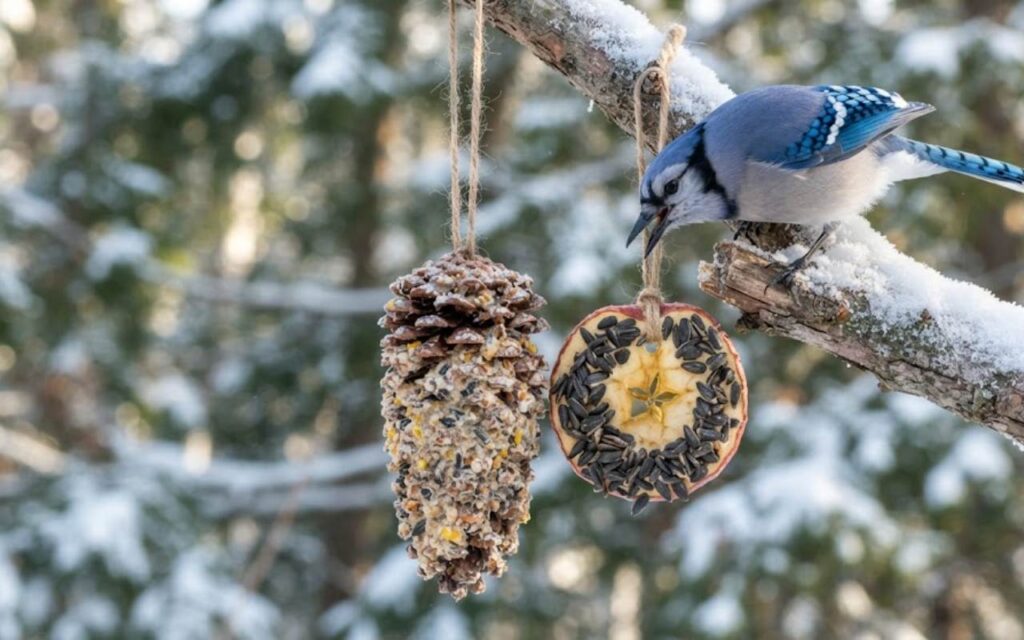
- How to Build It: Collect large, wide-open pinecones from your yard. Mix raw beef suet with cornmeal or oats to create a binding grain paste, as this keeps the peanut butter or fat from sticking to feathers. Fill the open layers with the paste and roll the pinecone in wild birdseed. You can hang them directly by a twine loop, or place them inside durable, rust-resistant hanging suet cages.
- The Xylitol Danger: Always read the ingredient label on your peanut butter. Never use any peanut butter that contains Xylitol. While it is a common sugar substitute for humans, Xylitol acts as a suspected systemic poison to wild birds and is a verified killer of domestic dogs, causing rapid, life-threatening drops in blood sugar.
2. Seed-Crusted Apple Rings
Fresh apples add a beautiful splash of festive red to your yard while providing natural sugars and moisture to overwintering birds.
- How to Build It: Slice fresh apples horizontally into 1/2-inch thick rings so the center cavity looks like a holiday star. Press the sides of the apple rings into a deep bowl of high-grade black oil sunflower seeds, which is the absolute favorite winter fuel for Northern Cardinals, chickadees, and finches.
- Assembly Tip: Push your hanging string directly through the tough skin and meat of the upper apple rind. Do not loop the string through the empty center hole, or the weight of a landing bird will cause the soft fruit pulp to split and drop.
Common Holiday Crafting Items That Are Dangerous to Birds
Experienced forum users flag several classic holiday crafting items that should never be placed outside, as they present severe choking and digestive risks:
- Whole Frozen Raisins: While soft dried fruits are fine during mild spring months, whole dried raisins and currants freeze into rock-hard pellets in the winter. They present an acute choking hazard to wintering fruit-eating birds like Eastern Bluebirds and European Starlings, and pose an acute canine toxicity threat if domestic pets ingest fallen pieces.
- Air-Popped Popcorn Garlands: Popcorn is a classic indoor tree decoration, but it fails completely outdoors. It quickly absorbs cold winter humidity, turning into a tough, leathery texture that small songbirds cannot chew or break apart safely, which can lead to severe stomach and crop blockages.
- Processed or Sugary Cereals: Many family craft boards suggest stringing brightly colored fruit loops or frosted cereals. Wildlife rescue centers warn that these foods contain artificial dyes and heavy sugar glazes that disrupt an avian digestive system. Use plain, original un-sweetened round oat cereals strictly as spacer pieces.
- Faux Berries and Tinsel: Never use plastic craft berries, metallic tinsel, or shiny foil ribbons on outdoor displays. Birds cannot tell the difference between plastic and real food and will swallow the microplastics, causing fatal intestinal blockages.
Where to Hang Your Ornaments to Keep Birds Safe from Pests
Where you choose to hang your holiday bird decorations dictates whether your yard stays a safe haven or becomes an easy target for predators and nighttime pests.
The 4-to-10-Foot Hanging Rule
Always position your edible decorations roughly 4 to 10 feet away from dense bushes, low walls, or cedar hedges.
- Why it matters: If you hang the ornaments too close to dense bushes, outdoor cats can easily hide and ambush the birds. However, if you hang them out in the open more than 10 feet away from cover, small songbirds are completely exposed to birds of prey like hawks and have no nearby branches to fly into for safety.
Keeping Raccoons and Opossums Away
High-fat suet and peanuts give off a strong scent that will inevitably attract nighttime scavengers like raccoons. To prevent your hard work from being torn down overnight, hang your festive ornaments using lightweight, weather-resistant . Simply unclip the strings at dusk, place them inside a secure storage bin on your porch, and clip them back outside at sunrise.
Keeping Your Ornaments Clean and Disease-Free
Bringing a large number of wild birds together into a small holiday display increases the risk of spreading common winter bird illnesses like Salmonella and House Finch Eye Disease (Mycoplasma gallisepticum), which pass quickly from bird to bird on shared perches.
To protect your backyard visitors, follow the 7-day safety rule: if the birds have not eaten your handmade ornaments within a week, take them down anyway.
Damp winter moisture and frost cause fruit pulp to ferment and suet mixtures to spoil. This creates toxic mold blooms that breed Aspergillus spores, causing a fatal avian respiratory disease known as Aspergillosis. Check your holiday decorations daily, and discard any pieces immediately if they become wet, molded, or dirty.