
Reader Transparency: This birding guide contains paid affiliate links. If you click a link and make a purchase, I may receive a small commission at no extra cost to you. As an Amazon Associate, I earn from qualifying purchases. Your support helps keep Feathered Guru flying!
Learning how to feed bluebirds in winter starts with one biological fact: unlike cardinals, chickadees, and finches, Eastern Bluebirds have slender, soft-bodied bills built for catching insects and swallowing whole berries, meaning they physically cannot crack open hard black oil sunflower shells.
When January freezes lock beetles underground and bury wild sumac or winterberry shrubs under ice, overwintering bluebirds burn through their fat reserves rapidly unless you offer soft, high-fat foods they can swallow whole.
Setting out live or rehydrated mealworms, soft suet nuggets, fine hulled sunflower chips, and thawed wild berries inside a sheltered platform or caged dome feeder gives your local flock immediate calories without wasting money on seed mixes they cannot eat. Pairing high-fat winter treats with a reliable source of unfrozen water keeps bluebirds energized through sub-zero nights until spring insects return.
Quick-Glance Winter Bluebird Feeding Summary
Because Eastern Bluebirds are partial migrants, many flocks stay year-round across southern Ontario, the Midwest, Mid-Atlantic, and New England as long as soft food, roosting shelter, and open water remain available.
- Core Winter Food Secret: Live or rehydrated dried mealworms paired with high-fat suet crumbles and fine hulled sunflower hearts (never whole-shell seeds).
- Why Regular Bird Seed Fails: Bluebirds lack the thick, conical seed-cracking beak of finches and cardinals, leaving whole sunflower and millet seeds untouched.
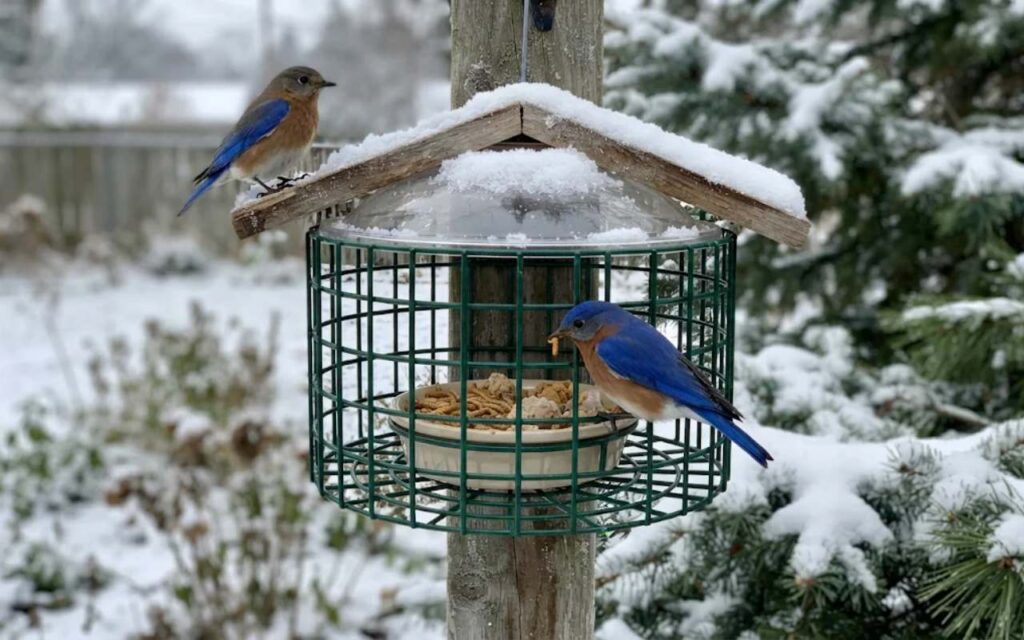
- Best Winter Feeders: A covered platform tray, caged mealworm dome feeder (with 1-1/2-inch wire mesh openings that block larger European Starlings), or a window tray feeder sheltered from freezing wind.
- Critical Water Rule: Bluebirds need liquid water in January to drink and bathe; use a thermostatically controlled heated birdbath that automatically turns on near freezing (around 40°F to 50°F / 4°C to 10°C) to keep water ice-free without overheating.
- Optimal Feeding Times: Offer mealworms twice daily (first thing at dawn to replenish overnight fat loss, and one hour before dusk to fuel their bodies for freezing night temperatures).
Why Bluebirds Starve When You Offer Standard Bird Seed
Most backyard birders fill tube feeders with black oil sunflower seeds, safflower, and cracked corn all winter, then wonder why bluebirds ignore the yard. According to life-history data from the Cornell Lab of Ornithology’s All About Birds, Eastern Bluebirds are insectivores and frugivores rather than granivores.
During spring and summer, roughly two-thirds of an adult bluebird’s diet consists of caterpillars, grasshoppers, crickets, and beetles, shifting in autumn and winter toward wild berries such as staghorn sumac, flowering dogwood, Virginia creeper, and Eastern red cedar berries.
When heavy sleet glazes those remaining winter berries in January and February, bluebirds face an immediate calorie deficit. Because their slender beaks cannot pry open tough sunflower hulls, offering soft, shell-free fats and proteins bridges the exact nutritional gap they need to survive winter storms.
The Best Winter Foods for Eastern Bluebirds
Stocking your bluebird feeder with a mix of protein-rich insects, rendered animal fat, and soft fruit gives wintering flocks fast, digestible energy:
- Live or Rehydrated Dried Mealworms: Live mealworms (Tenebrio molitor larvae) are the single most effective winter bluebird magnet because their movement triggers a bluebird’s natural hunting instinct immediately. If live worms are unavailable or freeze outdoors, soak dried mealworms in warm water for 10 to 15 minutes before serving; rehydrated worms deliver crucial moisture alongside 50%+ crude protein without causing winter dehydration.
- Bark Butter & Soft Suet Nuggets: Commercial spreadable suet (such as Jim’s Birdacious Bark Butter) or soft peanut-and-berry suet pellets crumble easily in a bluebird’s bill and provide dense, slow-burning calories for sub-zero nights.
- Fine Hulled Sunflower Hearts (Chips): While bluebirds cannot open whole black oil sunflower seeds, they readily swallow small, shell-free sunflower hearts whole, provided you buy fine or medium chips rather than oversized whole kernels.
- Softened Raisins, Currants, and Diced Apples: Soak dried raisins or Zante currants in warm water for 10 minutes until plump, drain well, and mix them into your platform tray alongside finely diced apples or thawed blueberries.
Best Winter Bluebird Foods Compared
| Winter Bluebird Food | Key Nutritional Benefit | Best Winter Prep Tip |
|---|---|---|
| Live Mealworms | High protein + natural moisture | Serve small portions at dawn & dusk so they don’t freeze |
| Rehydrated Dried Mealworms | 50%+ protein without dehydration risk | Soak in warm water 10–15 min & drain before serving |
| Soft Suet Crumbles / Bark Butter | Dense fat calories for sub-zero nights | Crumble into pea-sized pieces in a covered tray |
| Hulled Sunflower Hearts (Chips) | Shell-free plant fats & energy | Use fine/medium chips (never whole-shell seeds) |
| Soaked Raisins & Currants | Quick fruit sugars mimicking winter berries | Plump in warm water 10 min so they stay soft in cold air |
Exact Recipe: Homemade Winter Bluebird Suet Crumbles
Making your own winter bluebird suet mix costs a fraction of store-bought suet nuggets and stays soft enough for bluebirds to swallow easily in freezing weather:
- 1. Measure the Base Fats: Place 1 cup rendered beef suet (or plain lard) and 1 cup unsalted, xylitol-free creamy peanut butter into a microwave-safe bowl or saucepan over low heat until just melted together.
- 2. Stir in Dry Calories: Remove from heat and stir in 2 cups yellow cornmeal, 1 cup quick-cooking rolled oats, and 1/2 cup fine hulled sunflower chips until the mixture forms a thick, crumbly dough (optionally fold in 1/4 cup soaked, drained raisins).
- 3. Chill and Crumble: Press the warm mixture into a parchment-lined baking dish, refrigerate for 2 hours until firm, and break into bite-sized pea-sized crumbles. Store extra crumbles in a sealed freezer bag and scatter a small handful onto your covered bluebird tray each morning.
Choosing the Right Winter Feeder to Block Starlings and Snow
Pouring expensive mealworms into an open ground tray invites aggressive European Starlings, House Sparrows, and Blue Jays to wipe out the entire supply in minutes. Selecting the right feeder geometry protects your bluebird menu from bullies and winter sleet:
- Caged Bluebird Mealworm Feeders (1-1/2-Inch Wire Mesh): Surrounding a central glass or plastic mealworm cup with a 1-1/2-inch (38 mm) wire grid cage (such as the Erva Caged Bluebird Feeder) allows slender Eastern Bluebirds to slip right inside while physically blocking chunky European Starlings and grackles.
- Covered Tray Feeders with Clear Acrylic Domes: A wide roof overhang or adjustable acrylic baffle dome keeps freezing rain and blowing snow from burying suet crumbles and mealworms.
- Keep Mealworms From Freezing Solid: Live mealworms go dormant below 45°F (7°C) and die off when frozen below 40°F (4°C). Serve small portions twice a day in a shallow ceramic dish warmed indoors first, or mount your bluebird feeder on a sunny, south-facing sheltered post out of biting north winds.
Why a Heated Birdbath Is Just as Important as Food in January
When natural ponds and puddles freeze solid in midwinter, dehydration threatens songbirds almost as severely as starvation. According to winter bird-feeding guidance from the Cornell Lab of Ornithology, providing clean, unfrozen water in winter attracts birds that rarely visit seed feeders, especially Eastern Bluebirds.
Install a thermostatically controlled heated birdbath (or drop a low-wattage submersible de-icer into a shallow, non-porous basin) placed 8 to 12 feet from dense shrubs so bluebirds can drink and preen their feathers cleanly, as clean, unmatted feathers trap body heat far more effectively on sub-zero nights.
How to Train Local Bluebirds to Find Your Winter Feeder
If bluebirds pass through your neighborhood trees without landing at your feeder, use these proven attraction steps:
- 1. Convert a Nest Box for Winter Roosting: Overwintering bluebirds huddle together inside wooden nest boxes at night to conserve body heat. In late autumn, temporarily plug the top 5/8-inch side ventilation holes with corks or removable weatherstripping (or flip a reversible front panel upside down so the entrance hole sits near the bottom, trapping rising warmth inside) and place a handful of dry pine needles on the floor.
- 2. Use Live Mealworms to Break the Ice: Even if you plan to feed rehydrated mealworms or suet crumbles long-term, offer a small cup of wriggling live mealworms for the first 3 to 5 days; once one bluebird spots the movement, the entire flock will memorize your feeder location.
- 3. Feed on a Predictable Dawn & Dusk Schedule: Bluebirds quickly learn daily feeding routines; tapping a small metal spoon against the ceramic dish at 7:30 AM and 3:30 PM conditions local flocks to fly down within minutes.
Frequently Asked Questions About Feeding Bluebirds in Winter
Do Eastern Bluebirds migrate or stay in winter?
Eastern Bluebirds are partial migrants. While northernmost populations in parts of Canada and the upper Great Plains often move south during severe winters, many flocks stay year-round across southern Ontario, the Midwest, Mid-Atlantic, and New England whenever unfrozen water, winter berries, and backyard mealworm feeders are available.
Can you feed dry mealworms to bluebirds in winter?
Yes, though rehydrating dried mealworms in warm water for 10 to 15 minutes before serving in winter is much safer than offering bone-dry worms. Dry mealworms contain very little water and require birds to burn precious body moisture during digestion, whereas warm, plumped mealworms provide hydration alongside 50%+ crude protein.
Will bluebirds eat suet in the winter?
Yes. Eastern Bluebirds readily eat soft suet nuggets, spreadable bark butter, and homemade peanut butter suet crumbles during cold weather when insects are scarce, especially blends containing dried berries, mealworms, or fine sunflower chips.