
Reader Transparency: This birding guide contains paid affiliate links. If you click a link and make a purchase, I may receive a small commission at no extra cost to you. As an Amazon Associate, I earn from qualifying purchases. Your support helps keep Feathered Guru flying!
Birds eat snow in winter as a survival fallback when ponds, streams, and puddles freeze solid, trading scarce body heat for moisture instead of risking long flights or hawk attacks in search of open water. However, melting snow internally consumes roughly twice as much thermal energy as warming liquid water to avian body temperature, making unfrozen backyard water a critical winter lifeline.
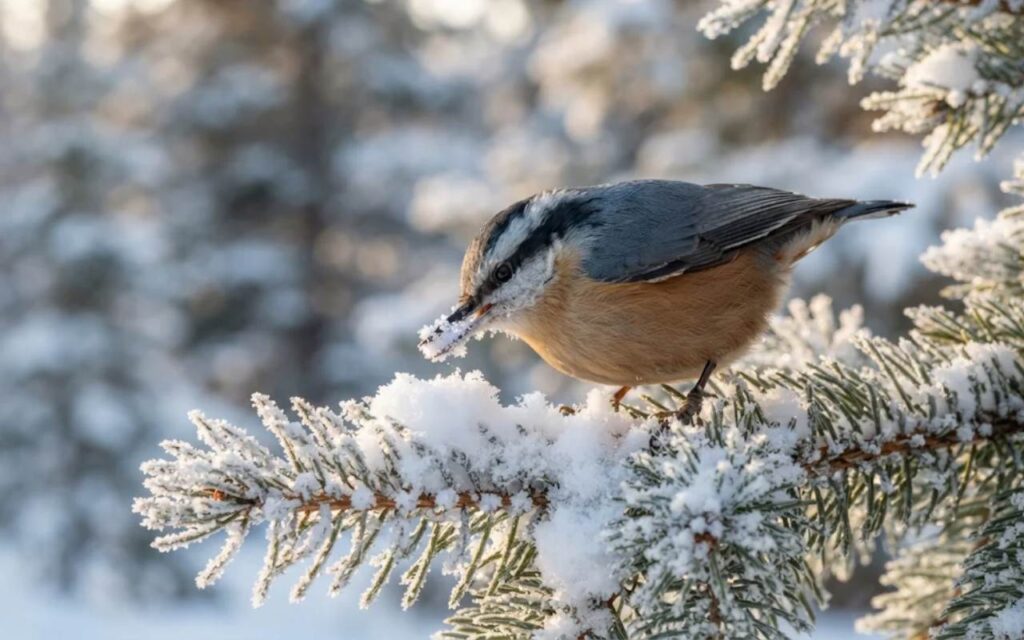
If you look out across a snow-covered yard in January, you may spot a Red-breasted Nuthatch scooping powdery snow off a pine branch or a Cedar Waxwing catching falling snowflakes mid-air. While it looks effortless, eating snow carries a steep metabolic price tag for animals that weigh less than an ounce.
Understanding why wild birds eat snow, and why liquid water is dramatically better for their winter survival, explains why a simple heated birdbath often draws more winter traffic than a brand-new seed feeder.
Quick-Glance Summary: Birds Eating Snow in Winter
- Why Birds Eat Snow: When open water freezes over, eating snow lets birds stay hydrated without leaving flock cover or burning flight calories searching for unfrozen streams.
- The Hidden Calorie Cost: Melting solid snow into liquid water (latent heat of fusion) requires roughly twice as much heat energy as warming that liquid water up to a bird’s ~105°F (40.5°C) core temperature.
- Low Water Yield: Fluffy winter snow is mostly trapped air, meaning a bird must ingest large volumes of snow crystals to get a tiny sip of actual water.
- Which Birds Do It Most: Red-breasted Nuthatches, Bohemian Waxwings, Northern Flickers, Common Redpolls, and Black-capped Chickadees (which also sip dripping icicles) regularly eat snow or ice chips.
- How You Can Help: Providing a shallow, thermostatically heated birdbath (1 to 1.5 inches deep) saves birds vital survival calories on sub-zero days.
Why Do Birds Eat Snow Instead of Flying to Open Water?
In mild weather, birds get moisture from drinking standing water, sipping morning dew, and eating water-rich insects and berries. During deep winter freezes, juicy insects vanish and every backyard puddle turns to solid ice.
As highlighted by BirdNote’s winter avian behavior reporting, small birds face a daily survival trade-off when natural water locks up:
- 1. Predator Exposure: Leaving a dense evergreen flock to fly across open snowfields in search of an unfrozen creek makes a small songbird an easy target for Cooper’s Hawks and Sharp-shinned Hawks.
- 2. Flight Energy Drain: Flying long distances in freezing air burns immediate fat reserves.
- 3. Controlled Small Doses: Rather than gulping large mouthfuls that cause sudden core chilling, birds take tiny, frequent nibbles of soft, sun-warmed snow throughout the day so their metabolism can absorb the thermal cost gradually.
The Physics Problem: Why Melting Snow Steals Avian Body Heat
A persistent backyard myth claims that wild birds do not need liquid water in winter because they can comfortably eat all the snow they want. Basic thermodynamics shows why snow is a costly substitute for liquid water:
- The Phase-Change Penalty: Turning solid ice at 32°F (0°C) into liquid water at 32°F (0°C) does not raise its temperature by a single degree, yet breaking those rigid ice crystals apart demands massive thermal energy (known as the latent heat of fusion).
- Double the Energy Burn: In fact, melting a beakful of snow inside a bird’s crop and digestive tract consumes twice as much heat energy as warming already-liquid ice water up to a songbird’s 104°F to 105°F (40°C to 40.5°C) body temperature.
- High Air-to-Water Ratio: Fresh powder snow can be up to 90 percent trapped air. A thirsty bird has to swallow beakful after beakful just to extract a few drops of moisture, repeatedly draining core warmth every time.
Liquid Water vs. Snow vs. Icicles for Winter Birds
Not all winter moisture sources cost the same amount of metabolic energy:
| Winter Water Source | Caloric Cost to Bird | Hydration Efficiency | Key Limitations |
|---|---|---|---|
| Heated Liquid Birdbath (35°F to 40°F) | Lowest; zero phase-change melting required | Immediate hydration in 2 to 3 quick sips | Requires shallow depth (1 to 1.5 in) so plumage stays dry |
| Dripping Icicles & Sun-Melted Puddles | Low; already in liquid state near 32°F | Moderate; small droplets require repeated visits | Only available during sunny midday hours above freezing |
| Fresh Powdery Snow | High; requires internal body heat to melt crystals | Low; high air content yields very little liquid water | Drains fat reserves needed for overnight shivering |
| Hard Crust Ice Chips | Highest; requires pecking effort plus full melting heat | Slow; used mainly by woodpeckers and flickers | Last-resort hydration during prolonged deep freezes |
Which Bird Species Are Most Often Seen Eating Snow?
According to field observations documented by BirdNote and winter birding networks, different species harvest snow and ice in distinct ways:
- Red-breasted Nuthatches & White-tailed Ptarmigans: Regularly scoop loose, powdery snow directly off tree limbs and snowbanks.
- Cedar & Bohemian Waxwings: Often sally into the air to catch falling snowflakes mid-flight, and eat snow from branches to balance dry winter berry diets.
- Northern Flickers & Downy Woodpeckers: Use their chisel-like bills to chip off small shards of crusted snow or ice when sap and insects are frozen solid.
- Black-capped Chickadees: Prefer sipping liquid meltwater from the tips of dripping icicles whenever midday sun warms rooflines.
- Common Redpolls & American Tree Sparrows: Northern tundra breeders that frequently rely on clean snowpack for hydration even when heated birdbaths are nearby.
Why Winter Seeds Make Birds Even Thirstier
Backyard feeders stocked with sunflower seeds, peanuts, and suet provide essential winter calories, but dry seeds contain almost zero free water. Digesting high-protein and high-fat winter rations requires continuous metabolic water to flush nitrogen waste through the kidneys.
When birds eat dry seeds all afternoon without access to liquid water, they either suffer mild dehydration or must burn part of the calories they just ate simply to melt snow in their stomachs. Offering unfrozen water alongside high-fat seeds lets birds keep 100 percent of their food energy for surviving freezing nights.
How to Set Up a Safe Winter Water Station (Without Wetting Feathers)
If you want to spare backyard birds the caloric cost of eating snow, follow four safety rules when setting up a winter birdbath:
- 1. Keep Water Shallow (1 to 1.5 Inches Deep): In sub-zero weather, birds need to drink, not take a deep bath. Wet contour feathers lose their insulating air pockets and can freeze rapidly. Place flat river stones inside deeper basins so small songbirds can perch safely above the waterline.
- Match Heater Wattage to Your Winter Temperatures: Choose a thermostatically controlled submersible de-icer or heated resin birdbath that turns on only when water approaches freezing. A 50- to 75-watt unit works well for mild freezes between 20°F and 32°F (-6°C to 0°C), while deep sub-zero temperatures below 0°F (-18°C) typically require a 150- to 250-watt cast aluminum de-icer such as the Allied Precision BDT250 250-Watt Bird Bath De-Icer to keep water open without overheating plastic or stone basins. If you prefer a budget-friendly setup, you can also build a homemade bird bath heater using a submersible aquarium heater or terracotta pot.
- 3. Never Add Antifreeze, Glycerin, or Salt: Chemical additives are toxic to birds or coat their feathers in oily residue that ruins waterproofing.
- 4. Place Near Cover, Away From Windows: Position your heated bath 8 to 10 feet from dense shrubs for hawk escape cover, and either within 3 feet or more than 30 feet from windows to prevent fatal glass collisions.
Frequently Asked Questions
Can birds die from eating snow?
Eating clean snow does not directly poison birds, and healthy birds with full fat reserves can safely melt small amounts of snow. However, during prolonged sub-zero cold snaps when food is scarce, burning calories to melt snow can push small songbirds into a fatal energy deficit overnight.
Do birds drink water in freezing temperatures?
Yes, birds need fresh water every single day in winter to digest dry seeds, regulate body temperature, and maintain healthy metabolism. A heated birdbath that stays liquid in sub-zero weather will attract dozens of species daily.
Why do birds eat snow near roads or driveways?
Sometimes birds pecking at roadside snow are actually trying to swallow tiny grains of mineral grit or road salt rather than snow for water. Because sodium chloride and calcium chloride ice melts are toxic to birds, always keep backyard feeding and watering stations away from salted driveways.