
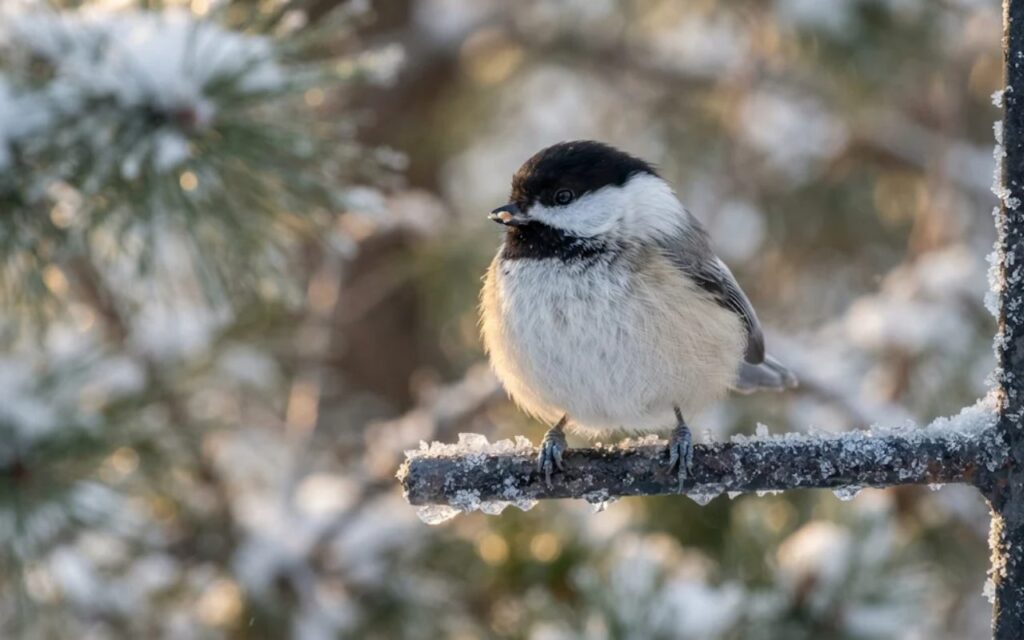
Birds rarely freeze to death through their bare feet because a circulatory system called countercurrent heat exchange keeps their core warm while letting their toes safely cool to just above freezing. Combined with dry, sweat-gland-free scales and low-fluid tendons, songbirds can grip sub-zero metal perches and stand on ice without frostbite or sticking.
Watching a tiny Black-capped Chickadee land barefoot on a frost-coated metal feeder rod at minus ten degrees Fahrenheit looks painful to human eyes. If you pressed bare skin against that same metal pole, moisture on your fingertips would freeze instantly and bond to the steel.
Yet backyard songbirds, gulls, and waterfowl spend hours standing on ice sheets and metal perches every winter without injury. Understanding how avian legs survive extreme cold reveals one of nature’s most efficient biological heat-recovery systems.
Quick-Glance Summary: How Avian Feet Survive Sub-Zero Ice
- Core vs. Extremity Temperature: Songbirds maintain an internal core temperature near 105°F (40.5°C) while deliberately letting their feet drop to roughly 33°F to 35°F (0.5°C to 1.6°C), a strategy known as regional heterothermy.
- Countercurrent Heat Exchange: Descending warm arteries press tightly against ascending cold veins in the upper leg, recapturing the vast majority of outgoing heat back toward the heart before it ever reaches the toes.
- Why Feet Don’t Stick to Metal: Unlike human skin, bird feet lack sweat glands and stay completely dry, eliminating the surface moisture needed to freeze onto metal perches.
- Frostbite-Resistant Tissue: Avian toes consist almost entirely of bone, tough tendons, and keratin scales with minimal muscle, water-heavy cells, or pain receptors.
- Behavioral Heat Conservation: Birds tuck one leg into their abdominal down feathers, squat over both feet while perching, and avoid bare metal feeders during freezing rain.
The Secret Inside Avian Legs: Countercurrent Heat Exchange
If a chickadee pumped 105°F blood straight into its unfeathered toes on a zero-degree morning, the bird would hemorrhage body heat into the frozen air and burn through its fat reserves within minutes. To prevent that catastrophic energy loss, birds rely on a vascular layout called countercurrent heat exchange, as explained by the Cornell Lab of Ornithology’s All About Birds.
Inside the upper leg (the tibiotarsus), arteries carrying warm, oxygenated blood down from the heart run directly alongside veins carrying chilled blood back up from the feet. Because the blood vessels touch each other, heat flows naturally from the warm outgoing arterial blood into the cold returning venous blood.
By the time arterial blood reaches the bare toes, it has already cooled down to just a few degrees above freezing. That cool blood delivers just enough oxygen and warmth to keep toe tissues alive without wasting precious core heat to the surrounding ice. Meanwhile, the returning venous blood is pre-warmed before re-entering the bird’s torso, preventing cold shock to the heart.
What Is the Rete Mirabile (“Wonderful Net”)?
In cold-water birds such as ducks, geese, and gulls, this countercurrent system is amplified by a dense, interwoven mesh of tiny arteries and veins called the rete mirabile (Latin for “wonderful net”). As highlighted by Audubon Magazine’s winter avian physiology coverage, this intricate vascular network creates a steep temperature gradient that lets waterfowl paddle in near-freezing water or stand on lake ice for hours while losing almost no core warmth.
Why Birds’ Feet Don’t Freeze to Metal Perches
A common backyard myth warns that metal bird feeders act like a frozen flagpole on a wet tongue, trapping songbirds by their toes. In dry winter weather, healthy birds do not stick to metal perches for two anatomical reasons:
- 1. Zero Sweat Glands: Human palms and fingers constantly secrete microscopic moisture from eccrine sweat glands, which freezes on contact with sub-zero metal. Bird feet have no sweat glands at all, leaving their keratin scales dry as fingernails.
- 2. Water-Shedding Keratin Scales (Scutes): Even when a bird visits a heated winter birdbath, water beads up and rolls cleanly off its overlapping leg scales and hydrophobic plumage before the bird lands on its next perch.
The One Rare Exception: Temporary sticking can only happen if a bird’s feet become physically soaked during freezing rain, sleet, or contact with an overflowing, unheated water dish just as temperatures plunge below freezing. While plastic perch covers are not necessary to prevent sticking, feeders with powder-coated metal, wood, or recycled plastic perches do help reduce conductive heat drain on bitter mornings.
Human Feet vs. Bird Feet in Freezing Temperatures
Comparing human anatomy to avian leg structure shows why birds tolerate conditions that cause rapid tissue death in mammals:
| Anatomical Feature | Avian Foot (Songbirds & Waterfowl) | Human Foot |
|---|---|---|
| Primary Tissue Composition | Bone, dense tendons, and dry keratin scales | Fluid-rich skeletal muscle, fat pads, and soft skin |
| Operating Temperature | 33°F to 35°F (0.5°C to 1.6°C) via regional heterothermy | Requires ~98.6°F (37°C) core circulation to prevent tissue death |
| Surface Moisture & Sweat | Zero sweat glands; dry scales prevent sticking to metal | High density of sweat glands; moisture freezes to cold metal |
| Pain & Cold Receptors | Very sparse sensory nerve endings in lower toes | Dense thermoreceptors and nociceptors triggering sharp pain |
Built-In “Antifreeze” Anatomy: Tendons, Bone, and Fast Circulation
Beyond heat exchange, avian feet are structurally engineered to resist ice crystal formation inside cells:
- Minimal Cellular Water: Frostbite destroys mammalian toes because water inside fleshy muscle cells freezes, expands, and ruptures cell membranes. Bird toes contain almost no bulky muscle tissue. Instead, the muscles that flex a bird’s toes sit high up in the warm, feather-insulated thigh and drumstick, pulling long, low-fluid tendons down into the claws like puppet strings.
- Rapid Heart Rate & Blood Velocity: A resting Black-capped Chickadee’s heart beats roughly 400 to 500 times per minute (and over 1,000 beats per minute in flight). Blood moves through the tiny capillaries of the toes so rapidly that it returns to the upper leg before ice crystals can nucleate.
- Sparse Pain Receptors: According to the Cornell Lab of Ornithology, cold-adapted birds such as Snow Buntings and Common Eiders possess very few cold-pain receptors in their lower extremities, allowing them to forage calmly on snowpack and pack ice without distress.
Three Behavioral Tricks Birds Use to Warm Cold Toes
Even with countercurrent circulation, birds actively manage heat loss through daily posture habits:
- 1. The One-Legged Flamingo Tuck: Standing on one leg cuts conductive heat loss through exposed skin by exactly 50 percent. Birds pull the lifted foot deep into their warm abdominal down feathers, then switch legs periodically.
- 2. Fluffing Over the Perch: When resting on a branch or feeder tray, songbirds squat low and fluff their contour feathers over their ankles and toes like a built-in down blanket.
- 3. Sun-Facing Roosts: On sunny winter mornings, birds perch facing the sun with their feathers slightly parted so solar radiation warms their legs and belly skin directly.
When Can Birds Actually Freeze to Death?
While healthy native birds rarely suffer frostbite on their feet, do birds freeze to death during severe winter storms? Yes, when extreme cold combines with calorie starvation or wet plumage:
- Empty Fat Reserves Overnight: Small passerines can burn up to 10 percent of their body weight in a single sub-zero night just shivering to stay warm. If snow or ice storms block access to high-fat seeds and suet before dusk, a bird can run out of metabolic fuel before dawn.
- Wet Feathers in Freezing Wind: If a bird immerses its body in an overly deep winter birdbath and its contour feathers freeze, the interlocking barbules separate, destroying its thermal insulation.
- Tight Metal Leg Bands or Non-Native Species: Tight aluminum research bands can occasionally trap ice against a bird’s tarsus during sleet storms, and tropical pet birds released outdoors lack the cold-acclimated vascular control of native winter species.
How Backyard Birders Can Protect Birds in Sub-Zero Weather
- Offer High-Lipid Foods Before Dusk: Stock feeders with black oil sunflower seeds, raw suet cakes, and shelled peanuts so birds build maximum fat reserves before sunset.
- Use Shallow, Heated Birdbaths: Keep water depth between 1 and 1.5 inches with a thermostatically controlled heater so birds can drink liquid water without soaking their belly feathers.
- Swap Bare Steel Perches for Coated or Wooden Dowels: While plastic perch covers aren’t needed to stop feet from sticking, choosing tube feeders with wooden, vinyl-coated, or thick resin perches helps minimize conductive heat drain when temperatures plunge below 0°F (-18°C).
Frequently Asked Questions
Do birds’ feet feel cold when they stand on snow?
Technically, yes, the surface of a bird’s toes drops to just above freezing (around 33°F to 35°F), so their feet are physically cold. However, because avian toes contain very few temperature-sensitive pain receptors, birds do not experience the stinging ache humans feel in freezing weather.
Can a bird’s feet freeze to a metal bird feeder?
No, not under dry winter conditions. Birds have zero sweat glands on their feet, so there is no surface moisture to freeze onto cold steel or aluminum perches. Temporary sticking only occurs if a bird’s feet become soaked during freezing rain or sleet.
Why do ducks and geese stand on one leg on ice?
Standing on one leg cuts heat loss through unfeathered skin in half while tucking the raised foot inside warm down feathers. A duck standing on one leg on a frozen pond is not injured or stuck; it is simply conserving energy.