
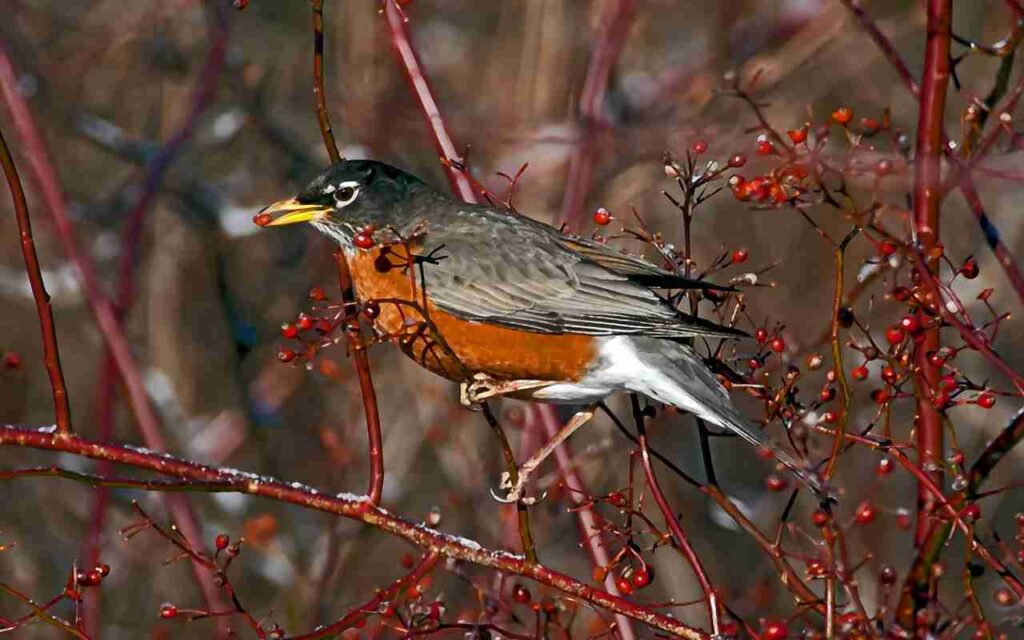
The American robin’s diet is a 12-month puzzle that resists simple labels. If you have ever wondered what American robins eat in different seasons, the answer is a dramatic dietary pivot from protein-heavy invertebrates in the spring to sugar-rich fruits and berries in the winter. Research shows a single robin can eat 14 feet of earthworms in a day, showing the incredible metabolic flexibility that allows them to thrive in every North American habitat.
Understanding this shift requires moving beyond the “bird-versus-worm” image to recognize the sophisticated foraging strategies driving their survival. This guide reveals the hourly feeding shifts, lipid-loading behaviors, and sensory mechanisms robins use to find everything from beetles to fermented berries and even rare vertebrate prey. This seasonal diet flip happens rapidly, as environmental cues overhaul their entire nutritional priorities in just one to two months 😊.
Visual Guide: Decoding the American Robin’s Seasonal Dietary Shift
While most birds are specialists, robins are masters of the seasonal flip by rapidly changing their entire foraging strategy to survive. Watch the whiteboard explainer below to see exactly how these birds transition from fourteen feet of earthworms a day to a nearly 100 percent fruit based winter diet.
Show Transcript:
0:00
We all know the American robin—the classic bird we see on our lawns, the iconic sign of spring. But did you know this familiar backyard bird leads a secret double life? Its incredible adaptation and survival strategies make it one of the most fascinating North American birds. Today, we’ll reveal the hidden secrets of the American robin’s diet, behavior, and seasonal survival.
0:20
If you were asked, “What’s a robin’s favorite food?” most people would say worms. And yes, they do eat worms—but that’s only part of the story. For more than half the year, that assumption is completely wrong.
0:33
Here’s the big secret: In spring, robins’ diets are over 60% protein—worms, beetles, caterpillars—perfect for nest building and raising chicks. But in winter, their diet flips almost entirely to fruit, over 90%! It’s a full metabolic switch that allows them to survive in cold climates while many other birds migrate south.
0:56
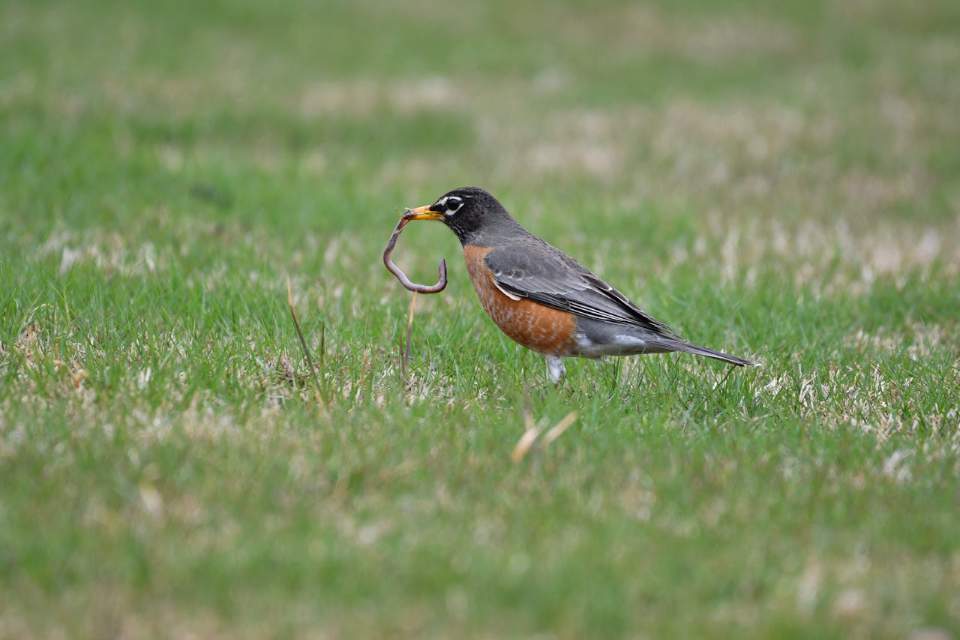
Let’s start with spring, the season most associated with robins. During this time, it’s all about protein. This isn’t just a meal—it’s fuel to build nests, lay eggs, and raise the next generation. Remarkably, a single robin can consume up to 14 feet of earthworms in a single day. That’s an incredible energy boost to power their busy spring lives.
1:32
You’ve probably heard, “The early bird gets the worm,” but there’s a catch: the ground must be warm enough. Soil temperatures above 37° F allow worms to reach the surface. Until then, the buffet is closed.
1:55
Now, here’s a common misconception: Earthworms aren’t actually robins’ top choice. Soft, protein-rich caterpillars rank first, followed by beetles, and then earthworms.
2:27
Ever notice robins tilting their heads while running on lawns? Most people think they’re listening for worms underground, but it’s actually a visual hunting technique. By tilting their heads, robins aim one eye directly at the ground to detect tiny prey movements. Their eyes are on the sides of their head, so this head tilt acts like a magnifying glass.
3:03
As summer ends and autumn approaches, robins’ diets and priorities shift. Bugs disappear, days shorten, and robins switch from protein for raising chicks to energy-rich foods to survive colder months.
3:21
Not all fruits are equal. Robins prefer lipid-rich berries like dogwood and spicebush for high energy, instead of sugary but low-nutrient berries like honeysuckle. These lipid-packed fruits act as “jet fuel” for survival and migration.
4:09
Winter is the toughest season. Robins become frugivores—fruit eaters—searching for leftover berries that survive snow and ice. Eastern red cedar, juniper, and crab apples provide essential fats, and sometimes fermented berries give extra calories, though they can cause temporary intoxication.
5:12
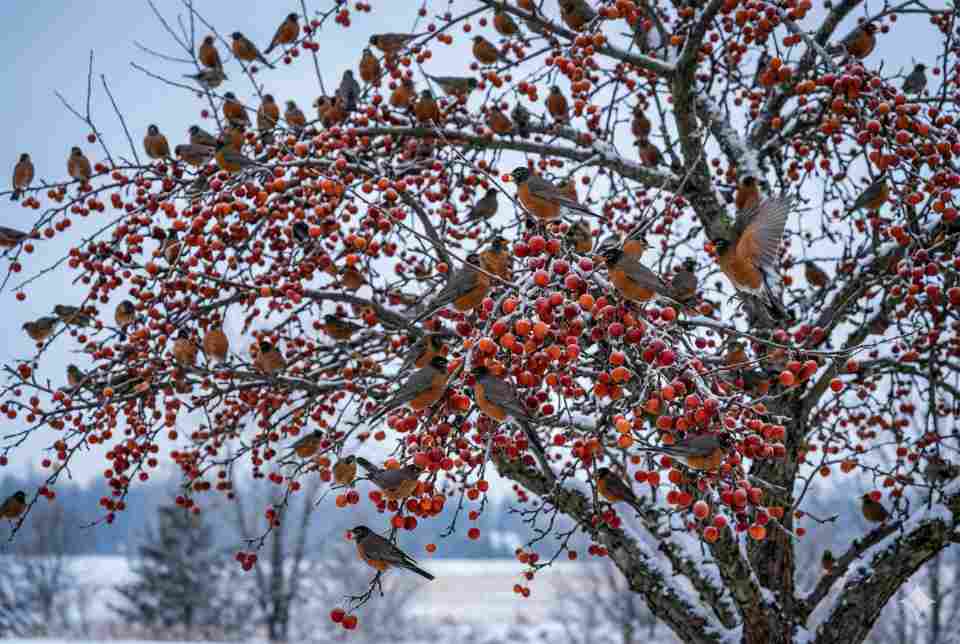
To survive winter, robins abandon territorial behavior and form large flocks for social foraging. Hundreds of eyes increase the chance of spotting food and predators, making survival more efficient.
5:32
So, how can you help robins in your backyard year-round? Offer the right food at the right time: protein-rich worms and caterpillars in spring, and high-energy fruits like chopped apples or soaked raisins in winter. Avoid bread and hard seeds—they don’t provide the nutrients robins need.
6:29
The single most important tip: provide a source of unfrozen water in winter. A heated birdbath allows robins to drink and clean their feathers, keeping them insulated against the cold.
6:49
From a protein-hunting spring feeder to a fruit-scavenging winter survivor, the American robin is a master of adaptation. These birds rewrite their own survival rules year-round, proving just how resilient and remarkable they are.
7:07
Next time you see a robin on your lawn, remember—you’re looking at a seasoned survivor, constantly adapting to every season, and a true hero of your backyard wildlife ecosystem.
Circadian Foraging: The Hourly Diet Shift
Morning Earthworm Focus vs. Afternoon Fruit Consumption
According to Cornell Lab’s Birds of the World documentation, robins forage for earthworms more frequently in early morning and late afternoon and eat more fruit later in the day. This circadian pattern reflects both prey availability and metabolic needs changing throughout the day.
Morning earthworm foraging capitalizes on moisture conditions. Earthworms remain near the soil surface during overnight hours when dew, precipitation, and cooler temperatures maintain surface moisture. As morning progresses and surface soils dry, worms retreat deeper where robins cannot access them. The morning feeding window provides optimal conditions for visual detection of worms near or at the soil surface.
Afternoon fruit consumption serves different nutritional purposes. According to research from Cornell Lab of Ornithology, robins eat different types of food depending on the time of day with more earthworms in the morning and more fruit later in the day. The sugar-rich fruits provide rapid energy replenishment after morning protein-focused foraging depletes readily available carbohydrate reserves. The simple sugars in ripe fruits absorb quickly, sustaining afternoon activity and building overnight energy stores.
The Early Bird Advantage: 37°F Soil Temperature Threshold
Soil temperature controls earthworm activity patterns. Earthworms become active at soil temperatures above 37°F (3°C), moving toward the surface as temperatures rise. Below this threshold, worms remain deep in soil where they’re inaccessible to surface-foraging birds. The spring warming that triggers robin migration coincides with soil temperatures exceeding the 37°F threshold, ensuring earthworm availability when robins arrive in northern breeding territories.
The “early bird gets the worm” saying reflects real biological timing. Robins foraging at dawn encounter earthworms still near the surface following overnight activity. As morning temperatures rise and surface soils dry, worms descend deeper. Robins feeding mid-morning encounter fewer worms despite identical foraging effort, creating selective pressure for early-morning feeding behavior.
Spring: The Protein and Calcium Phase
Breeding Requirements Driving Invertebrate Consumption
According to research on American robin diet composition, the diet generally consists of around 40 percent small invertebrates including earthworms, beetle grubs, caterpillars, and grasshoppers, and 60 percent wild and cultivated fruits and berries. However, during spring breeding season, invertebrate consumption increases dramatically to meet protein and calcium requirements for egg production and nestling development.
Female robins require substantial calcium for eggshell formation. A single clutch of 3-5 eggs represents significant calcium investment. Invertebrates, particularly earthworms and snails with calcium-rich shells, provide essential minerals unavailable in fruit-based diets. Protein requirements similarly increase during egg formation and the energetic demands of incubation.
Male territory defense and courtship displays require sustained high energy output. The protein-rich invertebrate diet supports muscle maintenance and the metabolic demands of constant singing, territorial patrolling, and mate guarding behaviors characteristic of breeding-season males.
Primary Spring Prey Species
According to research documenting robin prey preferences, the preferred animal food is the caterpillar, followed by beetles (which represent 40% of their insect diet), and then earthworms. This prey hierarchy reflects availability, nutritional value, and capture efficiency.
Earthworms provide high protein content (60-70% protein by dry weight) with amino acid profiles supporting feather growth and muscle development. The soft-bodied structure makes earthworms easy to digest and process, particularly important when feeding nestlings with undeveloped digestive systems.
Beetles represent 40% of insect diet during periods when beetles are abundant. The hard exoskeletons provide less digestible material than soft-bodied prey, but the protein and fat content reward the processing effort. Ground beetles, June beetles, and Japanese beetles all fall prey to robins patrolling lawns and gardens.
Caterpillars become priority prey during spring emergence periods. The exceptionally soft bodies, high protein content, and abundance during oak and other tree leaf-out periods make caterpillars ideal nestling food. A single robin pair may collect thousands of caterpillars weekly during peak nestling-feeding periods.
Grasshoppers supplement the spring diet, particularly in grassland habitats where earthworms are less abundant. The high protein content and large size make grasshoppers efficient prey items requiring fewer captures to meet nutritional needs compared to smaller insects.
The Nestling Menu: Soft-Bodied Prey Exclusivity
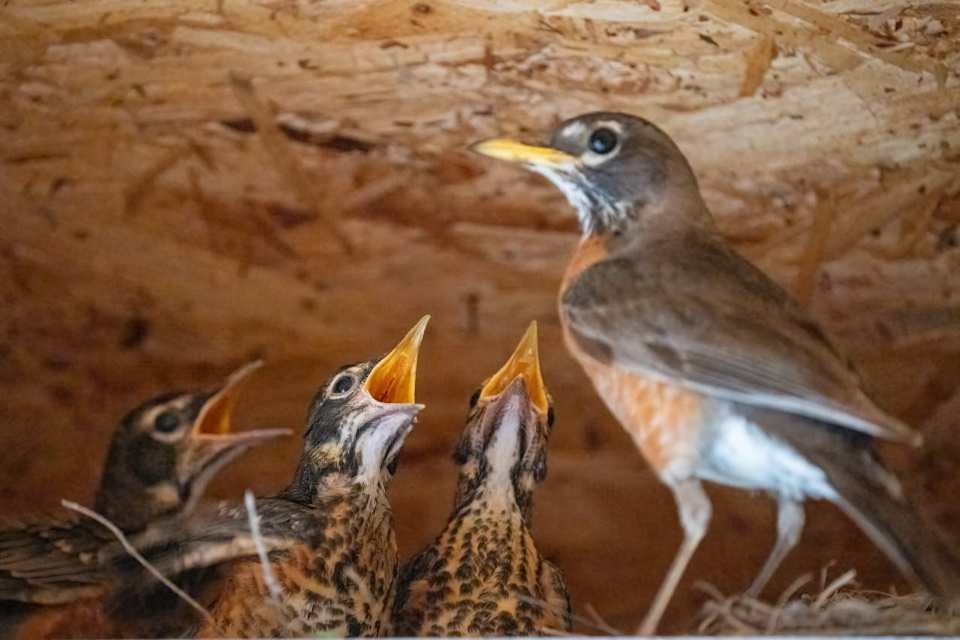
According to National Audubon Society field research, young are fed primarily on insects and earthworms. Parents exclusively feed nestlings soft-bodied invertebrates rather than fruit during the first 14-16 days post-hatching. The dietary restriction reflects nestling physiological limitations and rapid growth requirements.
Soft-bodied prey prevents choking and digestive blockages in young birds with immature digestive systems. Hard beetle shells, fruit seeds, and berry skins pose aspiration risks and may cause intestinal impactions in nestlings unable to process these materials. Parents instinctively select earthworms, caterpillars, grubs, and other soft prey eliminating these risks.
The protein concentration in soft-bodied invertebrates supports explosive growth rates. Robin nestlings increase from 5-6 grams at hatching to 40-50 grams at fledging in just 14-16 days, representing 700-900% mass increase. This growth requires sustained high protein intake possible only through concentrated invertebrate diet.
Summer: Transitioning to Sugars
Hydration Through Berry Consumption
Summer heat stress creates hydration challenges for robins living in hot, dry environments. Juicy berries including mulberries, serviceberries, cherries, and raspberries provide simultaneous nutrition and hydration. The high water content (70-85% water in most berries) reduces dependence on standing water sources that may be scarce during summer droughts.
The berry transition begins gradually as fruits ripen through June and July. Early-ripening species like serviceberries (Amelanchier) and mulberries (Morus) initiate the dietary shift. As additional species ripen sequentially through summer, berry consumption increases while invertebrate foraging decreases correspondingly.
The 50/50 Balance: Summer as Bridge Season
Summer represents transitional period between spring’s high-invertebrate diet and winter’s high-fruit diet. The roughly equal balance (50% invertebrates, 50% fruit) reflects simultaneous availability of both food types and ongoing but declining breeding-related protein demands. According to research, robins maintain dietary flexibility throughout summer, adjusting invertebrate versus fruit ratios based on daily availability and nutritional requirements.
Second and third broods extending into July and August maintain invertebrate demand for nestling feeding. Parents continue capturing earthworms and caterpillars for nestlings while increasingly consuming fruit themselves. The mixed diet supports both reproductive efforts and initiates the physiological transition toward fall fruit-focused foraging.
Fall: Lipid Loading for Migration and Survival
The Lipid vs. Sugar Choice
According to research published in The Auk on seasonal fruit preferences, American robins show seasonal preferences for lipids versus sugars in fruits, with preferences shifting to lipid-rich fruits during fall migration periods. This strategic selection builds fat reserves essential for migration and winter survival.
Lipid-rich fruits including spicebush (Lindera benzoin), flowering dogwood (Cornus florida), and sassafras (Sassafras albidum) become priority targets during fall. These fruits contain 30-50% lipid content (by dry weight) compared to 5-15% in sugar-rich fruits. The concentrated calories allow rapid fat deposition necessary for migration and winter survival.
The metabolic advantage of lipid storage exceeds sugar storage dramatically. Fats provide 9 calories per gram versus 4 calories per gram for carbohydrates. Robins depositing fat reserves for migration pack more than twice the energy per unit mass compared to carbohydrate-based energy storage, creating obvious selective advantage for lipid-rich fruit consumption during pre-migration fattening.
Native vs. Invasive Berry Preferences
Contrary to assumptions that invasive fruits dominate robin diets, research demonstrates robins actually prefer native berries when both options are available. According to feeding choice experiments, robins select native dogwood, spicebush, and Virginia creeper fruits over invasive honeysuckle (Lonicera) and multiflora rose when presented simultaneously.
The preference reflects nutritional quality differences. Native fruits co-evolved with North American birds, developing nutritional profiles matching avian requirements. Many invasive fruits provide “junk food” nutrition with high sugar but low protein, lipid, and micronutrient content. Birds consuming primarily invasive fruits show reduced body condition and lower overwinter survival compared to those eating native fruit-dominated diets.
Winter: The Nomadic Frugivore
Survival Staples: Cedar, Juniper, Holly, and Crabapple
Winter survival depends entirely on persistent fruits remaining available through snow cover and freezing temperatures. Eastern red cedar (Juniperus virginiana), common juniper (Juniperus communis), American holly (Ilex opaca), and various crabapple species (Malus) provide critical winter food sources when most berries are depleted.
Cedar and juniper berries persist through winter due to waxy coatings resisting freezing damage. The high lipid content (15-30% by dry weight) provides concentrated calories essential for thermoregulation during extreme cold. Robins strip entire cedar trees of berries during severe winters, creating temporary local depletion forcing birds to range widely searching for additional sources.
American holly berries remain attached and edible through winter, providing fallback food when preferred species are exhausted. The slightly toxic compounds in holly discourage consumption by mammals, ensuring berry availability for birds. Robins tolerate the mild toxins in exchange for guaranteed winter food access.
Crabapples freeze on trees but remain edible when thawed. Robins learn to time feeding on partially thawed crabapples during afternoon temperature peaks. The freezing and thawing actually improves palatability by breaking down cell walls and releasing sugars.
The Drunken Bird Phenomenon
According to documentation of robin winter behavior, robins will flock to fermented Pyracantha berries, and after eating sufficient quantities will exhibit intoxicated behavior such as falling over while walking. The ethanol intoxication results from yeast fermentation of overripe fruits producing alcohol concentrations reaching 1-2% or higher.
The fermentation process intensifies during freeze-thaw cycles common in late fall and winter. Freezing damages fruit cell walls, releasing sugars that yeasts metabolize into ethanol when temperatures rise above freezing. Robins consuming multiple fermented fruits ingest enough alcohol to show visible intoxication including impaired coordination, slowed reflexes, and inability to fly normally.
The intoxication creates predation vulnerability. Cats, hawks, and other predators easily catch impaired birds unable to detect threats or execute escape flights. Despite risks, robins continue consuming fermented fruits, suggesting caloric value outweighs intoxication dangers in winter food-limited conditions.
The Flocking Advantage for Patchy Resources
Winter robins abandon breeding territoriality, forming flocks of dozens to hundreds (occasionally thousands) of individuals. According to research, robin roosts can be huge, sometimes including a quarter-million birds during winter. The social foraging provides multiple advantages for locating and exploiting patchy winter food sources.
Information sharing occurs through flock feeding. Birds discovering fruit-bearing trees attract others through visual cues and vocalizations. The collective search effort locates scattered resources more efficiently than individual searching. Once located, multiple birds can strip fruit-bearing trees rapidly before spoilage or weather events destroy food.
Predator detection improves in flocks through many-eyes effect. Individual birds spend less time scanning for predators because flock-mates provide collective vigilance. The reduced vigilance time allows increased feeding time, critical advantage when winter days are short and energy demands are high.
Debunking Foraging Myths: Sight vs. Sound
Head-Tilting as Visual Focus Technique
According to research from Montana State University on robin sensory mechanisms, robins rely primarily on sight to detect earthworms, but can also use hearing when visual cues are blocked. The characteristic head-tilting behavior serves visual rather than auditory purposes.
The head tilt positions one eye directly toward spots on the ground where worms may be present. Robin eyes sit on the sides of their heads rather than facing forward, preventing binocular vision. The tilting maneuver brings one eye perpendicular to the ground, maximizing visual acuity for detecting slight movements or shapes indicating prey presence.
The alternating head tilts use each eye sequentially to scan adjacent areas. After examining a spot with the left eye, robins tilt to examine the same or adjacent spot with the right eye. This stereoscopic-substitute technique compensates for lack of true binocular vision, building three-dimensional representation of the ground surface through sequential monocular views.
The Hearing Debate: Modern Research Confirmation
While 1965 research by Frank Heppner concluded robins used only vision to locate earthworms, later experiments revealed hearing capability when visual cues were unavailable. According to research by Montgomerie and Weatherhead published in Animal Behavior, robins found worms with no problem when researchers eliminated visual, olfactory, and tactile cues, leaving only auditory information.
The hearing mechanism remains incompletely understood. Earthworms moving through soil create subtle sounds including friction against soil particles, muscular contractions, and displacement of soil and debris. These faint sounds require exceptional auditory sensitivity to detect, but robins clearly possess this capability.
The practical application involves using both senses cooperatively. Robins likely use vision as primary detection mode, switching to auditory detection when worms are present but not visible (hidden under leaves, in holes, or behind obstacles). The sensory flexibility provides foraging advantages in varied microhabitats where single-sense reliance would limit prey detection.
The Expert Corner: Rare and Unusual Prey
Vertebrate Hunting Documentation
According to Cornell Lab documentation, robins have rarely been recorded eating shrews, small snakes, and aquatic insects. These vertebrate prey items remain highly unusual but demonstrate dietary flexibility extending beyond typical invertebrate-and-fruit categorization.
Small snake consumption occurs opportunistically when robins encounter snakes small enough to overpower. Garter snakes, ring-necked snakes, and young individuals of larger species fall within size range robins can handle. The attacks likely stem from territorial defense that escalates to killing and consumption rather than deliberate predation strategy.
Shrew capture represents rare events documented through casual observation and stomach content analysis. The mammals’ small size (5-10 grams) places them within prey size range robins can physically manipulate. However, shrews’ terrestrial habits and rapid movements make them challenging targets compared to earthworms and insects.
Marine Foraging Adaptations
Coastal robins, particularly the northwestern subspecies (Turdus migratorius caurinus), demonstrate behavioral plasticity by feeding on beaches. According to research documentation, robins will feed on beaches, taking insects and small mollusks, and occasionally consuming small fish and marine invertebrates exposed at low tide.
The beach foraging uses identical run-and-pause technique robins employ on lawns, adapted to intertidal substrates. Birds scan wet sand and tide pools for amphipods, small crabs, marine worms, and tiny fish trapped in shallow water. The protein-rich marine prey provides alternative food source during periods when terrestrial invertebrates are scarce.
Backyard Conservation and Feeding Tips
What NOT to Feed: Standard Birdseed Rejection
Robins lack the bill structure and digestive physiology for processing hard, dry seeds that attract finches, sparrows, and other granivorous species. Standard birdseed mixes containing sunflower, millet, and milo provide no value for robins and go ignored even at well-stocked feeding stations. According to research, robins have evolved to lose sucrase, making sucrose unpalatable and useless as food source.
Bread products, despite robins’ apparent acceptance, provide minimal nutrition. The refined carbohydrates lack protein, vitamins, minerals, and fats robins require. Regular bread feeding creates malnutrition despite birds appearing to eat eagerly. The volume of bread needed to meet caloric requirements far exceeds digestive capacity while displacing consumption of nutritious foods.
The Success List: Mealworms, Raisins, and Suet
Live or dried mealworms provide ideal supplemental food matching robins’ natural invertebrate diet. The beetle larvae contain high protein (approximately 20% protein) and moderate fat (12-15% fat) supporting health and reproduction. Offer mealworms in shallow dishes on the ground or low platforms mimicking natural foraging conditions.
Soaked raisins rehydrate the dried fruit making it easier for robins to consume and digest. Soak raisins in water for several hours before offering, creating soft texture similar to fresh berries. The natural sugars provide quick energy without the processing challenges of hard, dry fruit.
Chopped apples attract robins, particularly during winter when natural fruits are depleted. Cut apples into small pieces exposing fresh fruit that robins can easily consume. Replace apples daily to prevent spoilage and remove pieces before they freeze solid or begin fermenting.
Suet provides concentrated calories during winter cold snaps when energy demands peak. While robins traditionally avoid suet feeders designed for woodpeckers, they will consume suet crumbles scattered on the ground or offered in specialized robin feeders with large perches.
Unfrozen Water: Winter’s Critical Resource
Heated birdbaths provide more survival value than supplemental food during winter. According to research on winter robin ecology, robins require water for drinking and bathing even during freezing weather. The metabolic cost of melting snow for water equals or exceeds calories obtained from eating frozen food, creating negative energy balance without liquid water access.
Bathing maintains feather condition critical for insulation. Dirty, matted feathers lose insulating capacity, increasing heat loss and caloric requirements for thermoregulation. Robins bathe year-round, including during winter, to maintain feather functionality. Providing unfrozen water allows necessary bathing without hypothermia risk from wet feathers in freezing conditions.
Quick Reference: The Robin’s Seasonal Nutritional Requirements
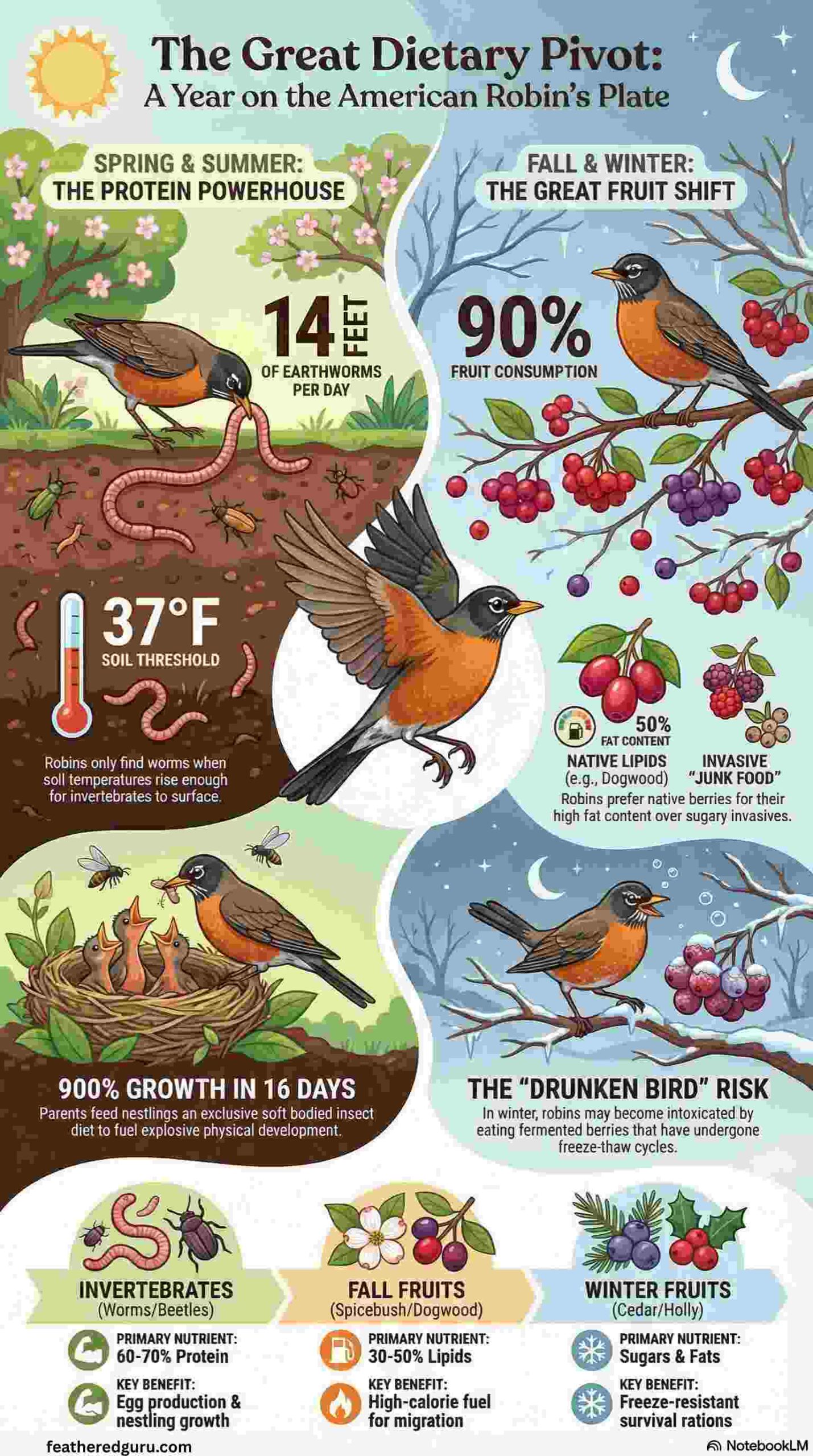
Navigating the complex world of lipid loading and protein phasing is easier when you see the big picture. This infographic provides a high level visual summary of the core nutritional needs discussed in this guide to help prepare you for the detailed master food table that follows below:
Conclusion and Master Food List
The American robin’s dietary flexibility represents evolutionary success strategy allowing occupation of diverse habitats across North America. The rapid seasonal transitions from invertebrate-focused spring diets to fruit-dominated winter diets reflect sophisticated nutritional sensing and behavioral plasticity. Understanding these patterns provides foundation for effective conservation strategies including native plant selection, pesticide-free landscaping, and strategic supplemental feeding.
The seasonal dietary pivot occurs predictably, driven by environmental cues including temperature, day length, and food availability. Spring warming triggers earthworm activity coinciding with robin breeding requirements for high-protein diets. Summer abundance allows dietary diversification incorporating both invertebrates and ripening fruits. Fall initiates lipid-loading behavior preparing for migration and winter survival. Winter forces complete dependence on persistent fruits and occasional supplemental foods.
Supporting robin populations requires providing resources matching seasonal requirements. Spring and summer management emphasizes creating invertebrate habitat through pesticide elimination, native plant diversity, and soil moisture maintenance. Fall management focuses on planting native fruiting shrubs and trees that provide lipid-rich berries during migration. Winter management emphasizes persistent fruit sources and heated water rather than supplemental feeding.
For additional information on supporting robin populations, explore guides on identifying American robins, selecting native plants for birds, and creating bird-friendly garden designs. Understanding broader avian dietary patterns and attracting birds through habitat rather than feeders provides context for robin-focused management within comprehensive bird conservation strategies.
Master Food Table: Seasonal Availability and Nutritional Value
| Food Category | Species/Type | Peak Season | Nutritional Profile |
|---|---|---|---|
| Invertebrates | Earthworms (Lumbricus) | Spring-Summer | 60-70% protein, high calcium |
| Invertebrates | Beetles (Various families) | Spring-Fall | 40-50% protein, moderate fat |
| Invertebrates | Caterpillars (Lepidoptera larvae) | Spring | 50-60% protein, soft-bodied |
| Invertebrates | Grasshoppers (Orthoptera) | Summer-Fall | 60-70% protein |
| Spring Fruits | Serviceberry (Amelanchier) | June-July | 15% sugar, moderate lipid |
| Summer Fruits | Mulberry (Morus) | June-July | High sugar, moderate protein |
| Summer Fruits | Cherry (Prunus) | June-August | 12-16% sugar |
| Summer Fruits | Raspberry/Blackberry (Rubus) | July-September | 10-15% sugar, high moisture |
| Fall Fruits | Dogwood (Cornus florida) | September-October | 30-40% lipid, high calorie |
| Fall Fruits | Spicebush (Lindera benzoin) | September-October | 40-50% lipid, migration fuel |
| Fall Fruits | Sassafras (Sassafras albidum) | September-October | 30-40% lipid |
| Fall Fruits | Virginia Creeper (Parthenocissus) | September-November | Moderate lipid, persistent |
| Winter Fruits | Eastern Red Cedar (Juniperus virginiana) | October-March | 15-30% lipid, freeze-resistant |
| Winter Fruits | American Holly (Ilex opaca) | November-March | Persistent, fallback food |
| Winter Fruits | Crabapple (Malus species) | October-February | 12-18% sugar, freeze-tolerant |
| Winter Fruits | Mountain Ash (Sorbus americana) | October-January | High vitamin C |
| Winter Fruits | Winterberry (Ilex verticillata) | November-February | Persistent, emergency food |
| Supplemental | Mealworms (live/dried) | Year-round offering | 20% protein, 12-15% fat |
| Supplemental | Soaked Raisins | Winter offering | Natural sugars, rehydrated |
| Supplemental | Chopped Apples | Winter offering | Fresh fruit substitute |