Look, I’m just gonna say it: there’s nothing quite like watching tiny birds visit your flowers while a goldfinch munches on coneflower seeds nearby. It’s basically free entertainment, minus the plant costs and dirt under your fingernails. By planting flowers that attract birds and pollinators, your yard can turn into a little wildlife show every day.
While this guide covers a variety of backyard visitors, from songbirds to bees and butterflies, hummingbirds deserve a special mention. For gardeners focused on these tiny aerial acrobats, nectar-rich flowers timed to migration and breeding cycles make all the difference. You can also check out our full guide on the best flowering plants to attract hummingbirds for more targeted tips 🙂.
- Plant native flowers for nectar, seeds, and caterpillar food.
- Hummingbird favorites: cardinal flower, bee balm, trumpet vine.
- Songbird favorites: sunflowers, coneflowers, black-eyed Susans.
- Pollinator-friendly: milkweed, lavender, butterfly bush (native preferred).
- Ensure blooms all season: spring, summer, and fall flowers.
- Use layers: groundcover, perennials, shrubs, small trees.
- Provide clean water and perches for birds.
- Avoid pesticides—they harm bees and butterflies.
- Even balconies and window boxes can help wildlife.
- Start with 3–5 plants, maintain 1 year, and watch your yard bloom 🙂.
Why Native Plants Are Best for Birds and Pollinators
Show Transcript
Best Flowers to Attract Birds and Pollinators
Today, let’s talk about how to transform your yard from just a patch of grass into a vibrant, living ecosystem. We’re going to cover the best flowers for attracting birds and pollinators—and I promise, it’s easier than you think.
Picture this for a second: that amazing nature scene you see in documentaries could actually be your backyard. It’s like having your own daily wildlife show, with a front-row seat. All it takes is a few smart choices.
So, where do we begin? It all starts with one key concept—the foundation for everything we’re about to discuss: native plants.
These are the secret ingredient. They’re not just decorations for your garden; they’re life support. They provide the nectar hummingbirds evolved to drink, the seeds that finches need to survive, and they host the insects baby songbirds rely on to grow.
One study found that pollinators visit native wildflowers 37% more often than non-native ones sold at big box stores. That’s a massive difference. If you want a yard buzzing with life, native plants are non-negotiable.
So, what do we mean by “native”?
Native plants are those that belong where you live. They’ve evolved alongside local wildlife for centuries, creating an interlocking system that supports the entire food web.
Now, let’s get to the fun part. Think of yourself as a restaurant owner for wildlife. Who do you want to invite to your backyard diner? Because you can design a “menu” tailored to the guests you want to see.
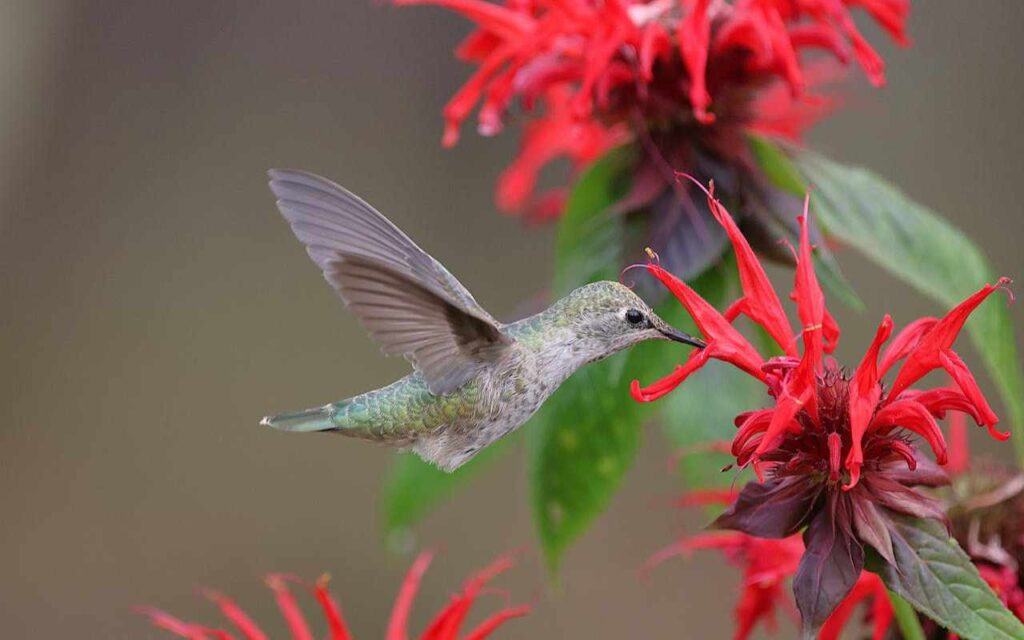
Hummingbirds are the acrobats of the garden. They’re on the hunt for high-octane nectar and love red, tubular flowers.
- Cardinal flower is an excellent choice, especially for damp areas.
- Bee balm is a hummingbird magnet (and bees and butterflies love it too).
- Trumpet vine is gorgeous, but be warned—it grows aggressively. Give it a trellis or fence, or it’ll try to take over your house.
Next, let’s feed the seed lovers.
- Sunflowers are a classic—one big head can feed goldfinches for weeks.
- Coneflowers bloom all summer, and their seed heads feed birds through winter.
- Black-eyed Susans often reseed themselves, keeping your garden lively year after year.
And we can’t forget the pollinators—the bees and butterflies that make it all possible.
- To help monarch butterflies, plant milkweed—it’s the only food their caterpillars can eat.
- Lavender attracts all kinds of bees.
- Butterfly bush isn’t native, but butterflies love it. Just make sure to pair it with native plants to balance the ecosystem.
A common mistake? Planting a garden that looks great in July—but only July.
To build a real habitat, think about providing food year-round. In early spring, crocuses and Virginia bluebells give bees their first nectar. In summer, bee balm and sunflowers take over. Come fall, goldenrod and asters fuel migrating monarchs and birds preparing for winter.
And when fall comes, resist the urge to “clean up.”
Those dried coneflower stalks are natural bird feeders, and hollow stems shelter native bees. A little mess means a healthy, living garden.
Now, remember—a true habitat is more than random flowers. Think in layers, just like a natural forest:
- Ground cover like wild strawberry for insects.
- Perennials like coneflowers for food.
- Shrubs like elderberry for berries and nesting.
- Small trees like dogwood for height and shelter.
This layering creates homes for all kinds of wildlife.
Here’s your quick habitat checklist:
- Add perches for birds to rest and watch for predators.
- Provide clean water (a simple birdbath works wonders).
- Keep a small brush pile for shelter.
- And skip the pesticides—they kill the insects birds need to feed their young.
If you only have a balcony, don’t worry. You can still do this on a smaller scale—use stacked pots instead of garden beds, trellises instead of trees. Every patch of habitat helps, especially in cities.
Feeling overwhelmed? Start small.
Just pick three to five native plants that fit your space. That’s it. It’s an easy first step that makes a big difference.
To recap the essentials:
- Mix flowers for nectar with plants for seeds.
- Add water and shelter.
- Prep your soil with compost.
- Water new plants well in their first year.
- And leave your garden a little messy in winter.
Do those things, and the wildlife will find you. Your backyard—no matter how big or small—can become a living, dynamic space that supports nature around you.
So really, the only question left is: Are you ready to start your own backyard wildlife show?
I used to think a flower was a flower, right? Turns out, I was dead wrong. Research from Oregon State University found that pollinators visit wild native plants about 37% more often than cultivated varieties, while cultivars only got preferential treatment 8% of the time. That’s a huge difference when you’re trying to support struggling bee populations.
Native plants for birds are essentially survival kits. They provide nectar-rich flowers for hummingbirds during migration, seed sources for finches and chickadees throughout winter, and most importantly, they support the insects that 96% of baby songbirds need to survive. Yeah, you read that right. Those cute little cardinals and finches you want in your yard? Their babies need bugs to eat, and bugs need native plants.
Here’s what makes native flowering plants so effective:
Nectar that actually matters. Native wildflowers and shrubs produce nectar with the right sugar concentration and nutritional profile that local pollinators have evolved to use. It’s like the difference between drinking actual orange juice versus that artificial orange drink, one has the nutrients you need, the other just tastes vaguely orange.
Seeds for songbirds. When you let those native perennials go to seed instead of deadheading everything, you’re providing essential winter food for finches, chickadees, and other backyard birds. I stopped cutting back my black-eyed Susans in fall, and suddenly goldfinches were everywhere in January. Who knew?
Host plants for caterpillars. This is the game-changer most people miss. According to the National Wildlife Federation, native oaks support 532 species of caterpillars, making them essential host plants for feeding baby birds. This is the game-changer most people miss. And that non-native butterfly bush everyone raves about? One species. Just one. Since caterpillars are the primary protein source for baby birds, planting native trees and shrubs isn’t just nice, it’s necessary.
Planting native flowering shrubs provides nectar for hummingbirds while simultaneously offering food for songbirds like cardinals and finches throughout multiple seasons. It’s wildlife gardening on easy mode.
Top Flowering Plants That Attract Birds
Okay, let’s get specific. You want names, you want details, you want to know exactly what to plant so you’re not wasting time and money on stuff that doesn’t work.
Hummingbird Favorites
Ever wondered why hummingbirds seem to hit certain flowers and completely ignore others? It’s all about that nectar-rich payoff and tubular flower shape that fits their specialized beaks.
Cardinal flower (Lobelia cardinalis) is basically hummingbird crack. Those intense red tubular blooms scream “NECTAR HERE!” in a frequency only hummingbirds seem to hear. According to research published in the American Journal of Botany, hummingbirds respond strongly to flowers that offer higher nectar volumes, and cardinal flower delivers. Plant these along a moist garden edge, and you’ll have ruby-throated hummingbirds visiting from July through September.
Bee balm (Monarda didyma) is my personal favorite because it’s beautiful, native, smells amazing, and hummingbirds absolutely mob it. The bright red or pink firework-shaped blooms contain nectar that hummingbirds can’t resist. Plus, bees and butterflies also love it, so you’re supporting multiple pollinator species with one plant. That’s efficient.
Trumpet vine (Campsis radicans) is for people who want drama. This vigorous climbing vine produces masses of orange-red trumpet-shaped flowers that hummingbirds will fight over. Fair warning: it’s aggressive and will take over if you let it, but if you’ve got a fence or arbor that needs covering, this is your plant. Just keep it contained unless you want your entire neighborhood covered in trumpet vine. Trust me on this 🙂
Want more ideas? Check out how to attract hummingbirds for detailed strategies and additional plant recommendations.
Flowers for Songbirds
Songbirds want seeds. Lots and lots of seeds. These birds that eat seeds will camp out in your garden all winter if you give them the right food sources.
Sunflowers (Helianthus annuus) are the obvious choice, but they’re obvious for a reason, they work. One massive sunflower head can feed dozens of goldfinches, chickadees, and other common backyard birds for weeks. I plant a whole row along my back fence every spring, and by September it’s basically a bird cafeteria. Just let them dry on the stalk instead of cutting them down for decoration.
Coneflowers (Echinacea purpurea) are native workhorses that bloom their heads off all summer, then produce seed heads that birds absolutely demolish in fall and winter. Goldfinches will hang upside down on these things, pulling out every single seed. It’s entertaining to watch and provides essential fat and protein when birds need it most for migration and winter survival.
Black-eyed Susans (Rudbeckia hirta) round out the bird-friendly seed trio. These cheerful yellow flowers bloom for months, attract native bees like crazy during summer, then provide seed for finches and sparrows through winter. They self-seed readily too, so plant them once and you’ll have them forever. For more tips on attracting specific species, visit how to attract finches to your yard.
Flowers That Attract Pollinators Too
The best bird-friendly plants do double duty, supporting both birds and the bees and butterflies that keep ecosystems functioning.
Butterfly bush (Buddleja davidii) is technically non-native, but I’m including it because butterflies go absolutely bonkers for it. Every butterfly species in your region will visit these nectar-rich flowers. However, pair it with native alternatives like…
Milkweed (Asclepias species) which is critical for monarch butterflies and also attracts hummingbirds. Monarch caterpillars can ONLY eat milkweed, so if you want monarchs, you need milkweed. Period. The flowers also produce copious nectar that supports dozens of native bee species. Research on swamp milkweed pollination found that large bees like bumblebees and carpenter bees are particularly effective pollinators, while smaller native bees also visit frequently for nectar, demonstrating how one native plant can support an entire pollinator community.
Lavender (Lavandula species) brings in honeybees, bumblebees, butterflies, and occasionally hummingbirds. It’s drought-tolerant once established, smells incredible, and you can harvest it for sachets or cooking. Plus it looks gorgeous planted en masse as edging along pathways. Learn more about creating pollinator-friendly spaces at bird-friendly garden design.
Seasonal Flowering Tips for Birds and Pollinators
Here’s something most people screw up: they plant everything that blooms in summer, then wonder why birds and pollinators aren’t around in spring or fall. You need continuous bloom across all seasons to support wildlife throughout their entire lifecycle.
Spring is when early-emerging native bees and migrating hummingbirds need fuel after a long winter or journey. Native wildflowers like crocus, Virginia bluebells, and wild columbine provide essential early nectar when little else is blooming. I can’t tell you how many times I’ve watched exhausted migrating warblers and hummingbirds hit my early spring flowers like they’ve found an oasis. Because they literally have.
Summer is peak activity season. Bee balm, sunflowers, coneflowers, and zinnias should be pumping out blooms and nectar constantly. This is when parent birds are feeding nestlings, bees are stocking their hives, and butterflies are laying eggs. The more flowering diversity you have, the more species you’ll support. Mix perennials with nectar-rich shrubs to provide continuous food sources.
Fall is critically underrated for birds and pollinators. Species like goldenrod and asters provide late-season nectar for monarchs heading to Mexico and energy for birds preparing to migrate or overwinter. Goldenrod gets a bad rap for causing allergies (it doesn’t, that’s ragweed), but it’s actually one of the most important native pollinator plants you can grow. I leave all my asters and goldenrod standing through winter because the seed heads feed birds when food is scarce. For fall-specific guidance, check out birds to attract in fall.
Winter maintenance matters too. Resist the urge to cut everything down for a tidy garden. Those dried flower stalks and seed heads are winter survival for birds, and the hollow stems provide overwintering habitat for native bees. Looking messy is actually a badge of honor in wildlife gardening.
Creating a Bird-and Pollinator-Friendly Garden Layout
Random planting is fine if you just want some pretty flowers, but strategic layering is what transforms your yard into actual wildlife habitat. Think of it like building a house, you need different levels and rooms for different activities.
Groundcover layer: Start with low-growing native plants like wild strawberry, creeping phlox, or Pennsylvania sedge. These provide ground-nesting habitat for bees and shelter for beneficial insects. They also prevent erosion and suppress weeds without chemicals.
Perennial layer: This is your workhorse level with all those flowering perennials we’ve discussed, coneflowers, black-eyed Susans, bee balm, and asters. Group them in drifts of at least three to five plants of each species. Pollinators forage more efficiently when they can visit multiple flowers of the same species without flying across your entire yard.
Shrub layer: Native flowering shrubs like ninebark, serviceberry, and elderberry provide structure, nesting sites for birds, and additional flowers and berries. These are absolutely essential for creating proper habitat-friendly gardening spaces. Shrubs also give birds escape cover from predators and shelter during storms.
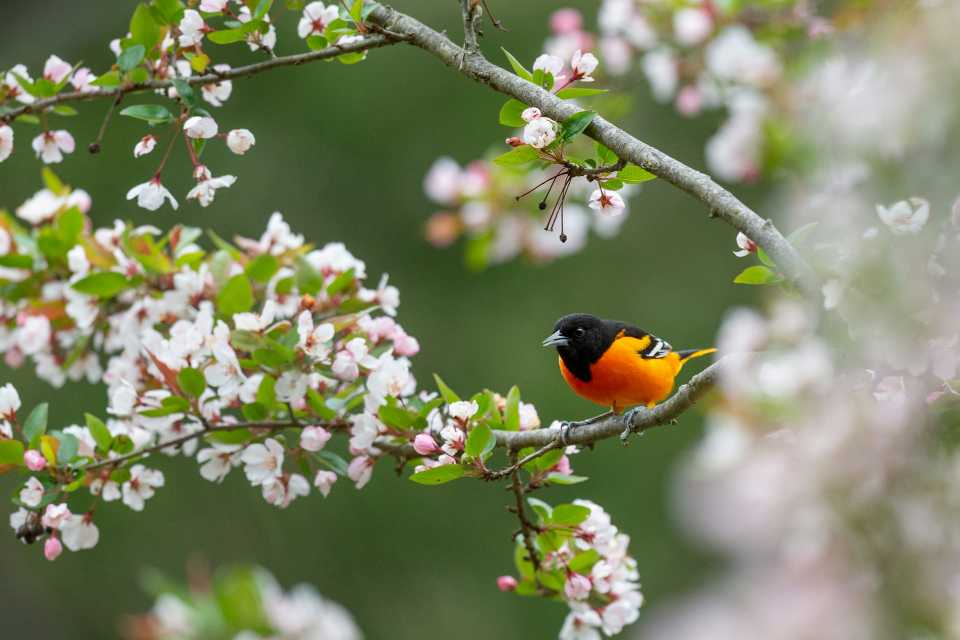
Small tree layer: Even compact yards can accommodate small native trees like dogwood, hawthorn, or crabapple. Trees provide the highest level of caterpillar production, offer nesting sites, and extend your garden’s vertical diversity.
Don’t forget to include perches (dead branches are perfect), birdbaths for drinking and bathing, and leave some brush piles for nesting areas. Mix flowering perennials with nectar-rich shrubs to provide continuous food for birds and pollinators throughout the season. Water is especially critical, I’ve found that my simple birdbath with a solar fountain gets more bird traffic than all my feeders combined.
Tips for Planting and Caring for Flowers
Look, you can have the perfect plant list and still fail if you don’t get the basics right. Here’s what actually matters:
Soil preparation is where most people skimp, and they pay for it later. Native plants aren’t necessarily “low maintenance” in crappy soil. Work in compost, make sure drainage is adequate, and match plants to your existing soil type rather than trying to completely amend everything. Some native plants prefer lean soil, others want rich loam. Do your homework before you plant.
Watering needs vary dramatically. Establish watering schedules based on your specific plants and regional climate. Most natives need consistent moisture the first year while establishing roots, then they’re pretty drought-tolerant. But that first year matters. I lost an entire bed of expensive native perennials by assuming “drought-tolerant” meant “I can ignore them completely.” Wrong.
Sun and shade placement is crucial. Pay attention to those plant tags. Putting a sun-loving coneflower in shade results in a sad, floppy coneflower that doesn’t bloom. Placing a woodland native like wild ginger in full sun kills it. It’s not complicated, but you have to actually match the plant to the location. The Xerces Society offers regional plant lists that specify light requirements for hundreds of native species.
Companion planting for birds and pollinators means grouping plants with similar needs together and creating diverse polycultures rather than monocultures. Plant spring, summer, and fall bloomers together so something is always flowering. Mix deep-rooted perennials with shallow-rooted annuals. This is sustainable gardening that mimics natural ecosystems.
Low-maintenance garden suggestions: Once established, native gardens require way less work than traditional landscapes. You’re not constantly fighting nature, you’re working with it. Skip the pesticides entirely because they kill the beneficial insects you’re trying to attract. According to Ohio State Extension, integrated pest management approaches protect pollinators while effectively managing actual pests. Hand-pull aggressive weeds, mulch properly, and let the system stabilize. Your garden might look a little wild, but that’s kind of the point.
Bonus: Small Yard or Apartment-Friendly Plants
You don’t need five acres to support birds and pollinators. Even a tiny balcony can make a difference, especially in urban areas where wildlife resources are scarce.
Container planting works surprisingly well for many bird-friendly plants. I’ve successfully grown trumpet vine, bee balm, and lavender in large pots on a small patio. Use containers at least 12-16 inches deep, plant in quality potting mix, and water more frequently than in-ground plants need. The key is choosing compact varieties specifically bred for containers.
Balcony-friendly flowers that attract hummingbirds and butterflies include salvias, fuchsias, and container-appropriate native perennials like smaller coreopsis varieties. Even a window box with herbs like oregano and thyme provides pollen and nectar for urban backyard bird plants when allowed to flower. According to Mississippi State Extension, even small patches of pollinator plants matter significantly in urban landscapes where natural habitat is fragmented.
Small yard birds appreciate vertical space as much as horizontal. Use trellises for vining plants like native honeysuckle or clematis. Stack containers at different heights to create layered habitat. Hang multiple hummingbird feeders among your flowering plants (and actually maintain them, filthy feeders spread disease). For specific guidance, see how to attract birds without a feeder.
Every yard and space matters in urban and suburban landscapes where natural habitat has been fragmented. Your small garden might be the only place pollinators can find food between larger natural areas. Penn State’s Center for Pollinator Research emphasizes that even small-scale efforts contribute meaningfully to regional pollinator conservation. Don’t underestimate your contribution.
Conclusion
Here’s what it comes down to: planting flowers that attract birds and pollinators isn’t just about making your yard look pretty, it’s about biodiversity, supporting ecosystems, and giving wildlife a fighting chance in increasingly developed landscapes.
Want to know what I wish someone had told me when I started? Start small and specific. Don’t try to overhaul your entire yard at once. Pick three to five native flowering plants suited to your region and growing conditions, plant them properly, and maintain them through that critical first year. Once you see hummingbirds fighting over your bee balm and goldfinches demolishing your coneflower seeds, you’ll be hooked. Then expand from there.
Mix native plants with nectar-rich flowers and seed-bearing perennials to support birds and pollinators from spring through fall. Layer your plantings from groundcovers through small trees. Provide water and shelter. Skip the pesticides. Leave the garden a little messy in winter. These aren’t complicated requirements, they’re just different from conventional gardening wisdom that Plant Virginia Natives and other conservation organizations are working hard to promote.
The birds and pollinators will show up. I promise. Last summer, I counted eight different butterfly species, four hummingbirds simultaneously visiting flowers (which resulted in impressive aerial combat), and more finches and chickadees than I could track. This happened because I planted the right native stuff and got out of the way.
Start with 3-5 native flowering plants this season and watch your backyard come alive with birds and pollinators! Seriously, just try it. You can thank me later when you’re watching the show from your window with coffee in hand.
For continued learning and more bird-attracting strategies, explore the complete backyard birding guide which covers everything from feeders to natural landscaping approaches.