
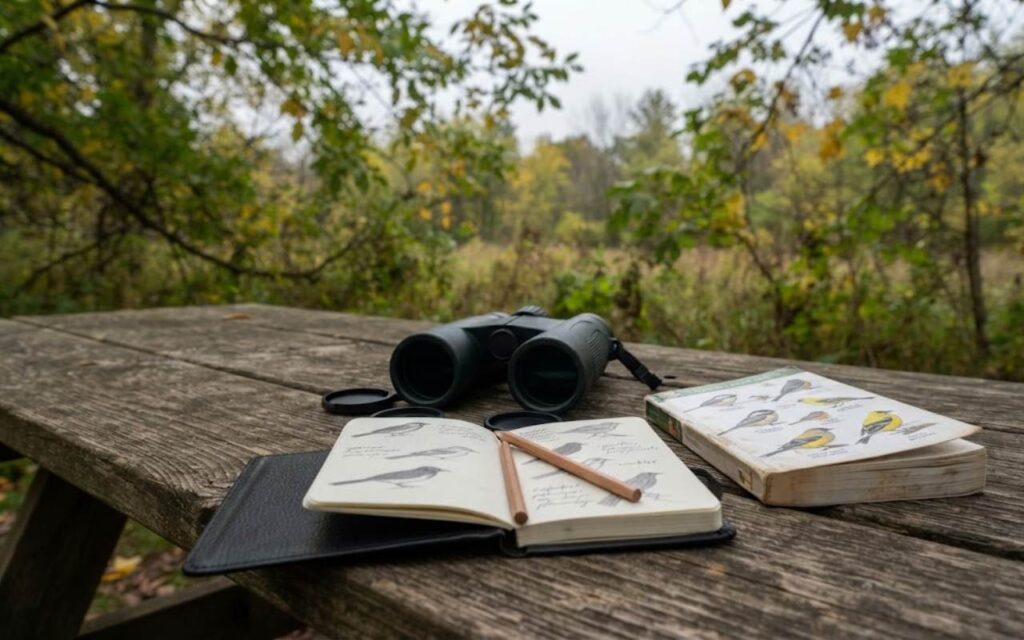
Starting out with an actionable bird watching guide means skipping generic gear lists and looking closely at how wild birds actually behave in your specific yard or local park. Most newcomers purchase expensive equipment they rarely use or install bird feeders that unintentionally turn into high-risk collision zones.
Real progress in this hobby comes down to calibrating your vision, dialing in practical optical mechanics, and setting up feeding stations that protect native species from domestic predators and fungal outbreaks. Field success depends far more on patience and habit tracking than on high-end optics.
Quick-Glance Field Summary
Accurate bird identification combines deliberate glass calibration with yard placement strategies that minimize strike injuries and contamination. You can resolve most field identification errors and feeder problems by locking in baseline hardware specs before purchasing specialized add-ons.
- Binocular spec for general field birding: 8×42 roof prism with twist-up eyecups
- Window strike safety spacing: less than 3 feet or beyond 30 feet from glass
- Winter hummingbird emergency nectar ratio: 3 parts water to 1 part plain white sucrose
- Standard feeder disinfection soak: 1 part household bleach to 9 parts cool water
- Feeder cage wire spacing to exclude squirrels and starlings: 0.25-inch to 1.5-inch hardware cloth
How to Focus and Adjust Your Binoculars Correctly
Most beginning birders struggle to spot birds in dense brush because their center focus wheel and independent right-eye diopter ring are completely misaligned. Community members on r/birdwatching frequently describe this frustrating blur, where users assume their optics are defective when the diopter simply was not calibrated to their eyes.
To set your optics, close your right eye and turn the center focus wheel until a distant, stationary branch appears razor-sharp through the left barrel. Next, close your left eye and rotate only the independent right diopter ring until that exact same object snaps into crisp focus.
- Stand twenty feet away from a high-contrast target like tree bark or a sign
- Adjust the central hinge until the two optical circles merge into one solid image
- Set the left barrel focus first using only the center focus knob
- Lock in the right barrel clarity using solely the right diopter adjustment ring
Once set, leave the diopter locked and use only the center wheel for varying field distances. If you wear eyeglasses, keep the rubber eyecups twisted fully down against the housing to preserve the field of view; twist them fully outward if you bird without corrective lenses.
| Essential Starter Gear | Technical Specification Baseline | Field Observation Benefit | Beginner Field Selection Key |
|---|---|---|---|
| Entry-Level Binoculars | 8×42 Magnification and Objective Lens setup. | Provides an exceptionally wide field of view and superior low-light tracking. | Avoid 10x or 12x glass early on; higher magnifications magnify hand-shake jitters. |
| Compact Field Notebook | Pocket-sized, completely waterproof grid paper. | Allows rapid, manual sketching of raw wing bars, tail proportions, and beak shapes. | Write down visual traits immediately before looking at reference books. |
Setting Up Your Feeders Safely to Avoid Window Collisions
Where you hang a feeder determines whether birds feed comfortably or suffer fatal blunt-force trauma against your home windows. The American Bird Conservancy and Audubon identify clear collision danger zones based on flight acceleration distances.
Hang your feeding equipment either closer than 3 feet to the exterior glass surface or farther out than 30 feet. Feeders placed within 3 feet prevent birds from building up enough momentum to sustain lethal injuries if startled, while distances beyond 30 feet give birds ample airspace to spot reflections and bank away safely.
- Place hanging stations within 36 inches of window panes to neutralize strike velocity
- Move distant ground stations past 30 feet away from exterior reflective surfaces
- Affix vertical external strike decals spaced no wider than two inches apart
- Install external 18-inch polycarbonate weather domes over seed trays to block rain
Forum contributors on r/backyardbirds often note that moving window-mounted suction cup feeders directly onto the pane instantly dropped their yard’s strike rate to zero. Pair these tight-distance feeders with external ultraviolet pattern decals or closely spaced paracord curtains to break up deceptive sky reflections.
Choosing the Right Seed and Keeping Feeders Clean
Cheaper grocery store seed blends rely on heavy fillers like red milo, oats, and cracked corn that local backyard birds toss straight onto the ground. This discarded filler accumulates quickly, rotting in wet soil and attracting rodents while creating breeding grounds for deadly fungal strains.
Damp, decaying seed hosts Aspergillus flavus, a mold that generates lethal aflatoxins capable of causing acute liver failure across entire finch flocks. Keep your seed offering dense and nutritious by selecting targeted seeds that match the beak anatomy of native species.
- Black oil sunflower seed delivers dense lipids and thin shells for chickadees and cardinals
- Safflower seed features a bitter taste that repels nuisance common grackles and squirrels
- Nyjer thistle provides tiny, high-protein grains tailored for native goldfinch bills
- Plain white granulated sugar dissolved in clean tap water fuels migratory hummingbirds
Upgrading your backyard yard footprint with these high-quality stations gives you the ideal baseline to practice tracking local plumage variations right from your window. If you are looking to take your starter skills into the field during April or May, check out our dedicated guide to Essential Spring Birdwatching Tips for Beginners to learn exactly how to map out early morning migration routes.
Clean your seed ports every two weeks using a 1:9 household bleach-to-water dilution bath. Submerge all ports and perches for ten minutes before rinsing them thoroughly with cold water. Never clean clear polycarbonate plastic tubes with boiling water, as intense thermal shock degrades the polymer and causes stress cracks along the seams.
Feeding Hummingbirds Safely Through Freezing Weather
Cold snaps create major challenges for non-migratory or late-lingering hummingbird populations in northern and coastal zones. Hummingbird tongues rely on rapid capillary action and flexible fluid trapping along microscopic grooves, meaning partially frozen or thickened nectar can starve a bird in torpor.
A standard warm-weather nectar mixture uses a 4:1 water-to-sugar ratio, which begins freezing and turning to slush at roughly 27 degrees Fahrenheit. While a richer 3:1 ratio lowers the freezing threshold down between 22 and 25 degrees Fahrenheit, modifying the solution introduces severe hydration risks.
As ice slush forms in a concentrated mix, the remaining unfrozen liquid becomes an overly dense syrup that can cause severe organ strain and dehydration if birds cannot find fresh open water. Leading wildlife authorities advise that you protect the feeder rather than changing the recipe.
According to the comprehensive Pop’s Birding Winter Care Guide, the safest protocol is maintaining a stable 4:1 ratio year-round and relying entirely on external heat to keep the liquid flowing safely.
- Use plain, dry white cane sugar rather than raw, turbid, or brown sugars
- Avoid commercial red dye concentrates that risk avian renal strain
- Wrap the feeder reservoir in outdoor-rated, incandescent holiday lighting strands for warmth
- Never add glycerin or oils, which mat wing feathers and cause fatal hypothermia
Community members on specialty wild bird forums repeatedly warn against adding any commercial anti-freeze additives or unrefined sugars into nectar ports. Unrefined sugars carry trace iron that builds up toxic levels in hummingbird organs, while souring syrups quickly harbor Candida albicans, a yeast infection that causes fatal tongue swelling.
Finding and Tracking Elusive Species in the Field
Locating skittish field birds requires sound identification skills and an awareness of natural cover. Veteran birders rarely track moving branches directly; instead, they lock their eyes on the open airspace immediately adjacent to dense foliage and wait for silhouette breaks.
Listen for sharp alarm calls, scolding vocalizations, and contact chips long before expecting a visual sighting. Birds moving through canopy gaps often travel in mixed-species foraging flocks during spring and fall migrations, led by energetic chickadees or titmice.
- Scan mid-canopy perches along structural edges where fields intersect dense forest
- Track rising raptors by watching for sudden distress flushes among ground sparrows
- Study tail-pumping movements and wing-bar patterns to separate confusing flycatchers
- Keep the sun directly at your back so light illuminates breast and eye plumage
When you spot a bird, resist the urge to drop your eyes down to flip through an identification app immediately. Keep your binoculars glued to the animal to note distinct physical markers like bill curvature, leg coloration, eye rings, and behavior before checking your field reference.
Mastering the Basics of Backyard Birding
Success in bird watching does not require an investment in top-tier commercial optics or complex automated gear setups. True skill is built on consistent habit tracking, understanding the native flora that provides natural canopy cover, and maintaining an unyielding commitment to avian safety.
By calibrating your hardware to your eyes and managing your feeding stations to limit structural impacts and disease outbreaks, you create a thriving sanctuary for local wildlife while elevating your own field observation skills.
Final Field Checklist for Beginners
- Verify Alignment: Set your center focus wheel for your left eye first before adjusting the independent right diopter ring.
- Measure Window Clearance: Ensure all yard feeding stations sit strictly under 3 feet or well beyond 30 feet from glass panes.
- Sanitize Regularly: Submerge seed ports and trays in a 1:9 bleach solution every two weeks to neutralize mold toxins.
- Keep Nectar Constant: Protect winter hummers by sticking to a 4:1 sugar ratio combined with a reliable external heat source.
- Observe Before Clicking: Keep your binoculars locked on an elusive bird to note structural markings before opening an identification app.