
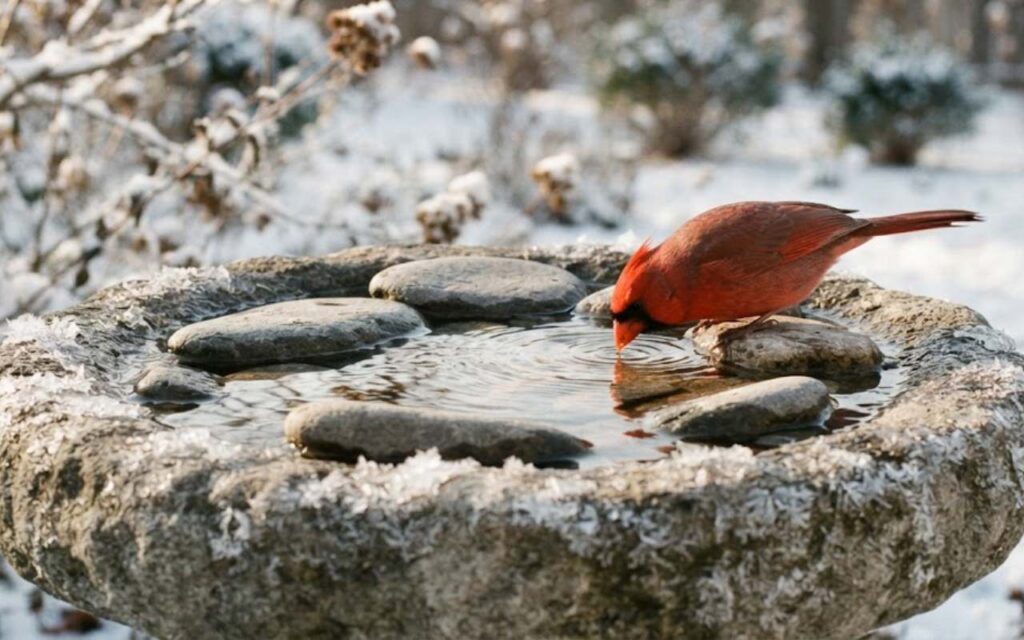
Knowing how to winterize a bird bath keeps local birds alive when backyard puddles and creeks completely freeze over. When temperatures drop below freezing, wild birds have to waste precious body heat melting snow inside their bodies, which makes finding open water a massive help for them.
Prepping your setup ahead of time also protects your gear from cracking and prevents birds from getting their feathers waterlogged in sub-zero weather. With a couple of quick hardware changes, you can keep a clean, safe water source running all winter without spiking your electric bill.
Quick-Glance Field Summary
Winter bird bath maintenance relies on controlled thermostatic heating, shallow water depth, and weatherized electrical connections to prevent freezing without encouraging dangerous deep-water plumage soaking. Follow these baseline hardware and chemical safety thresholds during your late-autumn yard setup:
- Water depth limit: 0.5 inches to 1.5 inches maximum to prevent full plumage immersion
- De-icer heater rating: 50 to 150 watts with integrated automatic shutoff thermostats
- Electrical safety standard: Class A GFCI-protected exterior receptacle with an IP44 or higher water-resistant cord box
- Electrical cord configuration: Drip loop formed below receptacle height to shed melted snow run-off
- Anti-freezing additives: Strictly zero chemical additives, salts, alcohols, or glycerin
- Safe basin substrates: UV-stabilized heavy polyethylene, polypropylene, or stamped aluminum
- Sanitation soak dilution: 1 part household bleach to 9 parts water, followed by a total cold water rinse
Choosing the Right Material to Prevent Cracking
Standard concrete, ceramic, and terra-cotta bird baths frequently fail during hard freezes because micro-fissures absorb water that expands by roughly nine percent as it turns to ice. In community forums like r/backyardbirds, experienced backyard keepers regularly share photos of fractured pedestal bowls caused by leaving heavy concrete or glazed earthenware active past the first hard frost. To protect delicate stone or concrete fixtures, drain them thoroughly, dry them completely, and store them indoors or cover them with an inverted heavy-duty plastic tote for the winter season.
Polyethylene resin, high-density plastics, and marine-grade spun aluminum basins easily flex under the physical expansion of freezing ice without rupturing. If you maintain a year-round setup, transition to an integrated heated plastic basin or a durable deck-mounted utility tub before ambient temperatures dip below 32 degrees Fahrenheit. Unheated stone basins left exposed to rapid freeze-thaw cycles deteriorate through surface flaking and structural splitting within a few seasons.
When mounting alternative winter water vessels, secure them directly to deck rails or stable ground blocks to resist sudden displacement from gusty winter winds. Avoid lightweight, unweighted plastic trays that can flip over when birds perch along the icy rims. Adding clean river stones to the center provides essential ballast while stabilizing the basin against winter weather.
Setting Up Your Heater Safely Without Tripping Breakers
The most common point of frustration reported across wildlife forums is the sudden tripping of Ground Fault Circuit Interrupter (GFCI) outlets during winter storms. Melting snow and freezing drizzle easily track along electrical cords, penetrating standard plug couplings and shutting down power to the heating element. To prevent phantom outages, encase all exterior extension cord junctions inside an IP-rated water-resistant safety gasket box, keeping the enclosure elevated off the damp ground.
Selecting the correct heating hardware depends on the capacity of your basin and the severity of local winter conditions. Submersible de-icers should feature internal thermostatic controls that cycle power on only when water temperatures approach 35 degrees Fahrenheit, preventing unnecessary electricity use. Foil-faced cast-aluminum de-icers outperform exposed glass tube aquarium heaters, which shatter under rapid temperature drops or when run dry.
- Shallow basins under 2 gallons: 40 to 50 watts provide sufficient freeze prevention down to 10 degrees Fahrenheit
- Broad basins exceeding 2 gallons: 75 to 150 watts offer dependable open water in sub-zero climates
- Power supply connection: Heavy-duty 14-gauge outdoor-rated extension cord with integrated ground pin
- Moisture diversion layout: Downward-hanging drip loop installed immediately below the outdoor socket
Thread the power cord cleanly away from the path of regular foot traffic and rodent tunnels, as squirrels and mice frequently chew insulated electrical cables during harsh winter weather. Inspect the cord jacket regularly for cracked insulation or exposed copper wiring before activating the circuit. Unplug the entire assembly immediately if the heater housing shows any signs of pitting, mineral warping, or casing breach.
Electrical Safety Hazard
Always plug your bird bath de-icer directly into a GFCI (Ground Fault Circuit Interrupter) outlet to prevent dangerous electrical ground faults in wet winter soil. Never utilize standard indoor-rated extension cords; only heavy-duty, outdoor-stamped cords should be deployed to mitigate fire hazards and voltage drops.
Keeping Water Shallow to Protect Freezing Birds
A critical topic raised in ornithological forums is the risk of small songbirds bathing during sub-freezing temperatures. Feathers insulated with trapped air lose their thermal resistance when saturated with water, causing rapid body heat loss that can lead to fatal hypothermia within minutes. Wild birds require winter water strictly for drinking and minor bill grooming, not deep-plunge bathing.
Keep winter water levels shallow by adding smooth river stones, clean bricks, or rough concrete pavers directly into the basin. These additions elevate the walking plane, ensuring the liquid water measures between 0.5 and 1.25 inches deep across the entire surface. This water height allows birds to access liquid hydration without wetting their flight feathers or downy breast plumage.
Never add chemical anti-freeze substitutes, salts, or glycerin to winter bird baths under any circumstances. While home hobbyists occasionally suggest glycerin to depress the freezing point of water, wildlife rehabilitators warn that it wrecks the microscopic barbules of bird feathers. Once coated in oily glycerin, feathers mat together permanently, stripping birds of their ability to retain body heat in freezing air.
Critical Avian Safety Note
Desperate birds will attempt to bathe in open water even during deep freezes. To prevent feathers from soaking and causing fatal hypothermia, place several large, flat river rocks into the basin. This restricts the depth, allowing birds to drink safely from the dry edges without fully submerging their plumage.
Protecting the Water from Wind and Creeping Ice
Heated winter bird baths evaporate water far faster than cold summer baths because of the sharp vapor-pressure difference between warmed water and dry winter air. Users on r/birdwatching frequently note that shallow heated baths can run completely dry in under 48 hours, threatening to burn out internal heating coils. Position your bird bath in an area shielded from prevailing northwest winds, such as the leeward side of an evergreen hedge or garden fence.
Wind shelters cut down on rapid evaporative loss while giving birds a sheltered microclimate to drink safely without battling heavy crosswinds. However, do not position the bath directly beneath dense overhead brush where feral cats or ambush predators can hide unnoticed. Keep brush cover roughly six to ten feet away, giving songbirds enough clearance to spot predators while keeping escape perches within easy reach.
- Wind abatement barrier: Cedar fence line, dense rhododendron hedge, or decorative reed screen placed windward
- Safe distance to brush cover: 6 to 10 feet from predator concealment zones to allow clear sightlines
- Water depth monitoring: Daily visual level checks to prevent thermal burnout of dry de-icing elements
- Safe surface grip: Textured stone perches extending above the water surface to keep avian feet dry
In persistent sub-zero weather, ice often forms along the outer perimeter of the bath, gradually creeping inward toward the heated center. Clear this perimeter ice shelf during routine yard maintenance so it does not reduce the usable surface area. Avoid striking the frozen basin with heavy metal tools or hammers, which can crack plastic shells or damage internal heating circuits.
Keeping the Water Clean and Removing Hard Water Build-Up
Winter bird baths often attract high concentrations of birds from miles around, increasing the risk of passing communicable avian diseases. Stagnant winter water can harbor Salmonella species or fungal spores like Aspergillus fumigatus, both of which thrive when organic matter accumulates in heated water. Clean the bath weekly by scrubbing the basin surface thoroughly using a firm nylon bristle brush to dislodge algae and biological slime.
For routine weekly cleaning, the National Audubon Society recommends avoiding harsh chemicals and instead scrubbing the basin with a gentle, wildlife-safe solution of one part distilled white vinegar to nine parts clean water. For severe deep-cleaning or confirmed disease outbreaks, opt for a stronger sanitation soak of one part chlorine bleach to nine parts water, allowing the mixture to sit for roughly ten minutes before scrubbing.
Whichever solution you choose, empty it safely away from garden soil and rinse the basin thoroughly with fresh cold water until no chemical or vinegar scent remains. Never pour boiling water onto cold plastic, acrylic, or stone baths, as the extreme thermal shock can warp plastic housings or fracture structural bases.
Hard tap water causes white calcium and magnesium scale to quickly form around the warm heating elements. Remove mineral crusts by soaking the unplugged de-icer in undiluted household white vinegar for thirty minutes to dissolve chalky deposits. Keeping heating elements free of scale build-up ensures proper heat transfer, stabilizes water temperatures, and extends the working life of your winter equipment.