
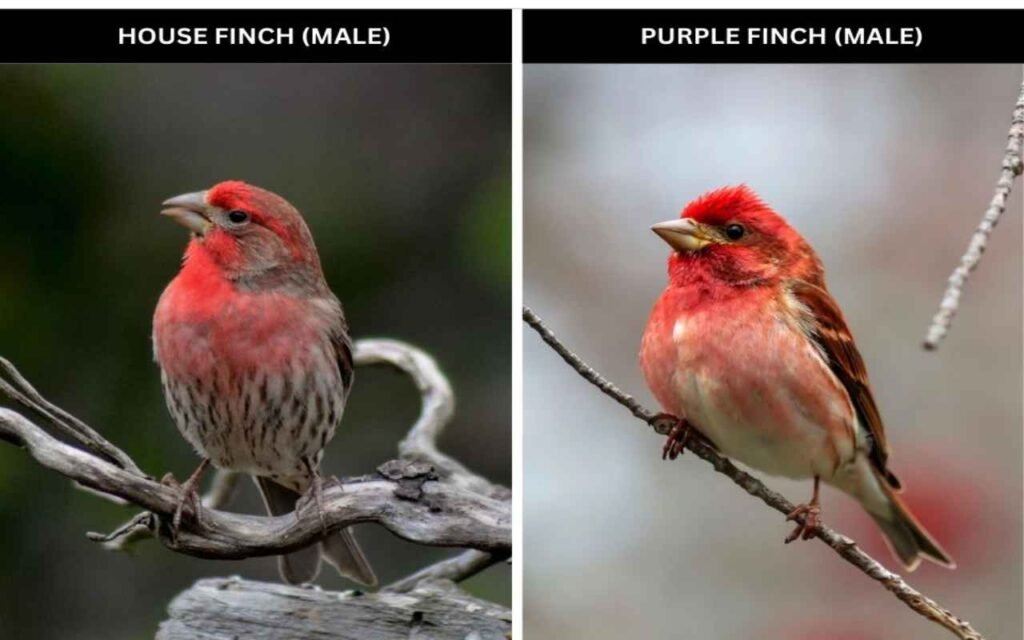
So, you’ve spotted a little red bird flitting around your backyard feeder and thought, “Sweet, a finch!” 😅 But then it hits you, wait, is this a House Finch or a Purple Finch? Don’t worry, you’re not alone. These two look deceptively similar, and even seasoned birders can mix them up sometimes.
I’ve spent countless mornings squinting at backyard visitors, trying to figure out who’s who, so let’s break it down together. By the end of this guide, you’ll be confidently calling out your finches without hesitation.
- Male House Finch: orange-red, patchy; Male Purple Finch: deep raspberry, uniform.
- Female House Finch: lighter brown streaks; Female Purple Finch: heavier, robust streaks.
- House Finch beak: short and pointy; Purple Finch beak: slightly broader at base.
- House Finch song: cheerful, repetitive; Purple Finch song: richer, melodic.
- House Finch habitat: urban, suburban; Purple Finch: forests, wooded areas.
- Feeding: House likes sunflower/nyjer seeds; Purple likes buds, berries, forest seeds.
- Red finch in city? Usually a House Finch.
- Plumage may fade in late summer; check seasonal changes.
- Key ID tips: look at streaks, beak shape, song, and behavior.
- Both species are common visitors at backyard feeders.
Understanding the Basics: House Finch vs Purple Finch
Show Transcript
0:00
All right, picture this. You see a flash of red at your bird feeders. You grab your binoculars and you think, “Is that a House Finch? Or wait, could it be a Purple Finch?” They look so much alike. It can be really frustrating. But don’t worry, because by the end of this, you’ll be telling these two apart like it’s second nature.
0:19
This is probably one of the most common mix-ups for anyone who loves watching backyard birds. You think you’ve got it figured out, you snap a photo, and then that little seed of doubt creeps in. It’s a classic case of mistaken identity, but we’re going to clear it up today.
0:36
So that really is the big question, isn’t it? When you see that little red bird flitting around, which one is it? Let’s break this mystery down piece by piece.
0:46
Let’s properly introduce our two contenders. On the surface, they’re both small, streaky, reddish birds — but their lifestyles are actually pretty different. And that right there is our first clue.
1:00
Clue number one is all about location. Think of the House Finch as the city bird. They’re totally at home in suburbs and backyards, and they love feeders. Purple Finches, though, are more reclusive. They prefer forests and deep woods. When they show up at a feeder, it’s more of a shy, special visit.
1:26
Now we get to the big one: the color. For the males, the exact shade and pattern of red tells you almost everything. And here’s an easy fruit analogy to remember it.
1:39
First up, the male House Finch. Think strawberry red. Sometimes a little orangish. And watch how the color looks — it’s not solid. It’s a wash of color, mainly on the head and chest, and it often looks patchy.
1:57
Now the male Purple Finch. Totally different story. This isn’t strawberry tint. This is raspberry jam. The color is deeper, richer, more wine-red, and it covers way more of the bird — all over the head and running down the back. It’s much more saturated and uniform.
2:19
While you’re looking at the color, look at the belly. A House Finch has blurry brown streaks down the sides. A Purple Finch has a much cleaner belly, almost bright white, with very light streaking. The takeaway: always check the belly.
2:38
Now, the females. This is where things get tough, even for experienced birders. They’re both brown and streaky, right? Not quite — you just have to know where to look.
2:55
For females, it’s all about the face. The female House Finch has a pretty plain face and blurry streaks. The female Purple Finch has a much more striking pattern — a bold white eyebrow stripe and a dark cheek patch. Her streaking is sharper and more defined.
3:16
Still not 100% sure after checking the colors and patterns? No problem — we’ve got a few more clues.
3:30
Take a close look at the beaks. It’s subtle but consistent. The House Finch has a slightly curved, more delicate beak. The Purple Finch has a chunkier beak with a broader base. Once you notice it, you can’t unsee it.
3:51
And don’t forget to use your ears. Their songs are totally different. The House Finch sings a long, jumbled, high-pitched song — energetic and cheerful. The Purple Finch sings a rich, beautiful warbling melody that flows like a flute.
4:10
Okay, we’ve covered color, streaks, beaks, habitat, and even their songs. Let’s pull it all together into a simple cheat sheet for your next finch mystery.
4:24
Here it is:
- Male color: strawberry vs. raspberry
- Female face: plain vs. bold pattern
- Beak: narrower vs. chunkier
- Habitat: city vs. forest
- Feeder use: frequent guest vs. occasional visitor
Screenshot it — it’ll help.
4:55
And listen, everyone gets this wrong sometimes. I’ve been convinced I had a Purple Finch, only to zoom in later and realize it was just a House Finch in weird lighting. It happens. It’s part of learning.
5:12
The trick is to get in the habit of checking more than one clue. Don’t rely on color alone. Look at the face. Look at the beak. Think about where you are. After a while, the differences will jump out at you.
5:27
Now you’re fully equipped to solve the great finch mystery at your feeder. And it makes you wonder — what other backyard mysteries are waiting to be solved next?
Before we get into the nitty-gritty of plumage and song, let’s set the stage. House Finches and Purple Finches both belong to the finch family, but they have subtle differences that matter if you want to ID them correctly.
- House Finch (Haemorhous mexicanus): Originally from the western U.S., these birds have spread coast-to-coast thanks to human activity. They love feeders and urban areas.
- Purple Finch (Haemorhous purpureus): Native to the eastern and northern U.S., these guys prefer forests and wooded areas. They’re a little shyer at feeders.
FYI, this guide will focus mostly on male finches because females are… well, let’s just say “less flashy,” and you’ll still need to recognize them. 🙂
Plumage Differences: The First Clue
Honestly, this is where most people trip up. Both birds show some red, but the shades and patterns are key.
Male House Finch
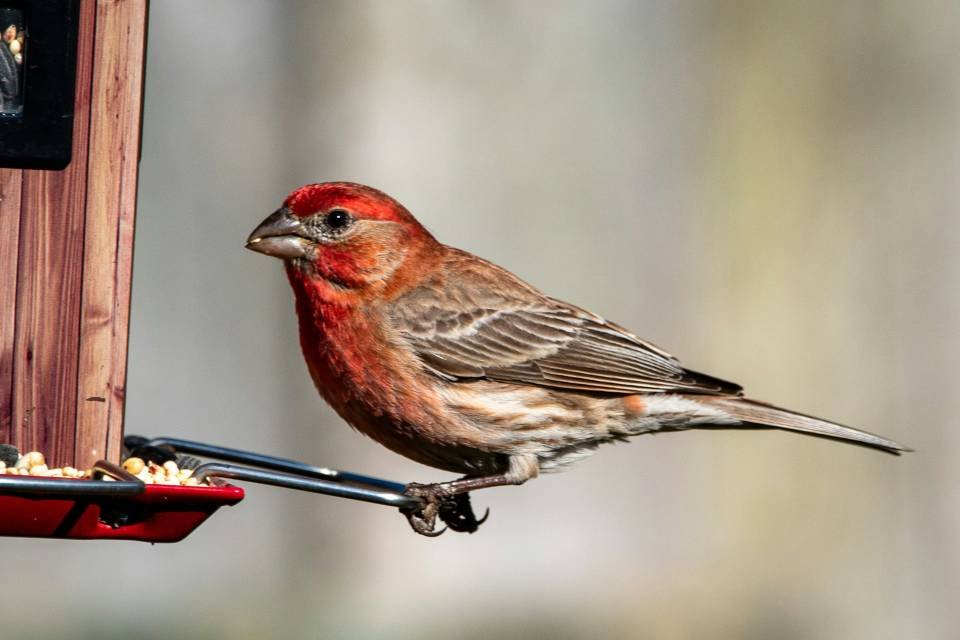
- Red coloring mostly on the head, chest, and sometimes up to the back.
- The red is usually orange-ish or strawberry-toned, not a true deep red.
- Brown streaks cover the belly and sides, making them look a bit scruffy at times.
Male Purple Finch
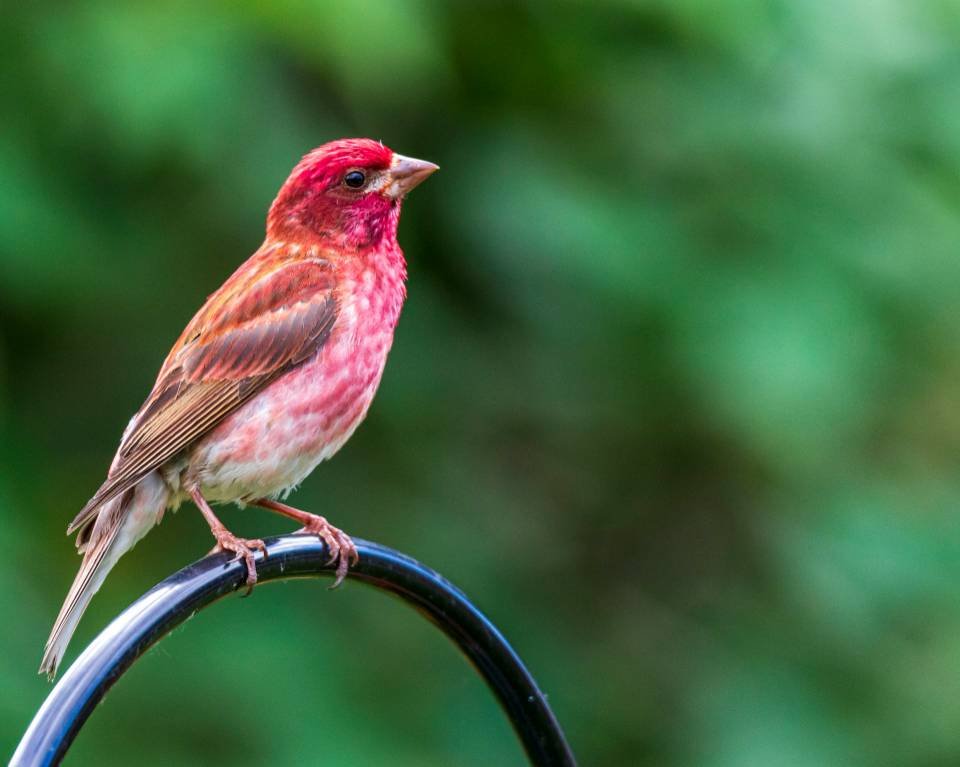
- Rich raspberry-red that covers the head, chest, and back more uniformly.
- The red is deeper and less patchy than House Finch.
- The sides are streaked, but the belly is usually cleaner than the House Finch’s.
Pro tip: If the red looks like it could double as raspberry jam, you’re probably looking at a Purple Finch. House Finch red is more like a soft peachy stain.
Female Finches: Don’t Ignore the Browns
Now, females might make you question your bird ID skills. They don’t have the showy reds, but there are differences:
Female House Finch
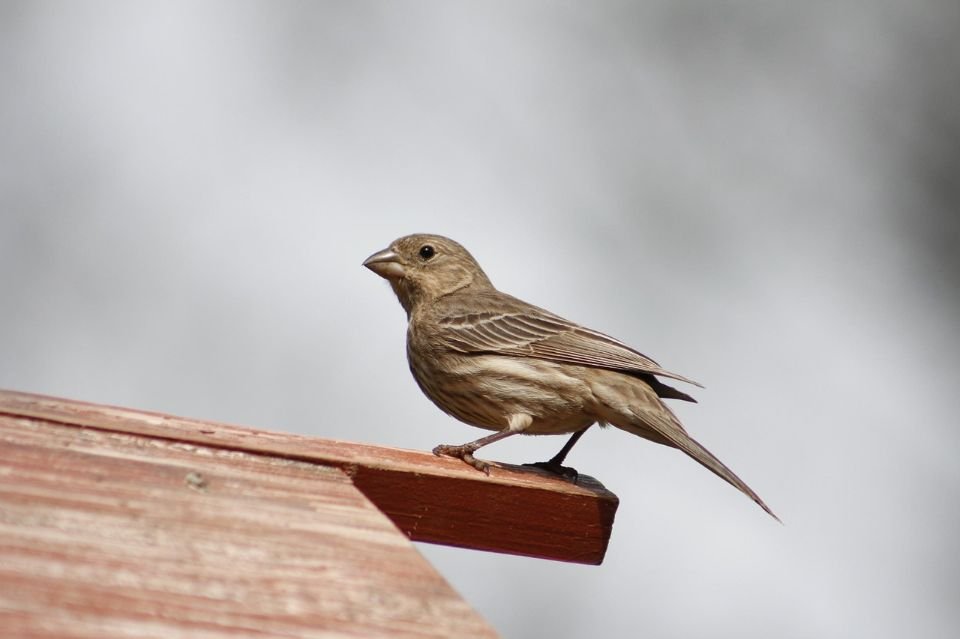
- Brown streaks cover the body.
- Face and chest are dull with a slight pale eyebrow.
- Overall, they’re more delicate-looking and less heavily streaked than female Purple Finches.
Female Purple Finch
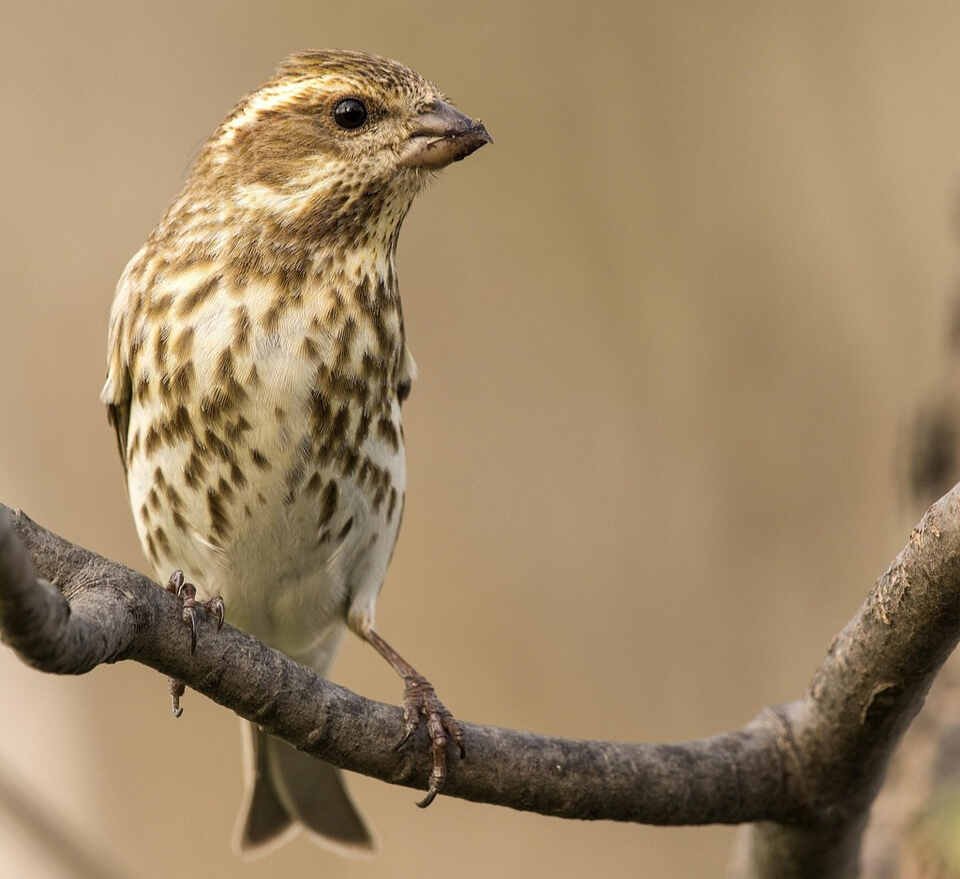
- Heavier streaking, especially on the chest and sides.
- Slightly more robust build.
- Subtle white or pale edging on the wing feathers.
Honestly, females are the ultimate test of your birding patience. But once you spot the streak patterns, your confidence will soar.
Beak Shapes and Size: Tiny Clues You’ll Appreciate
If plumage confuses you, beak shape rarely lies.
House Finch Beak
- Conical and short.
- Great for cracking seeds, especially sunflower seeds.
- Appears a bit pointier in profile.
Purple Finch Beak
- Also conical but slightly broader at the base.
- Suited for forest seeds, berries, and sometimes insects.
- Makes them look a touch bulkier than House Finches.
Bird nerd tip: Watch them at feeders. The way they handle seeds can clue you in before color even registers.
Songs and Calls: Ear-Test Your Finch
Birds aren’t just about looks; sound is a big deal.
House Finch Song
- A warbling, cheerful song that’s kind of repetitive.
- Often sounds like a “cheery chatter” from your porch.
- If they call, it’s a high-pitched “cheep” or “tsip.”
🎵 Listen to House Finch sounds here
Purple Finch Song
- Rich, melodic warble with more musical notes.
- Less repetitive, almost a bit elegant.
- Their call is a clear “tick” or “tek,” which stands out in a forest.
🎵 Listen to Purple Finch sounds here
I swear, after listening for a few mornings, you’ll recognize the songs like old friends. Personally, I can ID a Purple Finch from a block away just by their melody.
Habitat and Range: Know Where to Look
Geography does half the ID work for you. Ask yourself: Where am I seeing this bird?
House Finch
- Loves urban and suburban areas.
- Often at feeders, parks, and gardens.
- Flexible with habitat, which explains why they’re everywhere.
Purple Finch
- Prefers mixed woods, forests, and thickets.
- Less likely to hang out at backyard feeders in city centers.
- Winters may bring them to feeders, but spring and summer, they’re forest creatures.
So, spotting a red finch in your city yard? Odds are it’s a House Finch.
Feeding Habits: Watch What They’re Eating
I know, I know, feeding habits seem boring, but trust me, it helps.
House Finch
- Obsessed with sunflower seeds, nyjer seeds, and small grains.
- Enjoys feeder snacks more than berries or natural seeds.
Purple Finch
- Loves tree seeds, berries, and buds.
- Will visit feeders, but not as consistently as House Finches.
FYI, if you want to lure a Purple Finch, plant berry bushes. They’ll think your backyard is gourmet dining.
Seasonal Changes: Plumage Isn’t Static
Remember, these finches aren’t wearing the same outfit all year.
House Finch
- Males maintain their orange-red tint year-round.
- Molting in late summer can make colors look patchy or faded.
Purple Finch
- Males may appear slightly duller in late summer.
- Females and juveniles can look almost identical to House Finch females.
Season matters. Seeing a red patch in July doesn’t guarantee it’s the same intensity as spring.
Common ID Mistakes: Don’t Be Fooled
Even pros mess this up, so no shame. Here’s where people usually go wrong:
- Mixing up females: They look nearly identical. Focus on streaking and body shape.
- Assuming all red finches are House Finches: Many backyard “reds” are Purple Finches passing through.
- Ignoring behavior: Purple Finches tend to be bolder in trees; House Finches are feeder-obsessed.
Tip from personal experience: take a photo and zoom in. Sometimes your eyes just can’t catch the subtleties.
Quick Reference Comparison Table
| Feature | House Finch | Purple Finch |
|---|---|---|
| Male Coloration | Orange-red, patchy | Deep raspberry-red, uniform |
| Female Coloration | Duller brown, light streaking | Heavier streaking, robust look |
| Beak | Short, pointy | Slightly broader at base |
| Song | Cheerful, repetitive warble | Rich, melodic warble |
| Preferred Habitat | Urban, suburban | Forests, wooded areas |
| Feeder Preference | Seeds (sunflower, nyjer) | Seeds & berries |
I keep this table on my phone when I’m birding. Super handy.
Personal Anecdote: That One Time I Mistook Them
One morning, I thought a bright red finch visiting my feeder was a Purple Finch. I snapped pics, feeling smug. Later, I realized the red was too soft, the streaks too heavy, it was a House Finch. Lesson learned: never trust your first impression, and pay attention to the little details. Now I double-check, and honestly, it makes spotting these birds even more fun.
Conclusion: Don’t Sweat It, Enjoy the Birds
At the end of the day, both House and Purple Finches are awesome backyard visitors. You don’t need to memorize every detail to enjoy them. That said, knowing the differences makes watching them way more satisfying. Take your time, grab some binoculars, and have fun observing. Before you know it, you’ll call out House Finch and Purple Finch like a pro, maybe even correcting your friends at the feeder. 🙂
Birding is about noticing the little things, the color variations, the song patterns, even how they pick seeds. So go outside, watch, listen, and enjoy. And hey, if you get a little confused, welcome to the club. Every birder has been there.