
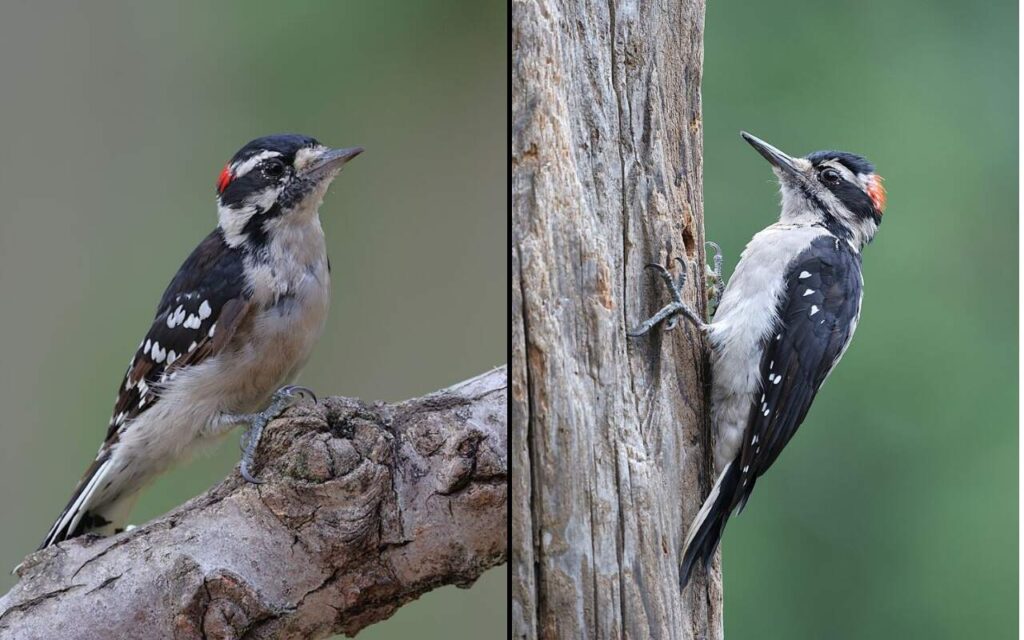
Mastering a Downy vs Hairy Woodpecker comparison solves one of the most notorious field identification challenges in backyard birdwatching. While these lookalike species appear nearly identical at a casual glance, subtle anatomical markers allow you to confidently separate them without requiring an uncertain double-take.
Learning how to tell the difference between a downy woodpecker and a hairy woodpecker requires moving far beyond basic plumage checks to study head ratios. Analyzing these specific skeletal bills, tail markings, and distinct drumming patterns allows you to accurately classify every visitor that lands on your backyard suet arrays.
How Do You Tell a Downy vs Hairy Woodpecker Apart?
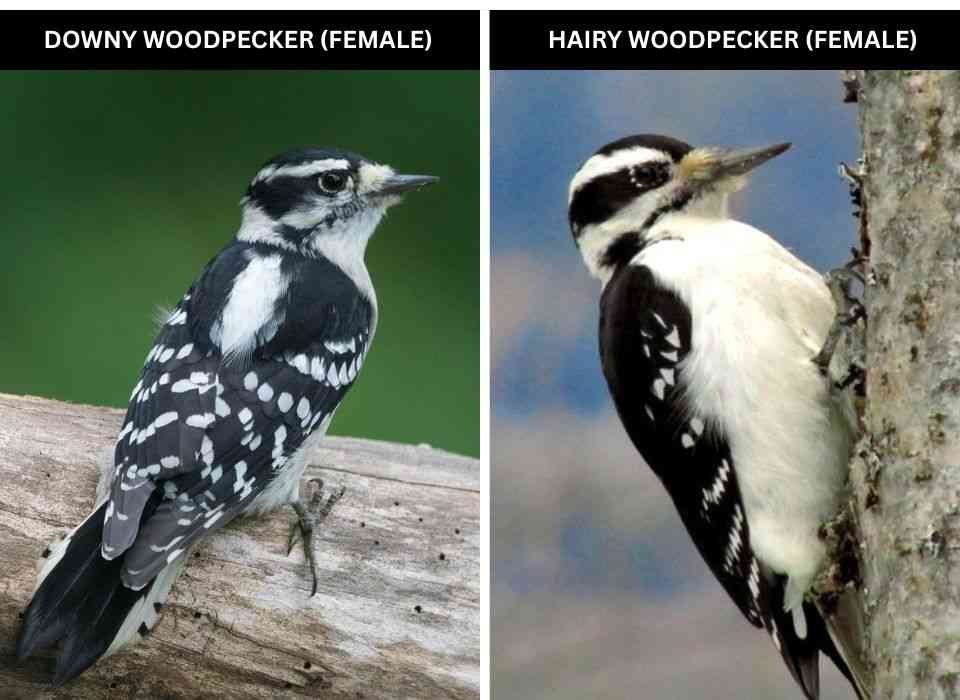
The fastest way to tell a downy vs hairy woodpecker apart is by bill length, as the downy features a short, stubby beak that is less than half its head length, while the larger hairy woodpecker sports a long, dagger-like bill.
To verify tricky views, check their outer tail feathers because downy woodpeckers display distinct black spots on their white tails, whereas hairy woodpeckers have completely plain, unmarked white tail feathers.
Watch Our Woodpecker Identification Breakdown
This animated whiteboard walkthrough illustrates the precise head ratios and tail patterns needed for accurate field tracking. Reviewing these illustrated visual shortcuts helps you confidently distinguish lookalike backyard species under real-world conditions.
Physical Dimension Comparisons and Body Proportions
Evaluating the physical mass differences between these lookalikes reveals a stark contrast that is often difficult to gauge when observing a single bird resting on a tree trunk. When these two species are placed directly side by side on a standard suet cage, the hairy woodpecker is noticeably much larger and more robust.
Their physical dimensions rely on distinct biological sizing parameters:
| Visual Indicator Metric | Downy Woodpecker (Dryobates pubescens) | Hairy Woodpecker (Dryobates villosus) |
|---|---|---|
| Average Total Length | 5.5 to 7.0 inches long | 7.1 to 10.2 inches long |
| Average Body Mass | 0.7 to 1.1 ounces total weight | 1.4 to 3.4 ounces total weight |
| Typical Wingspan Width | 9.8 to 12.2 inches wide | 13.0 to 16.1 inches wide |
| General Size Scale Reference | Matches a common house sparrow | Matches a large American robin |
Relying entirely on general size perception often leads to mistakes because poor lighting or long tracking distances can distort your field view. Foraging downy woodpeckers are the smallest of all North American woodpecker varieties, carrying a compact structure that allows them to land on fragile weed stalks.
Conversely, a mature hairy woodpecker carries roughly three times the overall body weight of its smaller counterpart.
According to the comparative field size data published in the foundational Audubon Woodpecker Identification Guide, a hairy woodpecker measures nearly fifty percent taller than a downy, giving it a much heavier and more aggressive presence at backyard feeding arrays.
Bill Length and Facial Structure Variations
Focusing your binoculars directly on the bird’s profile reveals a highly reliable anatomical marker that never changes regardless of regional variations. This method involves comparing the overall length of the bill against the front-to-back width of the bird’s head.
The Beak Length to Head Ratio Block demonstrates that the bill of a downy woodpecker is short, needle-like, and highly delicate, measuring roughly one-third of its total head length. If you mentally rotate the beak backward one hundred and eighty degrees, the tip would barely extend past the center of the eye socket.
Conversely, a hairy woodpecker carries a heavy railroad spike bill that is almost equal to its entire head width, meaning its rotated beak would extend far past the back edge of the skull.
This structural relationship highlights the unique physical adaptations of each species:
- The Dainty Downy Beak: The bill of a downy woodpecker functions like a precision tool for clearing shallow insects from weed stems.
- The Heavy Hairy Beak: The bill of a hairy woodpecker is built like a powerful hammer designed for deep, destructive trunk excavation.
- Nasal Tuft Density: Both birds feature distinct white bristly feathers covering their nostrils to filter out flying wood dust. The downy woodpecker has denser, fuzzier nasal tufts relative to its face size, giving its forehead a distinctly round, soft look.
Analyzing these precise proportions ensures a highly accurate identification even when a bird is sitting alone on a dark backyard feeder pole. The miniature beak of the downy woodpecker looks like a small extension of its face, whereas the massive bill of the hairy woodpecker dominates its entire head profile.
Tail Feather Markings and Undertail Barring
When a target bird is facing away from you or clinging to the side of a mature hardwood tree trunk, its beak may be completely hidden from view. In these common scenarios, you must shift your field tracking focus downward to inspect the outer stiff tail feathers that stabilize the bird against the bark.
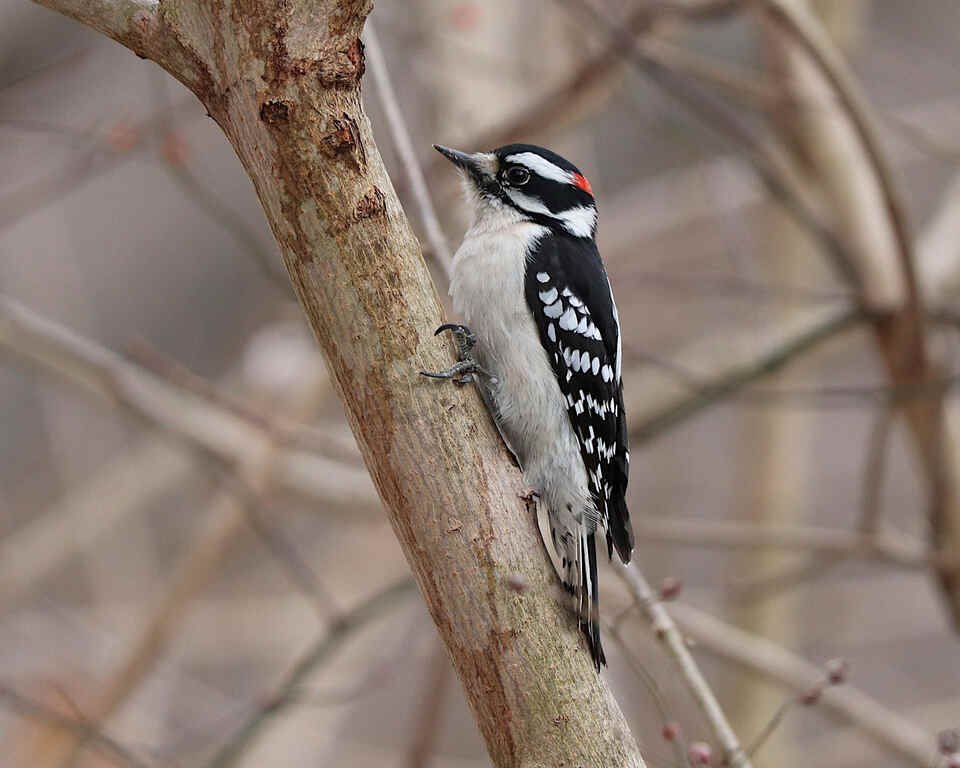
The Outer Tail Edge Pattern Block reveals that the white outer tail feathers of a downy woodpecker feature a series of distinct black spots or bars along the edges. These dark flecks remain fully visible from behind or below when the tail is fanned out against a tree trunk. By contrast, the outer tail feathers of a hairy woodpecker are completely clean, glossy, and pure white, creating a bright white border along the tail edge.
These subtle tail feather differences provide a reliable identification backup:
- Black Outer Tail Barring: The dark flecks on a downy provide a reliable visual indicator when hunting in dense foliage.
- Pure Unmarked Tail Edges: The clean white tail feathers of a hairy remain consistent across both eastern and western regional variants.
- Subspecies Tail Caveats: While western variations of the hairy woodpecker show reduced wing spotting, their outer tail feathers remain clean white. This dark flecking trait remains a reliable way to identify a downy across all major North American flyways.
Taking the time to check the lower tail feathers allows you to make an accurate identification without waiting for the bird to turn its head. This tail-checking method provides an excellent secondary fallback when birds are active high up in a forest canopy.
Head Plumage and Male Red Nape Variations
Both species share a nearly identical black and white striped facial layout, making head color charts useless for casual identification. In both varieties, adult males carry a bright red patch on the back of the neck, while females lack this colorful patch entirely.
The Red Nape Patch Distribution Block shows that the red patch on a mature male downy woodpecker is a single, solid, and continuous block of color sitting across the back of the crown. Conversely, the red patch on a mature male hairy woodpecker is often split down the middle by a distinct black vertical line, dividing the red markings into two independent color blocks.
Inspecting the precise layout of this red nape patch reveals two distinct patterns:
- The Solid Downy Patch: A single continuous block of red color that never breaks along the back of the crown.
- The Split Hairy Patch: A dual block of red divided by a black line, though this line can occasionally vary in thickness by region.
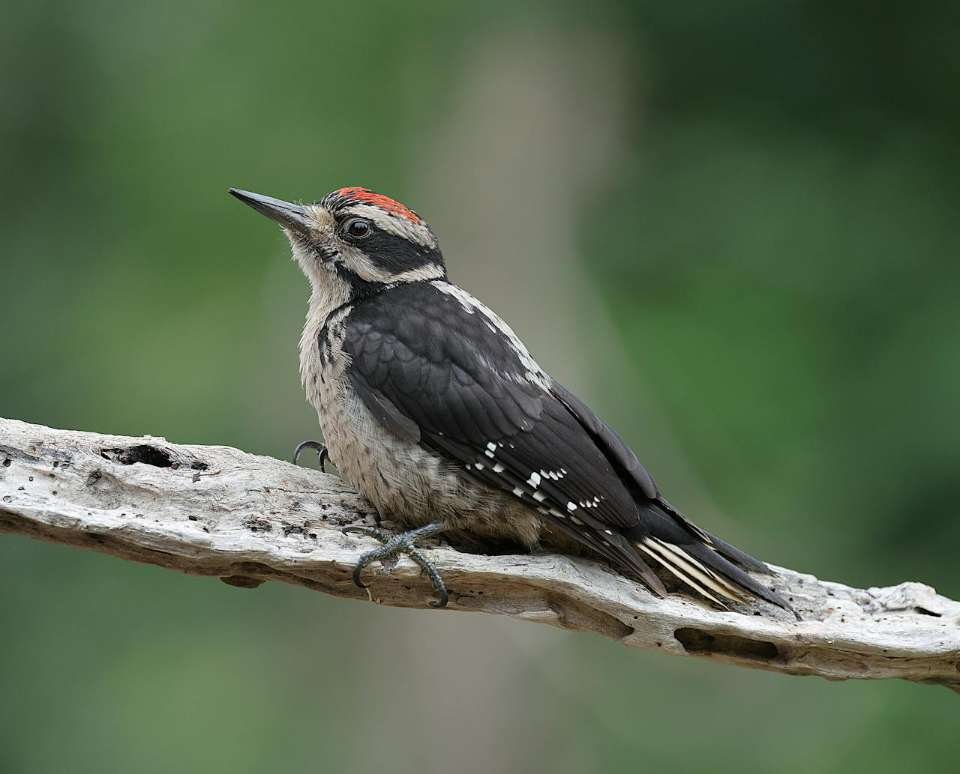
- Juvenile Head Markings: Young birds of both species feature a temporary wash of red or pink right on top of their forehead rather than on the back of the neck. This juvenile plumage fades completely after their first autumn molt, when they transition into their adult configurations.
Recognizing that both species feature identical sex-based color rules prevents you from mistaking a larger female hairy for a male downy. To see how these shared gender markings compare to other common backyard varieties, review our guide on the male vs female cardinal to master avian color charts.
Foraging Mechanics and Vertical Habitat Tiers
The significant difference in body mass and bill strength between these birds directly influences where and how they hunt for food in the wild. A downy woodpecker’s lightweight body allows it to utilize delicate foraging zones that would snap under the weight of a larger bird.
Their different physical builds drive two distinct foraging patterns:
- Slender Outer Branch Gleaning: Downy woodpeckers spend the majority of their hunting time exploring outer tree twigs, slender garden shrubs, weed stalks, and tall reed beds. They can easily hang upside down from fragile branches to pluck insects from surface bark.
- Deep Trunk Heavy Excavation: Hairy woodpeckers focus their intense drilling efforts on massive tree trunks, structural branch unions, and dead fallen logs. Their long bills allow them to hammer deep into solid wood to extract wood-boring beetle larvae.
- Forest Stand Preferences: Downy woodpeckers are highly adaptable and abundant in open woodlots, suburban city parks, and residential yards. Hairy woodpeckers prefer large tracts of mature forest with tall, old trees that offer deep drilling sites.
Property owners can easily predict which bird has visited their yard by checking the depth of the drill marks left behind on the wood. Dainty, shallow surface flakes indicate a downy has cleared the area, while deep, rectangular channels show a hairy has searched for wood-boring larvae.
To optimize your yard setup based on these hunting behaviors, review our comprehensive breakdown tracking what woodpeckers eat in suburban yards to prevent tree bark damage.
Evolutionary Mimicry and Social Dominance Theories
For decades, evolutionary biologists have been fascinated by why two birds from entirely different ancestral lineages look so much alike. Comprehensive genetic research published in the landmark Nature Woodpecker Plumage Convergence Study confirms that downy and hairy woodpeckers are not close relatives, meaning their matching plumage is a prime example of convergent evolution driven by geographic overlap.
This remarkable physical mimicry relies on several complex social behaviors:
- Interspecific Social Mimicry: Comprehensive behavioral studies published by the National Audubon Society Mimicry Analysis show that the smaller downy woodpecker likely evolved to mimic the look of the larger hairy woodpecker.
- Backyard Feeder Dominance: Looking like a larger bird allows the small downy woodpecker to intimidate third-party competitor birds, such as nuthatches, chickadees, and titmice. These smaller birds leave a feeder tray if they mistake a downy for an aggressive hairy.
- Aggression Targeting Data: Field data gathered by researchers shows that hairy woodpeckers target downies with high levels of territorial aggression. This aggressive behavior helps the larger birds defend high-value winter feeding zones from their smaller lookalikes.
This protective mimicry allows the downy woodpecker to gain clear survival benefits simply by copying the look of a dominant forest neighbor. This trick helps the smaller birds secure steady food resources throughout the highly competitive winter months.
Auditory Vocalizations and Drumming Rhythms
When these active foragers remain completely hidden inside dense summer leaves, you can easily distinguish them by listening closely to their unique calls and drumming speeds. Each bird utilizes a distinct vocal frequency and hammering rhythm to communicate territory lines across the forest canopy.
Their acoustic profiles follow two distinct patterns:
- The Soft Downy Call Notes: A downy woodpecker emits a short, relatively quiet call note that sounds like a soft pik. Their longer rattle call features a distinct musical quality that drops in pitch toward the end of the vocalization.
- The Sharp Hairy Call Notes: A hairy woodpecker utters a loud, metallic call note that sounds like a sharp peek. Their rattle call is loud and maintains a flat, unwavering pitch from start to finish, sounding like a high-speed machine gun.
- Drumming Rhythm Variations: Both birds tap rapidly on resonant hollow branches to claim territory, but their tempos are entirely different. A downy drums at a slower pace with clear spaces between individual strikes, whereas a hairy executes a high-speed burst that exceeds twenty-five taps per second.
Learning to recognize these unique sounds allows you to identify which species is visiting your yard before you even step outside. This acoustic tracking method is incredibly helpful for conducting accurate seasonal backyard bird surveys.
Seasonal Yard Preparation and Strategic Feeder Placements
Property owners can easily encourage both lookalike varieties to establish stable winter territories by providing a reliable mix of high-fat food sources. Because these birds have different physical weights and foraging habits, using a variety of feeder styles ensures both species can eat safely without fighting.
Yard Setup Checklist for Woodpeckers
To support both species across your yard landscape, mount an elevated suet cage with a long wooden tail-prop paddle on a mature hardwood tree trunk to provide the stable structural anchor that the large, heavy hairy woodpecker prefers.
Set up a separate, lightweight hanging wire mesh tube feeder filled with raw peanut halves in an outer shrub border to offer the agile downy woodpecker a dedicated foraging zone away from dominant birds.
To maximize your local tracking footprint, review our foundational guide detailing how to attract woodpeckers to your yard to build a premier winter sanctuary. Supplementing these feeding setups with active heated birdbaths ensures your local flocks have easy access to fresh water all winter long.
Summary Identification Checklist for Lookalike Woodpeckers
Reviewing these advanced visual clues, anatomical proportions, and distinct behavioral differences ensures you can quickly classify individual yard visitors across all four seasons. Instead of relying on a single, uncertain size guess when a bird lands on a tree trunk, you can cross-reference multiple reliable field markers to make a certain identification.
Verifying a dainty beak structure or spotting clear dark flecking on the outer tail feathers provides immediate visual validation that you are watching a downy woodpecker. Conversely, tracking a heavy railroad spike bill paired with pure white tail borders confirms the presence of a robust hairy woodpecker. Combining these physical checks with auditory tracking of drumming speeds and call notes guarantees absolute identification accuracy under any field conditions.
Documenting these local sightings also allows property owners to participate directly in real-world conservation data tracking through community science initiatives like Project FeederWatch. Ultimately, building a deep familiarity with these lookalike black and white foragers transforms your regular backyard window view into an engaging, active classroom for studying evolutionary success and North American avian biodiversity.