
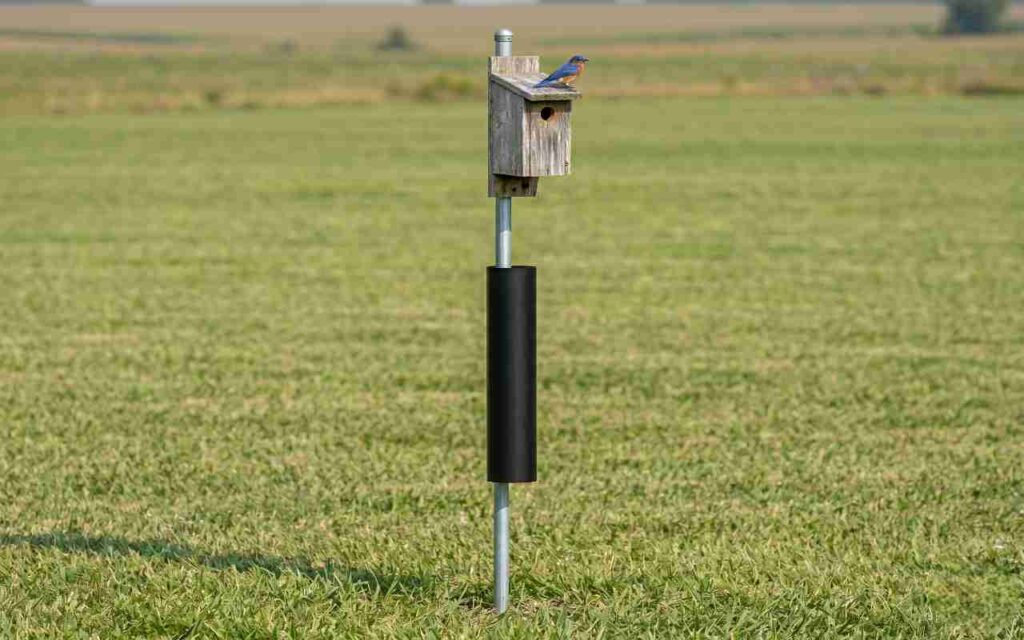
The Eastern Bluebird is not a generalist. For homeowners learning how to attract eastern bluebirds to a birdhouse, it is vital to understand that this species does not settle for whatever cavity is available. While attracting bluebirds to your yard usually starts with food and water, securing a nesting pair requires a much higher level of forensic precision. It is a precision forager with a narrow habitat template, and the nest box that succeeds in attracting a pair is one that matches that template exactly.
When a box remains empty, it is usually because it has failed a forensic audit of these specific habitat filters. Height, orientation, entry hole diameter, and proximity to open ground all interact. The recovery of the species since the 1970s is almost entirely attributable to organized nest box programs that applied exactly the specifications described here. Precision works. Approximation produces an empty box.
Quick Answer: The Forensic Audit for Bluebird Success
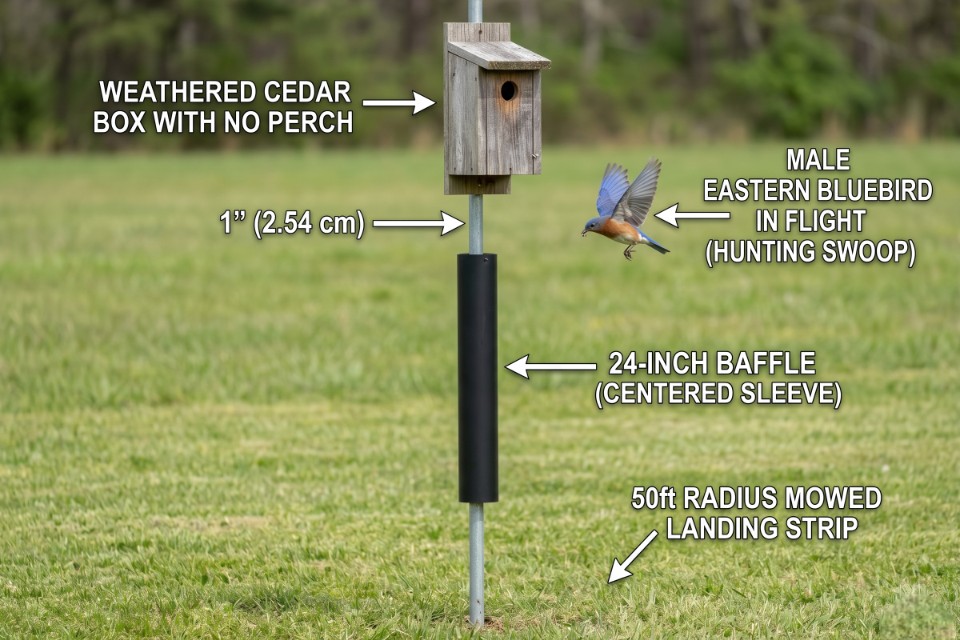
If bluebirds are rejecting your birdhouse, it is likely failing a Forensic Audit of its habitat filters. To attract a pair, you must apply precision placement: mount a weathered cedar box 5–6 feet high on a metal pole with a 24-inch stovepipe baffle to neutralize predators. You must also provide a 50-foot “Landing Strip” of low-cut grass for foraging and ensure a 1.5-inch precision entry hole to create a mechanical lockout against invasive starlings.
Attracting Eastern Bluebirds: A Forensic Placement Video Guide
While the technical specifications provide the biological groundwork, seeing the “Forensic Placement Formula” in motion offers the ultimate clarity for your backyard setup. Watch the video below for a visual breakdown of the stovepipe baffle installation and the flight path geometry required to secure a successful bluebird territory.
Show Transcript:
0:00
Welcome to this explainer. I am excited to share my personal journey transforming my yard from a quiet space into a thriving eastern bluebird habitat. It took a deep dive into bird biology, nest box design, and backyard birding strategy to get there.
0:07
I started by installing a wooden birdhouse for eastern bluebirds, expecting quick results. Instead, I learned that attracting bluebirds requires precision nest box engineering, not decorative setups.
0:33
Female bluebirds are highly selective nesters. They inspected my setup and rejected it repeatedly. That is when I realized the difference between a decorative birdhouse and a functional nest box designed for bird survival.
1:02
A decorative birdhouse may look nice, but for bluebirds it can create serious risks. Proper nest box design follows strict biological requirements that support safety, nesting success, and chick development.
1:17
My first setup failed in several ways. It was mounted in a poor location, too close to cover, faced the wrong direction, and included a large entry hole and exterior perch. Each of these mistakes reduced nest success and increased predator risk.
1:44
Section one focuses on entry rules for nest box safety. The key specification is a 1.5 inch entrance hole. This size allows eastern bluebirds to enter while blocking larger invasive species such as European starlings.
2:12
Even small changes in hole size can determine whether native birds succeed or invasive birds take over. Inside the box, adding textured wood surfaces, often called fledgling ladders, helps chicks climb out safely when they are ready to leave the nest.
2:42
A smooth interior can delay fledging and put stress on both chicks and parents. Another important rule is removing exterior perches. Perches make it easier for predators and invasive birds to access the nest cavity.
3:05
Bluebirds do not need perches. They can land directly at the entrance hole. Removing perches reduces predator access and improves nest box security.
3:12
Section two is mounting strategy. Placement is just as important as box design. Mounting on trees or fences increases predator access from squirrels, raccoons, snakes, and cats.
3:34
Instead, a freestanding metal pole provides isolation and better protection. The ideal height is about five to six feet, allowing monitoring access while limiting ground predator reach.
4:03
Direction also matters. Facing the box east or southeast helps regulate temperature, reduces wind exposure, and improves nesting conditions for eastern bluebirds.
4:19
Adding a stovepipe baffle to the pole creates a smooth barrier that prevents climbing predators. Research from Cornell Lab of Ornithology NestWatch data shows that predator guards like this significantly improve nest success rates.
4:43
Section three focuses on habitat design around the nest box. Bluebirds use a hunting method called scan and swoop, where they perch, observe, and drop to the ground for insects.
5:02
Dense vegetation can hide prey and reduce hunting efficiency. To improve foraging success, I cleared open ground around the nest box, creating a visible hunting zone for bluebirds.
5:27
I also added a separate scouting perch away from the nest box. This gives bluebirds a safe vantage point to hunt without exposing the nest entrance to predators or competing birds.
6:01
Section four is supplemental feeding. Mealworms act as a high protein food source that closely matches the natural insect diet of eastern bluebirds.
6:21
Providing mealworms during early spring helps support breeding success and can even increase clutch size during periods when natural insect populations are low.
6:45
However, invasive European starlings quickly discover mealworm feeders. To solve this, cage-style feeders with 1.5 inch openings allow bluebirds in while blocking larger birds.
7:08
With this full system in place, nest success improved dramatically. My yard supported multiple successful broods in a single season, with rapid fledging cycles and repeated nesting attempts.
7:35
Every part of this setup plays a role. Entry hole size, mounting height, predator guards, feeding strategy, and habitat design all work together to create a safe bluebird nesting environment.
7:59
The results show how much impact proper nest box design and backyard habitat management can have on native bird populations. Small changes lead to major improvements in nesting success.
8:07
The final question is simple. Will you turn your backyard into a properly engineered bluebird habitat, or continue using decorative setups that do not support nesting success?
Why are Bluebirds Rejecting My Birdhouse?
Bluebirds typically reject a birdhouse if it fails to meet specific habitat requirements, such as having a hole size larger than 1.5 inches, being mounted too low, or facing toward heavy brush. Female Eastern Bluebirds are precision nesters that “filter” multiple candidate sites; if a box is mounted on a fence post or near dense shrubbery, they will often reject it in favor of a site that offers better predator defense and foraging sightlines.
The most common reason a nest box goes unused is not that bluebirds are absent from the area. It is that the box fails one or more of the habitat filters the female applies during site prospecting. Female Eastern Bluebirds make the final nesting decision, and research on pair behavior consistently documents the female inspecting multiple candidate sites before committing.
Research published in The Auk (Oxford Academic) on Eastern Bluebird nest-site fidelity found that in a controlled choice experiment, 102 of 113 pairs chose their preferred box type when given the option between two cavity designs, confirming that females assess and discriminate between cavities based on perceived quality rather than accepting the nearest available site.
A box mounted on a fence post six feet from a shrubby border, facing north, at four feet of height, with an exterior perch and a two-inch entry hole is not a bad try. It is four separate failures stacked on top of one another.
According to Cornell Lab’s NestWatch Eastern Bluebird guide, bluebirds require open habitat with a round entrance hole of exactly one and a half inches, mounted facing open ground with a clear flight path.
The precision of these requirements is the starting point for everything that follows, including the 1.5-inch mechanical lockout required to stop invasive competitors.
How High Should a Bluebird House Be Mounted?
The optimal mounting height for an Eastern Bluebird nest box is five to six feet above the ground to balance ease of monitoring with protection from ground-based predators. This height is a predator defense specification derived from the biomechanics of primary threats; for instance, raccoons can reach roughly 18 inches beyond the top of a smooth vertical pole.
Because raccoons are the most consistently documented nest predator for Eastern Bluebirds, placement must account for their physical reach. A box at five feet, mounted on a metal conduit pole with a stovepipe baffle centered at approximately four feet, places the entry hole beyond the combined reach of a raccoon standing on top of a correctly installed cylindrical baffle
Height also matters for monitoring. A box at five to six feet allows the nest box manager to open the side panel and check nest contents without a ladder, which is important because regular monitoring every five to seven days is one of the most effective management tools available. Boxes that are too high to monitor comfortably tend to go unchecked, and unchecked boxes are where House Sparrow takeovers go undetected until it is too late to intervene.
Can You Mount a Bluebird House on a Tree?
No, you should never mount a bluebird house on a tree because it provides easy access for climbing predators like snakes, raccoons, and cats. For maximum safety, bluebird houses must be mounted on freestanding metal poles equipped with predator baffles.
Mounting a bluebird box on a tree is not a compromise. It is a structural failure that eliminates the predator defense entirely. Squirrels, raccoons, rat snakes, and cats can all climb trees and navigate branches to reach a box mounted anywhere on or near a trunk.
Cornell Lab’s NestWatch explicitly advises against mounting nest boxes on fences or trees, specifying that boxes should be placed on freestanding poles equipped with predator guards. Fence mounting fails for the same reason: a fence is a highway for climbing predators, and a box attached to it at any height is accessible to any animal that can travel along the fence line.
The only structure that can be adequately defended is an isolated, smooth metal pole with a properly sized and installed baffle.
How Do You Protect a Bluebird House from Predators?
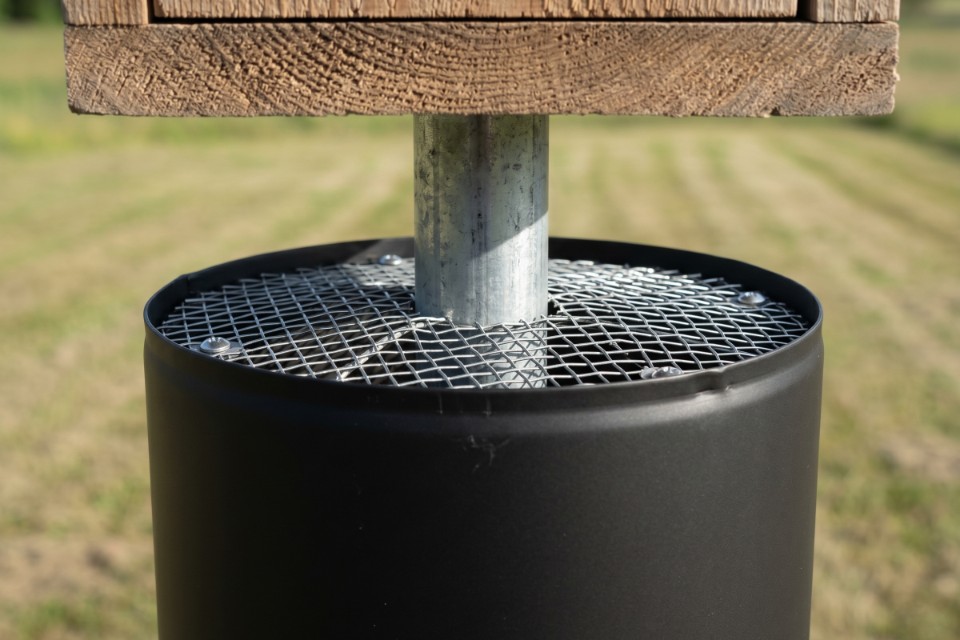
The most effective way to protect a bluebird house from predators is to install a stovepipe or cone-type baffle, which research shows can increase nest success rates by 6.7 percent.
Research using 24,114 nest records submitted to Cornell Lab’s NestWatch found that nest boxes equipped with predator guards had a 6.7 percent higher overall nest success rate than unguarded boxes.
According to NestWatch’s analysis of predator guard effectiveness, stovepipe baffles and cone-type baffles were among the most effective designs tested, outperforming entrance hole extenders and Noel guards in overall nest survival outcomes. These mechanical barriers outperform all other guard types by creating a smooth, rotating surface that raccoons and squirrels cannot climb.
A stovepipe baffle consists of a smooth, cylindrical metal sleeve centered on the mounting pole below the box. Because it rotates freely and provides no foothold, it is effectively impassable for raccoons and squirrels approaching from below.
At the national scale documented in that study, the 6.7 percent improvement translates to a meaningful conservation outcome across millions of nest attempts. At the backyard scale, it is the single most impactful structural addition a nest box manager can make after choosing the correct entry hole size.
Which Direction Should a Bluebird House Face?
A bluebird house should face East or Southeast to provide gentle morning light while protecting the interior from prevailing westerly winds and intense afternoon heat. The compass direction the entry hole faces is not a secondary consideration. It is a thermal and weather management decision that directly affects egg viability and nestling survival.
It is also one of the most frequently overlooked variables when a nest box is first installed, because the visual result looks the same from the outside regardless of which direction the hole faces. The consequences inside the box during a July heat wave or an April rainstorm are not the same at all.
How Do You Keep a Bluebird House from Overheating?
To keep a bluebird house from overheating, ensure the entry hole faces East or Northeast to avoid the intense afternoon sun. Additionally, using light-colored wood and providing adequate ventilation holes will help maintain safe interior temperatures. During these periods of high thermal stress, it is equally critical to manage how to keep birds hydrated during summer heat to prevent dehydration in both the incubating female and the developing nestlings.
A nest box with a south- or west-facing entry hole is exposed to full afternoon sun in summer. Interior box temperatures in an unshaded, west-facing cavity can exceed 40 degrees Celsius during peak afternoon heat, a temperature range directly associated with embryonic mortality.
Research published by East Carolina University on thermal stress in artificial cavity-nesting Eastern Bluebirds found that nest boxes in full sun reached temperatures above the survivable threshold for bluebird embryos, and that high mean temperatures during incubation significantly impacted the proportion of unhatched eggs per nest.
The study’s title phrase, “killing them with kindness,” captures the core problem precisely: a nest box installed with good intentions but placed in full sun can function as a heat trap that undermines the very nesting success it is meant to support.
Research published in Temperature (PubMed Central) on the effects of nest box temperature on Eastern Bluebird hatching success confirmed that optimal embryonic development occurs between 36 and 40 degrees Celsius, with mortality expected above 41 degrees Celsius.
The study monitored 67 Eastern Bluebird nest boxes in central Georgia and found that clutch size declined significantly as average daily high temperatures increased, and that hatch rates were significantly associated with hours spent at or above 42 degrees.
According to Cornell Lab’s NestWatch nest box placement guide, the entry hole should face east or southeast. East orientation provides gentle morning light to help the incubating female warm up after cool nights, while keeping the interior shaded during the hottest part of the day. Southeast orientation adds wind protection in most regions of North America, where prevailing winds arrive from the west or northwest.
How Do You Keep a Bluebird House Dry?
To keep a bluebird house dry, orient the entrance hole toward the East or Southeast to prevent prevailing westerly winds from driving rain directly into the cavity. This placement ensures that moisture does not accumulate in the nest cup, which is a leading cause of nestling hypothermia during early spring storms.
Orienting the entry hole away from prevailing winds serves two purposes simultaneously. First, it prevents rain from being driven directly into the cavity during storms, which is a documented cause of nestling hypothermia in early spring when chicks are not yet adequately feathered.
Second, it reduces wind exposure at the entry point, making the box more accessible and comfortable for adults approaching the cavity. The formula for most of North America is consistent: east or southeast, with morning light in, afternoon shade maintained, and prevailing westerly winds deflected off the back of the box.
Where is the Best Place to Put a Bluebird House?
The best place to put a bluebird house is in an open area with low-cut grass, located at least 50 feet away from dense brush to provide an unobstructed foraging ‘landing strip’.
A nest box placed in the middle of a lawn with no open sight lines to foraging territory is not an attractive bluebird box. Eastern Bluebirds are perch-and-swoop hunters with a highly specific relationship between nesting habitat and foraging habitat, and the placement of the box must serve both functions simultaneously.
Why Do Bluebirds Need Short Grass Near Their Birdhouse?
Bluebirds need short grass near their birdhouse because they are ground-foragers that rely on a clear line of sight to spot insects like grasshoppers and crickets in the turf.
According to the Audubon Society’s Eastern Bluebird field guide, bluebirds do most of their foraging by perching at low heights and fluttering to the ground to catch insects, often hovering briefly before landing. This scan-and-swoop technique requires an unobstructed view of the ground surface from the perch.
Short-cut or sparse grass allows the bird to detect prey movement. Dense, tall grass or ground cover conceals insects and makes the technique ineffective, which is why Eastern Bluebirds consistently avoid nesting where the ground cover within foraging range is unmowed.
A minimum cleared radius of 50 feet around the box, with grass kept at lawn height or lower, functions as a landing strip: open, visually legible prey habitat that the birds can work efficiently from a nearby elevated perch.
Where Should a Bluebird House Be Placed Relative to Perches?
A bluebird house should be placed within 10 to 20 feet of a low scouting perch, such as a small tree or fence line, to give the birds a ‘launch point’ for hunting insects in the grass.
A hunting perch positioned within 50 to 100 feet of the nest box serves multiple purposes. According to Penn State Extension’s habitat management guide for Eastern Bluebirds, because bluebirds often hunt from and display on perches, adding perch sites to open habitats with few existing ones can significantly improve habitat quality.
Bluebirds gather insects from leaves, branches, and the ground, and also catch insects in the air from perches using the technique known as hawking. Artificial perches such as garden stakes, fence posts, or tree limbs installed in open areas can be added where natural perches are absent.
The critical rule is that perches should never be attached to the nest box itself. A perch on the box front assists both House Sparrows and European Starlings in assessing and claiming the cavity. The scouting perch should be positioned near the box but structurally separate, giving an adult bluebird a clear view of both the entry hole and the surrounding foraging ground.
For more on how starlings exploit perch-equipped cavities, see our article on European starling nesting habits.
What is the Difference Between a Birdhouse and a Bluebird Nest Box?
The primary difference between a generic birdhouse and a bluebird nest box is that a nest box is built to specific scientific dimensions, including a 1.5-inch entrance hole and a lack of exterior perches to deter predators. While a standard birdhouse is often decorative, a true bluebird nest box is a functional tool designed with proper ventilation, drainage, and a side-opening panel for safe weekly monitoring.
The distinction between a decorative birdhouse and a functional nest box matters. A decorative birdhouse is designed for visual appeal. A functional nest box is engineered to the biological specifications of a target species, and the two goals often conflict.
What is the Best Entrance Hole Size for a Bluebird House?
The best entrance hole size for an Eastern Bluebird house is exactly 1.5 inches (38mm) in diameter, which creates a mechanical lockout against larger invasive species. This specific measurement allows bluebirds to enter the cavity while physically blocking larger European Starlings, making it the most critical dimension for a successful nest box.
It does not exclude House Sparrows, which are small enough to enter any hole a bluebird can use, making active nest monitoring a separate and necessary task. Any degradation of the entry hole beyond 1.5 inches opens the box to starling colonization.
Research published in PLOS ONE (PubMed Central) on Eastern Bluebird mate selection found that males with more elaborate UV-blue structural coloration were more successful competitors for limited nest box sites, and that females in this species face substantial risk of losing all breeding opportunities in a given season if they leave their original mate, partly because securing a suitable cavity is itself the primary constraint on reproduction.
The entry hole is the gatekeeping mechanism: maintaining it at the correct specification is what determines whether that cavity is available to bluebirds at all.
Soft wood, weather exposure, and woodpecker probing can all enlarge a hole over successive seasons, making annual measurement with a drill bit or hole gauge a standard maintenance step. For a full picture of why hole size matters so much in the competitive context of suburban cavities, see our article on characteristics of European starlings.
Should a Bluebird House Have a Perch?
No, a bluebird house should never have an exterior perch because bluebirds do not need one to enter, and perches make it easier for predators and invasive species to attack the nest. While bluebirds are agile enough to land directly on the entrance hole, a perch provides a ‘behavioral scaffold’ that assists house sparrows and starlings in claiming the box or reaching inside to harm nestlings.
House Sparrows and European Starlings, by contrast, show a documented preference for perch-equipped boxes, using the perch to stand at the entry and assess, display from, or defend the site. Removing the perch eliminates a competitive advantage those species hold over bluebirds in the box selection process.
The no-perch rule is one of the simplest modifications to make to an existing decorative birdhouse, and it is often the change that transforms a House Sparrow magnet into a viable bluebird candidate. If you are repurposing a box that came with an exterior perch, removing it flush with the front panel and sanding the area smooth leaves no visual cue that a perch was ever present.
For broader context on how introduced species use perch-equipped sites to outcompete native cavity nesters, see our article on invasive backyard birds.
Should a Bluebird House Have Interior Grooves?
Yes, a bluebird house should have interior grooves, also known as fledgling ladders, to help young birds climb out of the cavity when they are ready to fledge. Because the interior wood of a nest box can be too smooth for tiny claws to grip, shallow horizontal scores just below the entrance hole provide the necessary traction for chicks to reach the exit safely.
A smooth interior wall leaves young birds unable to get purchase as they attempt to work their way up to the exit, which can delay fledging and in some cases result in nestlings remaining in the box past the point of readiness. Early or delayed fledging carries real costs: a nestling that leaves the box before it is ready is far more vulnerable to predators, while one that stays too long consumes parental energy that should be going toward the second brood.
Most purpose-built bluebird nest box plans include scored interiors as a standard specification. If building from scratch or modifying an existing box, three to five horizontal saw kerfs spaced across the interior front wall provide adequate grip for nestlings at fledging age.
What is the Best Food to Attract Bluebirds?
Mealworms are the most effective supplemental food for attracting and retaining Eastern Bluebirds because they mimic the high-protein live prey found in their natural diet. While bluebirds primarily forage for wild insects, offering live or dried mealworms at a dedicated feeding station is the fastest way to ‘recruit’ a breeding pair and encourage them to nest in your provided birdhouse.
When a pair discovers a reliable, consistently replenished mealworm supply near their nest box, they integrate it into their provisioning routine. This reduces foraging time and energy expenditure for the adults and provides a buffer during cold or wet weather spells when wild insect availability drops sharply.
How Do Mealworms Help Attract Bluebirds?
Offering mealworms helps attract and retain bluebirds by providing a high-protein food source that increases reproductive success and clutch sizes for late-season nests.
Research organized by Cornell Lab’s NestWatch analyzed 24,528 nest records of Eastern Bluebirds from 2014 through 2019 to assess the effects of supplemental mealworm feeding on reproductive success. According to NestWatch’s published findings from that citizen-science study, Eastern Bluebirds provided with insect larvae showed a small but meaningful increase in clutch size for late-season nests, where clutch size typically declines.
The benefit was particularly pronounced early in the breeding season, when nestlings are most vulnerable to cold snaps that suppress wild insect availability. The study drew on data submitted by citizen scientists across the full continental range of the species, making it one of the most geographically comprehensive supplemental feeding studies ever conducted for any North American songbird.
The practical implication is straightforward: a mealworm feeder positioned near an occupied bluebird box, maintained consistently rather than sporadically, helps sustain the pair’s commitment to the site through first and second brood attempts.
How Do You Keep Starlings Out of Bluebird Feeders?
The best way to keep starlings out of bluebird feeders is to use a cage-style mealworm feeder with 1.5-inch entry holes that allow bluebirds to enter while physically blocking the larger starlings. Because starlings have a wider skeletal structure, these ‘bluebird-only’ feeders create a mechanical lockout that protects the high-protein food supply from invasive species.
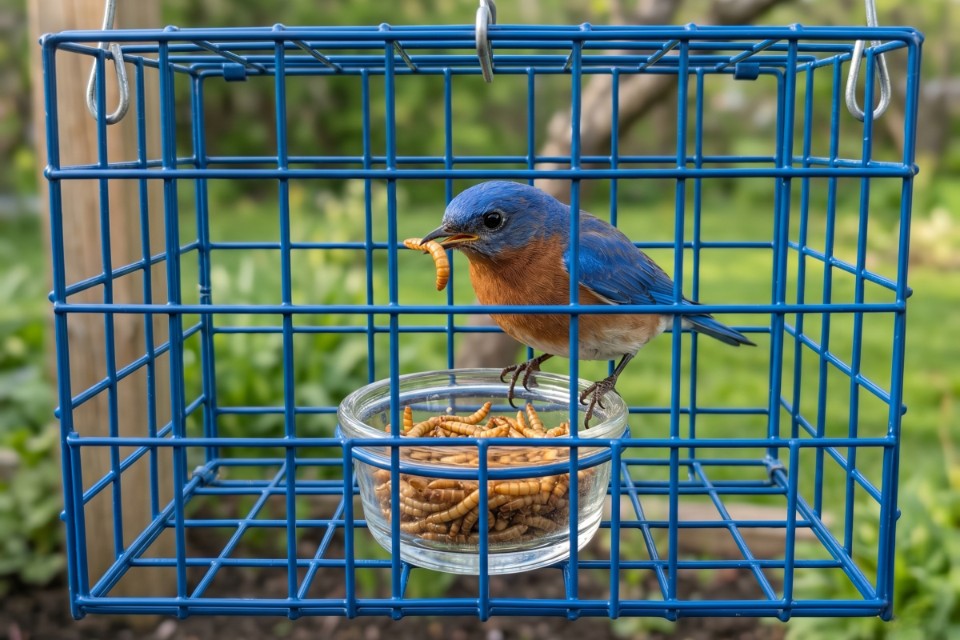
Positioning the feeder within 15 to 30 feet of the occupied nest box makes it easy for the resident pair to locate and use without extended foraging flights. The North American Bluebird Society recommends approximately 15 mealworms per bluebird per day, offered in smaller amounts twice daily rather than in a single large dump, to reduce the risk of other species discovering and depleting the supply before the resident pair accesses it.
For additional context on managing starling competition at feeding stations, see our article on how to deter starlings from bird feeders.
Bluebird Success: The Forensic Placement Master Key
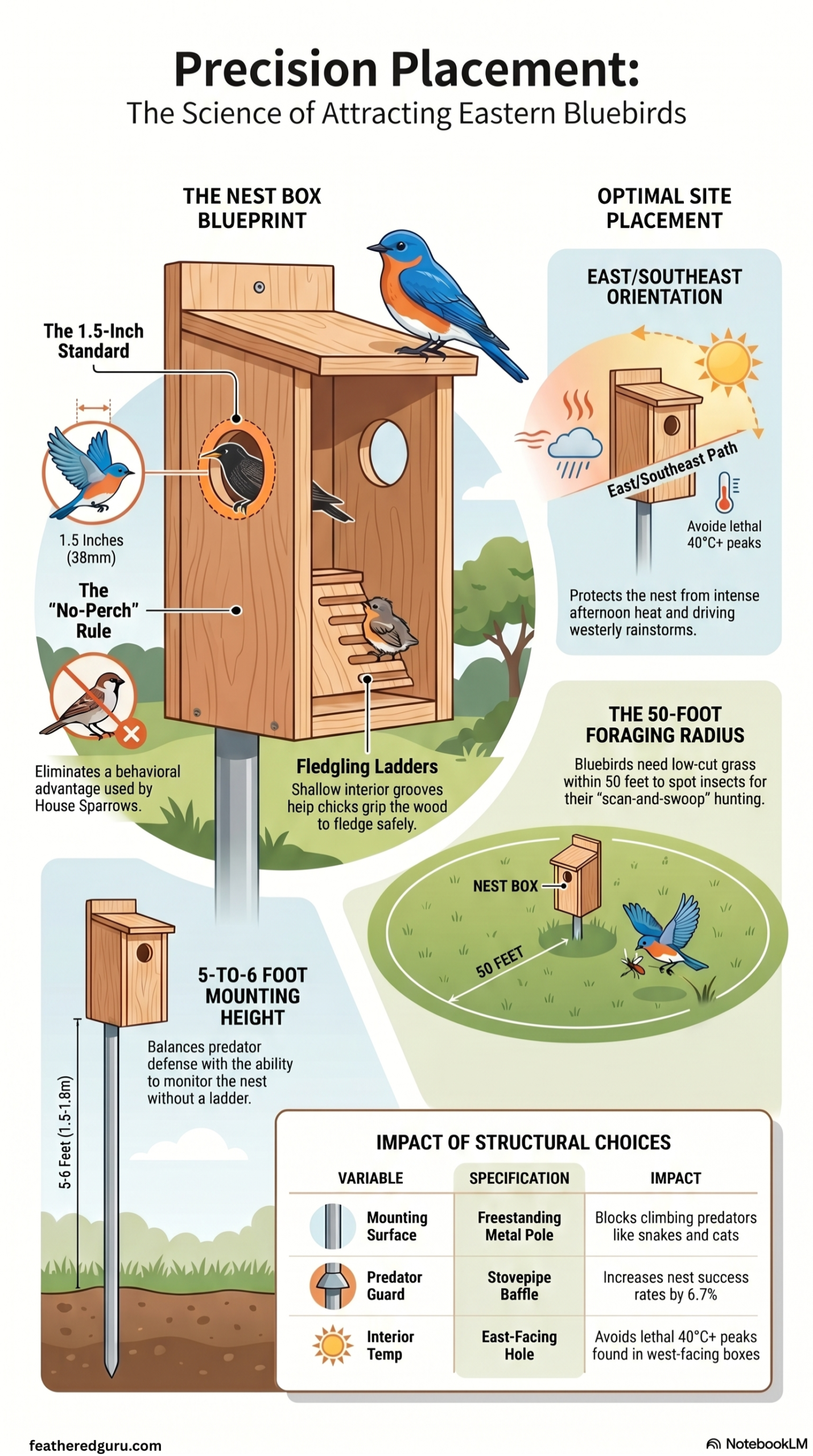
To ensure your backyard setup is 100% compliant with the biological requirements of the species, we have synthesized our data into a single visual “Field Manual.” Use the guide below as a final verification of your 5-to-6-foot mounting height, East-facing orientation, and mechanical predator barriers before the breeding season begins.
Summary: How Do You Successfully Attract Bluebirds?
To successfully attract bluebirds and maintain a productive territory, your setup must pass the forensic criteria for hardware and habitat. This requires providing a specialized nest box with a 1.5-inch entrance hole, mounting it 5 to 6 feet high in an open area, and offering supplemental mealworms for recruitment. By following these scientific placement and hardware specifications, you can turn a suburban yard into a productive territory capable of supporting multiple bluebird broods throughout the breeding season.
Eastern Bluebirds are capable of raising two to three broods in a single season. According to the Audubon Society’s Eastern Bluebird field guide, the species typically fledges young 18 to 19 days after hatching, and pairs begin a second nesting attempt shortly after the first brood becomes independent.
A yard engineered to the specifications described in this article does not just attract one nesting attempt. It creates the conditions for successive broods across a full five-month breeding season, from early March through late July in most of the eastern United States.
The evidence-based checklist for a successful multi-brood setup comes down to six non-negotiable elements: a freestanding pole at five to six feet; a stovepipe baffle below the box; an east- or southeast-facing entry hole of exactly 1.5 inches; no exterior perch; a minimum 50-foot radius of short open grass within sight of a separate scouting perch; and a consistently maintained mealworm feeder sized to exclude starlings. Each element targets a specific failure point, and together they replicate the conditions a wild bluebird pair would seek in optimal edge habitat.
For broader context on the invasive species pressure Eastern Bluebirds face across North America, see our articles on invasive backyard birds and Eastern Bluebird fun facts.