
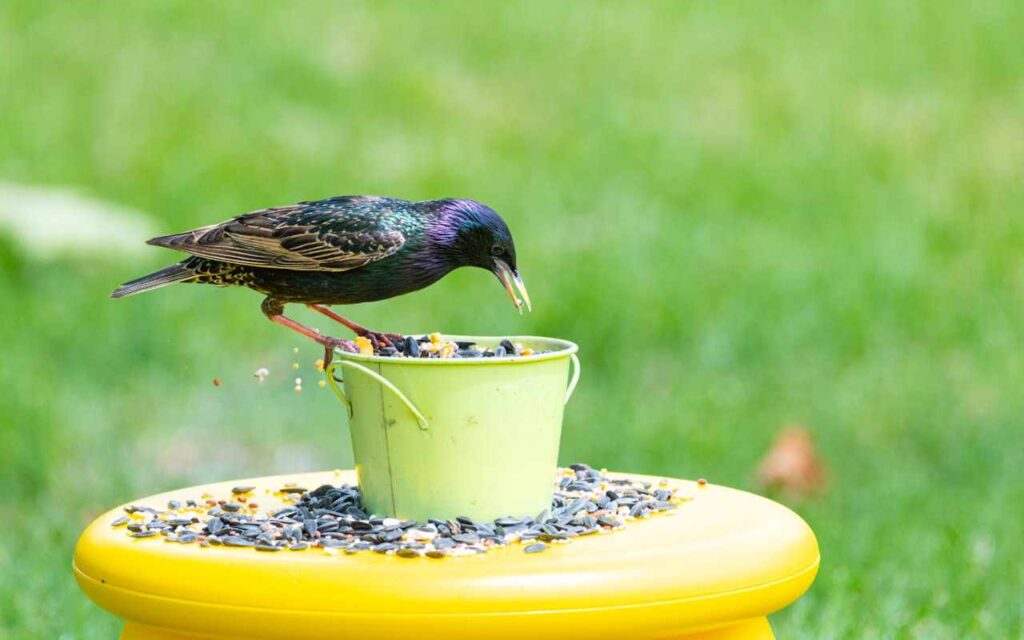
Here’s a confession: most people go out of their way to keep starlings out of their gardens. But some of us see these bold, noisy birds for what they are, smart, social, and honestly pretty entertaining to watch. If you’ve ever wondered how to attract starlings to your garden, you’re already ahead of the curve. Starlings get a bad reputation they don’t fully deserve, and once you start paying attention, you’ll see why they’re worth inviting in.
I grew up watching starlings sweep across my neighborhood in huge flocks, their wings roaring through the air like a wave 🙂. For years, I thought they were just nuisance birds. Then I actually started watching them closely, and my view changed completely. European starlings have complex social lives, sharp problem-solving skills, and surprising athleticism. If you want to experience the wild energy of backyard birdwatching starlings, here’s how to make your garden their new favorite hangout.
- Feed them suet, mealworms, cracked corn, and peanut bits, not hard seeds.
- Use sturdy platform or suet feeders that can handle groups of large, active birds.
- Scatter food on the ground to mimic their natural foraging habits.
- Plant berry-producing shrubs and trees for natural feeding opportunities.
- Install nest boxes or let them use cavities under eaves and building overhangs.
- Provide fresh water for drinking and bathing; starlings love a good splash.
- Keep feeders stocked year-round, starlings remember reliable feeding spots.
- Enjoy their bold energy, starlings add real character to any garden.
Understanding European Starlings: The Birds Everyone Loves to Hate
Show Transcript
0:00 – Introduction to Starlings
Let’s talk about starlings. Yeah, I know what you’re probably thinking: loud, aggressive, kind of the party crashers of the bird world. But what if I told you there’s way more to them? What if you could turn your backyard into a stage for one of nature’s smartest and most social birds? Let’s dive in.
0:17 – Pest or Prized Guest?
This is the big question: pest or prized guest? Most people see them as pushy intruders, but if you take a closer look, you find an incredibly fascinating social creature.
They’re bold, they’re noisy, but they’re clever, social, and honestly just super entertaining to watch.
0:51 – Understanding Starlings
How do we shift our perspective from intruder to icon? It starts with their story.
To attract them, we first need to understand how they got here and what makes them tick. It all started with a small group released in New York City, and now millions cover the entire continent. Their secret? Brains, a flexible diet, and the ability to live right alongside humans.
1:25 – Five-Step Plan to Attract Starlings
Step 1: Food (1:41)
Giving them the right food is key. Surprisingly, starlings can be picky. Whole sunflower seeds might get ignored, but high-energy, easy-to-grab items like suet, mealworms, or cracked corn will catch their attention fast.
Step 2: Feeder Types (2:08)
Platform feeders are perfect because starlings are social and like to feed together. Suet feeders are great too. Scatter some food on the ground to mimic natural foraging.
Step 3: Shelter (2:28)
Starlings are cavity nesters. Nest boxes are ideal if the dimensions are correct:
- Entrance hole: 1.5 inches
- Floor space: 4×4 inches
- Height: at least 8 inches
Step 4: Observation (3:17)
Watch starlings up close, including murmuration (the swirling cloud of birds in the sky). They react to the seven closest birds, creating a flowing, protective dance.
Step 5: Consistency (3:54)
Be a reliable host. A few scouts noticing your garden is enough to attract the whole flock over time.
4:29 – Intelligence and Problem-Solving
Starlings are incredible problem solvers. Puzzle feeders give you a front-row seat to watch them observe, experiment, and persist until they succeed.
4:57 – Year-Round Feeding Strategy
Your feeding strategy should change with the seasons:
- Spring & Summer: Protein like mealworms for babies
- Fall: High-calorie foods for migration
- Winter: Suet and corn when other food is scarce
5:20 – Creating a Starling-Friendly Garden
Think beyond the feeder. A starling-friendly garden includes:
- Dense shrubs for cover
- Berry-producing plants for snacks
- A clean, fresh bird bath for drinking and bathing
By providing food, water, and shelter consistently, you’re creating a mini ecosystem and a daily show of intelligence, drama, and acrobatics.
5:33 – Conclusion & Call to Action
By embracing this misunderstood bird, you open your garden to a world of energy and wonder. The only question left is: are you ready to welcome one of nature’s boldest and most fascinating performers?
For more detailed guides on attracting starlings, tips for feeders, and seasonal care advice, visit FeaturedGuru.com. Your garden, and your new feathered friends, will thank you!
Before you can attract starlings to your backyard, you need to understand what makes them tick. European starlings are controversial birds, but understanding their nature helps explain their success and appeal.
European starlings were introduced to North America in the 1800s by homesick settlers who wanted familiar birds from their homeland. According to the Cornell Lab of Ornithology, roughly 100 starlings were released in New York’s Central Park in 1890. Those birds have since multiplied into millions, making European starlings one of the most abundant bird species on the continent.
People often dislike starlings because they’re aggressive, noisy, and they eat enormous quantities of food. They’ll monopolize feeders, outcompete native species, and consume whatever resources they encounter. But here’s what I find fascinating: their aggression and competitiveness stem from the same characteristics that allow them to thrive anywhere humans exist. Starlings are generalists, they eat almost anything, nest almost anywhere, and they’re incredibly intelligent.
Research from Audubon confirms that starlings are highly adaptable omnivores. They’re problem-solvers that learn quickly and communicate complex information within their flocks. They dance, they sing, they perform aerial maneuvers of stunning complexity. They’re basically the overachievers of the bird world, and sometimes their competence feels threatening to other species. Check out our comprehensive guide on the characteristics of European starlings to dive deeper into their fascinating biology and behavior.
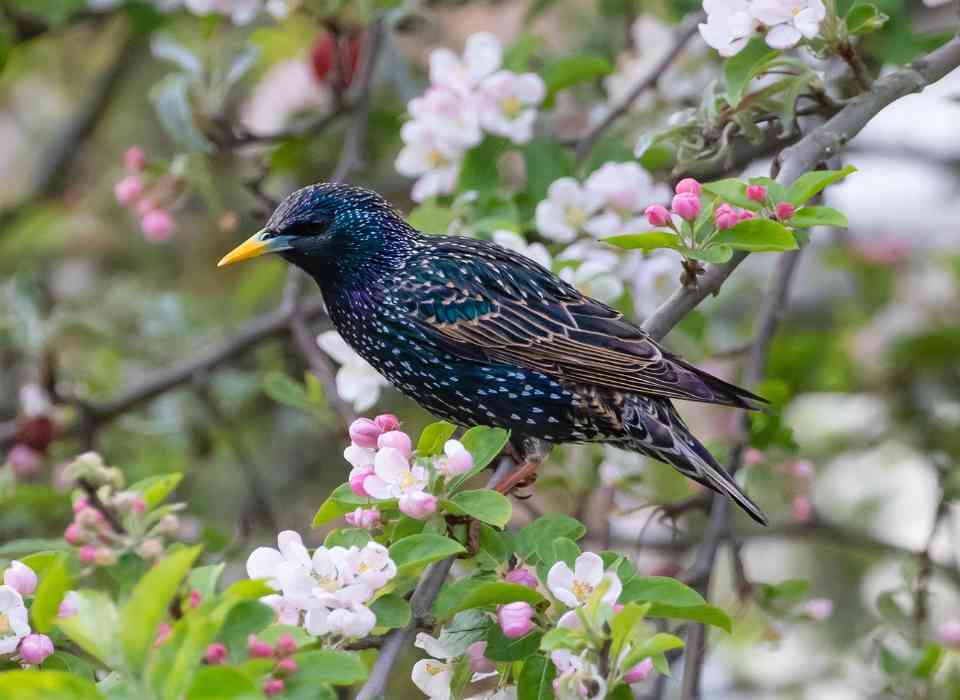
Physically, starlings are stocky black birds about 8-9 inches long with iridescent purple and green sheen on their plumage. They’re easily identifiable by their pointed bills, short tails, and aggressive posture. In winter, they develop white spotting that gives them a speckled appearance.
Feeding Starlings: Understanding Their Culinary Preferences
The fastest way to attract starlings to your garden is understanding what foods they genuinely prefer. Contrary to popular belief, starlings aren’t indiscriminate garbage disposals, they have specific feeding preferences that determine what brings them to your yard.
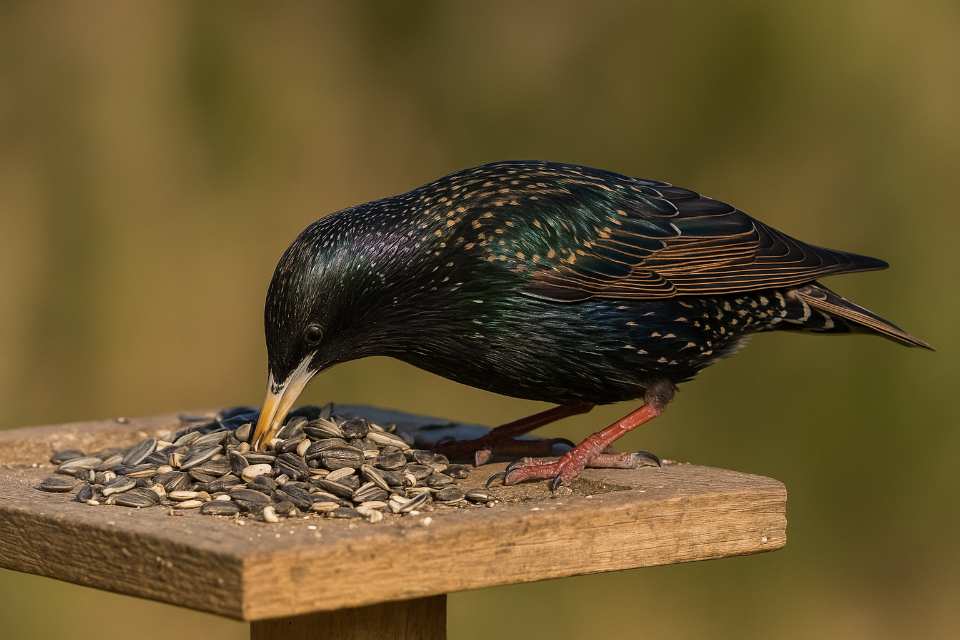
Softer seeds and grains appeal to starlings far more than hard seed shells. According to research from Birdfact, starlings have beaks designed for eating insects and soft fruits, not for cracking hard seed shells. They’ll devour cracked corn, broken peanut pieces, and crushed sunflower seeds, but they’ll ignore whole sunflower seeds and intact peanuts. This beak structure matters for your starling bird feeder guide, knowing what they can and can’t eat shapes your feeding strategy.
Suet and peanut butter are starling favorites. According to Wild Birds Unlimited, suet cakes, peanut pieces, and foods without shells attract starlings consistently. The soft, high-fat content provides concentrated calories that fuel their active lifestyles. FYI, starlings need enormous quantities of calories daily because they’re constantly active, vocally assertive, and energetically demanding birds. Learn more about how to make suet cakes for birds if you want custom feeding options for starlings.
Mealworms and insects form the bulk of their natural diet. Research from Bird Feeder Expert confirms that starlings prefer invertebrates above almost everything else. If you want maximum starling watching activity, offering live mealworms creates an irresistible attraction. Starlings will visit repeatedly, performing acrobatic feeding displays as they snatch insects mid-air or ground-feed on your lawn.
Berries and fruits attract starlings seasonally. They’ll strip berry-producing trees and shrubs bare if populations are large enough, consuming everything available. Mulberries, elderberries, and other wild fruits disappear quickly when starling flocks arrive. This feeding behavior, while destructive to landscaping, is entirely natural and beneficial for the birds.
What starlings don’t prefer is equally important. According to Chipper Birds, safflower seeds and Nyjer seeds attract far fewer starlings than other options. If you want to feed songbirds while minimizing starling competition, offering these seeds creates selective feeders that exclude the most aggressive competitors.
Starling Feeders: Creating Effective Feeding Stations
Your starling bird feeder guide should include understanding feeder types that work best for these robust, aggressive birds. Starlings need feeders that can withstand their weight and intensity.
Sturdy platform feeders work well for starlings. These open-design feeders accommodate the flock feeding behavior that starlings prefer. Multiple birds can land simultaneously, establishing loose social hierarchies while maintaining group vigilance. I’ve watched up to 20 starlings crowded onto a single platform feeder, creating this chaotic but fascinating feeding ballet 🙂
Suet feeders attract massive starling populations. Both cage-style and wire-mesh suet feeders work equally well. Starlings are strong birds that cling and manipulate feeders skillfully. They’ll work suet feeders for extended periods, consuming enormous quantities.
Ground feeding appeals to starlings’ natural foraging instincts. Scattered seed, grain, or breadcrumbs on bare ground brings flocks immediately. This ground-feeding behavior mimics their natural habitat preferences. Starlings evolved foraging on grasslands, so offering food at ground level feels natural to them.
Hopper feeders can work for starlings, though their weight sometimes stresses feeder mechanisms. Heavy-duty hoppers designed for larger birds handle starling populations better than lightweight models. Position them securely and monitor them regularly for damage.
Multiple feeders spread throughout your garden prevent any single feeder from becoming overwhelmed. Distributing food sources reduces aggressive confrontations and allows subordinate birds to feed without constant conflict. From a starlings garden tips perspective, redundancy keeps populations from concentrating too heavily in single locations. Check out our guide on how to keep squirrels away from bird feeders for strategies that can also protect starling feeders from damage.
Feeder placement matters significantly. Position feeders in open areas where starlings can see approaching predators and each other simultaneously. They feel safest with clear sightlines in all directions. This behavior stems from their flocking nature; constant awareness of group status trumps protective cover preferences.
Creating Attractive Nesting Habitat: Starlings Nesting Ideas
If you want starlings nesting ideas to work successfully, you need to understand what draws them to specific properties. Starlings are cavity nesters that exploit almost any enclosed space for breeding.
Starlings nest in cavities in buildings, structures, and trees. According to Wikipedia, they occupy holes in buildings, streetlights, sign posts, traffic lights, and other manmade structures with equal enthusiasm. They’re also comfortable nesting in natural tree cavities, old woodpecker holes, or specialized nest boxes. Their flexibility in nesting site selection means they can establish populations almost anywhere.
Nest boxes specifically designed for starlings attract breeding pairs efficiently. According to research from the Cornell Lab, starling nest boxes should feature 1.5-inch entrance holes, 4×4-inch floor dimensions, and 8-inch internal height. These specifications differ slightly from songbird nest boxes to accommodate starling body size and nesting behavior. For more comprehensive nesting strategies, explore our guide on how to encourage birds to nest in your garden.
Dense trees and shrubs provide protective cover that starlings find appealing. They prefer nesting sites surrounded by vegetation that screens them from predators while offering escape routes. Planting dense shrubs or maintaining thick tree foliage creates nesting habitat that starlings exploit. Our article on bird-friendly garden design covers creating layered vegetation that accommodates nesting starlings.
Building overhangs, gutters, and alcoves become natural nesting sites. Starlings will nest under eaves, in drain gutters, behind drainpipes, or in any protected nook that offers shelter from weather. Many people consider this problematic, but from a starlings nesting ideas perspective, you’re essentially providing housing that attracts breeding populations.
Starlings typically raise two broods per year, sometimes three in favorable conditions. They’re incredibly productive breeders, which explains their population explosion since their introduction. If you install nest boxes, you’ll likely host multiple generations within a single season.
Attracting Starling Flocks: Understanding Flock Behavior
The real magic of how to lure starlings comes from understanding their social nature. Starlings are intensely social birds that congregate in massive flocks, particularly during fall and winter migration.
Murmuration flocks create one of nature’s most spectacular aerial displays. Large starling flocks move in coordinated fashion, their wings creating mesmerizing wave-like patterns across the sky. According to research published in PLoS Biology, starling murmurations are primarily an anti-predator adaptation. The study found that murmurations function as coordinated escape strategies where birds share predator awareness across the entire flock, dramatically improving survival odds.
The Princeton research on murmuration coordination reveals additional complexity. According to research by George Young and colleagues, starlings coordinate their movements with their seven nearest neighbors, creating a cascading effect where individual responses propagate throughout the entire flock. This coordination system allows flocks to respond to threats with remarkable agility, making the flock essentially function as a single, massive organism.
Once you attract a few starlings to your garden, word spreads rapidly through local populations. Starlings communicate extensively, advertising food sources and safe locations to flock mates. A garden that successfully feeds a few initial starlings quickly becomes known throughout the broader population, resulting in exponential visitation increases.
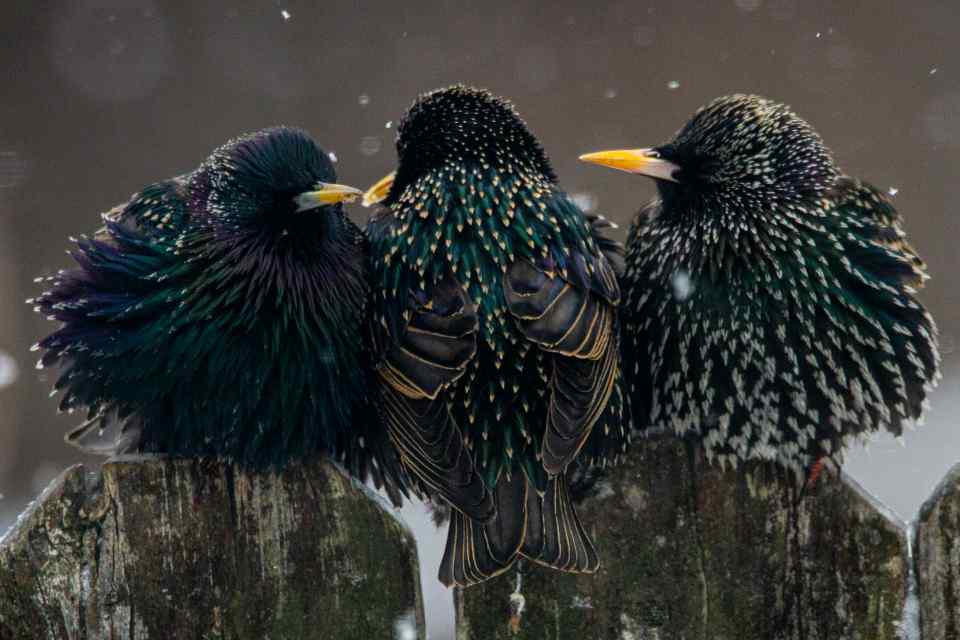
Winter roosting sites become critical for starling survival. Starlings establish communal roosts where hundreds or thousands of birds gather nightly. These roosts provide warmth through collective body heat and safety through group vigilance. If your garden offers protective cover, dense evergreens, thick shrubs, or building cavities, starlings will use it for roosting, creating impressive nightly congregations. For winter support strategies, check out our article on how to attract birds during winter.
IMO, observing starling flocks offers insights into avian intelligence, social structure, and problem-solving that solo birds simply can’t demonstrate. Watching starlings coordinate, communicate, and cooperate reveals complexity that challenges simplistic views of birds as instinct-driven automata.
Feeding Starlings Year-Round: Seasonal Strategies
Understanding feeding starlings seasonally optimizes your approach and determines whether starlings become permanent residents or seasonal visitors.
Spring and summer starlings hunt insects obsessively. Research confirms that starlings consume enormous quantities of invertebrates during breeding season, feeding multiple nestlings simultaneously. Natural insect populations support most breeding-season starlings, so feeder visitation drops significantly. However, offering mealworms or suet during breeding season keeps them invested in your garden as a territory worth defending.
Fall migration brings starling flocks to gardens en masse. Migrating populations need fuel for their journey, and they descend on feeders with remarkable intensity. This is when attract starlings to backyard efforts yield maximum results. You’ll witness the most dramatic feeding activity, the largest flock congregations, and the most chaotic feeder dynamics during fall.
Winter feeding becomes essential for survival. Starlings that overwinter in northern regions rely on feeders when natural food sources freeze or disappear under snow. Consistent winter feeding supports local populations and attracts migrants seeking reliable resources during harsh conditions.
Year-round feeders kept reliably stocked maintain starling populations from season to season. Starlings are smart enough to remember productive feeding locations and return reliably once established. A single missed refill can trigger abandonment as starlings shift their foraging routes to more reliable sources.
Garden Management for Starling Populations
Managing your garden to support starlings garden tips requires balancing their needs with those of other wildlife and landscaping goals.
Dense protective cover becomes essential for roosting populations. Maintain thick shrubs, evergreen trees, and brush piles that accommodate large numbers of roosting birds. These structures provide warmth, safety, and shelter from weather that starlings desperately need, particularly during winter.
Natural food sources reduce feeder dependence. Berry-producing plants, grass areas with insect populations, and seed-bearing plants support starlings naturally. Gardens designed for feeding starlings naturally create systems where birds exploit diverse resources rather than relying entirely on supplemental feeding.
Accommodate large populations gracefully. Rather than fighting starling presence, accept that healthy ecosystems accommodate all species, including the aggressive and prolific ones. Large starling populations indicate environmental conditions that support abundant bird life generally.
Monitor for conflicts with native species. Starlings are cavity nesters that compete aggressively with native cavity-nesters like bluebirds and woodpeckers. Providing multiple nest boxes at various heights and entrance hole sizes allows diverse species to nest without eliminating starling access to appropriate boxes.
Conclusion: Celebrating Controversial Birds
Attracting starlings to your backyard requires accepting them as they are: aggressive, intelligent, social birds that refuse to follow rules other species respect. They’re not “bad” birds; they’re just exceptionally good at exploiting available resources.
Once you stop fighting starlings and start embracing them, you unlock hours of entertainment and real insight into animal behavior. Their flocking, complex calls, problem-solving skills, and stunning aerial displays rival any native bird. Yes, they dominate feeders. Yes, they’re loud. Yes, they draw large flocks. But they’re fascinating in ways many popular backyard birds just aren’t.
Stock your feeders with softer seeds, suet, and mealworms. Provide nesting boxes and dense protective cover. Keep water sources reliably filled. Then step back and observe the chaos, energy, and intelligence of starling flocks. You’ll witness coordinated behavior, complex social hierarchies, and problem-solving that challenges assumptions about avian cognition.
Last spring, I watched a starling spend ten minutes figuring out how to manipulate a puzzle feeder designed to exclude its species. It observed other birds, experimented with different approaches, and eventually succeeded through sheer persistence and problem-solving. That moment crystallized my appreciation for these often-maligned birds. They’re remarkable, even if they’re not always welcome. Give them a chance, and they’ll surprise you.