
Reader Transparency: This birding guide contains paid affiliate links. If you click a link and make a purchase, I may receive a small commission at no extra cost to you. As an Amazon Associate, I earn from qualifying purchases. Your support helps keep Feathered Guru flying!
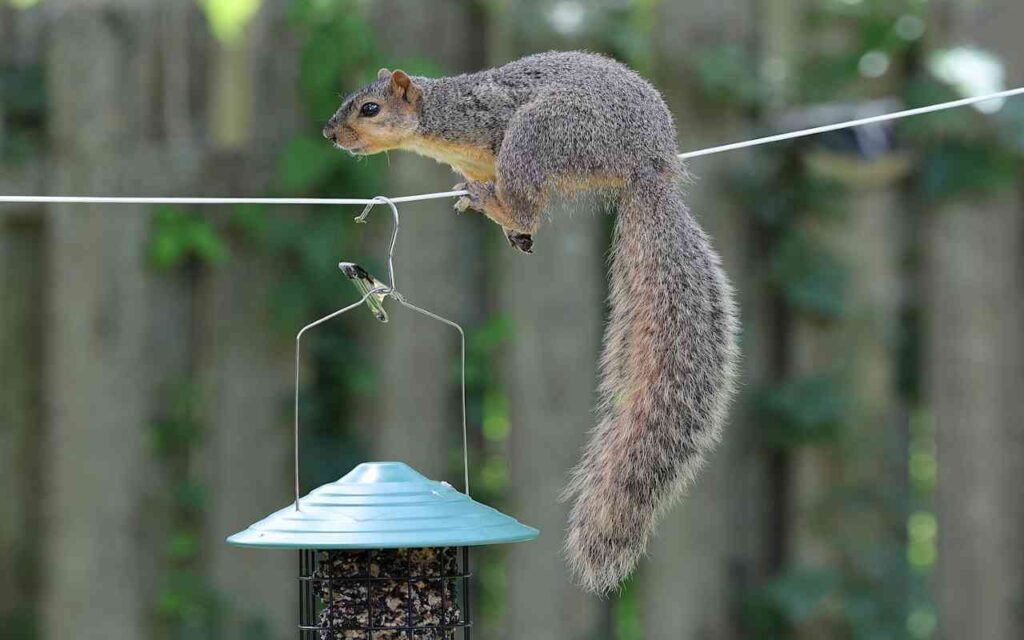
Last week, I pulled up a chair with my morning coffee, looked out the window to enjoy a beautiful flash of crimson, and found a fat gray rodent hanging upside down from the perch, devouring my expensive seed. Every backyard birdwatcher knows the explosive frustration of watching a single persistent mammal turn an expensive sanctuary into its personal buffet, forcing you to figure out how to keep squirrels away from bird feeders for good.
In my own yard, buying louder noise makers, hanging flashy decorations, or throwing rocks at tree branches never worked because these clever critters solved basic obstacles before my coffee even got cold. If you are tired of watching local songbirds get bullied off your property lines, you must move past casual tricks and master the raw physics of mammalian exclusion.
Proven Strategies for Squirrel-Proofing Your Yard
The single most effective strategy is isolating your hardware entirely outside the rodent jumping zone by applying the strict five-seven-ten spacing rule across your yard layout.
Pairing this structural calculation with a smooth eighteen-inch metal pole baffle and premium weight-sensitive mechanical shrouds permanently neutralizes theft without harming local wildlife.
Watch How to Stop Squirrel Jumps (Animated Guide)
Reviewing an illustrated breakdown provides excellent clarity when learning these spatial spacing rules for the first time. This animated whiteboard video maps out the precise jumping arcs, baffle installation heights, and weight-calibration settings directly on a digital canvas.
📝 View Video Timeline & Key Takeaways
[00:00 – 01:32]: Analyzing rodent behavioral motivation and bio-acrobatics. This segment examines how mammalian pests leverage high spatial memory, integrated sensory olfactory pathways, a 5-foot stationary vertical leap, and a massive 10-foot horizontal trajectory to compromise standard feeding arrays.
[01:33 – 02:43]: Deploying the 5-4-8 Spatial Clearance Blueprint. To neutralize kinetic jumping metrics, the feeder must sit a minimum of 5 feet vertically from the ground, 4 feet horizontally from flat launch pads like fence rails, and 8 feet away from lateral climbing vertical planes like tree trunks.
[02:44 – 04:04]: Mechanical Armor & Kinetic Deterrence Hardware. Evaluating the physics of weight-activated compression ports, micro-mesh caged enclosures, and active torque-spinning cylinders. Incorporating physical low-friction PVC perimeter columns and modular deflecting baffles breaks climbing leverage completely on autopilot.
[04:05 – End]: Biochemical Repellents & Tactical Diversion Operations. Leveraging avian insensitivity to capsaicinoids by introducing crystalline pepper matrices to the seed supply to trigger severe mammalian trigeminal nerve rejection. Deploying alternative decoy feeding zones, botanical olfactory boundaries, and automated motion-activated hydro-repellents to achieve complete territory control.
Mastering the Physics of the Five-Seven-Ten Spacing Rule
To understand how to keep squirrels away from bird feeders, you must first treat these animals as highly athletic ballistic projectiles.
An adult gray squirrel can jump five feet straight up from a solid grass lawn, leap seven feet horizontally from a flat fence rail with a running start, and drop ten feet vertically from an overhanging roof shingles layout without sustaining any internal injuries.
If your mounting pole sits anywhere inside this metric framework, your seed supply will be systematically raided. You must measure your clearances using a physical tape measure rather than guessing.
Anchor your primary mounting poles a minimum of twelve feet away from the nearest porch railing, tree trunk, or brick wall patio. This total environmental isolation completely removes their launch pads, forcing them to remain down on the turf lines.
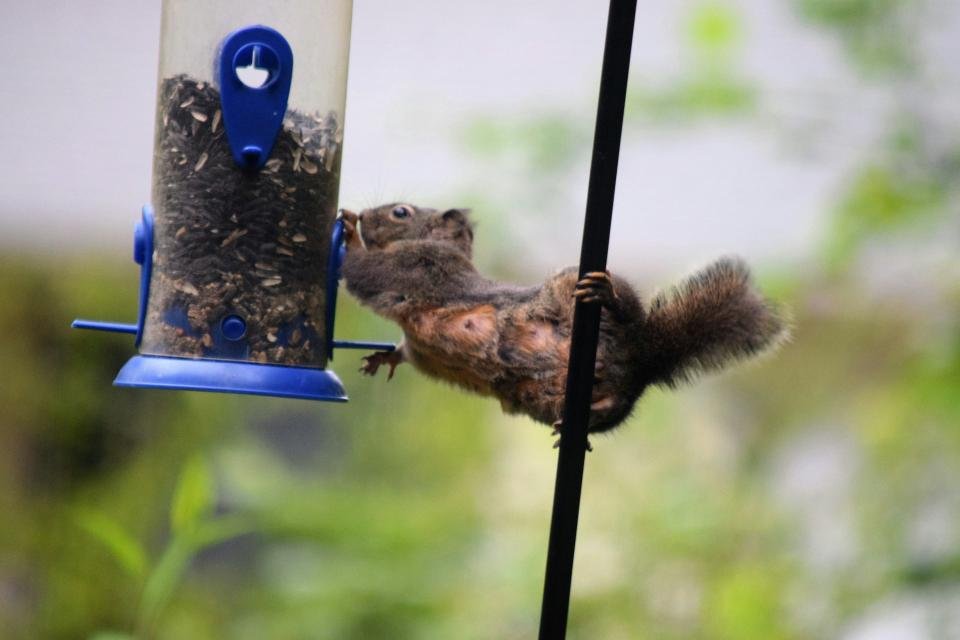
Furthermore, these rodents utilize advanced climbing mechanics to gain access to seemingly impossible vertical surfaces. Their hyper-flexible hind ankles can rotate a full 180 degrees, allowing them to climb straight down tree bark or metal poles headfirst.
Once they achieve a secure grip on an unprotected pole, their vertical ascent velocity allows them to reach your hanging trays in a matter of seconds.
By using the strict five-seven-ten horizontal and vertical safety clearing guidelines, you create an uncrossable air gap that nullifies their specialized climbing and jumping abilities entirely.
Implementing Mechanical Exclusion Barriers
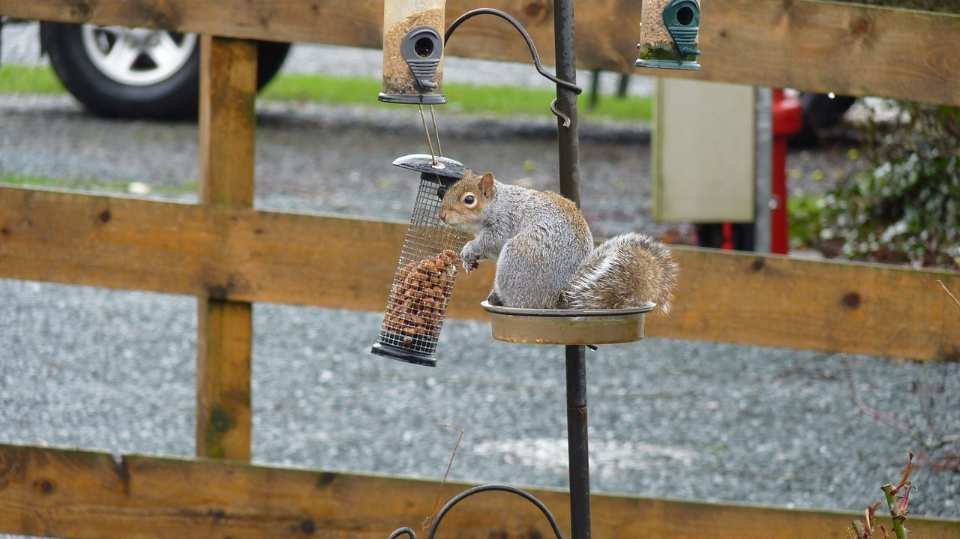
Standard clear plastic tubes are completely useless against rodent teeth, as their sharp incisors can gnaw through thin acrylic walls in under five minutes. To permanently exclude them, your hardware must feature heavy-gauge powder-coated steel mesh grids or internal weight-activated compression springs.
Investing in a premium model ensures that when a heavy mammal lands on the top ring, an integrated metal shroud instantly slides down to lock all seed access holes tightly. Reviewing our complete breakdown on how to prevent bird seed waste will help you pick a heavy-duty structural layout that keeps your yard clean and stops messy cleanup problems before they start.
To stop climbing scouts from moving straight up your mounting poles, install a wide metal pipe sleeve or a smooth metal disk baffle at least five feet above the grass. Baffles must measure at least 18 inches in diameter to prevent agile scouts from wrapping their claws around the edge.
According to field operational insights published in the Audubon Magazine Rodent Deterrent Guide, placing this smooth barrier between four and five feet high is the only definitive way to nullify climbing friction.
If you want to view your yard visitors without pesky rodents getting in the frame, read our best smart bird feeder with camera report to find a tech-calibrated solution.
Secure Your Feeder with a Professional Heavy-Duty Baffle
Stop climbing thieves instantly with a slick, defensive barrier. Upgrading to a highly rated One-Piece 17″ Metal Squirrel Baffle for Bird Feeder Poles & Hanging Feeders ensures that rodents slip right off your pole before they ever reach the seed tray. This easy-to-install hardware solution instantly patches the single biggest vulnerability in your backyard layout.
Check Price on AmazonThe Mechanics of Weight-Sensitive Feeder Shrouds
When space constraints prevent you from achieving total distance isolation, your primary defense line must rely on mechanical weight-activated technology. These systems allow lightweight songbirds to feed continuously while dropping a heavy defensive shroud the microsecond a heavy mammal sets foot on the metal perches.
Using this gear creates a passive hardware barrier that protects your premium black-oil sunflower blends entirely on autopilot. It removes the need for constant supervision and stops destructive chewing behaviors before they ruin your expensive property investments.
Mechanical shrouds are highly superior to basic wire cages because cages naturally exclude beautiful larger songbirds like northern cardinals, rose-breasted grosbeaks, and mourning doves.
A spring-loaded compression system calibration allows you to adjust the precise closing weight threshold down to the gram. This means you can keep your ports wide open for heavier local birds while slamming the steel doors shut the moment an eastern gray squirrel touches down.
Furthermore, high-quality mechanical units use marine-grade aluminum and thick powder-coated steel armor plates that stand up perfectly to decades of aggressive gnawing attacks. The smooth outer body surfaces give climbing rodents absolutely zero claw traction, forcing them to slip off the unit safely onto the turf below.
Stop Rodents Instantly with the Gold Standard of Feeder Protection
If you want to end the seed theft game permanently, invest in the legendary Brome Squirrel Buster Plus Weight-Activated Bird Feeder. This commercial-grade system features patented adjustable weight spring settings, a 5.1-pound seed capacity, and a unique chew-proof design that pays for itself in under a month. It is the absolute highest-rated option among professional birding field guides for total mammalian exclusion.
Check Price on AmazonUtilizing Dietary Chemistry Deterrents
If your current yard layout forces you to hang seed stations near mature tree limbs or tight balcony railings, you can protect your grain using chemical taste aversions. Mixing dry, powdered capsaicin formulations or pure cayenne pepper directly into your loose bird seed creates an immediate defensive barrier.
When a rodent attempts to chew the treated grain, the capsaicin triggers a powerful heat reaction across their mucous membranes, forcing them to quickly abandon the area.
Reviewing the formal field data published in the Cornell University Capsaicin Research Study confirms that treating whole black-oil sunflower seeds with capsaicin oleoresin at a heat strength of 40,000 Scoville Heat Units drastically drops mammalian feeding durations.
For an easier, mess-free alternative, you can buy pre-treated hot pepper seed cylinders. To make sure your local songbirds stay healthy, review our diagnostic field guide on how to prevent mold in bird feeders to keep your spicy seed blocks fresh and dry during heavy rainstorms.
Mammalian pain pathways are highly sensitive to these specific plant lipids because capsaicin directly targets the sensitive nerve endings inside the tongue and mouth. When a rodent handles or chews the treated hull, it experiences an intense, non-damaging inflammatory burning sensation that triggers its survival instinct to escape.
Because wild birds evolved completely separate digestive tracks and taste receptors, their systems process the hot pepper as normal nutrition. In fact, many species of bright backyard songbirds are actively drawn to the red color of pepper-infused seed blends, helping you increase your yard diversity while keeping local mammal populations at bay.
Switch to Pre-Treated Infused Hot Seed Bulk Options
Skip the messy powder mixing process entirely by switching your birding inventory to pre-treated feeds. Stocking your yard with a bulk bag of Cole’s HM20 Hot Meats Bird Seed (20-Pound Bag) allows you to leverage defensive biochemistry immediately without changing your existing pole setup. Songbirds will swarm your yard for the high-oil, nutritious whole sunflower kernels while squirrels and neighborhood rodents leave the fiery, habanero-infused seeds completely untouched.
Check Price on AmazonStrategic Habitat Modification Steps
Managing your surrounding landscape is critical to permanently breaking local foraging patterns. If your bird boxes are constantly raided, clearing away low hanging brush prevents predators from nesting nearby.
Reviewing our sitemap blueprint on the best place to put a birdhouse will show you how to safely separate your breeding sanctuaries from active feeding stations. Additionally, pruning your lower tree limbs up to eight feet from your home’s roof removes key launching pads.
To keep your ground clean, clear away all fallen hulls and seed debris daily. If large flocks or rodents continue to overrun your lower yard boundaries, deploying the sensory exclusion techniques outlined in our guide on how to discourage crows from your yard will quickly restore long-term ecological balance.
According to avian conflict data compiled in the Wildlife Online Nest Predation Report, high densities of foraging mammals can directly cause up to 27% of nesting failures for local woodland bird species.
Furthermore, comprehensive urban planning metrics published in the ScienceDirect Landscape and Urban Planning Journal demonstrate that unguarded feeding stations attract a heavy concentration of predators, which significantly lowers the survival rate of adjacent wild bird nests.
Fallen seed layout zones create a massive secondary scent trail that continuously draws local rodent populations straight to your property perimeters. When birds sort through cheap wild grain blends, they intentionally scatter lighter filler seeds onto the lawn, building a highly accessible ground-level feeding station for pest species.
To break this attraction cycle, implement a strict lawn sanitation routine using a heavy outdoor vacuum or a stiff wire broom to clear out hidden organic waste every afternoon. Swapping your low-grade retail seed out for zero-waste, hull-free meat blends ensures that every piece of food is eaten directly on the perches, leaving nothing behind to fuel overnight mammalian scouts.
Transforming Your Daily Backyard Wildlife View
Shifting your property design to prioritize strict spatial boundaries completely permanently alters local mammalian foraging tracks. Moving your gear out of the launch zone saves money on seed and creates a peaceful backyard sanctuary for native songbirds.
Focus entirely on maintaining clear metal barriers, using weight-activated ports, and applying natural capsaicin coatings. These simple, highly disciplined field updates ensure you can enjoy your morning view with absolute confidence.
Once you finish adjusting your garden pole placement, utilize our premium backyard birds checklist to systematically document your daily species counts. Active logging allows you to easily track seasonal migratory arrivals and monitor your local wildlife ecosystem with absolute diagnostic accuracy.