
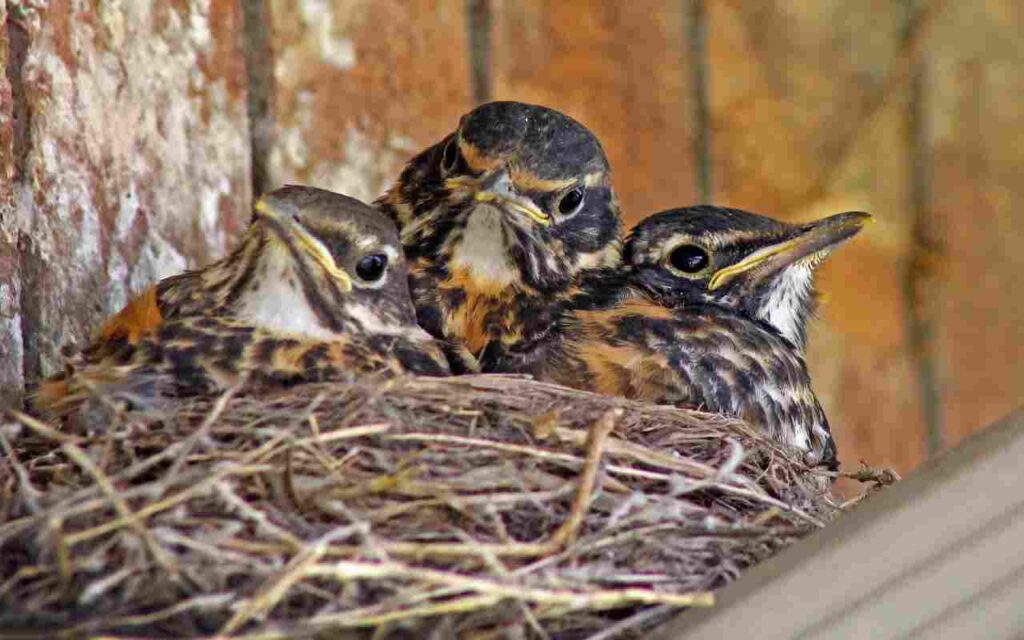
Spring transforms residential landscapes into critical breeding habitats for dozens of bird species, but well-intentioned homeowners often inadvertently compromise nesting success through routine activities. Knowing how to avoid disturbing nesting birds in spring helps property owners understand how everyday actions affect birds during their most vulnerable life stage and how small changes can support rather than disrupt breeding attempts.
Proper garden preparation creates the foundation, but avoiding disturbance during the breeding season determines whether those preparations translate into successful reproduction. This comprehensive guide examines timing, distance, noise, and activity patterns that influence whether birds successfully raise young or abandon nests prematurely. 🙂
- Birds are most sensitive during early incubation and just before fledging.
- Complete major pruning, construction, and window cleaning before breeding season.
- Walk paths and mow lawns carefully; mark and avoid ground nests.
- Keep pets leashed or indoors, especially around dense shrubs and tall grass.
- Minimize noise, sudden movements, and repeated visits near nests.
- Create low-disturbance zones in prime nesting habitat with multiple vegetation layers.
- Observe from a distance, monitor success, and adjust activities as needed.
Quick Explainer: Minimizing Disturbance to Nesting Birds
Before diving into the full guide, watch this quick video to learn practical steps you can take to avoid disturbing nesting birds in your yard.
Show Transcript:
0:00
Ah, spring is finally here. And you know what that means. That itch to get outside, clean up the yard, and finally tackle all those projects you’ve been putting off.
0:09
But here’s the thing. As we’re out there getting to work, we’re sharing that space with some very important and very vulnerable new neighbors.
0:16
So today, we’re diving into how to make our yards a true safe haven for nesting birds.
0:22
Let’s start with a really important question. Is your spring cleanup, done with the best intentions, actually helping local wildlife, or could it be harming them?
0:36
The tough reality is that many normal yard tasks like mowing, pruning shrubs, or power washing the deck can pose hidden but serious risks.
0:46
Without realizing it, we can accidentally sabotage nesting birds right when they’re at their most vulnerable.
0:53
To understand how to help, we first need to understand what I call the danger zone. It all comes down to timing and knowing when birds are most at risk.
1:02
Take a look at this timeline. Peak nesting season for most birds runs from April through July.
1:08
But the most critical moments are at the very start of incubation and right before young birds are ready to fledge.
1:16
Disturbances during these windows can easily cause parents to abandon the nest altogether.
1:27
And this isn’t a small issue. A major review found that eighty-eight percent of outdoor human activities, even quiet ones like hiking, negatively affect birds.
1:40
These impacts range from increased stress to complete reproductive failure.
1:44
Research shows that even activities we think are harmless create measurable stress, and that stress directly affects chick survival.
1:56
So yes, having a plan really matters. And that’s exactly what we’re getting into next.
2:01
Let’s walk through a simple but highly effective action plan to make your yard safer for nesting birds.
2:12
The single most impactful thing you can do is get your timing right. Try to finish big, loud, disruptive projects before March fully kicks in.
2:19
That means major pruning, power washing, or construction work should be wrapped up early.
2:27
From March through July, pause anything that isn’t absolutely essential.
2:31
Now let’s talk about mowing. We all have to do it, but it’s one of the biggest threats to ground-nesting birds.
2:36
The solution is a simple three-step approach. Before mowing, walk your lawn carefully.
2:42
If you find a nest, mark it from a distance and create a buffer zone about ten to fifteen feet wide.
2:52
Leave that area untouched until the chicks have fledged. It really is that simple.
3:00
Some projects are best saved for August, after the main breeding season ends.
3:04
Things like deck refinishing or roof repairs create constant noise and activity that can cause parents to abandon nests.
3:17
We also need to talk about pets. Dogs and cats are a major source of disturbance and predation during nesting season.
3:25
Keep dogs on a leash, and keep cats indoors, especially from March through July.
3:34
What if you find a nest and feel curious? That’s normal. If you do check it, follow Cornell’s NestWatch one-minute rule.
3:43
Keep visits to sixty seconds or less to reduce stress on the parents.
3:54
And if you don’t see a nest, the birds will still tell you when you’re too close. You just need to recognize the signs.
4:03
Listen for sharp, repetitive alarm calls, not normal songs. Watch for puffed feathers, agitated hopping, or dive-bombing behavior.
4:21
One dramatic example is the killdeer, which fakes a broken wing to lure threats away from its nest.
4:36
If you see these signals, stop what you’re doing, back away calmly, and avoid that area for a few weeks.
4:56
By taking these steps, you’re doing more than avoiding harm. You’re turning your yard into a functioning wildlife sanctuary.
5:09
When disturbances happen, nest abandonment increases. But when we actively protect nesting areas, fledgling success rises sharply.
5:24
Your actions have a direct and positive impact.
5:28
What might feel like a small inconvenience, like delaying a project, is actually a meaningful act of conservation.
5:41
And the reward is incredible. Watching young wrens or chickadees fledge because you gave them space is something special.
5:56
So here’s the question to think about. What’s one small change you can make this week to help your yard become the safe haven nesting birds need?
Understanding Disturbance Sensitivity Across Nesting Stages
Birds exhibit varying sensitivity to disturbance throughout the breeding cycle, with certain stages proving particularly vulnerable to human interference. Preparing your garden for nesting birds before breeding season begins is essential, but once nesting starts, minimizing disturbance becomes the priority.
According to the Cornell Lab of Ornithology’s NestWatch program, disturbance during the first few days of incubation can cause nest abandonment, as parent birds have not yet fully committed to a specific clutch. Similarly, approaching nests when young birds are close to fledging can trigger premature departure, dramatically reducing survival rates. Research on American kestrels nesting near human activity found urban disturbance can increase nest abandonment compared to quieter areas.
Research on disturbance effects published in PMC documented that even controlled scientific disturbance during banding operations affected reproductive success differently across species. The study found that daily nest survival rates varied based on timing and frequency of disturbance, demonstrating that both when and how often nests are approached matters tremendously.
Research on American kestrels monitored 536 breeding attempts and found that nesting success ranged from 67% for unmarked pairs to 91% for pairs with both adults marked, though this likely reflected differences in capture probability rather than disturbance effects. More significantly, the study demonstrated that carefully managed disturbance following established protocols minimized negative impacts.
According to research published in the Journal of Environmental Management, a comprehensive review of recreation ecology literature identified 69 papers examining effects of activities like wildlife viewing, hiking, cycling, and dog walking on birds. Sixty-one of these papers (88%) found negative impacts, including changes in bird physiology, immediate behavior, abundance, and reproductive success. This research underscores that even seemingly benign activities create measurable stress that affects breeding outcomes.
Understanding these sensitivity patterns allows homeowners to time essential activities when they’ll cause least disruption. Early incubation (days 1-3) and late nestling period (when young are fully feathered and alert) represent the highest-risk periods for human-induced nest failure.
Critical Timing Windows for Garden Activities
The breeding season timeline varies by region and species, but understanding general patterns helps homeowners schedule disruptive activities appropriately. According to ornithological research, most songbirds in temperate North America begin nest building in late March through early April, with peak nesting activity extending through July.
Spring Pruning and Landscape Work
Complete all major pruning, tree removal, and structural landscaping work by early March in northern regions and by mid-February in southern areas. Many early-nesting species including chickadees, titmice, and some woodpeckers begin prospecting for territories while winter still grips much of their range. According to guidance on when birds start nesting, cavity nesters often claim territories weeks before cup-nesting species become active.
Delay any non-essential pruning from March through July to avoid destroying active nests. Birds frequently nest in vegetation that appears unsuitable to human eyes, and well-intentioned tidying can eliminate the dense, protective structure that many species require. This is why preparing your garden properly before nesting season begins is critical—once birds start building, your options for modifications become severely limited.
Lawn Mowing Strategies
Lawn mowing represents one of the most common yet overlooked threats to ground-nesting birds. According to NestWatch guidance on landscaping for nesting birds, maintaining a regular mowing schedule prevents birds from establishing nests in grass, while irregular mowing allows sufficient time for juncos, sparrows, and other ground nesters to build nests and lay eggs between mowings.
Research documented by the Greene Land Trust indicates that grassland bird nesting season extends from early May through late July in New York, with nests, eggs, and young highly vulnerable to destruction by mowers. During these three months, nests must be protected from human disturbance for populations to survive and reproduce successfully.
Before mowing during breeding season, walk your entire property checking for ground nests. Look for disturbed grass patches, accumulations of nesting material, or adult birds displaying alarm behavior. If you discover a nest, mark its location and create a buffer zone of at least 10-15 feet that you avoid mowing until young have fledged. Encouraging birds to nest means accepting some temporary adjustments to your lawn care routine during these critical months.
Research on mowing techniques published in Conservation Evidence found that mowing from the center of fields outward rather than from edges inward allows birds to escape, though youngest chicks (less than 2 days old) cannot move quickly enough regardless of technique.
Power Equipment and Construction
Postpone power washing, deck refinishing, roof repairs, and exterior painting until August when most birds have completed breeding. These activities create sustained noise, vibration, and human presence that cause nest abandonment even when work occurs 20-30 feet from nest sites.
Similarly, delay installation of fencing, shed construction, landscaping renovations, and tree removal until late summer. While these projects may not directly destroy nests, the chronic disturbance prevents birds from successfully incubating eggs or feeding nestlings.
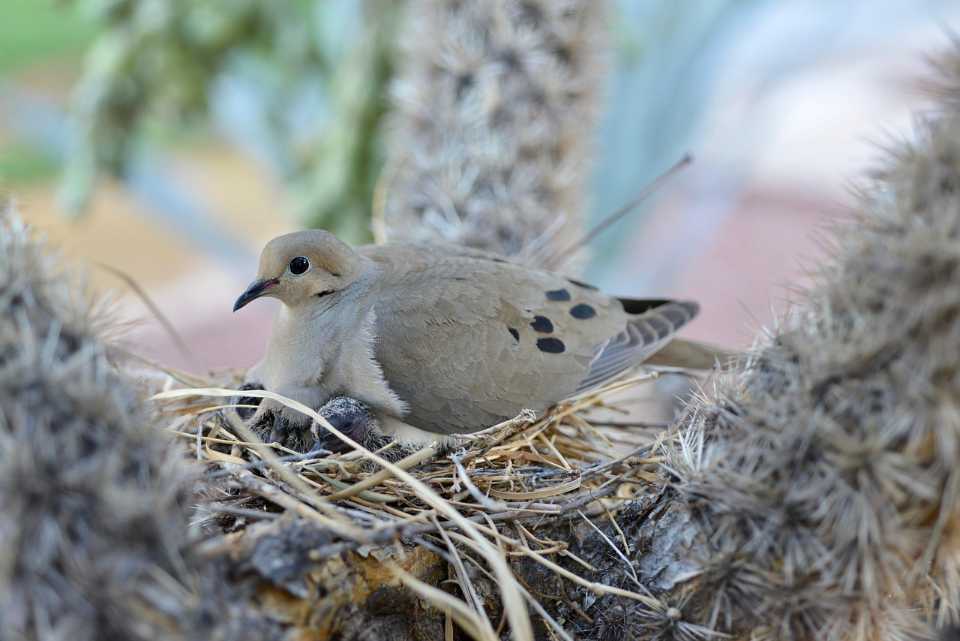
Distance Guidelines for Different Activities
The distance at which human activity causes disturbance varies dramatically by species, activity type, and specific circumstances. Research provides some general guidelines, though individual situations require assessment.
Observation and Photography
According to Cornell’s NestWatch code of conduct, nest visits should last no longer than 1 minute to minimize disturbance. Approach nests slowly and quietly, avoiding sudden movements that startle parent birds. Wait for adults to leave voluntarily rather than flushing them from nests.
Never check nests in early morning when most birds lay eggs and when eggs or young nestlings can become dangerously cold if adults are forced to leave. Plan nest observations for late morning or afternoon when temperatures have risen and laying activity has concluded.
Avoid approaching nests during bad weather. Research indicates that checking nests during cold, damp, or rainy conditions creates severe stress for birds that must choose between maintaining egg temperature and fleeing perceived threats.
Walking Paths and Trails
Route regular walking paths at least 50-100 feet from known or suspected nest sites. While birds can habituate to predictable human activity along established trails, routes that pass directly through prime nesting habitat cause chronic stress that reduces reproductive success.
Research on recreational disturbance in seabirds found that even cavity-nesting storm petrels, which remain underground and out of visual contact during daylight hours, experienced reduced breeding success in areas exposed to high tourist activity compared to low-disturbance zones. If invisible disturbance affects underground cavity nesters, visible human presence surely impacts species nesting in open vegetation.
Pet Management
Keep dogs on leashes or confined during March through July, particularly in areas with dense shrub cover or tall grass where birds commonly nest. According to guidance on protecting nesting birds, domestic pets represent significant predators and disturbance sources for ground and low-shrub nesting species.
Cats should remain indoors year-round, but especially during breeding season when nestlings that have prematurely fledged or recently left nests remain vulnerable. Even well-fed pet cats kill birds opportunistically, with nesting season representing peak vulnerability.
Activity-Specific Disturbance Risks
Different human activities create varying levels and types of disturbance that affect nesting birds differently.
Noise Disturbance
Research published in Journal of Ornithology found that chronic gas well compressor noise affected landscape patterns of avian habitat use and nest success. While most homeowners don’t operate industrial equipment, the principle applies to residential noise sources.
Reduce use of loud power equipment near potential nesting areas during breeding season. Schedule necessary equipment operation for midday when parent birds are actively foraging rather than during dawn and dusk peak feeding periods. Minimize outdoor entertainment volume, particularly music with heavy bass that travels long distances and creates sustained disturbance.
Garden Maintenance and Nesting Material
Routine garden maintenance creates multiple disturbance pathways that affect nesting birds. Weeding, deadheading, watering, and harvesting bring humans into close proximity with nests hidden in garden beds and borders.
According to Cornell Lab guidance, if you discover a nest near your home, minimize disturbance by approaching from the same direction each time, keeping visits brief (under 1 minute), and avoiding touching vegetation immediately around the nest. Observe from a distance whenever possible, and only check on the nest when the parents are away.
For nests in vegetable gardens or flower beds, establish alternative routes that allow you to access other areas without passing directly by the nest. Create visual barriers using temporary trellises or plant supports that provide cover while still allowing parent birds clear flight paths.
If you’ve been providing nesting materials earlier in spring, discontinue refilling material stations once active nesting begins in your area. Continued human activity at material collection sites creates unnecessary disturbance when birds should be focusing on incubation and chick-rearing rather than nest construction.
Window Washing and Exterior Cleaning
Exterior window washing, gutter cleaning, and pressure washing should be completed before late March or delayed until August. These activities require ladders, extended reaches with equipment, and sustained presence directly adjacent to potential nest sites under eaves, in shrubs beside buildings, or on architectural features.
If emergency cleaning becomes necessary during nesting season, carefully inspect all areas before beginning work. Look for nests on ledges, behind shutters, in vents, under eaves, and in nearby shrubs. If you discover an active nest, postpone work in that specific area until after fledging.
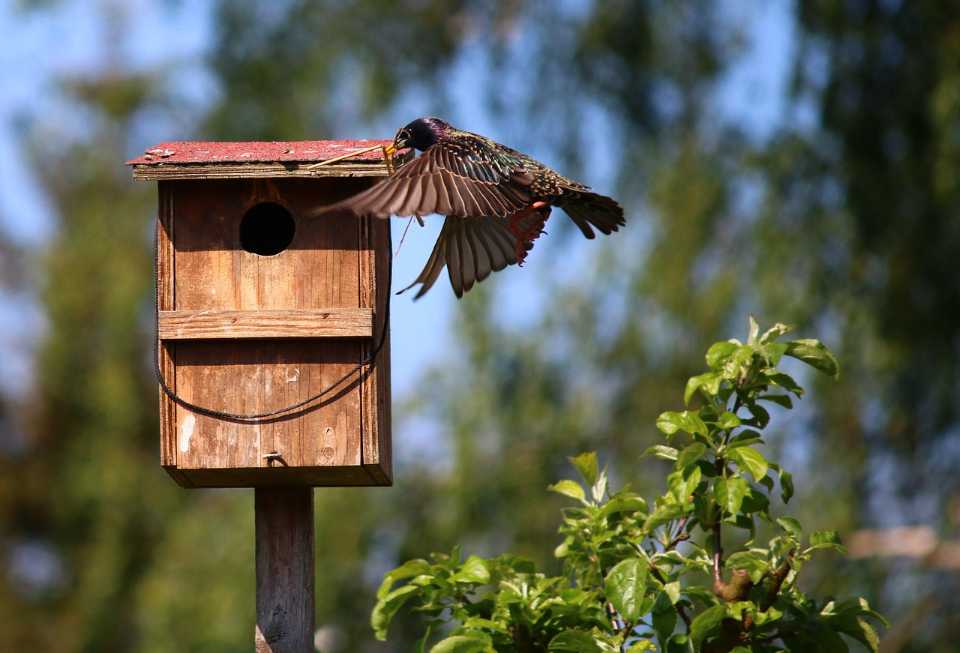
Recognizing and Responding to Disturbance Signals
Birds communicate disturbance stress through specific behaviors that alert observers to problematic situations. Learning to recognize these signals allows immediate response to reduce impact.
Alarm Calls and Displays
Parent birds emit sharp, repetitive alarm calls when they perceive threats near nests. Species-specific alarm vocalizations differ from normal songs and contact calls, typically consisting of harsh chips, rattles, or scolding notes delivered rapidly and repeatedly.
Visual displays include fluffed plumage, spread wings or tail, hopping agitatedly between perches near the nest, or flying directly at perceived threats. Some species like killdeer perform distraction displays, feigning injury to lead predators away from nest sites.
If birds exhibit these behaviors while you’re working in your yard, stop immediately and retreat. Observe from a distance to determine nest location, then avoid that area for the duration of the nesting attempt.
Behavioral Changes
More subtle behavioral changes also indicate disturbance stress. Birds that repeatedly approach but don’t enter nest areas signal reluctance to expose nest locations to potential predators (including humans). Parents that remain away from nests for extended periods following your departure suggest you’ve caused significant stress.
If you notice decreased feeding rates, parents spending less time at the nest, or eggs/nestlings left uncovered for prolonged periods after activities near suspected nest sites, you’ve likely created problematic disturbance that requires immediate activity modification.
Special Considerations for Ground Nesters
Ground-nesting species face unique vulnerability to human disturbance because their nests occupy the same horizontal plane where humans conduct most activities. Species including juncos, towhees, ovenbirds, some sparrows, and killdeer require particular care.
According to research on ground-nesting bird conservation, operation of mechanized equipment or vehicles should be prohibited during the grassland bird breeding season (April 23 to August 15) except as necessary to control invasive species.
Before any ground-level activity including mowing, raking, mulching, or walking through tall grass areas, conduct careful visual searches for nests. Ground nests blend remarkably well with surroundings, often appearing as simple grass-lined depressions virtually invisible until you’re directly above them.
Walk slowly through potential nesting areas, watching for adult birds flushing from underfoot. Note their location and behavior, then carefully search that specific area for nests. Mark discovered nests with distant flags placed at least 30 feet away with clear notes on how to locate the nest from the marker.
Creating Disturbance-Free Zones
Strategic property planning can minimize conflicts between human activities and nesting birds by designating specific areas as low-disturbance zones during breeding season.
Identifying Prime Nesting Habitat
Conduct a late-winter assessment of your property to identify areas most likely to attract nesting birds. Dense shrub plantings, mature trees with natural cavities, thick ground cover, edges between different vegetation types, and areas with structural diversity all represent prime nesting habitat.
According to principles of bird-friendly garden design, properties with multiple vegetation layers including ground cover, low shrubs, tall shrubs, understory trees, and canopy trees support the greatest diversity of nesting species. Once you’ve encouraged birds to nest through proper habitat creation, protecting those areas from disturbance becomes paramount.
Mark these areas on a property map and establish March through July restrictions on activities within them. Route regular paths around rather than through prime habitat. Position garden work areas, compost bins, and tool storage away from sensitive zones.
Temporal Zoning
For properties large enough to support zoning strategies, consider temporal rotation of disturbance. Divide property into sections and restrict intensive activities to different sections each year, allowing other areas to remain undisturbed during that breeding season.
This approach works particularly well for larger rural properties but can be adapted to suburban lots by rotating which areas receive intensive pruning, renovation, or other major work on a multi-year schedule.
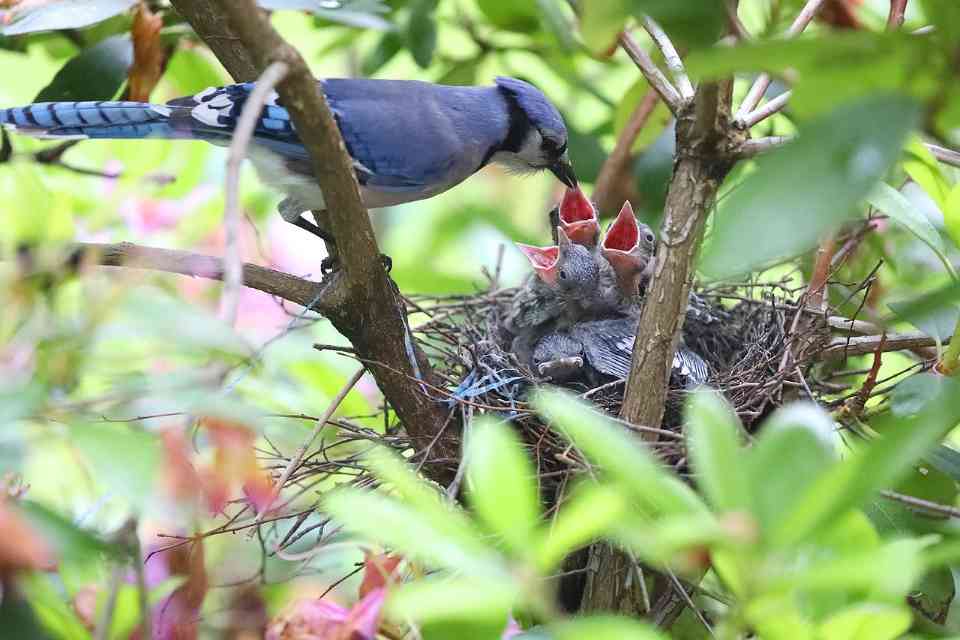
Legal Protections and Compliance
Understanding legal protections for nesting birds helps homeowners appreciate the seriousness of disturbance issues and avoid potential violations.
According to Cornell’s NestWatch, under current laws in the United States, Canada, and Mexico, it is illegal to possess, import, export, transport, buy, or sell any native bird, or the parts, nests, or eggs of such birds except under authority of a valid permit. Additionally, in most instances it is illegal to touch or otherwise physically disturb an active nest or its contents.
Outside North America, local laws regulate treatment of native birds, their nests, and eggs. Familiarize yourself with applicable regulations in your jurisdiction before conducting any activities near suspected nest sites.
While accidental disturbance during routine property maintenance rarely results in enforcement action, knowing these protections exist emphasizes the importance of reasonable care to avoid nest destruction or abandonment.
When Disturbance Becomes Unavoidable
Occasionally, situations arise where some level of disturbance becomes unavoidable due to emergency repairs, safety hazards, or other compelling circumstances.
Emergency Situations
If a tree containing an active nest must be removed due to storm damage or imminent failure threatening structures, contact local wildlife authorities for guidance. Some jurisdictions require permits for emergency work affecting protected species, while others may provide exemptions for genuine safety emergencies.
Document the situation with photographs showing the hazard, the nest location, and relevant safety concerns. This documentation protects you legally while also providing wildlife officials with information needed to make appropriate decisions.
Minimizing Unavoidable Impacts
When disturbance cannot be completely avoided, implement measures to minimize impact:
- Schedule necessary work for the shortest possible duration
- Approach from consistent directions to reduce unpredictability
- Avoid early morning, late evening, and bad weather
- Keep noise levels as low as possible
- Limit the number of people involved
- Complete work quickly and retreat immediately upon finishing
These measures won’t eliminate disturbance but reduce its severity and duration compared to prolonged, unpredictable, or unnecessarily intensive approaches.
Monitoring Success and Adjusting Practices
After implementing disturbance-reduction strategies, monitor outcomes to assess effectiveness and identify needed adjustments.
Observation Protocols
Observe your property from a distance during breeding season, noting which species establish territories, where they spend time, and whether you detect evidence of successful nesting. Use binoculars to watch from inside your home or from distant vantage points that don’t add to disturbance.
Document fledgling sightings, which indicate successful breeding attempts. Young birds recently out of nests appear similar to adults but often have shorter tails, fluffier plumage, and yellow gape flanges visible when begging for food.
Compare year-to-year patterns. If certain areas consistently support nesting attempts while others remain unused despite suitable habitat, analyze differences in disturbance levels, predator access, or other factors affecting site selection.
Adaptive Management
Adjust your disturbance-avoidance strategies based on observed results. If specific activities seem correlated with nest failures or avoided territories, modify timing, location, or methods. If certain areas see repeated successful nesting, maintain or enhance protection measures there.
Consider participating in the Cornell Lab’s NestWatch program to contribute data on nesting success while learning more about birds breeding on your property. The program provides standardized protocols for monitoring nests safely and tools for recording observations that contribute to scientific understanding.
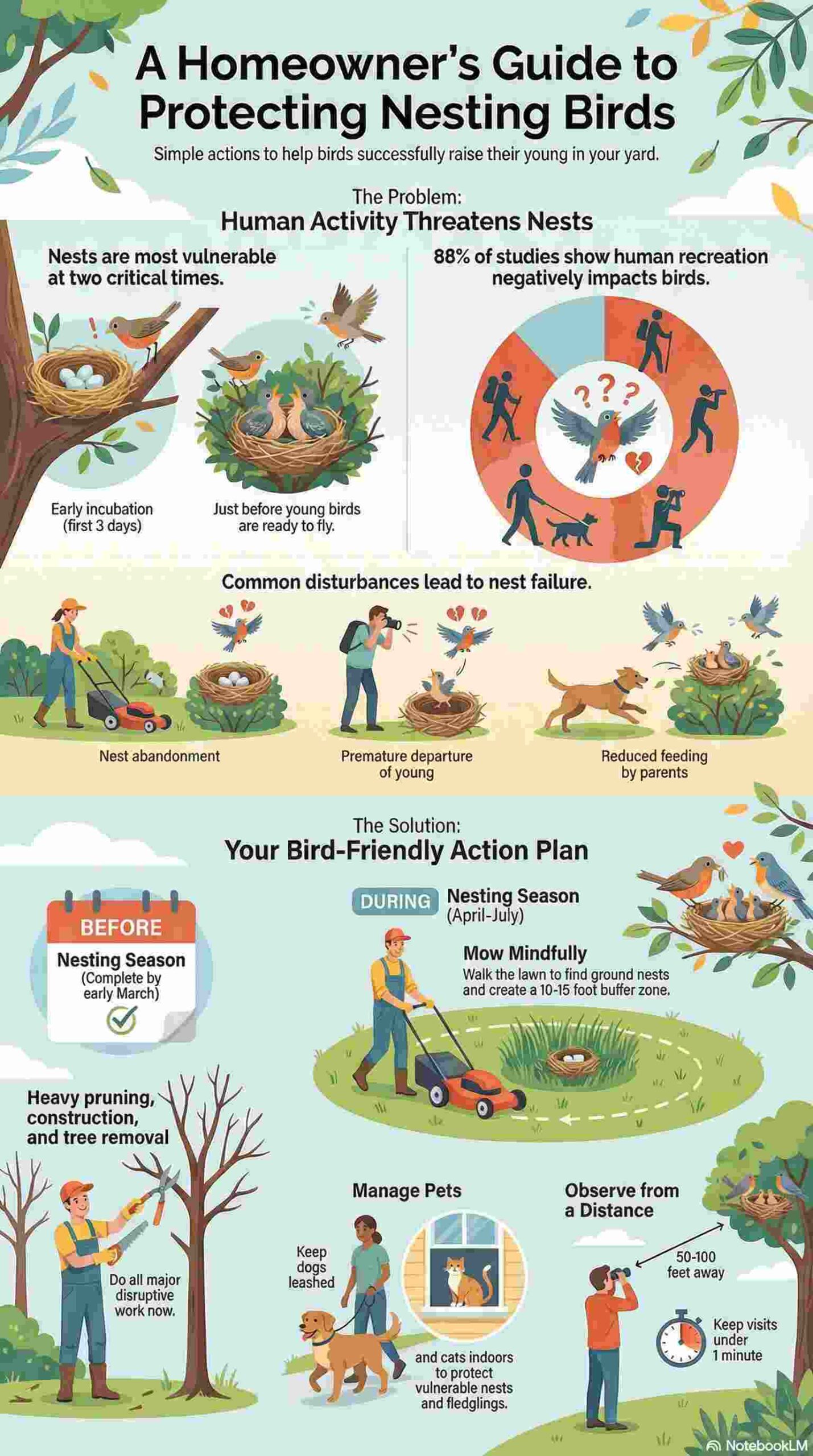
Infographic: Protecting Nesting Birds at a Glance
For a quick visual summary of the key strategies to protect nesting birds this spring, check out our infographic below before you finish the guide.
Conclusion
Avoiding disturbance to nesting birds during spring requires understanding how routine human activities affect breeding success and implementing practical modifications to timing, location, and intensity of property maintenance work. Research consistently demonstrates that human disturbance reduces reproductive success through nest abandonment, decreased incubation time, reduced feeding rates, and premature fledging.
The most critical strategies include completing major landscape work before late March, maintaining regular lawn mowing schedules to discourage ground nesters in high-traffic areas while leaving designated areas unmowed, routing paths and activities away from prime nesting habitat, keeping pets confined or leashed, and minimizing noise during peak nesting periods from April through July.
Recognizing disturbance signals including alarm calls, agitated behavior, and extended nest absences allows immediate response to reduce impact when inadvertent disturbance occurs. Creating disturbance-free zones in areas with dense shrubs, mature trees, and structural diversity protects the most productive nesting habitat while still allowing reasonable property use.
Understanding that minor inconveniences during a few critical months enable dozens of birds to successfully raise young provides perspective that transforms spring yard work from frustrating limitations into meaningful conservation actions. The reward of watching fledgling wrens, chickadees, or cardinals exploring your garden under parental supervision far exceeds any temporary restrictions on when you can trim hedges or wash windows.