
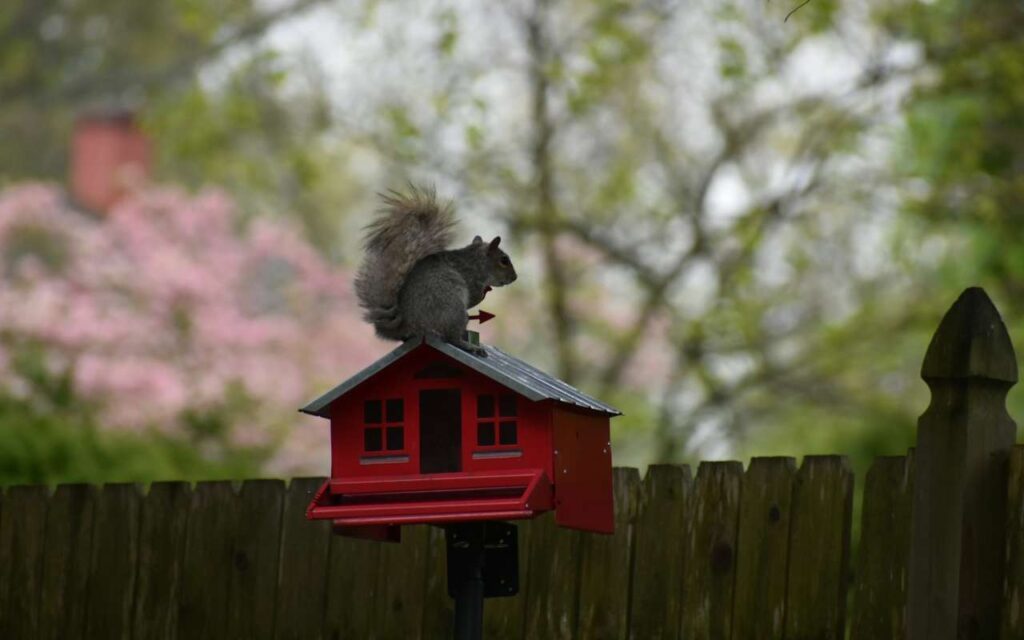
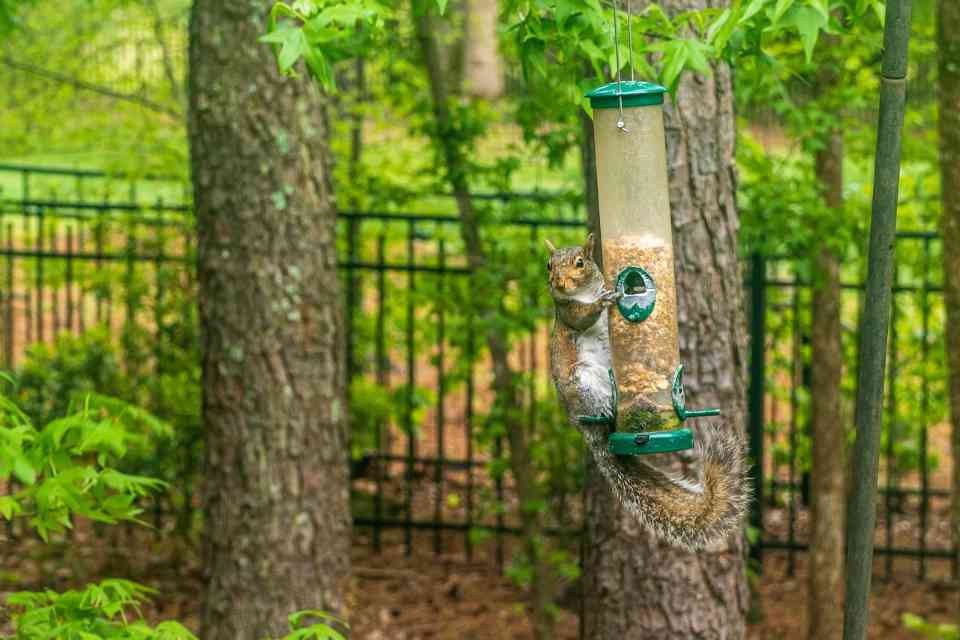
If you’ve ever tried to figure out how to install a squirrel proof bird feeder, let me paint you a familiar picture. You fill your brand-new feeder with premium black oil sunflower seeds, step back to admire your setup, and within minutes a gray squirrel has turned into a furry acrobat. It launches itself six feet sideways off your deck railing and ends up hanging from your supposedly squirrel-proof bird feeder like it paid for a front-row ticket.
I’ve lived that exact scene more times than I’d like to admit. And after watching squirrels treat my feeders like amusement park rides, I finally learned that the real secret isn’t just the feeder, it’s how and where you install it. Once I understood their jump range and used the right placement tricks, the birds finally got their turn, and the squirrels had to rethink their life choices 😄.
- Place the feeder at least 5–7 feet off the ground.
- Keep it 7+ feet from trees, fences, decks, or anything squirrels can jump from.
- Ensure there’s at least 9 feet of clearance above so they can’t drop down onto it.
- Mount a squirrel baffle 4–5 feet above ground on a sturdy metal pole.
- Use weight-activated, caged, or metal-port feeders for extra protection.
- Anchor your pole deeply so squirrels can’t shake or tilt it.
- Remove nearby “launch pads” like rocks, stumps, or lawn décor.
- Choose seeds that attract birds but not squirrels, like safflower.
- Test your setup by checking all jump angles and making adjustments.
- Keep feeders clean, stable, and inspected so they stay truly squirrel-proof.
Follow these rules and you’ll beat the squirrels, miss one and you’re toast.
Before You Start: What “Squirrel-Proof” Actually Means
Show Transcript
0:00
All right, let’s jump right in. We’re tackling a timeless backyard battle: how to build a squirrel-proof bird feeder setup that actually works.
0:15
Does this sound familiar? You fill a brand-new feeder with premium birdseed, step back, admire your work… and bam! A squirrel launches itself like a furry missile and empties the whole thing.
0:31
If that’s you, you’re not alone. Classic backyard war: human vs. nature. And let’s be clear: squirrels are no ordinary pests.
0:43
They’re smart, persistent, acrobatic little chaos machines. Olympic athletes with PhDs in mischief.
0:52
But don’t worry. Today, we’ve got the battle plan to outsmart them.
Section 1: Know Your Opponent
0:58
Step one: understand your enemy. It’s not about the feeder—it’s about squirrel physics.
1:17
You can buy the fanciest feeder in the world, but if you don’t understand how squirrels move and jump, you’ve already lost.
1:31
Consider this: horizontal jumps of up to 10 ft, vertical leaps of 4–5 ft from a dead stop, and midair path adjustments. These little parkour masters are running your yard.
Section 2: The Secret 579 Rule
1:56
Step two: the 579 rule, your secret weapon. It’s placement, not just the feeder, that wins the war.
2:34
Here’s how it works:
- 5: Feeder at least 5 ft high.
- 7: 7+ ft away from any launch point like fences, branches, or roofs.
- 9: 9 ft of clearance above to prevent aerial attacks.
2:55
That’s it. 579. Simple, easy to remember, and incredibly effective.
Section 3: Step-by-Step Battle Plan
2:57
Time to build defenses. Here’s what you’ll need:
- Solid metal pole system (squirrels can’t climb easily)
- Baffle (we’ll cover this in a second)
- Measuring tape to enforce 579
- Level to keep the pole straight
- Quality feeder
3:34
Step-by-step:
- Choose your spot using the 579 rule
- Secure the pole so it’s stable
- Install the baffle correctly
- Mount the feeder at the right height
3:52
Placement is king, but the right feeder helps too. Three effective types:
- Weight-activated feeders: too heavy for squirrels, doors close automatically
- Caged feeders: only small birds fit inside
- Metal port feeders: stop squirrels from chewing through plastic
The Baffle: Game Changer
4:20
Your baffle is key. Cone or cylinder on the pole under the feeder. Placement: 4–5 ft off the ground.
4:35
Why that height? That’s just out of their maximum vertical jump. Lower than that and they’ll hop over it.
Section 4: Winning the Squirrel War
4:51
Defenses are up. Now it’s time to hold the line.
5:04
Dealing with a super persistent squirrel? Try these:
- Safflower seed: birds love it, squirrels don’t
- Hot pepper seed: birds unaffected, mammals avoid it
- Decoy feeder: cheap seed on the other side of the yard
5:30
Squirrels will test everything. For the first week, be the general: watch, adapt, and plug any gaps in your defenses.
Maintenance & Reward
5:52
Winning the war is one thing; keeping the peace requires upkeep:
- Keep the feeder clean for healthy birds
- Check pole stability
- Ensure the baffle hasn’t slipped
6:17
And this is the reward: goldfinches, chickadees, and cardinals feasting peacefully, right in your backyard.
6:45
You outsmarted one of nature’s cleverest, most persistent little thieves. And for the birds, victory tastes like sunflower seeds.
6:50
The only question left: are you ready to reclaim your backyard? Grab your tape measure, follow the plan, and win this war for the birds.
Let’s get real for a second, there’s no such thing as a 100% squirrel-proof feeder without proper installation. I don’t care if the manufacturer promises Fort Knox security. Squirrels are basically Olympic-level athletes with PhDs in problem-solving.
Research published in the journal Science documented that fox squirrels can leap distances up to three times their body length, adjust their jumping strategies mid-air, and even innovate new “parkour” techniques when faced with difficult obstacles. The study found squirrels learned to navigate complex aerial courses in just five attempts, demonstrating remarkable cognitive flexibility.
Translation? Gray squirrels can jump 8-10 feet horizontally and 4-5 feet vertically. They can climb anything that isn’t perfectly smooth metal. They can hang upside down. They can rotate mid-jump. They’re basically furry ninjas powered by pure determination and an insatiable love of sunflower seeds.
Who Benefits from Proper Installation
When you finally get your setup right, you’ll attract the birds you actually want to see: goldfinches at nyjer feeders, chickadees hitting suet blocks, nuthatches working sunflower seeds, cardinals dominating platform feeders, and blue jays… well, being blue jays and bossing everyone around.
These birds need safe feeding stations where they can eat without competing with squirrels for every seed. Proper installation creates that environment.
Tools & Supplies You’ll Need
Let’s talk equipment. The right tools make installation dramatically easier and more secure.
Tools & Supplies for Installing a Squirrel-Proof Bird Feeder
For ground pole installation:- Post hole digger or auger
- Level (essential for straight poles)
- Measuring tape (you’ll use this constantly)
- Concrete mix (optional but recommended for stability)
- Bird feeder pole (1-inch diameter metal minimum)
- Squirrel baffle (cone or torpedo style, minimum 18-inch diameter)
- Shepherd’s hook (7+ feet tall)
- Ground anchoring system
- S-hooks or carabiners rated for outdoor use
- Metal chain (squirrels can’t climb it like rope)
- Screws and mounting brackets
- Rust-resistant hardware
- Wrench set
- Optional: pole extenders for added height
I personally use ground-mounted pole systems over shepherd’s hooks. They’re sturdier in wind, easier to baffle effectively, and give you better control over height and positioning. But both work if installed correctly.
Step 1: Pick the Right Location (Most Critical Factor)
Location determines everything. Get this wrong and even the best feeder and baffle combo won’t save you. I’ve moved feeders four times in my yard before finding the sweet spot where squirrels finally admitted defeat.
The 5-7-9 Rule for Squirrel-Proof Placement
This is your bible for squirrel proof feeder setup:
5+ feet off the ground. Squirrels can jump 4-5 feet vertically from a standstill. Mount your feeder at least 5 feet up, preferably 6-7 feet. This forces them to climb your pole, where your baffle will stop them (more on that in Step 3).
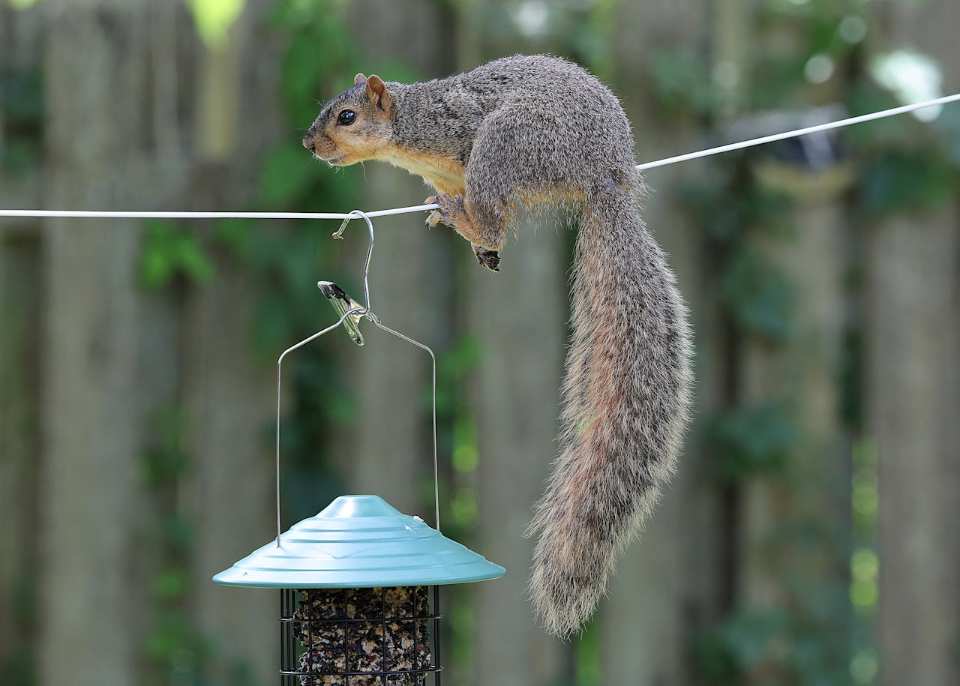
7+ feet from trees, fences, structures, or anything else. Remember that 8-10 foot horizontal leap? Yeah. Squirrels will absolutely launch themselves from tree trunks, fence posts, shed roofs, and that decorative trellis you thought was far enough away.
According to Audubon, when you place your feeder 8–10 feet from any solid objects, squirrels are much less likely to launch themselves onto it; add a baffle 4–5 feet high on the pole for strong protection.
9+ feet below any overhang, roof, or tree branch. Squirrels will climb above your feeder and drop down onto it. I’ve watched them rappel down thin branches that I didn’t think could possibly support their weight. They’ll prove you wrong every time.
What to Avoid
Never mount feeders on deck railings. Just… don’t. Squirrels walk on railings like highways and you’ve basically served them dinner on a platter.
Avoid placing feeders against or near trees. Even if a tree is 7 feet away horizontally, if it has branches extending toward your feeder, squirrels will use them as launching pads.
Don’t position feeders near fences. Fences are basically squirrel superhighways. They’ll run along the top and jump the gap without breaking stride.
Skip feeder placement near rooftops or overhangs. Squirrels climb houses, and they’ll absolutely use your roof as a staging area for feeder raids.
Finding Your Sweet Spot
Walk your yard with a measuring tape. Look for an open area at least 10 feet from any vertical structure and 15 feet from any overhanging branches. Consider bird visibility too, you want birds to actually find your feeder. A completely isolated location in the middle of an open lawn might deter squirrels but also confuse birds looking for food near natural cover.
The ideal spot is within 10-15 feet of trees or shrubs (so birds feel safe approaching) but far enough that squirrels can’t leap the gap. Think about wind direction too. Position feeders on the south or southeast side of your property if possible, using natural windbreaks for shelter without creating squirrel access points.
Step 2: Install a Squirrel-Proof Pole System
Now that you’ve identified your location, it’s time to install your pole. This is the foundation of your entire setup, so don’t rush it.
Anchoring Your Pole Securely
For permanent installations, dig a hole at least 18-24 inches deep. This provides stability in wind and prevents the pole from leaning or twisting over time.
Set your bird feeder pole in the hole. Use a level to ensure it’s perfectly vertical, leaning poles make baffles less effective and feeders swing awkwardly. Pack dirt firmly around the base as you fill, tamping it down every few inches.
For maximum stability, mix quick-setting concrete and pour it around the pole base. Let it cure for 24 hours before mounting feeders. This is overkill for lightweight tube feeders but essential if you’re mounting heavier platform feeders or multiple feeders on one pole.
Ground sleeve systems are another excellent option. These metal sleeves stay permanently installed in your lawn, and poles slide in and out. This lets you move feeders seasonally or bring poles inside for cleaning without disturbing the concrete base.
Ideal Pole Height for Maximum Protection
Aim for 6-7 feet of pole height above ground. This puts feeding ports at eye level (convenient for refilling) while maintaining enough height to deter squirrels. With a baffle mounted 4 feet up, you create an insurmountable barrier.
If squirrels still manage to reach your feeder (overhanging branches you missed, or they’re just exceptional athletes), add a pole extender. I’ve gone as high as 8 feet with success, though refilling becomes a workout at that point.
Stability Matters
Test your installed pole by giving it a firm shake. It shouldn’t wobble or lean. Squirrels are smart enough to exploit any weakness, if a pole feels unstable, they’ll rock it back and forth until feeders swing within reach or bird seed spills.
In windy areas, consider guy-wires or ground stakes for additional support. The last thing you want is your entire setup toppling over during a storm. Ask me how I know. :/
Step 3: Add a Squirrel Baffle the Right Way
This is where most people screw up. They buy a baffle, slap it on the pole somewhere, and wonder why squirrels still reach their feeders. Squirrel baffle installation is precision work.
Correct Baffle Placement
Mount your baffle at least 4 feet above ground, preferably 4.5-5 feet. This is above squirrels’ maximum vertical jump height. If it’s lower, they’ll simply leap over it from the ground.
The baffle must go underneath your feeder, facing downward. Sounds obvious, but I’ve seen people mount them upside down (which creates a squirrel landing platform) or above the feeder (which does absolutely nothing).
Leave at least 12-18 inches of bare pole below the baffle. Squirrels need something to grab before hitting the baffle. If the baffle is mounted too low on the pole, they might be able to jump directly to the pole above it.
Choosing the Right Baffle Design
Cone baffles (shaped like upside-down cones) work well on poles. They need to be at least 17-18 inches in diameter. Smaller baffles let squirrels reach around them. I use 20-inch diameter cone baffles and haven’t had a squirrel breach in two years.
Torpedo baffles (cylinder-shaped with domed tops) are excellent for hanging feeders. They’re harder to install on poles but work beautifully suspended from shepherd’s hooks.
Dome baffles work for either application but must be large enough that squirrels can’t stretch around the edges. A study on squirrel biomechanics documented how eastern gray squirrels adjust their center of mass and grip points on varying substrate sizes, demonstrating their remarkable ability to navigate narrow supports, which is why baffle diameter matters so much.
Common Baffle Mistakes
Don’t use cheap plastic baffles that crack in sun or cold. Metal baffles last indefinitely and squirrels can’t chew through them.
Avoid mounting baffles loosely. They need to be secured tightly to the pole so squirrels can’t lift or rotate them. Some squirrels have learned to flip loose baffles up and climb past them.
Never position baffles where squirrels can launch over them from nearby structures. If a fence is 5 feet away and your baffle is only 4 feet high, squirrels will jump from the fence to the pole above the baffle.
Step 4: Mount Your Squirrel-Proof Feeder
With your pole and baffle properly installed, it’s time to add the feeder itself. Feeder design matters almost as much as placement.
Weight-Activated Feeders
These feeders have spring-loaded perches that collapse under squirrel weight but support birds. Brands like Brome Squirrel Buster and Droll Yankees Yankee Whipper use this technology effectively. According to The Wood Thrush Shop, weight-activated feeders only become truly effective when paired with correct placement, such as having the feeder hang 14–18″ from the pole so the squirrel applies its full weight.
Mount them securely to your pole using the provided brackets. Make sure the feeder hangs or mounts straight, tilted feeders might not close properly when squirrels land.
Caged Feeders
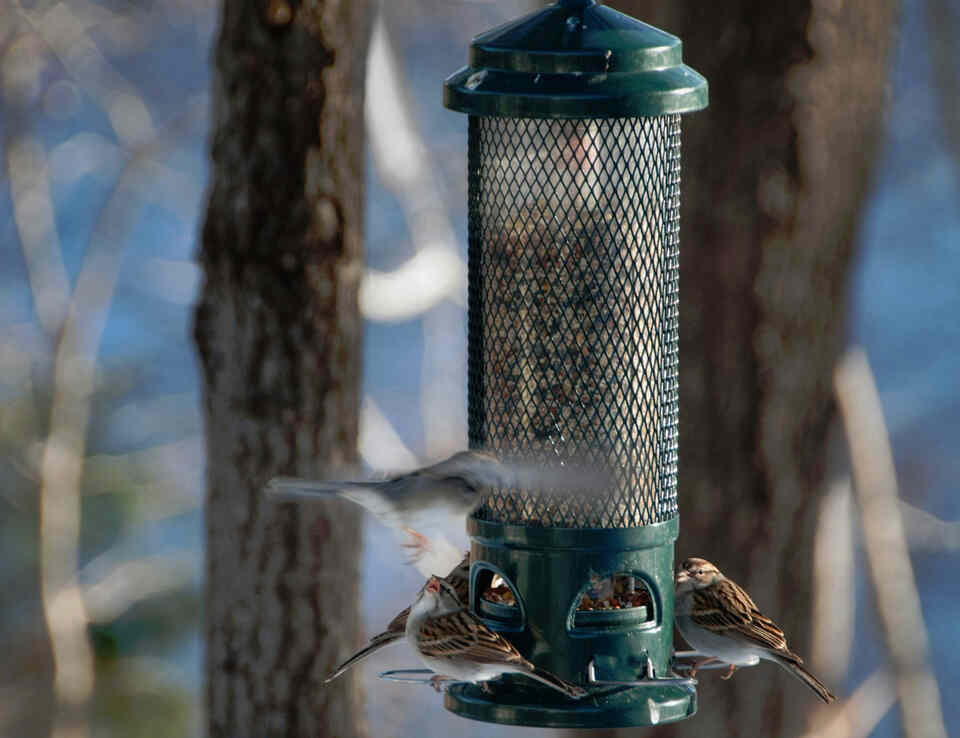
Metal cage designs allow small birds like finches, chickadees, and nuthatches to enter while excluding squirrels. The cage openings need to be small enough that squirrels can’t squeeze through (2-inch maximum) but large enough for target birds.
These work especially well for protecting bird feeders that serve smaller species. Cardinals and jays won’t fit through the cage openings, so use these for finch-specific feeders while maintaining separate open feeders for larger birds.
Tube Feeders with Metal Ports
Squirrels love chewing through plastic feeding ports to enlarge them. Metal-reinforced ports prevent this vandalism. Brands like Woodlink and Audubon offer metal-port tube feeders that withstand years of squirrel abuse.
Secure the feeder to your pole using the hanging hook or mounting bracket. If using a hook, make sure it’s thick metal that squirrels can’t chew through. Some feeders come with locking mechanisms that prevent squirrels from lifting the feeder off the hook, use them.
Height Considerations
Position feeding ports at comfortable bird-feeding height, typically 5-6 feet off the ground for tube feeders. Platform feeders can go slightly lower (4-5 feet) since they’re more exposed and birds feel safer with better sightlines.
Don’t hang feeders so high that you need a ladder for every refill. Part of successful bird feeding is consistency, and if refilling is a hassle, you won’t do it regularly.
Step 5: Add Optional Deterrents (If Needed)
If you’ve followed Steps 1-4 correctly, squirrels shouldn’t reach your feeders. But nature finds a way, and some squirrels are more determined than others. Here are additional strategies.
Safflower Seeds: The Natural Deterrent
Safflower seeds taste bitter to squirrels but cardinals and chickadees love them. I switched one of my feeders to straight safflower and squirrel activity dropped to zero within a week. The downside? Finches and jays often avoid safflower too.
Hot Pepper Suet and Seeds
Birds lack the receptors that detect capsaicin (the spicy compound in peppers), but mammals like squirrels definitely feel the heat. Hot pepper suet blocks and treated seeds discourage squirrels without affecting birds.
Some people report mixed results, desperate squirrels will eat it anyway, but it’s worth trying if you’re still having issues.
Spinning Feeders
Battery-powered spinning feeders fling squirrels off when they land. These are entertaining to watch but require regular battery changes and can malfunction in cold weather. IMO, they’re more novelty than solution, but some people swear by them.
Seed Catcher Trays
These catch fallen seed before it hits the ground. Less ground spillage means fewer squirrels attracted to the area in the first place. It’s not about stopping squirrels from climbing, it’s about making your yard less interesting to them overall.
Step 6: Test Your Setup
Before declaring victory, test your installation thoroughly. This seems silly, but it works.
Grab a broom handle or long stick and simulate squirrel approaches. Can you reach the feeder by extending the stick 8 feet horizontally from nearby structures? Can you touch it from above by lowering the stick from branches?
Watch for squirrel behavior over the first week. They’ll test your defenses repeatedly, trying different approaches. If they’re still succeeding, observe how they’re getting there and adjust accordingly.
Check for unexpected launch points you missed during planning. That garden statue 9 feet away? Squirrels might be using it. Those decorative stones? Launching pads.
Video your feeders (time-lapse works great) to catch squirrel attempts when you’re not watching. You’ll learn a lot about their strategies and where your setup needs reinforcement.
Troubleshooting: When Squirrels Still Win
Even with perfect installation, creative squirrels sometimes find ways through. Here’s how to diagnose and fix problems.
Problem: Squirrels Jumping from Ground Objects
Solution: Walk a 10-foot radius around your feeder and remove anything taller than 6 inches. That includes decorative rocks, stumps, garden ornaments, and stacked firewood. Squirrels use these as launching platforms.
Problem: Baffle Installed Too Low
Solution: Move it up. Your baffle needs to be at minimum 4 feet above ground, preferably 4.5-5 feet. If squirrels are jumping from ground level and grabbing the pole above the baffle, raise the baffle immediately.
Problem: Feeder Too Close to a Structure
Solution: Move it. I know, it’s a pain to relocate an installed pole. But if squirrels are still reaching your feeder after proper baffling, proximity to launch points is usually the culprit. Remeasure distances and move the feeder another 3-5 feet away from the nearest structure.
Problem: Feeder Not Truly Weight-Activated
Solution: Some “squirrel-proof” feeders have poorly calibrated mechanisms that don’t close under squirrel weight. Test the mechanism manually before installation. If it’s not sensitive enough, return it and buy a better feeder. Brome and Droll Yankees are reliable brands that actually work.
Problem: Pole Leaning Over Time
Solution: Re-level and stabilize your pole. Ground freeze-thaw cycles can shift poles gradually. Check levelness every few months and add support stakes if needed.
Maintaining Your Squirrel-Proof Setup
Installation isn’t a one-time deal. Your setup needs regular maintenance to stay effective.
Clean feeders every 1-2 weeks during warm weather, every 2-3 weeks in winter. Disease spreads quickly at contaminated feeding stations, and moldy seed can kill birds faster than squirrels could eat it.
Check pole stability monthly. Give it a firm shake. Tighten any loose brackets or clamps. Re-level if it’s starting to lean.
Inspect baffle brackets seasonally. Especially after winter, check that baffles are still securely mounted. Temperature cycles can loosen hardware.
Oil metal components annually to prevent rust. Use a rust-inhibiting spray on pole bases, mounting brackets, and baffle hardware. This is especially important if you live in humid climates or areas with harsh winters.
Monitor for mold during humid weather. Wet seed grows fungus that causes fatal infections in birds. If you spot mold, empty the feeder immediately, clean it thoroughly with bleach solution, and let it dry completely before refilling.
Birds You’ll Attract with Proper Setup
Once squirrels stop dominating your feeders, you’ll actually see the birds you installed feeders for in the first place.
Goldfinches will mob nyjer feeders, their bright yellow plumage making your yard look like someone spilled sunshine everywhere. They’re one of the few birds that feeds their chicks exclusively seeds rather than insects.
Chickadees are acrobatic little birds that love black oil sunflower seeds and suet. They’re year-round residents in most areas and remarkably cold-hardy, surviving brutal winters by lowering their body temperature at night to conserve energy.
Nuthatches walk head-down on tree trunks and will visit suet feeders and sunflower seed offerings. Watch for white-breasted and red-breasted varieties depending on your region.
Cardinals are one of the few bird species where both males and females sing. They prefer platform feeders or feeders with large perches where they can crack sunflower seeds comfortably.
Blue jays are bossy, loud, and absolutely gorgeous. They’ll dominate feeders, but they’re also intelligent enough to cache food for winter and serve as neighborhood alarm systems when predators appear.
Alternatives to Traditional Squirrel-Proof Feeders
Sometimes the best solution isn’t fighting squirrels, it’s redirecting them.
The Decoy Feeding Strategy
Set up a separate squirrel feeder stocked with cheaper corn and peanuts in a different part of your yard. Load it generously. Squirrels will often take the path of least resistance and leave your bird feeders alone once they have their own food source.
I started doing this three years ago and it dramatically reduced squirrel pressure on my bird feeders. Yeah, I’m technically feeding squirrels now, but they stay in their zone and my birds stay in theirs. Compromise works.
Natural Barriers
Plant dense shrubs or install decorative fencing that creates physical barriers between squirrel highways (like fences and trees) and your feeders. This won’t stop determined squirrels but makes casual raids less convenient.
Ground Feeding Zones
Some people give up on feeders entirely and scatter seed in designated ground areas. This works for species like juncos, sparrows, and mourning doves that prefer ground feeding anyway. Just be prepared for squirrels to absolutely clean up. Preventing seed waste becomes more challenging with ground feeding, but it eliminates installation hassles.
Frequently Asked Questions
How high should I install a squirrel-proof bird feeder?
At least 5 feet off the ground, ideally 6-7 feet. This forces squirrels to climb your pole where they’ll hit the baffle. Any lower and they can jump directly to the feeder.
Can squirrels really jump 10 feet?
Yes. Research documented in Science confirmed fox squirrels can leap up to three times their body length, which translates to 8-10 feet horizontally. They’re also capable of creative mid-air adjustments, making them extremely difficult to outsmart without proper barriers.
Will a baffle stop raccoons too?
Usually, yes. Raccoons are heavier than squirrels and less acrobatic. A properly mounted cone baffle stops them effectively. However, raccoons can sometimes climb smoother poles than squirrels can, so make sure you’re using metal poles with slick finishes.
Should a bird feeder sway or stay rigid?
Slight swaying is fine and actually normal for hanging feeders. Excessive swinging can spill seed and scare birds away. Pole-mounted feeders should be stable with minimal movement.
Can squirrels chew through metal feeders?
Not effectively. They’ll chew plastic feeding ports and wooden feeder parts, but quality metal feeders withstand their gnawing. This is why I always recommend feeders with metal-reinforced ports, especially if you’re dealing with persistent squirrels.
Common Installation Mistakes That Lead to Failure
Let me save you from mistakes I’ve made (and seen others make repeatedly):
Mounting too close to branches. That tree branch looks 10 feet away, but once leaves fill in, it’s probably 7 feet. And squirrels don’t need much. Measure carefully and add a buffer.
Not measuring jump distances. Get a real measuring tape and check every potential squirrel launch point. Your visual estimate is probably wrong.
Using cheap plastic baffles. These crack, fade, and sometimes shatter in cold weather. Spend the extra $10 for metal. It lasts forever.
Hanging feeders off decks or fences. Stop it. Just stop. Squirrels own these structures. You cannot win this way.
Using seeds that attract squirrels. Whole peanuts, cheap seed mixes heavy on corn, and cracked corn are squirrel magnets. If you want fewer squirrel problems, use safflower or nyjer seeds that they typically avoid.
Final Setup Checklist
Before you call your installation complete, run through this list:
✓ Feeder is 5+ feet off the ground
✓ Location is 7+ feet from all trees, fences, and structures
✓ No overhead branches within 9+ feet
✓ Baffle is mounted 4+ feet above ground
✓ Baffle is underneath the feeder, facing downward
✓ Pole is level and stable
✓ Feeder is securely mounted and won’t slide off hooks
✓ All hardware is rust-resistant and properly tightened
✓ You’ve tested access from all angles
✓ Ground area is clear of launch objects within 10-foot radius
If you can check every box, congratulations, you’ve successfully installed a truly squirrel-proof bird feeder. Now sit back and enjoy watching birds eat in peace.
The Bottom Line
Installing a squirrel-proof bird feeder isn’t about buying expensive equipment, it’s about understanding squirrel behavior and using that knowledge to create insurmountable barriers. The feeder matters, but placement, height, baffling, and distance from launch points matter more.
I spent two years throwing money at different feeders before I realized the problem wasn’t the feeders, it was where and how I was installing them. Once I applied the 5-7-9 rule, mounted proper baffles at the right height, and eliminated all the sneaky launch points I’d missed, the squirrel raids stopped almost entirely.
You’ll still see squirrels trying occasionally. They’re persistent little geniuses who never fully give up. But instead of feast, they’ll find frustration. Meanwhile, your chickadees, goldfinches, and cardinals will finally get the peaceful meals they deserve.
Now get out there with that measuring tape and show those squirrels who’s boss. Your birds are waiting. 🙂