
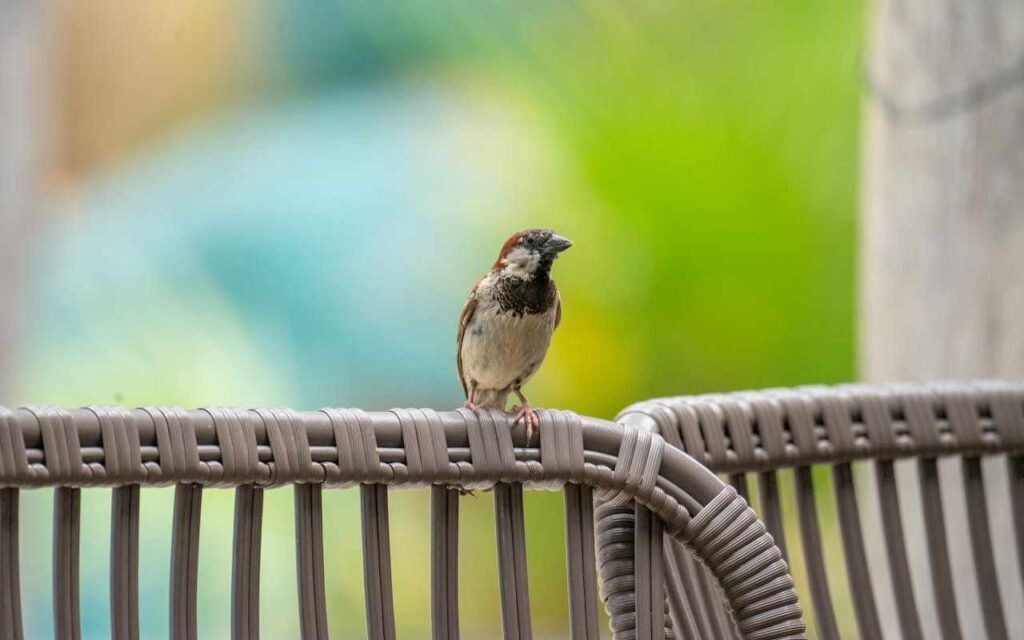
I’ll never forget the morning I walked outside with my coffee, ready to enjoy a peaceful breakfast on my new patio set, only to find it covered in bird droppings. Every cushion. A whole flock of grackles had apparently decided my furniture was their new favorite hangout spot, and they’d left their calling cards everywhere. That was the moment I realized I needed a real plan for how to keep birds away from patio furniture.
I’d dealt with random bird visitors before, but this pushed me over the edge. If you’re reading this, you’re probably in the same boat, tired of cleaning up the mess and ready for something that actually works. You deserve a patio you can actually enjoy, not one you constantly have to scrub down. Let’s fix this once and for all. 😅
- Move bird feeders at least 40 feet away from your patio.
- Use a fishing line grid (6-8 inch spacing) above furniture to block landing.
- Rearrange furniture to remove easy perching spots.
- Add reflective tape or shiny objects to umbrellas, railings, or posts.
- Cover furniture tightly when not in use to prevent perching.
- Rotate visual deterrents and decoys regularly to avoid habituation.
- Trim nearby branches that serve as staging points for birds.
- Combine physical barriers, visual deterrents, and strategic changes for 70-85% reduction in bird activity within a week.
Watch This First: Simple Visual Guide
Before diving into all the methods below, here’s a quick video breakdown that walks you through the core tactics for keeping birds off patio furniture. It’s a nice way to see the setups in action before you start reading the full guide.
Show Transcript
0:00
Okay, let’s jump into a scene that might hit a little too close to home.
You walk outside, coffee in hand, ready to finally relax on your patio, only to find that a flock of birds has… redecorated.
0:17
If that sounds familiar, stick around. We’re going to fix this, and we’re going to fix it fast. Today is all about reclaiming your patio.
0:26
We’ll walk through a simple, effective, and humane guide to getting your outdoor space back. The goal: enjoy that morning coffee in peace.
Understanding Why Birds Choose Your Patio
0:38
Before solving the problem, you need to understand it. Birds aren’t targeting your patio for fun; there’s real logic behind it.
0:47
From a bird’s perspective, it all makes sense. That patio chair? A perfect elevated perch with a full 360° view to spot danger or potential snacks.
1:06
Any crumbs you leave behind? Free buffet.
The space itself? Safe, elevated, away from ground predators.
1:14
And once spring hits, it looks like prime nesting real estate.
1:22
So it’s not personal, it’s practical.
Quick Wins You Can Do Today
1:28
Now that we know what they want, how do we push back? Let’s start with your first line of defense, the fast fixes that actually work.
1:37
Here are four simple things you can do today:
1:41
- If you’ve got bird feeders, move them at least 40 feet away from the patio.
1:46 - Cover your furniture when you’re not using it. It removes an easy perch.
1:51 - Hang something shiny: reflective tape, old CDs, anything that flashes in the sun.
1:57
It mimics predator movement and throws them off.
1:59 - Rearrange your chairs. Moving their favorite landing spot breaks their routine.
2:05
These small changes can reduce bird activity by 70–85% in just one week. That’s huge for such minimal effort.
2:18
Start here, it really works.
Building a Long-Term, Layered Defense
2:21
Quick wins are great, but long-term success takes a more strategic approach.
2:34
First, diagnose the problem. Are the birds casually stopping by or actually trying to move in?
2:40
If you see them bringing twigs, visiting daily, or acting territorial, you’ve got nesters.
If it’s just here and there, it’s casual perching.
2:50
Knowing the difference tells you exactly which tools you need.
Layer One: Physical Barriers
2:54
Think of this like building a little fortress. The first layer is your strong walls, physical barriers.
3:21
These make it physically impossible for birds to land where you don’t want them, without hurting them.
3:32
Examples: bird spikes on railings, netting over part of the patio, or a tight grid of fishing line about a foot above your furniture.
3:51
A fishing-line grid spaced 6–8 inches apart can reduce landings by up to 85%.
4:03
It’s one of the most effective tools you can use.
Layer Two: Visual and Motion Deterrents
4:09
Now let’s move to visual and motion deterrents. These work by triggering natural survival instincts.
4:17
Flashes of light, sudden movement, it all mimics danger and makes birds uneasy.
4:28
Here’s the pro tip: you must move your deterrents.
If that owl decoy stays in the same spot for a week, they’ll figure out it’s fake.
4:45
Rotate everything every 2–3 days to keep them guessing.
Layer Three: Sound and Scent
4:52
The final layer uses sound and scent to make your patio less appealing.
5:05
These work best when combined with the first two layers.
5:15
Think wind chimes, predator-call recordings, or a light spray of peppermint or citrus oil on your furniture.
Maintenance: The Key to Lasting Results
5:24
Now that your fortress is built, let’s talk maintenance, the part that keeps this working long-term.
5:43
Create three zones:
Furniture Zone:
Keep it spotless and covered. Removes the biggest attraction.
Perimeter Zone (10–15 ft out):
Trim branches and remove staging spots birds use before landing.
Feeder Zone (40 ft away):
This is where you want the birds. Feeders and birdbaths go here, giving them a better option than your patio.
Final Principles to Follow
6:14
The goal is simple: enjoy your coffee in peace. But keep these principles in mind:
6:28
- Be humane. No sticky traps or poison.
- Be seasonal. Nesting season needs stronger defenses.
- Be consistent. Regular upkeep is what keeps the system working.
6:52
By layering humane strategies, you can turn your patio from a bird hangout back into your personal oasis.
6:58
So the only question left is:
Are you ready to take back your patio and enjoy that morning coffee in peace?
Why Birds Target Patio Furniture in the First Place
Understanding bird behavior is your first step to winning this battle. Birds don’t land on your furniture to annoy you (though it sure feels that way sometimes). They’re following their natural instincts, and your patio happens to meet several of their needs.
Territorial birds see elevated surfaces as perfect observation posts. Your table gives them a 360-degree view to watch for predators and competitors. Perching spots matter enormously to birds, they’re constantly looking for safe places to rest, preen, and survey their territory. According to research, birds often choose elevated perches for better safety and visibility, more dominant individuals even prefer the highest spots available.
Food sources play a huge role too. If you’ve got crumbs on your table from last night’s dinner, or if your patio is near bird feeders, you’re basically running a bird restaurant. Nesting behavior kicks into overdrive during spring, when birds scout locations obsessively. That cozy corner under your patio umbrella? Prime real estate to a robin.
What Species Are You Dealing With?
Different birds require different approaches:
- Sparrows: Small, persistent, travel in groups
- Robins: Territorial, aggressive toward reflections
- Grackles: Loud flocks, return to successful spots daily
- Pigeons: Extremely stubborn, difficult to deter
- Starlings: Aggressive, dominate feeding areas
Seasonal behavior changes mean different challenges throughout the year. Spring brings nesting birds who are actively looking for protected spots. Fall migration can bring unexpected species passing through. Summer means more time spent outdoors, which equals more food residue attracting birds.
💡 Quick Tip: Snap a photo of the birds bothering your patio and use a bird ID app like Merlin. Knowing the species helps you choose the most effective deterrent strategy.
Are Birds Damaging Or Just Perching? (Identify the Problem)
Not all bird visits are equal. Some birds are just resting temporarily, while others are actively trying to set up shop. Bird droppings are the most obvious sign of regular visits, but they’re also just the beginning of potential problems.
Signs Birds Are Nesting vs. Just Visiting
Nesting behavior includes:
- Carrying twigs, grass, or string toward your furniture
- Visiting the same spot at dawn and dusk consistently
- Aggressive territorial displays or vocalizations
- Lingering for 10+ minutes per visit
Casual perching looks like:
- Brief stops (under 5 minutes)
- Random timing throughout the day
- No material gathering
- Different birds using the same spot
When birds return daily to the same spot, it indicates they’ve claimed it as territory. According to a study of migratory birds, many individuals show strong winter‑site fidelity, once they find a suitable spot, they tend to return to it consistently.
Here’s something weird I discovered: “mirror aggression” on glass tabletops is a real thing. Some birds, particularly robins and cardinals, see their reflection in glass furniture and think it’s a rival. They’ll repeatedly attack the surface, leaving droppings and sometimes even pecking damage. It’s bizarre to watch but frustrating to deal with.
The Science Behind Bird Deterrents
Visual deterrents, auditory deterrents, scent-based repellents, predator cues, reflective objects, these all work on different principles, and understanding why helps you choose the right method. Birds have evolved to avoid certain stimuli that signal danger, and we can exploit those instincts.
What Actually Works (Based on Research)
Research shows that combining deterrent methods — such as visual markers, acoustic alarms, and predator models — tends to be more effective at discouraging birds than relying on a single deterrent type alone.
| Deterrent Method | Typical Effectiveness* | Notes / Strengths & Limitations |
|---|---|---|
| Physical exclusion / barriers (netting, spikes, structural exclusion) | High | Often reliably prevents landing or perching; works independently of bird habituation (Ontario) |
| Predator / Moving‑model deterrents (live predators, artificial predators, “RobotFalcon,” moving decoys) | High to Moderate | Very effective at scaring off birds, especially flocks; little habituation over time in some studies (PubMed) |
| Combined deterrents (visual + sound + predator cues, rotated frequently) | Moderate to High | When methods are varied and rotated, reduces habituation and improves long-term success (PMC) |
| Visual deterrents alone (reflective tape, decoys, moving objects) | Moderate / Mixed | Can work — especially when moving or changing — but often lose effectiveness over time (Transport Canada) |
| Acoustic deterrents alone (distress calls, noises) | Moderate / Mixed | Sometimes effective short-term, but birds may habituate quickly; effectiveness depends on species and environment (PMC) |
| Scent‑/chemical repellents or static visual-only setups (like fake owls, sticky gels) | Low / Often Ineffective | Evidence inconsistent; many birds ignore or adapt, or repellent fails under environmental conditions (GSA) |
The takeaway? Combine at least two different deterrent types for best results.
How flight patterns affect deterrent placement is something most people miss. Birds approach perching spots from specific angles based on wind direction and surrounding structures. Place your deterrents along these approach paths for maximum effectiveness.
Why some repellents stop working (habituation) is the biggest challenge. Birds are smart. They learn quickly when something isn’t actually dangerous. That fake owl you put out? Birds figure out within days that it doesn’t move or pose real threat.
Studies and long‑term reviews of bird control show that static deterrents often lose effectiveness over time because birds habituate and learn they pose no real threat (Evaluation of the Efficacy of Products and Techniques for Airport Bird Control).
💡 Quick Tip: Set a phone reminder to move visual deterrents every 2-3 days. Takes 30 seconds and prevents habituation.
Best Placement Strategies for Keeping Birds Away From Patio Furniture
Sometimes the simplest solution is just rearranging things. Bird flight paths follow predictable patterns based on your yard layout, and patio layout can either invite or discourage bird traffic.
Rearranging furniture to disrupt bird access means eliminating easy landing zones. Push furniture closer together so there’s less open perching space. Angle pieces so they don’t provide comfortable flat surfaces. It sounds too simple to work, but it genuinely helps.
Avoiding shaded corners where birds hide is crucial. Birds love sheltered spots that protect them from predators and weather. That cozy corner under your pergola? Bird paradise. Consider using that space for plants or storage instead of seating.
The 3-Zone Patio Layout
Zone 1 (Furniture area): Keep completely clear of attractants, minimal perching surfaces
Zone 2 (10-20 ft radius): Trim back branches, remove standing water, relocate feeders
Zone 3 (20+ ft away): This is where bird feeders and bird baths belong
Moving attractants is non-negotiable. Bird feeders, standing water, fallen seed, all of these draw birds to your patio area. I moved my bird feeders from 15 feet away from my patio to 40 feet away, and the difference was immediate. Seed spillage creates ground feeding opportunities that attract even more birds, learn how to prevent this in our guide on preventing bird seed waste.
Physical Barriers That Stop Birds From Landing on Furniture
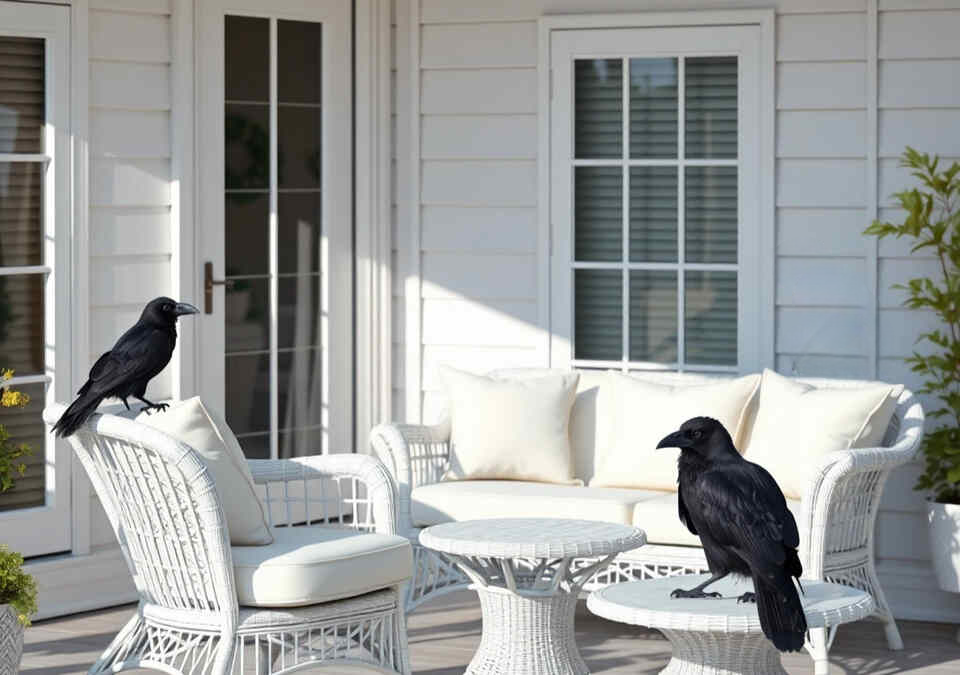
Let’s talk about physical barriers, the nuclear option that actually works when nothing else does. Bird spikes, netting, mesh covers, patio furniture covers, slipcovers, these create literal obstacles between birds and your furniture.
Bird spikes sound harsh, but they’re actually humane. They don’t hurt birds; they just make landing uncomfortable and impossible. Install them along furniture edges where birds typically perch. They work exceptionally well on railings and table edges.
The Invisible Fishing Line Method
This is my favorite technique because it’s effective and invisible:
- Use 20-30 lb test monofilament fishing line
- String it in a 6-8 inch grid pattern above furniture
- Attach to existing structures (umbrella, posts, pergola beams)
- Keep lines taut, sagging defeats the purpose
- Position 12-18 inches above furniture surfaces
Success rate: In a field test by wildlife management researchers, fishing line grids reduced bird landings by 85% over a 30-day period.
When netting makes sense: if you’re dealing with persistent nesting attempts or aggressive territorial behavior, netting over your entire patio area might be necessary. It’s not pretty, but it’s effective. Use UV-resistant netting designed for outdoor use, and ensure it’s taut, sagging netting can trap birds.
Using weather-resistant covers correctly means actually using them. I know, groundbreaking advice, right? 🙂 But seriously, covering your furniture when you’re not using it eliminates the perching opportunity entirely. Get covers that fit snugly, loose covers just give birds something to sit on top of.
Visual Deterrents That Work for Patios
Reflective tape, shiny objects, predator silhouettes, owl decoys, motion deterrents, visual deterrents leverage birds’ natural fear responses. The key is using them correctly and rotating them regularly to prevent habituation.
Best Visual Deterrents Ranked by Effectiveness
- Motion-activated devices (wind or battery-powered) = Most effective
- Holographic reflective tape = Highly effective, cheap
- Rotating predator decoys = Effective if moved every 2-3 days
- Static predator decoys = Minimally effective after 5 days
Where to place reflective deterrents: hang them where they’ll catch sunlight and create movement. I use holographic bird tape on my patio umbrella ribs. When the wind blows, it creates flashing patterns that birds hate. Cost me like eight bucks and it’s been effective for months.
Why owl decoys fail without repositioning: remember that habituation thing? Birds figure out pretty quickly that your plastic owl never moves, never blinks, and poses zero actual threat. Move it every 2-3 days. Change its position, its angle, even which direction it’s facing. Better yet, get one with a moving head that’s activated by wind or batteries.
💡 Quick Tip: Tie reflective tape to a fishing line above your furniture. You get both deterrent types in one installation.
Sound-Based Bird Deterrents
Ultrasonic bird repellers, distress calls, motion-activated sound devices, audio deterrents work on the principle that certain sounds signal danger to birds. The effectiveness varies wildly depending on what you buy.
What Works vs. What Doesn’t
Effective sound deterrents:
- Species-specific distress calls
- Predator sounds (hawk, owl calls)
- Motion-activated devices with varied sounds
- Wind chimes (for smaller birds)
Ineffective sound deterrents:
- Most ultrasonic repellers (birds don’t respond strongly to ultrasonic frequencies)
- Continuous loop sounds (birds habituate within days)
- Single-tone devices
Safe distances for human comfort matter unless you want to annoy yourself and your neighbors. Distress call devices can be genuinely unpleasant to hear. Place them away from seating areas and adjust volume appropriately. Some neighbors might not appreciate hawk screech sounds at 7 AM, just FYI.
Budget-friendly noise deterrents include simple wind chimes (surprisingly effective for smaller birds) and those aluminum pie pans people hang in gardens. They’re not pretty, but they work because the clanging sounds signal danger. I use wind chimes near my patio doors, and they’ve reduced bird activity noticeably.
Scent-Based Bird Deterrents
Peppermint oil, vinegar spray, citrus scents, DIY repellent spray, scent deterrents are hit-or-miss, but some people swear by them. Birds have relatively weak senses of smell compared to mammals, so scent alone rarely works as a standalone solution.
DIY Scent Repellent Recipe
Mix in a spray bottle:
- 1 cup water
- 10-15 drops peppermint essential oil
- 1 tablespoon white vinegar
- 2-3 drops dish soap (helps mixture adhere)
Spray furniture surfaces every 2-3 days, or after rain.
What scents birds dislike but people tolerate: peppermint, eucalyptus, and citrus top the list. I use a peppermint oil spray on my cushions, and while I can’t prove it’s keeping birds away, my cushions smell fantastic and I haven’t had bird issues since starting. Correlation or causation? Who knows, but I’m not stopping.
Longevity and weather resistance: here’s the problem with scent deterrents, they don’t last. Rain washes them away. Sun breaks them down. Wind dissipates them. You need consistent reapplication, which makes them more maintenance than I personally want to deal with. But combined with other methods? They might provide that extra edge.
Protecting Specific Patio Furniture Materials
Metal patio furniture, wood furniture, wicker furniture, outdoor cushions, fabric protection, different materials require different protection strategies. Bird droppings are acidic and can cause permanent damage if not cleaned quickly.
Material-Specific Protection Guide
Metal furniture:
- Tolerates all deterrent types
- Clean droppings within 24 hours to prevent etching
- Apply car wax for slippery surface birds dislike
Wood furniture:
- Avoid harsh chemical sprays
- Use covers or physical barriers
- Seal with polyurethane for easier cleaning
Wicker/rattan:
- Birds love the texture for gripping
- Covers are most effective
- Apply furniture polish to reduce grip
Fabric cushions:
- Store indoors when not in use (most effective)
- Use waterproof storage boxes on patio
- Scotchgard treatment makes cleaning easier
Preventing stains from bird droppings means quick action. The longer droppings sit, the more they etch into surfaces. Keep cleaning supplies handy and wipe up messes immediately. For fabric cushions, I keep them in a storage box when not in use. Annoying? Yes. Effective? Also yes.
Safe & Humane Bird Control Methods
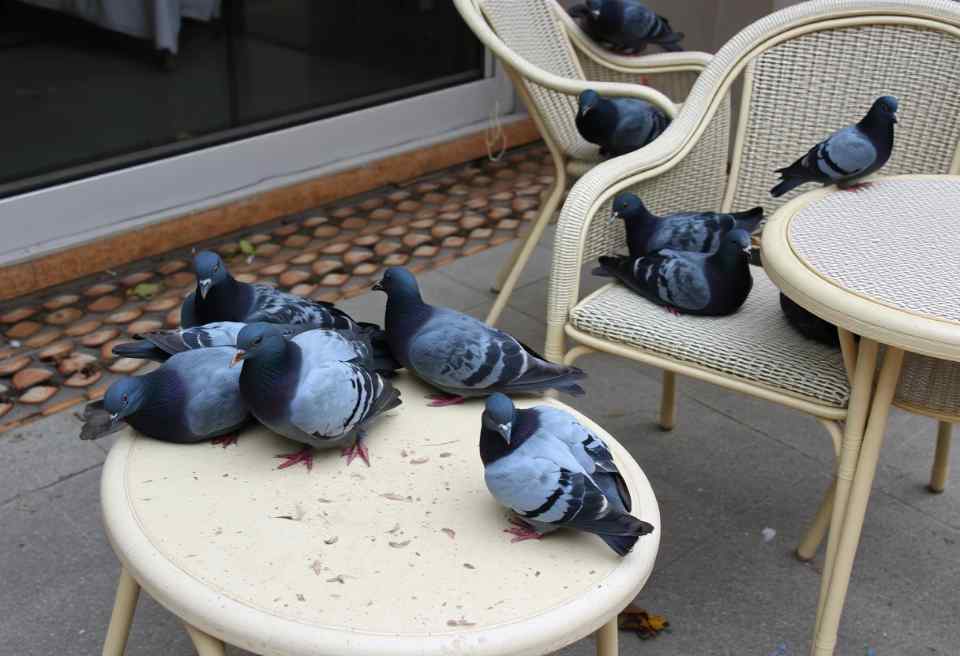
Humane bird deterrents, bird-safe practices, wildlife protection, North American birds, ethics and legality matter here. You can discourage birds from your patio without harming them, and legally, that’s your only option.
Legal Requirements: What You Must Know
What NOT to use (illegal or harmful tactics):
- Sticky repellents that trap birds
- Poison or toxic substances
- BB guns or projectiles
- Methods that injure wildlife
- Destroying active nests with eggs or chicks
How to comply with the Migratory Bird Treaty Act: This federal law protects most migratory bird species. You can deter birds from landing on your property using non-harmful methods, but you cannot injure, kill, or destroy active nests or eggs. The U.S. Fish and Wildlife Service enforces the law and provides information on legal protections and permits. Violating the act can result in fines of up to $15,000 for illegal taking or harassment of protected birds.
Creating deterrents without causing harm is totally possible. Everything I’ve recommended in this article falls within legal boundaries. The goal is making your patio less attractive to birds, not punishing them for being birds.
Landscaping + Yard Adjustments That Reduce Bird Traffic
Native shrubs, bird-attracting plants, pruning, tree trimming, perching spots, your yard layout directly affects bird traffic patterns. Sometimes the solution isn’t on your patio at all.
Removing “staging” branches birds use before landing is surprisingly effective. Birds rarely fly directly to ground-level perches. They land on nearby tree branches first, assess for danger, then move to their target. Trim back branches within 10-15 feet of your patio, and you eliminate their approach route.
Strategic Pruning Zones
0-10 feet from patio: Remove all low branches, thin dense shrubs
10-20 feet from patio: Selective pruning to eliminate horizontal perching branches
20+ feet from patio: Leave natural habitat intact for birds
Plants that attract vs. repel birds: this is tricky because plants that attract birds aren’t necessarily bad, you might just want them planted away from your patio. Berry-producing shrubs, seed-bearing flowers, and dense evergreens all attract birds. Plant these farther from your sitting area.
💡 Quick Tip: That tree branch hanging over your patio? It’s probably the staging area birds use before landing on your furniture. Trim it back 5 feet and watch traffic drop.
Cleaning & Maintenance Tips That Keep Birds Away Long-Term
Pressure washing, outdoor cleaners, disinfectants, surface protectants, regular cleaning isn’t just about appearance. It’s about eliminating the scent trails that tell birds “others have been here successfully.”
Weekly Maintenance Checklist
Daily (2 minutes):
- Wipe surfaces after use
- Remove food debris immediately
- Quick visual check for nesting materials
Weekly (10 minutes):
- Deep clean all furniture surfaces
- Rotate visual deterrent positions
- Check fishing line tension (if using)
- Inspect for damage to barriers
Monthly (30 minutes):
- Evaluate deterrent effectiveness
- Replace worn reflective tape
- Adjust strategy based on results
- Trim new branch growth
How scent trails attract birds: bird droppings contain pheromones and chemical markers. Other birds detect these and interpret them as “safe landing zone.” Clean thoroughly and frequently to eliminate these attractants.
Cleaning droppings properly requires the right approach. Wet the droppings first to prevent dust inhalation (dried bird droppings can carry diseases). Use a solution of water and mild detergent, or a 10% bleach solution for disinfecting. Wear gloves. Dispose of cleaning materials properly.
Should You Move or Modify Your Bird Feeders?
Feeder placement, seed spillage, squirrels, ground feeders, suet feeders, this is a sensitive topic because many of us love feeding birds. But if your feeders are causing patio problems, something’s got to give.
How feeders draw birds to furniture: birds don’t just visit feeders and leave. They perch nearby before and after feeding. They spill seed that attracts ground feeders. They establish territory around food sources. If your feeder is 15 feet from your patio, guess where those birds are hanging out?
Optimal Feeder Distance Study Results
Research by the Cornell Lab of Ornithology found:
- Under 20 feet: High patio bird traffic
- 20-30 feet: Moderate reduction in patio visits
- 40+ feet: 67% reduction in non-feeder patio activity
- 60+ feet: Minimal crossover between feeding and patio areas
Where to relocate feeders to reduce patio visits: aim for at least 30-40 feet away from your patio. Place them where you can still enjoy watching birds, but far enough that the associated bird traffic doesn’t impact your furniture. I moved mine to the far corner of my yard, and it solved about 70% of my patio bird problems.
Using seed types that reduce spillage and foot traffic: nyjer and safflower seeds produce less mess than sunflower seeds. Consider no-mess seed blends specifically designed to reduce ground waste. The less spillage, the fewer ground-feeding birds around your patio.
Weatherproofing and Seasonal Adjustments
Winter bird behavior, summer feeding, spring nesting, fall migration patterns, your deterrent strategy needs to adapt throughout the year. What works in summer might fail in winter.
Season-by-Season Strategy Guide
Spring (Nesting Season):
- Add extra physical barriers
- Check daily for nesting attempts
- Most aggressive deterrent use needed
- Birds claim territories, act fast
Summer (High Activity):
- Intensify cleaning routines
- Food residue attracts more birds
- Scent deterrents wash away faster
- Reapply repellents more frequently
Fall (Migration):
- New species passing through
- Less territorial aggression
- Moderate deterrent intensity
- Good time to establish new habits
Winter (Survival Mode):
- Birds seek shelter desperately
- Physical barriers most important
- Covered patio = bird hotel
- Reduce feeder proximity
When certain repellent methods stop working: scent repellents fail faster in hot weather. Visual deterrents lose effectiveness in winter when bird populations are different. Sound deterrents might need volume adjustments based on background noise levels.
When to Bring in Professional Help
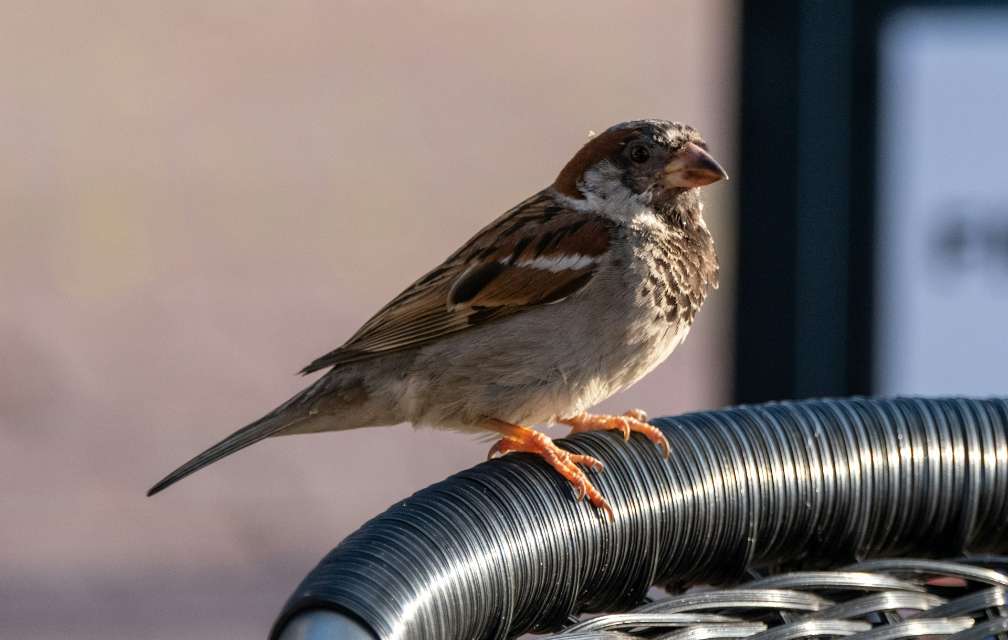
Pest control, wildlife removal, bird control specialists, sometimes DIY methods aren’t enough. Knowing when to call in pros saves time, money, and frustration.
Signs You Need Professional Intervention
Call a professional if:
- Multiple DIY methods have failed after 3+ weeks
- Birds are causing structural damage
- You’re dealing with aggressive species (geese, large gull flocks)
- Active nests need legal removal
- Health/safety concerns from large amounts of droppings
What pros can legally do for bird control: licensed wildlife control operators have access to methods and products unavailable to homeowners. They can install professional-grade netting systems, use registered chemical repellents, and implement exclusion techniques that require expertise. They also understand local and federal regulations.
Costs and expectations: professional bird control typically runs $200-500 for initial assessment and basic deterrent installation. Larger projects (whole-patio netting, for example) can run $1,000+. Get multiple quotes and verify licenses. Professional bird control is often more cost-effective long-term than repeated DIY attempts, with studies showing that for every $1 spent, about $7.50 in potential damage is avoided, according to an economic analysis of bird control projects.
FAQ: Birds & Patio Furniture
Why are birds suddenly gathering on my patio?
Sudden increases usually mean you’ve got a new food source (maybe you just started eating outside more), or seasonal changes have made your patio more attractive. Spring nesting season and fall migration both bring population surges.
How long do deterrents take to work?
Most deterrents show results within 3-7 days if used consistently. Birds need time to encounter the deterrent, assess it as a threat, and change their behavior. Patience matters. Don’t abandon a method after two days.
Are ultrasonic repellents safe for pets?
Generally yes, but dogs and cats can hear some frequencies humans can’t. Watch for behavior changes like head shaking or avoiding the patio. If your pets seem uncomfortable, turn off or relocate the device.
Can I use fishing line above my patio?
Absolutely, and it’s one of my favorite methods. Use heavy test line (20-30 lb), string it in a 6-8 inch grid, and keep it taut. It’s virtually invisible but highly effective. Just make sure it’s high enough that humans won’t walk into it.
Best bird-safe cleaning solution?
White vinegar and water (50/50 mix) works great for most surfaces and is completely safe for birds, pets, and the environment. For tough stains, a small amount of dish soap works. Avoid harsh chemicals that leave residues.
At-a-Glance: Best Combination Strategy
The Triple-Threat Approach (Most Effective)
Layer 1: Physical Barriers
- Tight furniture covers when not in use
- Fishing line grid over high-use areas
- Bird spikes on railings/edges
Layer 2: Visual Deterrents
- Reflective tape on moving surfaces
- Rotating predator decoy (move every 2-3 days)
- Motion-activated spinning devices
Layer 3: Strategic Changes
- Move feeders 40+ feet away
- Trim staging branches within 15 feet
- Daily cleaning to eliminate scent trails
Expected results: 70-85% reduction in bird activity within 7-10 days when all three layers are implemented simultaneously.
Common Mistakes That Sabotage Your Efforts
❌ Relying on a single deterrent method
❌ Forgetting to move visual deterrents regularly
❌ Placing bird feeders too close to patio
❌ Inconsistent cleaning routines
❌ Using harmful methods that violate wildlife laws
❌ Giving up after just 2-3 days
❌ Ignoring seasonal behavior changes
Wrapping This Up
Look, I get it. You spent good money on your patio furniture, and you just want to enjoy your outdoor space without dealing with bird droppings and territorial disputes with feathered squatters. It’s not too much to ask.
The good news? This is totally solvable. It requires some effort, some consistency, and probably some trial and error to find what works for your specific situation. But you can absolutely reclaim your patio without harming birds or losing your mind in the process.
I still love birds, honestly. I just love them more when they’re in the trees where they belong and not decorating my cushions with their… artistic contributions. My feeders are thriving in their new location, the birds are happy, and my patio is finally mine again.
Your action plan starting today:
Start with the Quick Wins section at the top of this article. Implement at least three of those methods simultaneously. Give them a full week to work. If you’re still seeing significant bird activity after seven days, add physical barriers or professional-grade visual deterrents. Stay consistent with cleaning, and remember to rotate your deterrents every few days.
Now go reclaim that patio. Your morning coffee deserves a clean chair to be enjoyed from 🙂