
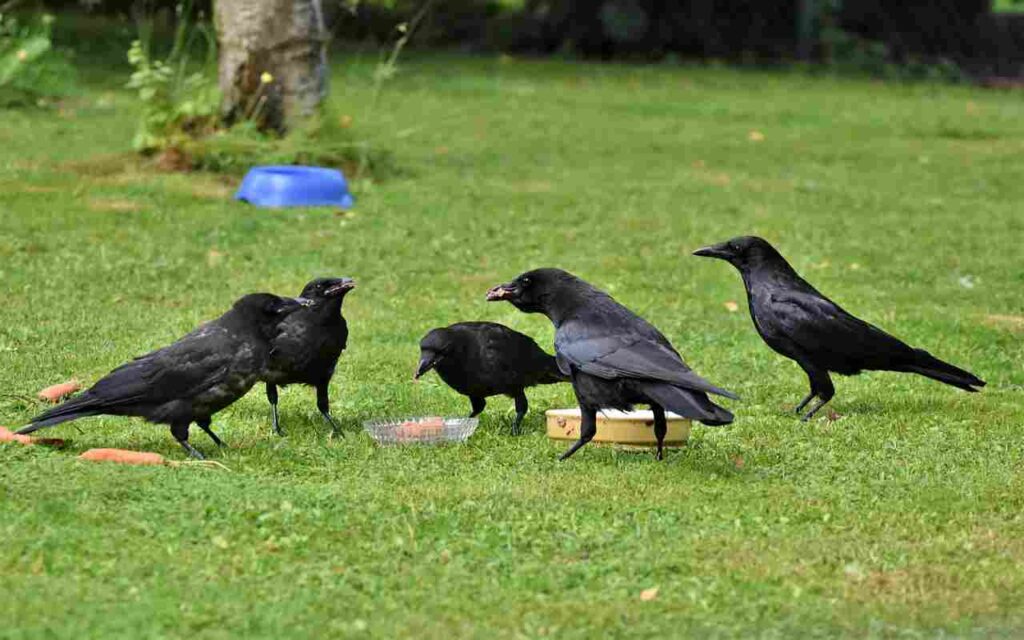
Waking up to a raucous murder of crows ripping through your garbage bins or bullying smaller songbirds completely ruins a quiet morning. If you have been trying to figure out how to discourage crows from your yard, you already know how stubborn these highly intelligent birds can be once they find a reliable meal.
The absolute key to clearing them out is implementing a strict, time-bound cleanup routine that completely breaks their local feeding patterns. By combining strategic food elimination with multi-sensory deterrents, you can permanently signal to incoming scouts that your property is no longer an open buffet.
Quick Answer: What is the single best way to discourage crows from your yard?
The most effective method is eliminating local food sources by completely securing all garbage cans, pet food stations, and compost piles while keeping lawns completely clear of fallen fruit or scattered birdseed.
Because crows are highly intelligent, you must simultaneously deploy a mix of reflective flash tape, scare-eye balloons, and recorded distress calls alongside targeted tree pruning to eliminate preferred perching sites.
Video Guide: How to Discourage Crows from Your Yard Safely
Want to see these crow-deterring strategies in action? This quick explainer video walks you through simple, legal, and effective ways to keep crows away from your yard, without harming them. Perfect if you prefer visual guidance alongside the tips above.
Show Transcript
0:00 So, are you locked in a battle of wits with the birds in your backyard? Well, today we are diving deep into how to
0:03 handle the clever, the noisy, and yeah, the often frustrating crow. This is your
0:05 strategic guide to humanely reclaiming your yard. You know exactly what I’m
0:18 talking about, right? You step outside, coffee in hand, and it looks like a
0:20 full-blown investigation is underway. There are like 20 crows loudly arguing
0:24 over last night’s garbage. Trash is everywhere and they don’t seem to care
0:30 one bit that you’re standing right there. If that sounds familiar, you’re
0:33 in the right place. And look, it’s not just about the mess. Crows are
0:36 incredibly opportunistic. They’ll treat your compost pile like a buffet, steal
0:40 fruit right off the trees, bully your small pets, and completely take over the
0:46 bird feeders, scaring off all the smaller birds you actually want to see.
0:50 And oh, the noise. That constant way too early calling can be a lot. So, what’s
0:57 the game plan? Well, the very first step is to understand what we’re really up
1:01 against. And let me tell you, this is not just any bird. We are dealing with a
1:06 feathered genius. To outsmart a crow, you absolutely have to get inside its
1:10 head and know how it thinks. See, crows belong to the Corvid family, which is
1:16 basically the bird world’s honor society. These guys are famous for their
1:20 mind-blowing intelligence. We’re talking advanced problem solving, like dropping
1:24 nuts into traffic so cars will crack them open, using tools, and a memory that
1:29 would honestly put most of us to shame. And this, this is the part that’s so
1:34 important to get. Crows can recognize and remember individual human faces for
1:40 years. So if a crow decides you’re a threat or a friend, it will not forget
1:46 you. This totally explains why one bad run-in can turn into a long-term grudge
1:51 match in your backyard. So, what does this intelligence look like in action?
1:56 Well, first, they solve complex puzzles to get food. Second, they learn by
2:00 watching, watching you, watching other animals. And third, and this is the real
2:05 kicker, they teach other crows what they’ve learned. So, if one crow figures
2:09 out your garbage day schedule, you better believe the entire flock will
2:12 know about it by next week. So, why your yard? What makes it so special? Chances
2:18 are, it’s checking all the boxes on their list. Crows are basically looking
2:22 for two things. An easy meal and a safe place to hang out. Unsecured garbage,
2:26 pet food left out, compost piles, bird feeders. That’s an all-you-can-eat
2:31 buffet. Combine that with some nice tall trees for perching, and boom, you’ve
2:35 basically rolled out the red carpet for them. Okay, before we get into the
2:39 really fun stuff, the solutions, there is a massive non-negotiable rule we need
2:44 to get straight. When you’re dealing with crows, the law is crystal clear.
2:48 Our goal is to discourage them, never ever to harm them. And this isn’t just a
2:52 friendly suggestion. We’re talking about federal law. American crows are a
2:57 protected species under the Migratory Bird Treaty Act. What that means for you
3:02 is that it is flat-out illegal to harm, trap, or kill them or to mess with their
3:07 nests when they’re active. Every single method we talk about has to be humane.
3:11 Period. So, here are the rules of engagement. What’s off limits versus
3:16 what’s fair game? Poisoning, trapping, shooting, absolutely not. Harming nests,
3:21 no way. But deterring them, annoying them, discouraging them, that’s all
3:26 approved. You can’t harm their home. But you can definitely modify your habitat
3:30 to make it way less appealing. It’s all about making your yard an inconvenient,
3:34 maybe even irritating place to be. All right, now that we know the rules, it is
3:39 time to build your strategic defense. Let’s get into the toolkit you can use
3:43 to make your yard an official no-fly zone for crows. First up, visual
3:48 deterrence. Crows are naturally suspicious of anything new, shiny, or
3:52 that moves unpredictably. So, things like reflective tape that flutters in
3:55 the wind, those big balloons with scary eyes on them, decoy predators like an
4:00 owl. You can even hang old CDs from a string. The magic words here are
4:04 movement and novelty. Now, listen up, because this is the single most
4:08 important rule for visual deterrence. You have to move them every 2 or 3 days.
4:14 If you leave that fake owl sitting on the same branch for a week, the crows
4:17 will figure it out so fast they’ll probably start perching on its head just
4:21 to mock you. Rotation is everything.
4:25 Next in the toolkit is sound.
4:27 Unpredictable noises work wonders. You can play a recorded crow distress call.
4:32 That’s basically a danger signal to other crows. You can also set up
4:36 motion-activated alarms or my personal favorite, motion-activated sprinklers.
4:41 Nothing says get out of my yard like a sudden unexpected shower. Even random
4:45 wind chimes can help make the environment feel less secure. And just
4:49 like with the visual stuff, the secret ingredient here is unpredictability.
4:53 If you just have a sound running constantly, it becomes background noise.
4:57 They’ll just tune it out. What you want are random motion-activated sounds that
5:02 keep them on edge and convince them your yard is not a safe, quiet place to
5:06 chill. Okay, now we get to what is probably the most effective strategy of
5:11 all. Removing their reason for being there in the first place. Make your yard
5:15 less attractive. Get secure lids for your garbage bins. Cover the compost.
5:20 Clean up fallen fruit right away. And maybe, just maybe, pause the bird
5:24 feeding for a couple of weeks until the crows get the message and move on. No
5:28 food means no reason to stay. This is how you win the war. So, how do we pull
5:34 all of this together to win the long game? Look, just using one of these
5:37 tricks probably isn’t enough. You have to combine your tools and really start
5:42 thinking like a strategist, adapting to whatever the crows throw at you. And
5:46 that strategy needs to change with the seasons. In the spring, your focus
5:50 should be on making sure they don’t see your trees as a great place to build a
5:53 nest. Come summer, you’re dealing with young birds learning where the good food
5:56 is. Then in the fall and winter, you might be up against bigger flocks, which
6:00 means food removal becomes even more important. It’s all about timing. The
6:05 big takeaway here is that an integrated approach is the only thing that really
6:09 works. You’ve got to combine the visual stuff, the sound stuff, and the habitat
6:13 control all at the same time. This creates an environment of constant
6:18 uncertainty, and eventually the crows will just decide your yard is way more
6:21 trouble than it’s worth. So, here it is, your final four-step action plan. Number
6:27 one, combine your tools. Number two, rotate those deterrents constantly.
6:32 Number three, be consistent. You can’t let up. And number four, pay attention.
6:37 See what’s working and what isn’t and adjust your strategy. In the end, just
6:42 remember this. Discouraging crows is about strategy, not a battle. They might
6:46 be smart, but a smart yard, a well-managed yard can outwit even the
6:50 wisest bird out there. So, go secure that garbage, move those decoys, and
6:54 take back your space. Peaceful mornings await.
Understanding Crows in Your Yard
Let’s start with some respect for your adversary. The American Crow (Corvus brachyrhynchos) is one of the most intelligent birds on the planet. We’re talking problem-solving abilities that rival some primates.
Research published in Proceedings of the Royal Society B found that New Caledonian crows were able to solve physical reasoning tasks and transfer solutions to new versions of those tasks, indicating they use causal reasoning to work through complex, multi-step problems.
Crow behavior is fascinating and infuriating in equal measure. They remember faces, literally. A landmark study in Proceedings of the Royal Society B showed that crows can recognize individual humans associated with threat and socially transmit that knowledge to other crows over multiple years.
Brain imaging research in PNAS even revealed that crows activate specific brain regions when they see faces of people who previously captured them. That person who shooed them away aggressively? They remember. They’ll tell their crow friends. Suddenly you’re the villain in crow society.
As backyard birds go, crows are both beneficial and problematic. They eat tons of insects, clean up carrion, and disperse seeds. But they’re also nuisance birds that can be incredibly loud, aggressive toward smaller birds, and destructive when they decide your property has what they want.
Common problems include excessive noise (especially during dawn chorus), aggressive behavior during nesting season, scavenging through garbage and compost, raiding bird feeders meant for other species, and occasionally harassing pets or livestock. Understanding why they’re there is your first step to getting them to leave.
Why Crows Are Attracted to Your Yard
Crows don’t show up randomly. Your yard is meeting specific needs, and identifying those needs helps you eliminate the attraction. Food sources top the list, crows are opportunistic omnivores who will eat basically anything edible.
- Natural food sources in your yard might include insects in your lawn, seeds from plants and grasses, fruits from trees or bushes, earthworms after rain, and small animals like mice or frogs. Crows are incredibly efficient foragers who miss nothing.
- Human-provided food is even more attractive because it requires less work.
- Garbage is crow paradise, they’ll tear through bags looking for scraps.
- Bird feeders designed for songbirds become all-you-can-eat buffets for crows.
- Pet food left outside is basically an invitation. Even your compost pile, if not properly secured, becomes a crow restaurant.
- Fruit trees are particularly problematic. Crows love berries, apples, cherries, and pretty much any fruit you’re trying to grow. They’ll strip a tree faster than you’d believe possible.
- Lawns that are heavily watered attract earthworms to the surface, which attracts crows for easy protein.
- Shelter and nesting areas matter too. Tall trees, especially conifers, provide excellent nesting sites. Crows prefer locations with good visibility and proximity to food sources. If your yard offers both food and shelter, congratulations, you’ve created crow real estate that’s basically prime location.
Legal and Ethical Considerations
Before you do anything, understand this: you cannot harm crows without potentially breaking federal law. The Migratory Bird Treaty Act protects most bird species, including American Crows. This wildlife protection law makes it illegal to kill, capture, or harm crows without proper permits.
Local wildlife regulations might add additional protections or restrictions. Some municipalities have specific ordinances about bird deterrents, noise levels, and what methods you can legally use. Check with your local wildlife agency before implementing anything aggressive.
What is allowed vs illegal deterrence breaks down simply: you can make your property unattractive to crows through habitat modification, visual deterrents, sound deterrents, and exclusion methods. You cannot poison them, shoot them (in most areas without permits), trap them without licenses, destroy nests with eggs or young birds, or use methods that cause injury.
Humane bird control isn’t just ethical, it’s practical. Killing a few crows won’t solve your problem because other crows will move into the territory. Plus, remember that whole “crows remember faces and hold grudges” thing? You really don’t want to make enemies of birds that might harass you for years.
The U.S. Fish and Wildlife Service provides guidance on laws, permits, and best practices for managing and conserving migratory birds under federal protections, helping people comply with legal bird management methods.
Non-Lethal Ways to Discourage Crows
Visual Deterrents
Reflective tape, scare-eye balloons, predator decoys, scarecrows, shiny objects, visual deterrents exploit crows’ natural wariness of potential threats. The key is variety and movement because crows habituate quickly to static objects.
Where to place them: position visual deterrents along crow approach paths, near food sources they’re targeting, and in areas where they typically perch. Hang reflective tape from tree branches, fence posts, or anywhere wind can move it. The flashing light patterns trigger avoidance responses.
Scare-eye balloons with predator eyes work reasonably well for short periods. Hang them where they’ll move in the wind and position them at varying heights. Studies on bird deterrents consistently show that visual methods are most effective when they incorporate movement and appear novel to the birds.
Predator decoys like fake owls or hawks can work, but here’s the catch, how often to move them determines success. Move decoys every 2-3 days minimum. Change their position, orientation, and height. Static decoys become landscape features that crows ignore within a week. I learned this the hard way when crows started perching on top of my fake owl 🙂
Scarecrows and shiny objects like old CDs or aluminum pie pans add variety to your deterrent arsenal. Crows are suspicious of novelty, so rotating between different visual deterrents keeps them guessing.
Sound Deterrents
Crow distress calls, ultrasonic bird deterrents, motion-activated alarms, noise-making devices, audio deterrents can be highly effective if used correctly. Crows are social birds with complex vocalizations, and certain sounds trigger immediate alarm responses.
Crow distress calls are recordings of crows in danger or distress. These trigger flock-wide alarm behavior and can clear an area quickly. You can purchase commercial devices that play these calls, or find recordings online. Timing and placement to avoid habituation matter enormously, don’t run them constantly or crows will realize there’s no actual danger.
Ultrasonic bird deterrents are largely ineffective for crows. Despite marketing claims, crows don’t respond strongly to ultrasonic frequencies. Save your money for methods that actually work.
Motion-activated alarms that trigger when crows approach create unpredictability. Crows learn patterns quickly, so devices that activate randomly or in response to movement work better than timed systems. I use a motion-activated water sprinkler near my compost bin, and it’s been surprisingly effective.
Noise-making devices like wind chimes or banging pans can provide short-term relief, but crows habituate to repetitive sounds within days. Use them as part of a multi-pronged approach, not as standalone solutions.
Habitat Management
This is where you win long-term. Remove food sources, secure garbage bins, prune trees, cover compost, limit water sources, making your yard less appealing is the most effective strategy, period.
Remove food sources systematically. Bring in pet food immediately after feeding. Clean up fallen fruit from trees daily. Keep bird feeders away from areas you want crow-free, or switch to squirrel-resistant feeder designs that are harder for crows to access. Stop feeding birds entirely for 2-3 weeks if crows are a serious problem, once they establish different feeding patterns, you can resume with modifications.
Secure garbage bins with locking lids or bungee cords. Crows can flip regular lids easily. Store bins in enclosed areas until collection day if possible. Double-bag anything particularly aromatic. Trust me, crows can smell opportunity from impressive distances.
Prune trees to eliminate preferred perching and nesting sites. Crows like high vantage points with clear sightlines. Thinning dense canopy areas makes your trees less attractive. Remove dead branches where crows commonly perch.
Cover compost with secure lids or bury food scraps under several inches of brown material. An uncovered compost pile is basically a crow buffet. I switched to a sealed tumbler composter and my crow visits dropped by about 80%.
Limit water sources if you’re dealing with persistent crow problems. Bird baths, fountains, and standing water attract crows, especially during hot weather. If you want to maintain water features for other birds, consider designs that are too small or shallow for crows.
Behavioral Conditioning
Negative reinforcement, scare tactics, training crows, flock management, yes, you can actually condition crow behavior. How crows learn is both the problem and the solution. They’re highly intelligent, socially connected, and teach each other.
Negative reinforcement means consistently making your yard an unpleasant experience without causing harm. Motion-activated sprinklers, loud noises when crows appear, and immediate removal of food sources all teach crows that your yard isn’t worth the effort.
Scare tactics work best when they’re immediate and varied. The key is responding quickly when crows arrive, delays let them succeed in finding food, which reinforces the behavior you’re trying to discourage.
Effectiveness over time depends on consistency. You need to maintain deterrents for several weeks minimum. Crows have excellent memory, but they also move on to easier targets if your yard consistently disappoints them. Research shows that corvids adjust foraging strategies based on success rates, make your yard a consistently poor choice.
Seasonal Strategies for Crow Control
Migration patterns, nesting season, winter foraging, breeding season, crow behavior changes throughout the year, and your deterrent strategy should adapt accordingly.
Spring nesting season (March through June) brings increased territorial aggression. Crows defend nesting areas vigorously and might dive-bomb perceived threats. This is when you’ll see the most aggressive behavior. Focus on preventing nest establishment in your trees by installing deterrents in late winter before nest building begins. Once nests contain eggs or chicks, you legally cannot disturb them.
Summer means feeding hungry fledglings. Crow families stick together, increasing the number of birds visiting your yard. Young crows are noisy and demanding. Maintain strict food source control during this period.
Fall migration patterns bring mixed flocks and increased numbers as crows gather for migration. Some populations are year-round residents while others migrate. This seasonal influx can create sudden crow problems where you previously had none.
Winter foraging drives crows to reliable food sources. Natural food is scarce, making human-provided food even more attractive. Crows gather in large communal roosts during winter, sometimes numbering in the thousands. If you’re near a roost, your yard might become a stopover location. Winter is actually the best time to establish deterrents because food scarcity makes crows more willing to seek easier locations.
What Not to Do
Culling, poison, illegal traps, harassment, illegal shooting, let’s be crystal clear about what doesn’t work and what will get you in legal trouble. Risks, legal issues, and why these methods fail or backfire are substantial.
Culling (killing individual crows) doesn’t solve the problem. Other crows immediately move into the territory. You’ve accomplished nothing except potentially breaking the law and making crow enemies. Poison is illegal, inhumane, and dangerous to other wildlife, pets, and children. Don’t even consider it.
Illegal traps violate the Migratory Bird Treaty Act. Illegal shooting carries serious federal penalties, fines up to $15,000 and potential jail time. Even in areas where crow hunting is legal with permits, shooting near residential areas violates local ordinances.
Harassment beyond legal deterrent methods can cross into illegal territory. Actively pursuing crows, destroying nests with eggs, or using methods designed to injure rather than deter are all prohibited.
Why these methods fail: crows are too intelligent and social. Kill one crow, ten more learn about the food source from the original crow’s absence. Crows have been documented holding funerals for dead flock members and becoming more cautious in those areas, but they don’t abandon territory entirely. You need long-term solutions, not aggressive short-term actions.
Combining Multiple Methods for Best Results
Integrated pest management (IPM), multi-layered deterrence, long-term solutions, single-method approaches rarely work with crows. Their intelligence means they quickly figure out what’s real threat and what’s harmless annoyance.
How combining visual, sound, and habitat changes works better than a single tactic: think of it as creating uncertainty. If your yard has reflective deterrents AND motion-activated sounds AND no accessible food, crows start questioning whether the effort is worthwhile.
According to the Internet Center for Wildlife Damage Management’s Principles of Wildlife Damage Management, effectively reducing wildlife conflicts, including nuisance birds, usually requires considering a variety of solutions and combining multiple techniques rather than relying on just one method.
Start with habitat management as your foundation, eliminate food and nesting opportunities. Layer in visual deterrents that change regularly. Add sound deterrents that activate unpredictably. Maintain this combination for at least 3-4 weeks before expecting results.
I use a rotation system: week one, reflective tape and secured garbage. Week two, add predator decoy in new location. Week three, introduce motion-activated sprinkler. Week four, reposition all visual deterrents. This creates ongoing novelty that prevents habituation while maintaining pressure on crow populations to relocate.
Monitoring Success
Backyard wildlife survey, bird observation, crow behavior tracking, motion cameras, you need to know if your methods are working or if you’re wasting time and money.
How to track improvements and adjust strategies: keep a simple log of crow visits. Note time of day, number of birds, what they were doing, and which deterrents were active. After two weeks, patterns emerge that help you refine your approach.
Motion cameras are incredibly useful for understanding crow behavior when you’re not watching. I installed a cheap trail camera and discovered my crows were visiting primarily between 6-8 AM and 4-6 PM. Focusing my deterrent efforts on those windows increased effectiveness dramatically.
Bird observation helps you distinguish between passing-through crows and resident crows. Passing birds aren’t a problem, they’re just traveling. Resident crows that return daily are your target. Look for consistent individuals (crows often have distinctive markings or behaviors) to understand if you’re discouraging the same birds or just experiencing regular crow traffic.
For tracking overall backyard bird diversity, consider formal survey methods that help you balance crow deterrence with maintaining habitat for desirable species.
Frequently Asked Questions
Why are crows aggressive?
Aggression is almost always territorial defense, especially during nesting season. Crows perceive threats to their nests or young and respond with dive-bombing or loud vocalizations. Once nesting season ends, aggression typically disappears. If crows are aggressive outside nesting season, you’re probably near their food source or communal roost.
Can I scare crows without harming them?
Absolutely, and it’s your only legal option anyway. Visual and audio deterrents, habitat modification, and physical exclusion all work without causing harm. The key is persistence and variety.
Do crows return if I remove food?
Eventually, no. Crows are efficient foragers who maximize food return for energy expended. If your yard consistently provides nothing worth eating, they’ll adjust their foraging routes. This takes 2-4 weeks of strict food removal before you see results.
How smart are crows?
Crows are incredibly smart. Studies on tool use in crows published in Royal Society Open Science showed these birds can innovate and improve tool designs through trial and error. They can count, use tools, recognize faces, hold grudges, teach their young, and solve complex problems. You’re not dealing with a simple bird, you’re dealing with a feathered genius.
Should I stop feeding birds entirely?
Temporarily stop feeding for 2–3 weeks to break crow habits, remove all accessible food, then resume with crow-resistant feeders. Monitor your yard and adjust placement to keep crows away while still helping smaller birds.
Keeping Your Yard Crow-Friendly for Other Birds
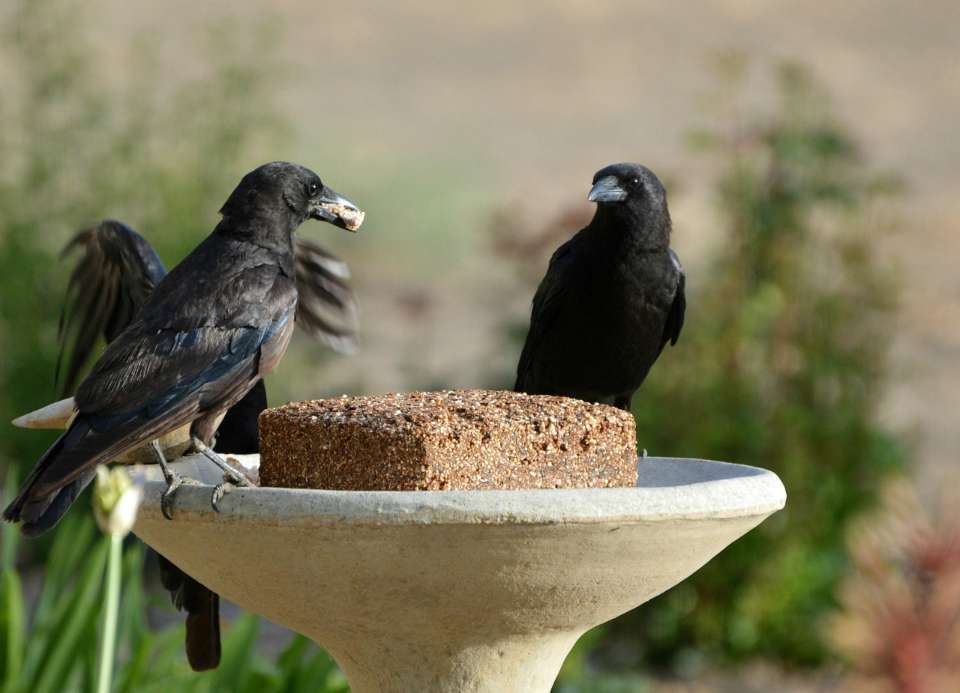
Here’s the thing, crows are part of healthy backyard bird diversity. The goal isn’t eliminating them entirely but managing their presence so they don’t dominate your yard and drive away songbirds and other native birds.
A bird-friendly garden can accommodate crows at a distance while prioritizing smaller species. Plant native vegetation that attracts insects for smaller birds. Install feeders designed for specific species that exclude crows through size restrictions. Create layered habitat with shrubs and small trees where smaller birds can shelter from crow harassment.
Responsible wildlife management means balance, not elimination. Crows serve ecological roles, they clean up carrion, control insect populations, and disperse seeds. They’re also incredibly entertaining to watch when they’re not destroying your garbage or terrorizing your songbirds.
Some of my neighbors have actually befriended their local crows by feeding them consistently in specific locations far from gardens and living spaces. The crows learn the routine, stop being destructive, and even defend the territory from other crows. I’m not quite there yet (still holding my garbage bag grudge), but it’s an option if you want to embrace the chaos.
Summary Checklist for a Crow-Free Yard
Setting up your yard protection in layers creates a reliable shield that handles changing bird habits easily. Your secure bin locks, moving predator models, automated perimeter sprinklers, and strict food removal timelines stay useful through spring nesting, summer fledgling care, and winter foraging periods.
Once your main lawns are secure, you can easily tweak your long-term backyard layouts to support smaller wildlife safely. Learn how to keep house sparrows away from feeders using targeted size-exclusion barriers, explore our structural techniques for keeping birds away from patio furniture, and check our visual guide on crow vs raven identification to distinguish passing travelers from permanent resident flocks.
Stay consistent with your maintenance routine each season. Relocate your visual scare-eye balloons every 48 hours, keep your trash storage lids tightly cinched with heavy bungee cords, and clear fallen orchard fruit from the turf daily. Executing these steady adjustments ensures these intelligent corvids permanently adjust their daily foraging routes completely away from your property boundaries.