
Reader Transparency: This birding guide contains paid affiliate links. If you click a link and make a purchase, I may receive a small commission at no extra cost to you. As an Amazon Associate, I earn from qualifying purchases. Your support helps keep Feathered Guru flying!
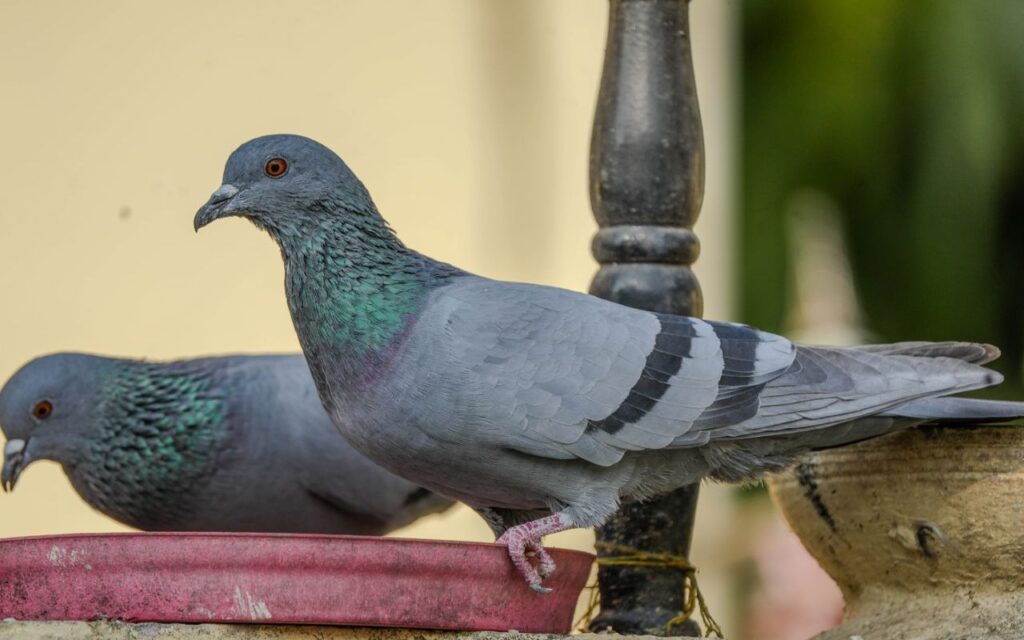
You know that frustrating feeling when a heavy flock of feral pigeons drops out of the sky and claims your entire backyard station as their personal buffet? If you want to learn how to keep pigeons away but not other birds, realizing that these urban scavengers rely on wide flat surfaces to feed will save your yard and your budget.
The truth is that you do not have to pull your feeding stations down just to get rid of the crowd. Pigeons are physically incapable of maneuvering around tight spaces or clinging to vertical wires, meaning you can easily exploit their clumsy size to completely lock them out while keeping your favorite small songbirds perfectly safe.
How to Lock Out Heavy Feral Pigeons
The Quick Answer: The most effective way to deter pigeons is to install a “visual exclusion shield” using tight wire cages or weight-sensitive perches that instantly shut under a pigeon’s heavy body mass. By eliminating wide landing platforms and choosing vertical tube designs with perches cut under two inches, you can physically block large flocks from landing without scaring away local cardinals or finches.
The Weight Threshold: Upgrading to Spring-Loaded Columns
The absolute fastest way to drop an invisible wall in front of an invading flock of pigeons is to use their own heavy body weight against them. A typical feral pigeon weighs anywhere from nine to thirteen ounces, which is nearly ten times heavier than a delicate goldfinch or chickadee.
By upgrading your main yard hardware to a premium Brome Squirrel Buster Plus Wild Bird Feeder, you can isolate feeding access entirely by mass.
When a light songbird lands on the perch ring, the internal metal springs remain fully open, allowing the bird to collect seeds without issue. However, the second a heavy pigeon presses its large feet onto the bar, the spring system instantly collapses downward, dropping an integrated shroud directly over the feeding ports.
This mechanical cutoff completely blocks their heavy bills from reaching the food supply. As outlined in the core species evaluation resources managed by Birds and Blooms, weight-activated exclusion mechanisms are exceptionally reliable against heavy yard birds over four ounces.
Because pigeons are lazy foragers that look for effortless access points, hitting a weight-sensitive locking system will cause them to quickly abandon your coordinates

• Adjustable shroud snaps shut under heavy birds
• 100% pigeon proof blocks 9-ounce pests automatically
• Ring perch design lets cardinals feed in total safety
• Ventilation system keeps inner sunflower seeds dry
The Two-Step Visual Exclusion Shield Strategy
If persistent flocks are still swarming the base of your station poles, you must deploy a two-step visual exclusion shield to disrupt their comfort zones. Pigeons are classic open-air ground foragers that require clear visibility and a wide perimeter to feel secure while feeding.
- Step 1: Stop throwing cheap mixed seed blends onto your lawns or open walkways. These retail bags are packed with millet and cracked corn, which act as a massive scent flag pulling in wild pigeons from miles away.
- Step 2: Hang tight, vinyl-coated wire boundary cages directly over your tube cylinders. Set the grid openings to exactly one and a half inches wide.
This structural spatial gap creates an absolute physical barrier that works flawlessly against large pests. Tiny finches, nuthatches, and chickadees can easily glide right through the wire gaps to eat safely inside, while wide-shouldered pigeons are left completely stuck on the outside.
This style of physical barrier is highly effective for localized zone defense, a mechanical principle you can explore further in my tactical walkthrough on how to deter starlings from bird feeders.
Eliminating Flat Platform Landing Pads and Ground Spills
Traditional open wooden hoppers, flat ground trays, and wide plastic seed catchments provide an easy landing zone for multiple large birds to gather side-by-side.
To break this pattern without buying new hardware, you can drop a dietary wall by swapping out your default sweet grains for pure, unblended safflower seed. Pigeons completely refuse the bitter flavor of these white hulls, causing the flock to quickly abandon your station.
If you must use a catch basin to protect your lawn from rot, select a narrow model equipped with a steep, slick plastic dome shield directly above the perches. Forcing large, heavy birds onto highly angled, slippery surfaces makes it impossible for them to balance their chest muscles or build a territorial feeding zone.
Furthermore, you must keep the ground space directly beneath your hangers completely clear of loose husks. Pigeons are heavily drawn to low-altitude leftovers, a messy yard habit you can completely bypass by implementing the cleaner station adjustments featured across my guide on how to prevent bird seed waste.

• 2-pack supply includes two 20-pound bags
• 100% pure seed creates a no-mess formula
• High energy plant lipids fuel songbirds
• Feeder-friendly profile fits all hopper stations
The One-Inch Perch Restriction Blueprint
Sometimes, modifying your food blends is not enough, and you must make simple structural adjustments to your existing hardware to block large birds.
Standard commercial tube cylinders come equipped with long, protruding plastic or metal rods designed to accommodate a wide variety of bird sizes. To target pigeons specifically, you must shorten these landing pegs down to exactly one inch.
Small, agile songbirds can effortlessly clamp their claws onto a tiny one-inch peg because their center of gravity sits close to their feet. Pigeons have large, wide feet and massive breast muscles that require broad, flat surfaces or extra-long perches to support their stance comfortably.
According to the master food profile charts managed by the All About Birds support hub, premium specialty items like thick-shelled safflower seeds and micro-sized Nyjer seeds are specifically optimized to feed small, targeted finches and cardinals.
Because heavy ground-feeding pigeons cannot navigate narrow tube holes or deal with small, oily needle-seeds, using tight perches completely locks them out. If a clumsy pigeon tries to swing its heavy frame onto a restricted one-inch peg, it will tilt backward, lose its grip, and slide right off the tube frame.
This shifts access exclusively to native clinging species, an layout fix that works perfectly if you are simultaneously trying to fix a yard station where birds are not coming to a new bird feeder.
Protecting Songbird Territories from Feral Displacement
When a massive flock of feral pigeons overruns a residential property, the primary damage isn’t just financial seed loss. It creates a high-pressure environment where native songbirds feel too vulnerable to forage. Pigeons will swarm around hangers, blocking access lines and creating constant ground movement that triggers flight responses in small birds.
If your yard’s target songbirds are constantly forced to scatter, they will eventually drop your property coordinates from their daily routes. Reclaiming your yard balance requires strict spatial isolation.
By moving your small-perch vertical columns away from wide fences and building tight exclusion barriers, you can give native passerines a secure zone to feed without fear of displacement.
This protection strategy keeps your localized population targets safe and steady, a structural goal we prioritize heavily when managing territorial species variations in our guide on male vs female cardinal populations.