
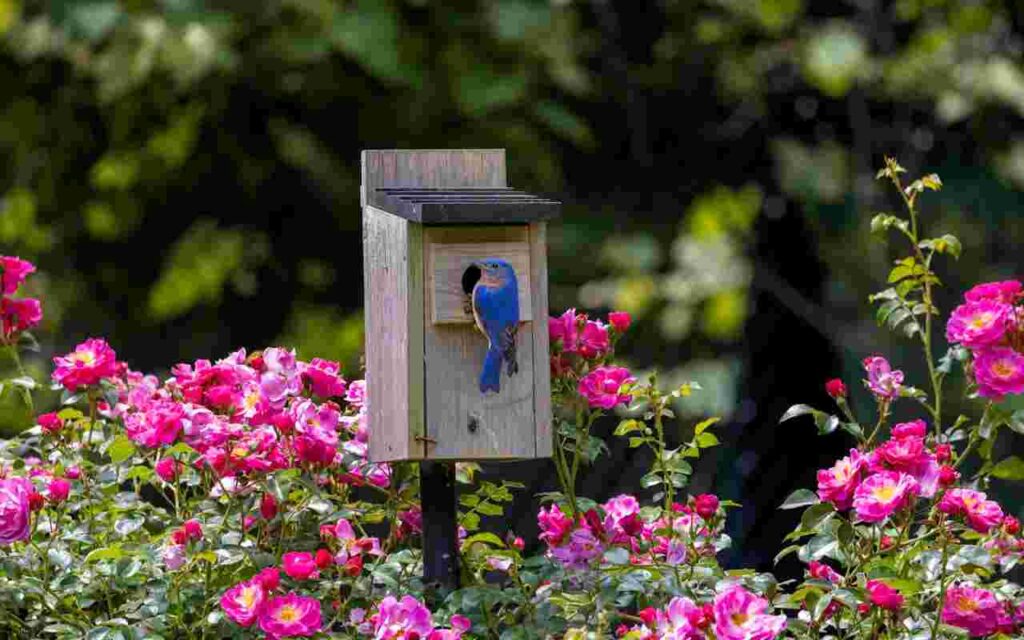
Spring transforms residential gardens into vital breeding habitat for songbirds. Learning how to prepare your garden for nesting birds gives birds the best chance to successfully raise their young. Research shows Carolina chickadees need yards with at least 70% native plant biomass to fledge chicks, proving garden prep isn’t just about looks, it’s about creating a thriving breeding ecosystem.
This guide is for homeowners who want birds to raise young in their yards, not just visit feeders. Nest predation is the leading cause of reproductive failure for many species, with suburban failure rates exceeding 50%. Smart garden preparation can dramatically improve outcomes 🙂.
- Spring gardens become vital nesting habitats for songbirds.
- Carolina chickadees need 70% native plant coverage to fledge chicks.
- Prioritize native trees, shrubs, and perennials for insects and nest sites.
- Install water sources and nest boxes early to boost success.
- Follow seasonal prep: late winter = plan, early spring = plant, mid-spring = observe.
- Leave leaf litter and avoid aggressive pruning to preserve insects and nests.
- Use layered garden structure: ground plants, shrubs, understory, canopy.
- Monitor boxes, clean annually, and adjust for local species and regions.
- Start small, gradually reach 70% natives, and birds will return year after year.
Show Transcript:
0:00
So, you love watching birds in your garden, right? But have you ever stopped to think if your yard is really helping them? Today we’re going to dig into some fascinating research that shows how to turn your space into a real-life sustaining sanctuary. And trust me, the answer is probably not what you’re expecting.
0:18
Let’s start with a tough question: is your garden a sanctuary, or could it unintentionally be a trap? Are we helping birds thrive, or could we be setting them up for failure? Fifty percent. Just let that number sink in. According to numerous studies, that’s the documented nest failure rate in many typical suburban landscapes. That means half of all nesting attempts are failing. We need to understand why.
0:49
This brings us to the suburban nesting crisis. To find a solution, we first have to understand the problem. The issue isn’t a lack of birds at feeders. The crisis hits during nesting season. Our yards might look green and beautiful, but to a nesting bird, they can be total food deserts. They often lack the right resources needed to successfully raise their babies.
1:21
So, what can we do? Research points to a single powerful rule that unlocks the secret to nesting success. A landmark study tracked chickadees and found a clear scientific line in the sand. When a landscape had more than seventy percent native plants, birds thrived. Drop below that, and their ability to raise a family almost vanished. That seventy percent mark is not just a suggestion; it’s a tipping point. Above it, things work. Below it, they don’t.
2:11
This is not about having pretty plants. It’s about the food web and what those plants support. For roughly ninety percent of songbirds, baby food means one thing: caterpillars. They are the perfect protein and fat-packed power bars for growing chicks. Nine thousand. That’s the number of caterpillars one chickadee family needs to raise its young. That’s an enormous amount of food, and typical ornamental plants from Asia or Europe cannot provide it because our local caterpillars never evolved to eat them.
3:04
The big question is, how do we create a yard that can actually produce that much life? Let’s get practical and outline a blueprint for building your bird sanctuary from the ground up. First, the best habitats are layered, just like a forest. Tall canopy trees, a mid-level understory, a shrub layer, and ground cover. Each layer serves a purpose: nesting high, hiding from predators in the middle, and providing a bug-filled cafeteria below. This structure attracts a variety of birds.
3:41
Keystone trees are powerful. For example, a single native oak can support over 550 types of caterpillars. Planting even one of these trees has a huge ripple effect, building the food web. The key is timing. Do heavy work like removing invasive plants in late winter, before the birds arrive, and plant natives in early spring. After that, watch quietly. Proper timing is critical.
4:27
We also need to discuss what not to do. Many common gardening habits can sabotage your efforts. The essential mindset shift is this: a tidy yard is not the goal. Ecologically, a perfectly tidy yard is sterile. The new goal is living. Leaves with holes are not a problem. That means you’re feeding baby birds. A messy yard is a healthy yard.
4:50
Some common harmful habits include raking up every leaf, spraying for insects, and thinking a feeder alone is enough. A true bird sanctuary leaves the leaves, appreciates insects, and prioritizes habitat over aesthetics.
5:29
Success is easy to recognize. When your yard works, you’ll hear it first: the air fills with bird song as they claim territories. Next, you’ll see parents flying back and forth with beaks full of caterpillars to hidden nests. The ultimate payoff is the fledglings themselves venturing into the world. That’s the proof your habitat is working.
6:11
The bottom line is this: the choices you make this spring determine whether your yard is ornamental or a vital part of conservation. Are you just growing plants, or are you growing a future for the birds we all love?
The Critical 70% Native Plant Threshold
Garden preparation begins with a key research finding that reshapes conventional landscaping wisdom. University of Delaware researchers Desirée Narango, Douglas Tallamy, and Peter Marra from the Smithsonian Migratory Bird Center tracked Carolina chickadee reproduction across 150 residential properties in the Washington DC area.
Their 2018 study on residential bird reproduction revealed a sharp threshold: when native plant biomass dropped below 70% of total landscaping, chickadee reproductive success plummeted to near zero.
The reason? Caterpillar availability. During breeding season, arthropods make up more than 90% of a chickadee’s diet, with caterpillars providing fat, protein, and carotenoids essential for rapid nestling growth. A single brood requires 6,000–9,000 caterpillars from hatching to fledging.
Native plants support robust caterpillar populations, while non-native ornamentals have almost none of these critical food sources.
This 70% threshold applies broadly across insectivorous species. For gardeners serious about supporting nesting birds, it sets a clear target: convert at least 70% of your landscaping to regionally native species before spring.
In my own yard, I’ve seen nest box occupancy jump significantly after converting roughly 60% to natives over two seasons, with chickadees and wrens returning to the same boxes year after year.
Learn more about selecting native plants for birds to help meet this critical threshold.
Timeline for Spring Garden Preparation
Successful nesting habitat preparation follows a structured timeline aligned with bird migration and breeding chronology.
Late Winter Preparation (January-February)
Complete major landscape changes before birds begin territory selection in March. This window allows disturbed areas to stabilize and new plantings to establish.
Critical Tasks:
- Remove non-native invasive shrubs providing poor nesting substrate
- Install nest boxes for cavity nesters
- Install water features requiring plumbing or electrical work
- Order native plants from local nurseries
- Plan for minimum 70% native coverage
Early Spring Preparation (March 1-31)
March represents optimal planting time for bare-root trees and shrubs. Plants installed during dormancy experience less transplant shock and establish stronger root systems.
Critical March Tasks:
- Install bare-root native trees (oaks, cherries, maples, birches)
- Plant native shrub species (serviceberry, viburnum, dogwood, elderberry)
- Apply 2-3 inch layer of shredded leaf mulch
- Clean and fill birdbaths
- Remove winter-killed weeds before they set seed
Avoid These Mistakes:
- Do not disturb areas where ground-nesting birds may establish territories
- Do not apply mulch more than 3 inches deep (suffocates beneficial insects)
- Do not use landscape fabric beneath mulch
- Do not prune shrubs aggressively (removes nesting sites)
According to Cornell Lab of Ornithology’s NestWatch program, habitat quality within a bird’s territory directly determines nesting success, making March preparation critical.
Mid-Spring Actions (April 1-May 15)
By April, most species actively select nesting territories. Garden preparation shifts to fine-tuning and observation.
April-May Tasks:
- Plant container-grown native perennials
- Hand-pull invasive species before they shade natives
- Establish “no-mow” zones for ground nesters
- Document which species investigate nest sites
- Refrain from loud garden work near nests
Understanding when birds start nesting in spring helps time these critical tasks appropriately.
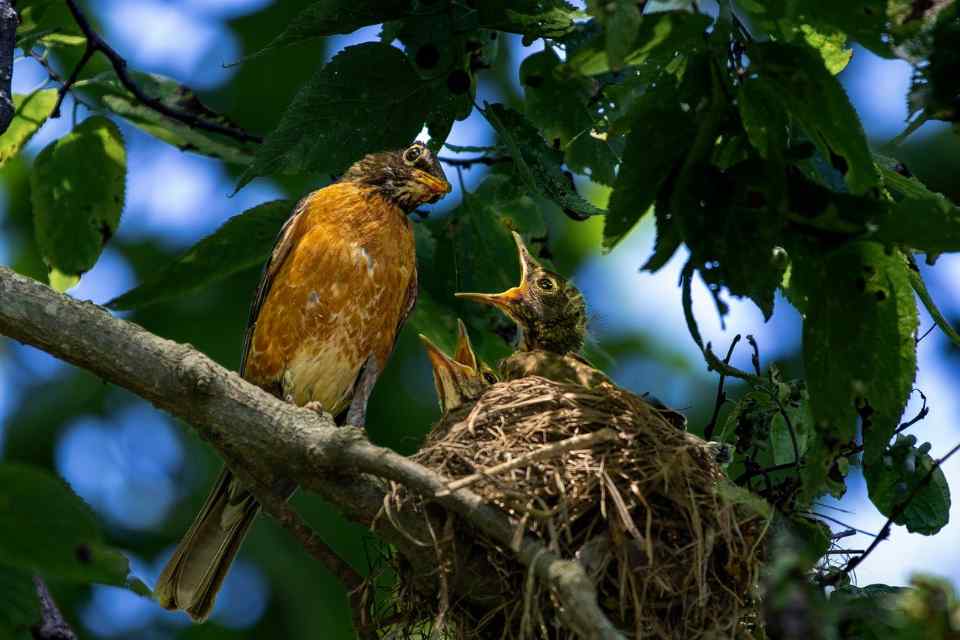
Essential Nesting Habitat Components
Research consistently identifies specific habitat elements that determine whether birds attempt nesting and whether those attempts succeed.
Vertical Structure Layering
Studies of urban bird communities demonstrate that structural diversity strongly predicts both bird abundance and nesting success. Birds occupy different vertical zones:
Ground Level (0-3 feet):
- Dense native grasses and sedges
- Low-growing wildflowers
- Leaf litter accumulation
- Attracts: juncos, towhees, wood thrushes
Shrub Layer (3-10 feet):
- Native deciduous shrubs with dense branching
- Native evergreens for cover
- Thorny species deterring predators
- Attracts: cardinals, catbirds, robins, mockingbirds
Understory Trees (10-25 feet):
- Small native trees (serviceberry, redbud, dogwood)
- Medium conifers
- Attracts: tanagers, orioles, vireos
Canopy (25+ feet):
- Native oaks, maples, cherries, birches
- Large conifers
- Attracts: warblers, kinglets, chickadees, woodpeckers
Native Plant Selection for Maximum Insect Support
Which specific native plants you choose matters significantly. Research examining residential yards found that yards landscaped with native plants supported more robust food webs during breeding season.
Top Native Trees for Nesting:
| Tree Species | Caterpillar Species | Primary Nesting Birds |
|---|---|---|
| Native Oaks | 557+ species | Warblers, tanagers, vireos |
| Black Cherry | 456+ species | Robins, thrushes, catbirds |
| Native Willows | 455+ species | Goldfinches, warblers |
| Birches | 413+ species | Chickadees, nuthatches |
| Native Maples | 297+ species | Orioles, tanagers |
Top Native Shrubs:
Serviceberry (Amelanchier): Supports 120+ lepidopteran species, produces protein-rich fruit precisely when birds feed nestlings (June), provides excellent nest sites for robins and catbirds.
Viburnum (Native species): Supports diverse native insects, produces fall berries lasting into winter, creates protected nesting sites for cardinals and mockingbirds.
Native Dogwoods (Cornus): High-fat berries critical for migrants, layered branching ideal for cup-nesting species, attracts thrushes and tanagers.
Water Feature Placement and Design
Water sources dramatically increase both species diversity and nesting density. Birds require water for drinking, bathing, and collecting mud for nest construction.
Research-Based Guidelines:
Depth and Design:
- 1-2 inches maximum depth for bathing
- Gradually sloping sides
- Textured bottom surface for secure footing
Placement Strategy:
- Position within 50 feet of dense shrub cover
- Avoid placement directly beneath feeders
- Place near mud sources for swallows, robins
Maintenance:
- Clean every 2-3 days during breeding season
- Scrub with 10% bleach solution weekly
- Change water if visibly contaminated
Adding drippers, fountains, or misters increases discovery through sound and motion. For additional water strategies, explore how to attract birds to bird baths.
Nest Box Installation: Specifications That Determine Success
For cavity-nesting species, artificial nest boxes provide critical nesting opportunities. However, improper installation reduces occupancy and increases predation.
Height Above Ground
Multiple studies document that nest box height significantly affects both occupancy and nesting success. A Swedish study found that boxes at 4.5 meters had 100% occupancy compared to 75% for boxes at 1.5-3 meters, with higher boxes also producing more eggs and fledglings.
The mechanism relates to predator access. Ground-dwelling predators (raccoons, opossums, cats, snakes) access boxes more easily below 5 feet. However, boxes above 15 feet become difficult for parent birds to defend.
Optimal Height by Species:
- Bluebirds: 4-6 feet in open areas
- Chickadees/titmice: 5-15 feet
- Wrens: 6-10 feet
- Wood ducks: 10-20 feet over water
Entrance Hole Diameter
Precise entrance hole sizing allows target species entry while excluding larger competitors and predators.
Specifications:
- 1.25 inches: Chickadees, titmice, nuthatches
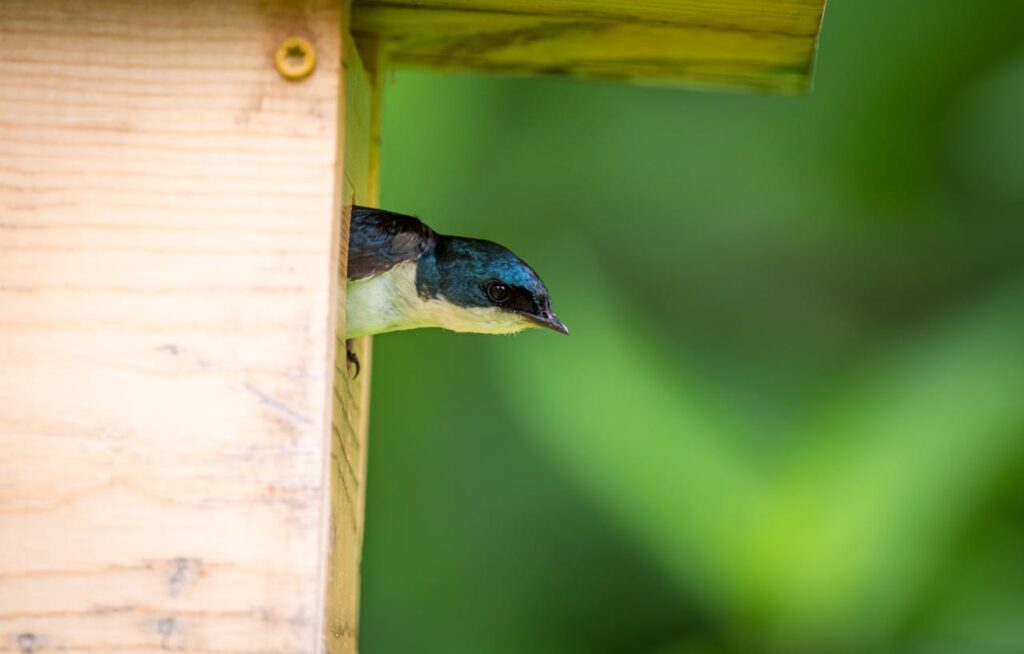
- 1.5 inches: Bluebirds, tree swallows
- 2.5 inches: Woodpeckers, larger flycatchers
- 3-4 inches: Wood ducks, screech owls
Holes larger than species requirements allow access by European starlings and house sparrows, invasive species that aggressively exclude natives and destroy eggs.
Predator Guards
Essential Modifications:
- Metal entrance plate prevents predators from enlarging holes
- Baffles below box prevent climbing predators (reduces predation 60-80%)
- Increased box depth (12+ inches floor to entrance) prevents predators from reaching eggs
Avoid:
- External perches (assist predators, not needed by target species)
- Wire mesh on all sides (reduces ventilation)
After installing predator baffles on boxes in my yard, nest success improved noticeably, with fewer signs of raccoon disturbance and more successful fledging.
Creating Nesting Material Availability
Birds construct nests from materials available within their territories. Providing appropriate materials reduces energy expenditure during nest-building.
Natural Materials Birds Use
DNA barcoding research analyzing nest contents identified specific plant materials different species incorporate.
Preferred Materials:
Grasses and Sedges: Primary structural material for ground and cup nesters. Allow native grasses to go to seed before mowing.
Small Twigs: Structural base for larger nests (robins, jays). Leave pruned material in piles. Stem diameter 1/8 to 1/4 inch most useful.
Moss and Lichen: Chickadees, kinglets, hummingbirds use for nest exterior. Do not remove moss from natural surfaces.
Mud: Robins, phoebes, swallows require mud for nest construction. Maintain muddy area near water source.
Animal Hair/Fur: Chickadees, titmice line nests with soft materials. Pet brushings can be offered.
Materials to Avoid
Never Provide:
- Dryer lint (absorbs water, contains synthetic fibers)
- Yarn or string longer than 3 inches (entanglement risk)
- Plastic strips (entanglement)
- Treated wood shavings (chemical exposure)
- Human hair (too fine, tangles)
Common Preparation Mistakes That Reduce Nesting Success
Mistake 1: Excessive Tidying in Late Winter
The Problem: Removing leaf litter, cutting back perennials, and clearing dead branches in March eliminates overwintering insect populations that emerge precisely when nesting birds need maximum caterpillar availability.
The Solution:
- Leave perennial stems standing until late April
- Allow leaf litter to remain beneath shrubs and trees
- Delay clearing dead branches until after nesting season
Mistake 2: Planting Only Ornamental Non-Natives
The Problem: Traditional landscaping emphasizes ornamental species bred to resist insects, making them valueless for nesting birds.
The Solution:
- Convert at least 70% of landscaping to regionally native species
- Prioritize native trees (largest impact per plant)
- Remove invasive non-natives systematically
Mistake 3: Pesticide Use During Nesting Season
The Problem: Pesticides kill the arthropods that nesting birds require. A single mosquito fogging application can eliminate weeks of caterpillar production.
The Solution:
- Eliminate all pesticide use from February through August
- Accept that native plants with insects are functioning correctly
- Promote natural pest predators
Mistake 4: Installing Nest Boxes Without Monitoring
The Problem: Unmonitored boxes become ecological traps where birds attempt nesting in unsuitable conditions.
The Solution:
- Clean boxes annually in late fall or late winter
- Monitor weekly during breeding season
- Remove house sparrow nests (non-native, aggressive)
- Relocate boxes empty for two consecutive seasons
For proper maintenance, learn how to clean birdhouses following research-based protocols.
Mistake 5: Focusing Solely on Feeders While Ignoring Habitat
The Problem: Feeders provide supplemental food but cannot replace functional breeding habitat. Even seed-eating birds feed almost exclusively insect protein to nestlings.
The Solution:
- View feeders as supplemental to habitat
- Prioritize native plant installation over feeder expansion
- Use feeders to attract birds, habitat to retain them
Regional Considerations
Nesting bird communities vary significantly by region, requiring preparation strategies matched to local species.
Eastern and Midwestern Gardens
Primary Nesting Species: Wood thrush, cardinals, catbirds, robins, warblers, chickadees
Regional Priorities:
- Maximize native oak coverage (supports 557 caterpillar species)
- Install multi-layer structure
- Provide water features
- Control invasive honeysuckle, multiflora rose
Timing: Earliest nesters March 15, peak April 20-May 30, late nesters June-July
Southeastern Gardens
Primary Species: Carolina wrens, chickadees, brown thrashers, mockingbirds, summer tanagers
Regional Priorities:
- Dense evergreen cover for year-round residents
- Water features with moving water
- Native flowering vines
- Create palmetto/understory thickets
Timing: Year-round residents nest late February-March, migrants April-May
Western Gardens
Primary Species: Western scrub-jays, black-headed grosbeaks, multiple hummingbird species
Regional Priorities:
- Water features absolutely critical
- Drought-tolerant natives (manzanita, ceanothus, toyon)
- Native flowering plants
- Cavity nest boxes
Timing: Variable by elevation, mountain regions May-June, desert regions March-April
Step-by-Step Monthly Calendar
January: Planning and Assessment
- Calculate current native plant percentage
- Inventory existing plants
- Order bare-root trees and shrubs
- Design water feature locations
February: Infrastructure Installation
- Install nest boxes
- Construct water features
- Remove invasive species
- Prepare planting beds
March: Major Planting Phase
- Install all bare-root trees and shrubs
- Plant cool-season native perennials
- Apply shredded leaf mulch
- Fill water features
April: Fine-Tuning
- Plant warm-season natives
- Establish “no-mow” zones
- Monitor nest boxes
- Clean birdbaths every 2-3 days
May-July: Hands-Off Period
- Minimize disturbance
- Birdbath cleaning only
- Gentle watering early morning
- No pruning or loud equipment
Success Metrics
Short-Term Indicators (Weeks 1-4)
- Number of species investigating yard
- Duration of visits
- Territorial singing
- Nest building material collection observed
Mid-Season Indicators (Months 2-3)
- Confirmed nest locations
- Number of nests by species
- Adults carrying food to nest sites
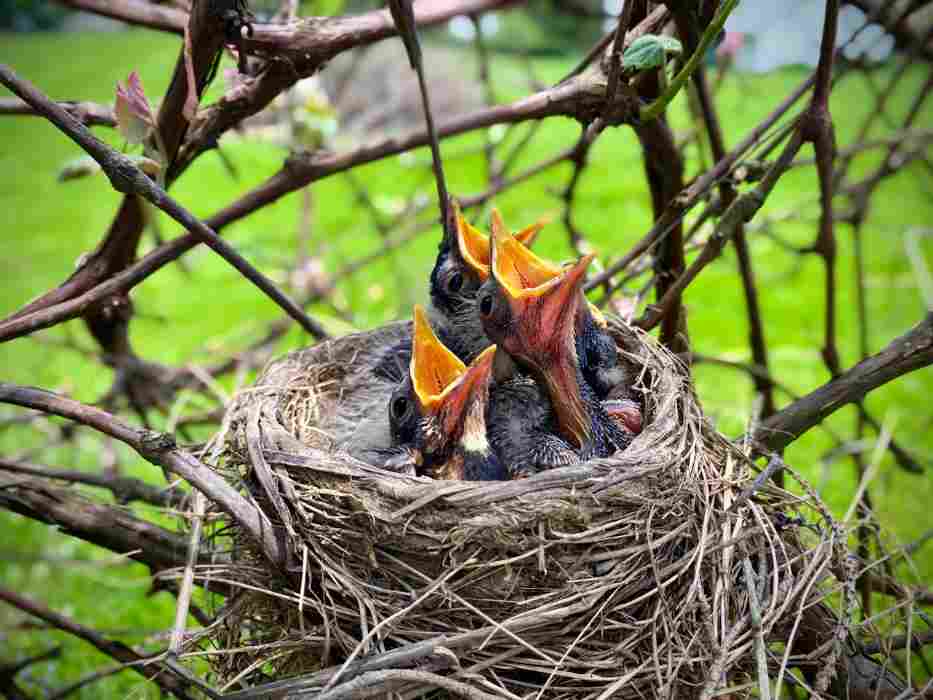
- Begging calls from nestlings
- Fledglings appearing with parents
Long-Term Success (Year 2-3)
- Increased breeding pair density
- Species diversity expansion
- Return of same individuals year-over-year
- Multiple broods per season

Conclusion
Spring garden preparation for nesting birds differs fundamentally from conventional landscaping. The 70% native plant threshold, established through peer-reviewed research, provides a clear, measurable target that dramatically increases chances of hosting successful nesting attempts.
Gardens meeting this threshold transform from spaces birds visit briefly into territories where birds establish breeding populations and return year after year. Implementation doesn’t require perfection. Starting with achievable goals, converting 20-30% of landscaping to natives initially, and building toward the 70% threshold over 2-3 years creates steady progress. Each additional native plant, each invasive species removed, and each pesticide application avoided increments habitat quality.
For those serious about supporting nesting birds, spring preparation represents annual commitment rather than one-time effort. Observation and adaptation based on what works in your specific location refines strategies over time.