
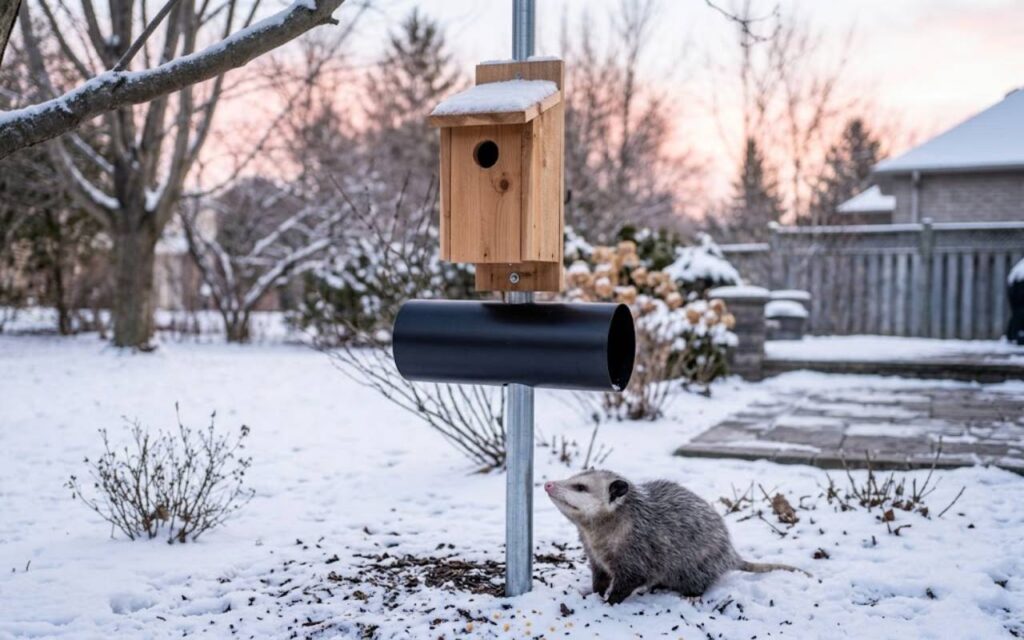
Learning how to prevent an opossum in bird house roosting boxes this winter is essential for maintaining a safe shelter for wild birds during severe cold snaps. Virginia opossums frequently seek out dry, wind-sheltered cavities to avoid ear and tail frostbite when ambient temperatures plummet. When an opossum moves into a communal winter roost, it displaces small backyard birds, soils the space, and introduces dangerous parasites.
Backyard birders often find that generic predator advice fails to deter these determined marsupials once winter sets in. By modifying box entrance portals, adjusting mounting hardware, and removing climbing access points, you can secure your shelter exclusively for overwintering birds. Taking decisive structural action early in the season will prevent unwanted mammalian takeovers.
Entrance Hole Diameter and Internal Baffle Geometry
A primary reason opossums enter a winter roost box is an improperly sized or degraded entrance portal. While mature opossums cannot squeeze through tiny bird openings, subadults can compress their bodies through apertures as small as two inches across.
Over time, squirrels and woodpeckers can chew away the margins of soft cedar or pine entries, creating an opening large enough for an opossum to invade.
To prevent physical entry, you must reinforce the portal using rigid materials that cannot be chewed wider. Standard winter roost boxes designed for small songbirds like chickadees, titmice, and nuthatches require tightly restricted entrance parameters.
- Heavy-gauge copper or steel portal plates with a strict 1.5-inch opening.
- Exterior wooden entry blocks adding an extra 0.75 inches of depth to limit reach.
- Internal wooden baffle shelves mounted directly behind the hole to obstruct reaching paws.
Roost boxes typically position the entrance hole near the bottom rather than the top to trap rising body heat inside the upper chamber. This bottom-entry layout makes it easier for an opossum to climb inside if the box lacks internal deflectors. Installing an angled interior partition just above the opening allows small birds to hop upward while blocking longer mammalian bodies from curling into the nesting cavity.
Quick Comparison: Opossum Exclusion Tactics
For a scannable overview of how common strategies perform against determined climbing marsupials, review the technical parameters below:
| Exclusion Strategy | Primary Mechanism | Effectiveness Level | Impact on Target Songbirds |
|---|---|---|---|
| 1.5-Inch Entry Restriction | Limits hole diameter to block mammalian skull clearance. | Excellent | Perfectly accommodates small cavity-nesting passerines. |
| Smooth Metal Mounting Pole | Replaces textured wood lines that claws can easily grip. | Excellent | Completely eliminates standard ground climbing paths. |
| Stovepipe Torpedo Baffle | Cylindrical steel housing drops and wobbles under weight. | High | Prevents climbing predators from reaching the base frame. |
| Nocturnal Box Closure | Manual blockades placed over portals during active dusk hours. | Moderate | High risk of trapping diurnal birds inside the chamber. |
Stovepipe Baffle Dimensions and Mounting Pole Mechanics
Attaching a roost box directly to a wooden fence post or garden stake gives opossums an easy climbing surface. Virginia opossums possess specialized feet with an opposable, clawless hallux on each hind foot, allowing them to scale rough surfaces effortlessly.
Mounting your shelter on smooth, galvanized steel electrical metallic tubing conduit creates an immediate mechanical disadvantage for them. A bare metal pole is rarely enough on its own because wet or dirty conduit still offers some claw purchase.
You must install a proper stovepipe baffle beneath the roost box to form a physical barrier that opossums cannot bypass.
- Galvanized steel stovepipe cylinders measuring at least 8 inches in diameter.
- Minimum baffle length of 24 inches to prevent climbing animals from stretching around it.
- Mounting height placed at least 4.5 feet above the ground line to the top of the baffle.
- Heavy-duty conduit pipe clamps securing the internal hardware to keep the cylinder loose and wobbly.
A loose, swaying stovepipe baffle unbalances the animal as soon as its front paws shift weight onto the metal rim. When the cylinder wobbles, the opossum cannot establish a secure grip with its hind feet or prehensile tail. This physical tipping action causes the animal to drop harmlessly back to the ground without gaining access to the roost box above.
Tree Trunk Bark Grips and Canopy Access Bridges
Installing winter roost boxes on live tree trunks is one of the most common mistakes bird enthusiasts make. Rough bark provides unlimited traction for an opossum’s sharp claws, turning the tree trunk into a natural ladder directly to your box.
Even if the box entrance is reinforced, an opossum resting on the roof can terrorize roosting birds through vibration and scent alone. Furthermore, opossums are proficient climbers that readily traverse high tree canopies and drop onto shelters from above.
If your roost box sits on a well-baffled pole but rests underneath a low-hanging limb, an opossum will bypass the pole entirely by walking along the branch and dropping down.
- Horizontal clearance of at least 10 feet from adjacent tree limbs, fences, and structures.
- Vertical clearance of at least 8 feet beneath overhanging roof eaves or patio covers.
- Complete removal of nearby vines, climbing ivies, and landscape trellises that serve as climbing ramps.
Pruning back secondary limbs creates an isolated safety zone around your pole system. Opossums lack the explosive jumping power of gray squirrels, so maintaining a clear buffer zone eliminates aerial drops. Placing your setup in open yard space forces predators to approach across open ground where your stovepipe baffle can stop them.
Scent Decontamination and Sebum Residue Scrubbing
Once an opossum occupies a roost box, it leaves behind musky scent marks, thick greasy sebum, urine, and droppings. This pungent biological footprint acts as a chemical beacon that attracts other neighborhood opossums long after the original tenant leaves.
In addition, communal winter birds avoid cavities that carry strong mammalian predator odors. Evicting the mammal is only half the battle; you must thoroughly sanitize the wooden interior before birds will return.
Avoid using boiling water on delicate roost parts, as excessive moisture can split structural cedar joints and cause warping.
- Dilute wash using one part household bleach to nine parts warm water for pathogen removal.
- Stiff nylon scrub brushes to eliminate dried feces, urine scale, and oily sebum stains.
- Full outdoor air drying in direct sunlight for 48 hours to dissipate residual chlorine odors.
Fouled boxes often harbor ectoparasites like fleas, ticks, and mites that thrive in warm mammal fur. These parasites can quickly transfer to small birds, causing severe stress and feather loss during freezing weather. Scrubbing down the wood with a mild disinfectant eliminates these pests and neutralizes territorial scent markers, restoring a safe sanctuary for wild birds.
Winter Roost Ladder Configurations and Box Relocation Protocols
Unlike seasonal birdhouses, dedicated roost boxes contain internal ladder rungs, screen wire, or grooved wall panels that allow multiple birds to pack together for thermal retention.
If an opossum forces its way into this setup, it can break fragile wooden perches and crush the ladder layout. Rebuilding or modifying the interior layout is essential to keep the space optimized for birds while discouraging heavy invaders.
Internal perching dowels should be swapped out in favor of narrow, rough-sawn cedar slats attached directly to the inner back panel. Mammals require wider ledges to support their weight, while songbirds can cling easily to shallow vertical textures.
- Narrow cedar climbing strips with shallow horizontal saw kerfs spaced 0.5 inches apart.
- Staggered wooden perching strips with a maximum ledge depth of 0.375 inches.
- Removable floor panels that facilitate rapid cleaning and prevent moisture accumulation.
If opossums have repeatedly targeted a specific corner of your yard, relocate the entire pole assembly to a brighter, more open location. Moving the box away from dense foundation shrubs removes the hidden travel corridors that nocturnal marsupials prefer to patrol. Placing the shelter where morning sunlight strikes the roof helps warm the box naturally, keeping your winter flock safe, dry, and warm.