
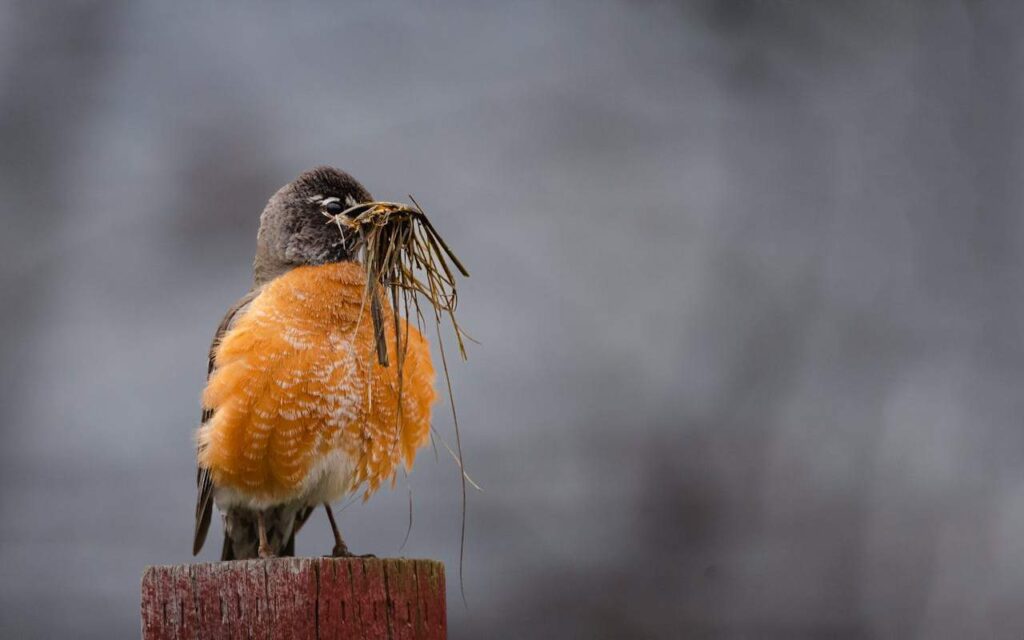
Providing nesting materials for birds is one of the simplest yet most misunderstood ways to support breeding birds. Knowing when to put out nesting material for birds ensures your efforts match species-specific preferences, seasonal timing patterns, and safety considerations essential for successful nest construction. Poorly timed or unsafe materials can waste effort or even harm birds.
This guide is for property owners who want to support nesting birds with safe, appropriately timed materials, not create hazards through well-intentioned but misguided offerings. Understanding when different species begin nest building, which materials serve structural functions, and which common items cause injuries transforms offering nesting materials from guesswork into strategic habitat support 🙂
- Provide materials early: Jan (south), Feb (north).
- Peak demand: Mar-May; refresh every 3-4 weeks.
- Offer all layers: twigs, rootlets/bark, grasses/moss.
- Safe materials only: natural fibers, moss, leaves, mud.
- Use ground piles, hanging dispensers, or holders.
- Monitor usage weekly and adjust for species.
- Early, mid, late nesters need different timing.
- Check success: materials taken, nests built, broods.
Watch: How to Put Out Nesting Materials for Birds
Discover in this short explainer video exactly when and why to put out nesting materials for birds, and how timing impacts their nesting success throughout the season.
Show Transcript:
0:00
We all love helping wildlife in our backyards, right? One of the easiest ways seems to be leaving out materials for birds to build their nests. But our best intentions can sometimes cause serious harm. Today we’re going to dive into what birds really need and what they absolutely don’t.
0:20
It’s incredible to watch a bird meticulously build its home. It feels great to think you may have contributed a little piece of fluff or a twig. Helping these tiny architects is a natural instinct. But some of the most common things we offer, which seem soft and safe, can actually be hazardous or even deadly for adult birds and their chicks.
0:52
The first thing to consider is timing. When you offer nesting materials is just as important as what you offer. Most people think of spring, when the sun comes out and things warm up. But if you wait that long, you’ve already missed the early birds.
1:06
Great horned owls and crows start scouting for building supplies in January and February. Early birds need materials out before the first thaw. Then you hit peak season for robins and wrens, and the nesting season stretches into August for late nesters like goldfinches.
1:29
Now that timing is covered, what should we actually put out? Birds are not randomly grabbing junk. They are strategic builders and select very specific materials for specific jobs. Think of it like building a house.
1:44
Nests are built in layers. They start with a foundation of strong, coarse twigs for structure. The middle layer weaves in finer twigs for stability, like framing in a house. The most important part is the lining, soft materials like feathers and moss that provide insulation and a warm cushion for eggs.
2:07
Birds need a variety of materials, and your yard is probably already a gold mine. Small twigs, dried grass from a chemical-free lawn, moss, and even a patch of mud are all excellent resources. For softer materials, make sure they are 100% natural, like pure cotton.
2:28
This is critical. Any fibers you put out, whether cotton, jute, or animal fur, must be cut into short pieces, three to four inches maximum. Anything longer is a serious entanglement risk for parent birds and chicks.
2:47
Now for the do-not-donate list. Human hair may seem natural, but it is a triple threat. It is strong, thin, and can wrap around a bird’s leg or wing, cutting circulation and causing serious injuries. Safe fibers are short and natural. Dangerous fibers, like yarn, string, or synthetics, do not break down and create permanent traps.
3:30
One big myth is dryer lint. It looks soft and warm, but it is a total trap. When it rains, the lint becomes soaked and loses shape. When it dries, it becomes weak and crumbly, and nests can fall apart with babies inside. Lint also contains chemicals from detergents.
3:58
Other dangers include pet fur from treated animals, fabric scraps with synthetic plastics, and materials like plastic strips, cellophane, or aluminum foil. Birds might use some of these out of convenience, but it is not safe. Studies show fatal entanglements in synthetic materials are common.
4:42
So what’s the solution? Creating a bird-safe supply station is easy and effective, using simple things you already have at home. A clean suet cage works for cotton fibers and moss. Produce mesh bags are great for dried grass and small twigs. A loose pile of twigs and leaves on the ground also works. The goal is to make it easy for birds to grab what they need.
5:14
Here are the three golden rules. First, start early. Get materials out by January or February. Second, offer variety. Birds need strong materials for structure, flexible materials for weaving, and soft materials for lining. Third, keep it short and natural. Cut fibers and avoid synthetics at all costs.
5:40
Following these science-backed guidelines changes your role from passive observer to active habitat builder. You are providing the safe, essential building blocks for the next generation. That is how you truly help.
Understanding Nest Construction Timing
Nest building doesn’t occur uniformly across spring. Different species initiate construction on species-specific schedules tied to migration timing, food availability, and environmental cues.
Early Season Nesters (January-March)
Some species begin nesting remarkably early, often before most people consider spring to have arrived. According to Sacramento Audubon Society guidance, some bird species can start to nest early in the year, with materials ideally available in yards by January or February. This timing accommodates the earliest breeding species and ensures materials are present when nest building commences.
Early Nesting Species:
- Great Horned Owls: Begin nest building in January-February
- Red-shouldered Hawks: Start in late January-March
- American Crows: Initiate construction in February-March
- Mourning Doves: Begin building by late February in southern regions
These species benefit from material availability well before obvious spring weather arrives. Property owners in northern regions should have materials accessible by late February, while southern locations require January deployment to support the earliest nest builders.
Peak Nesting Period (March-May)
The majority of songbird species nest during this 3-month window, creating peak demand for construction materials.
Mid-Season Nesters:
- American Robins: March-April
- Eastern Bluebirds: Late March-May
- Carolina Wrens: March-June
- House Wrens: Late April-May
- Cardinals: March-July (multiple broods)
Long‑term nesting phenology records across North America show that spring brings birds to breed at different times depending on the region and species, and these timing patterns help guide when to deploy habitat improvements and materials.
Late Season Nesters (June-August)
Several species nest late in summer, requiring fresh material supplies beyond the traditional spring period.
Late Breeders:
- American Goldfinches: June-August (time nesting to thistle seed availability)
- Cedar Waxwings: June-August
- Barn Swallows: May-August (often second broods)
Sacramento Audubon Society recommends refreshing nesting material supplies throughout spring to support later nesters. Materials deployed in February may weather or get depleted by early nesters, leaving nothing available for species nesting in June and July.
For comprehensive nesting preparation strategies, see how to prepare your garden for nesting birds.
How Birds Select Nesting Materials
Understanding material selection helps property owners provide resources birds actually use rather than materials they ignore or that cause harm.
Structural Requirements Drive Selection
Research published in the Journal of Ornithology examining structural properties of materials from deconstructed nests found that birds use materials strategically based on structural needs. The study analyzed nests from four thrush species and two finch species, discovering that structural properties varied within different nest regions, with thicker and stronger materials found in parts needing the most support.
This research demonstrates birds don’t randomly collect materials but select specific items for specific purposes:
Foundation/Structural Layer:
- Thick twigs providing primary support
- Coarse grass stems creating framework
- Small branches forming nest cup walls
Middle Layer:
- Finer twigs interwoven for stability
- Rootlets binding structural elements
- Bark strips adding insulation
Lining:
- Fine grasses providing soft surface
- Feathers insulating eggs
- Moss cushioning clutch
- Animal fur creating thermal layer
Experience Influences Material Choices
Research published in Behavioral Ecology investigating how previous breeding success affects nest-building decisions in blue tits found that birds that had previously raised fledglings added insulating material at similar rates as their first nest, while previously unsuccessful birds changed their material choices and amounts. This demonstrates birds learn from experience, adjusting material selection based on prior outcomes.
The study documented that air temperature during nest building influences material choices, with females adding insulation material in preparation for egg laying and incubation. Warmer temperatures occurring later in the building process cued females to increase insulation rate, showing environmental conditions affect material deployment timing.
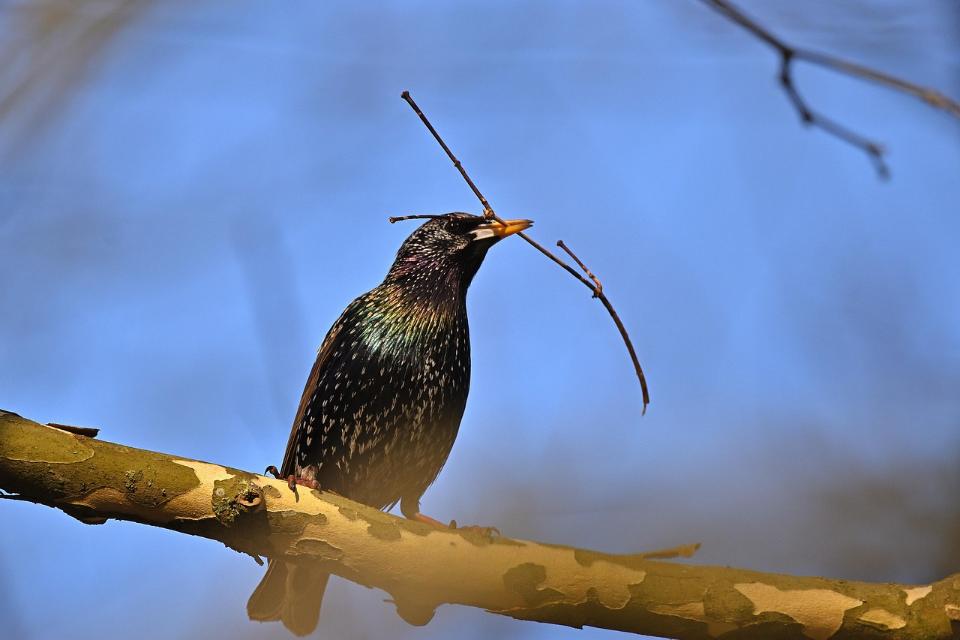
Safe Materials to Provide
Material safety varies dramatically, with some natural materials causing serious injuries despite appearing benign.
Recommended Safe Materials
According to Audubon Magazine guidance from Jennifer Gordon, executive director of Carolina Waterfowl Rescue, teams treat dozens of adult birds and chicks annually due to hazardous nesting materials. Gordon advises staying clear of anything synthetic and providing only natural materials, though even some natural elements aren’t always safe.
Twigs and Small Sticks:
- Diameter: 1/8 to 1/4 inch works for most songbirds
- Length: 4-8 inches optimal
- Source: Natural materials birds could find independently
- Deployment: Pile loosely or bundle in accessible locations
Dried Grass and Leaves:
- Chemical-free grass clippings (no fertilizers, pesticides, or herbicides)
- Naturally fallen leaves
- Native plant seed heads
- Deployment: Leave in natural piles rather than perfectly manicuring lawns
Moss and Lichen:
- Naturally occurring on trees and rocks
- Don’t remove from natural surfaces; birds collect as needed
- Particularly important for hummingbirds using moss for nest exteriors
Mud:
- Essential for Barn Swallows, Cliff Swallows, American Robins, Black Phoebes
- Create mud bed in spring by adding water to plain soil area
- Maintain moist conditions throughout nesting season
- Clay soil works better than sandy soil
Natural Fibers:
- Cotton fibers (not synthetic cotton blends)
- Jute or sisal (cut to 3-4 inch lengths maximum)
- Coconut fiber (coir)
- Hemp fibers
In my own yard, after providing a maintained mud bed during spring, I noticed Barn Swallows making repeated trips to collect material, with nest construction progressing noticeably faster than in previous years when no supplemental mud source existed.
Dangerous Materials to Avoid
Many commonly suggested materials cause entanglement, injury, or nest failure.
Human Hair – Triple Threat
Gordon identifies human hair as particularly dangerous: it’s long, thin, and strong. These characteristics create a deadly combination, allowing hair to easily ensnare a bird’s leg or wing and sever it. Hair can wrap around appendages and cut circulation, causing tissue death.
Yarn and String
Long strands wrap around birds, with hatchlings particularly susceptible to entanglement. Research documents cases of nestlings strangled by yarn their parents incorporated into nests.
Dryer Lint
Despite appearing soft and insulation-like, dryer lint becomes dangerous when wet. When it rains, holes form in nests made with dryer lint. After drying, lint becomes crumbly and nests fall apart. Dryer lint also contains chemicals harmful to birds from laundry detergents and fabric softeners.
Pet Fur
Birds’ legs and feet become tangled in pet fur. Additionally, fur from pets treated with flea and tick medications or other chemicals may be toxic to birds. The medications persist in fur even after treatment ends.
Fabric Scraps
Even fabrics made with natural fibers can tangle around birds’ feet. Most modern fabrics contain synthetic materials that don’t break down and create permanent entanglement risks.
Plastic, Aluminum Foil, Cellophane
Research published in Philosophical Transactions of the Royal Society B examining why some bird species incorporate more anthropogenic materials found that many species use items like sweet wrappers, cigarette butts, and plastic strings. While birds incorporate these materials, their presence doesn’t indicate safety. Anthropogenic materials have become widely available globally, but availability doesn’t equal suitability.
A 2025 study in The European Zoological Journal documented a great tit’s fatal encounter with anthropogenic nesting material, demonstrating entanglement in synthetic fibers can be lethal. This research provides direct evidence that materials birds collect may harm them.
Learn about protecting baby birds from predators, including nest-related dangers.
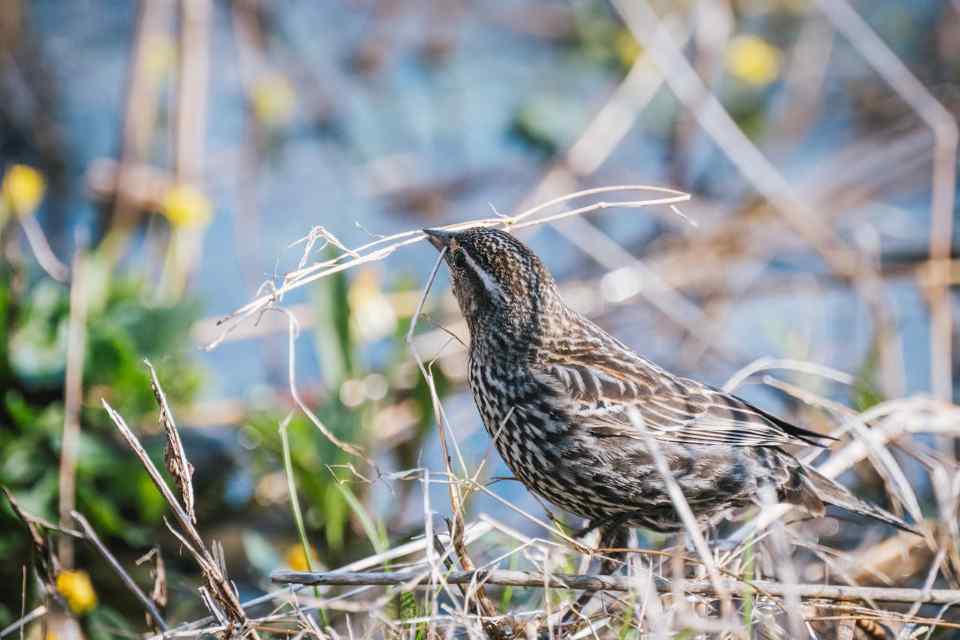
Best Practices for Providing Nesting Materials for Birds
Successfully offering nesting materials to birds requires more than simply placing items outdoors. Strategic deployment, consistent maintenance, and understanding bird behavior maximize effectiveness while minimizing risks.
Ground Piles
Loosely pile twigs, leaves, and grass in accessible locations. This method works well for natural debris that birds would encounter on forest floors. Position piles in semi-open areas where birds can access them while maintaining visibility for predator detection.
Hanging Dispensers
Suet Cages: Clean wire-mesh suet cages work for offering:
- Short lengths of natural fiber (3-4 inches maximum)
- Small amounts of pet-safe wool
- Cotton batting
Mesh Produce Bags: Reuse mesh bags from produce for:
- Dried grass
- Straw pieces
- Small twigs
Hang dispensers 3-6 feet high on tree trunks, fence posts, or railings where birds regularly forage.
Specialty Holders
Spiral wire holders designed specifically for nesting material resemble oversized honey-dippers. These allow birds to pull material through gaps while keeping supplies dry and accessible.
Monitoring Material Usage
Tracking which materials birds select provides valuable feedback for refining offerings in subsequent seasons.
Weekly Checks: Inspect material stations weekly during peak nesting season (March-June). Document which materials disappear quickly versus those birds ignore. This information guides future material selection.
Species-Specific Preferences: Different species show distinct material preferences. Chickadees favor moss and soft plant down. Robins seek mud and grass. Wrens collect small twigs. Documenting which species visit helps tailor offerings to local bird communities.
Seasonal Patterns: Early season materials get used at different rates than late season offerings. Early nesters like crows and robins deplete structural materials (twigs, grass) first. Late season goldfinches favor thistle down and fine plant fibers. Adjust material types as the season progresses.
Weather Impact: Rain and wind affect material condition. After storms, check stations and refresh soaked or blown-away materials. Birds prefer dry, clean materials over weathered, dirty options.
Species-Specific Material Preferences
Different bird families show pronounced preferences for specific materials, reflecting nest architecture variations.
Cup Nesters (Robins, Bluebirds, Finches)
These species build cup-shaped nests requiring:
- Foundation: Coarse grasses, small twigs (1/8 inch diameter)
- Walls: Interwoven fine grass stems, rootlets
- Lining: Fine grass, moss, feathers, soft plant down
Robins incorporate more mud than other cup nesters, creating solid bases. Bluebirds use minimal mud but abundant soft lining materials. Goldfinches delay nesting until July-August when thistle down becomes available, using it extensively for lining.
Cavity Nesters (Chickadees, Titmice, Nuthatches)
Birds nesting in cavities face different structural requirements:
- Foundation: Moss, wood chips, bark pieces
- Lining: Abundant soft materials including fur, feathers, fine plant down
- Volume: Cavity nesters use more material than cup nesters to fill cavity space
Chickadees particularly favor moss for foundational layers, making 20-30 trips to collect sufficient quantities. Providing moss near nest boxes significantly reduces energy expenditure during construction.
Platform Nesters (Mourning Doves, Grackles)
Platform nests use minimal materials:
- Foundation: Twigs laid loosely in platform configuration
- Lining: Minimal fine materials
- Construction: Haphazard appearance but functional structure
Mourning doves build notoriously flimsy nests using remarkably few materials. Their nests often appear insufficient but successfully support eggs and young despite minimal construction.
Enclosed Nesters (Wrens, Some Sparrows)
Wrens build enclosed domed nests requiring:
- Foundation: Substantial twig accumulation creating structure
- Walls: Dense twig weaving forming enclosed chamber
- Lining: Soft materials including feathers, moss, spider silk
House Wrens collect prodigious amounts of twigs, often filling entire nest boxes with material before creating the actual nest cavity within. This behavior serves both construction and potential predator confusion functions.
For comprehensive nesting support, explore how to encourage birds to nest in your garden.
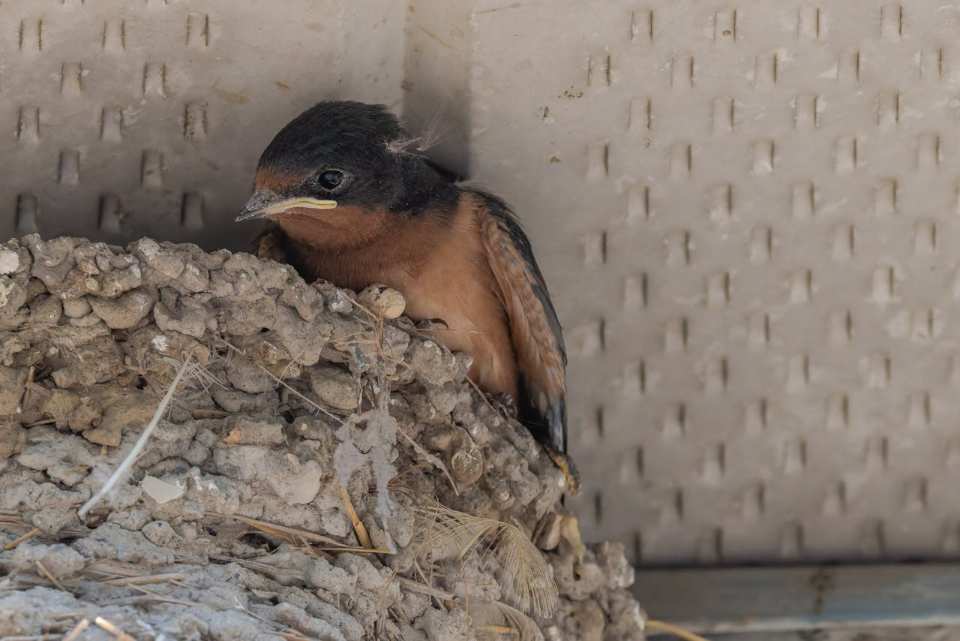
Regional Timing Variations
Optimal deployment timing varies by geography, tracking regional spring advancement.
Southern Regions (USDA Zones 8-10)
Initial Deployment: Mid-January Refresh Schedule: Every 3-4 weeks through August
Rationale: Early nesting species begin in late January; extended breeding season runs through summer
Mid-Atlantic and Southeast (USDA Zones 6-7)
Initial Deployment: Late January to early February Refresh Schedule: Every 3-4 weeks through July Rationale: Moderate climate supports February nesting starts; most species finish by late July
Midwest and Northeast (USDA Zones 4-5)
Initial Deployment: Late February to early March Refresh Schedule: Every 3-4 weeks through June Rationale: Delayed spring means later nesting initiation; shorter breeding season
Western Mountain Regions
Initial Deployment: Variable by elevation (February-April) Refresh Schedule: Monthly through July Rationale: Elevation creates microclimates with staggered nesting timing
Pacific Northwest
Initial Deployment: Early February Refresh Schedule: Every 3 weeks through August Rationale: Mild climate supports early starts; extended season through late summer
For regional nesting timing details, see when do birds start nesting in spring.
Common Mistakes That Reduce Effectiveness
Mistake 1: Deploying Materials Too Late
Many property owners wait until obvious spring weather before offering materials, missing early nesters entirely. Great Horned Owls and Red-shouldered Hawks complete nesting before most people think about providing materials.
Solution: Deploy materials by late January in most regions, early February at the absolute latest for northern areas.
Mistake 2: Offering Only One Material Type
Birds need diverse materials for different nest components. Providing only twigs or only soft materials forces birds to search elsewhere for missing components.
Solution: Offer materials representing all three nest layers: structural (twigs), middle (rootlets, bark), and lining (soft grasses, feathers).
Mistake 3: Not Refreshing Supplies
Initial material deployment gets depleted by early nesters or weathers over time. Late-season nesters find nothing available.
Solution: Check supplies every 2-3 weeks, refreshing as needed through the entire nesting season.
Mistake 4: Providing Treated or Chemically-Contaminated Materials
Grass clippings from chemically-treated lawns, pet fur with flea treatment residue, or fabric with detergent chemicals all introduce toxins to nests.
Solution: Provide only untreated natural materials with no chemical exposure.
Mistake 5: Offering Long Strands That Cause Entanglement
Any material longer than 6 inches creates entanglement risk. String, yarn, and natural fibers all become dangerous at excessive lengths.
Solution: Cut all fibrous materials to 3-4 inch maximum lengths before deploying.
Ectoparasite Considerations
Material choice affects nest parasite loads, which impact nestling survival.
Research published in Bird Study examining ectoparasite loads relative to nesting material found that abundances of hen fleas and parasitic blowflies were positively related to nest mass and amount of animal hair in nests. The study recommended nest boxes be regularly replaced to reduce parasite load, as old boxes had significantly higher loads despite thorough cleaning.
This research suggests that while animal hair provides insulation, it also harbors parasites. Property owners offering materials should understand this trade-off. Providing diverse materials allows birds to balance insulation needs against parasite risks based on local conditions.
Success Indicators
Track these metrics to assess whether material offerings benefit birds:
Short-Term Indicators (Weeks 1-4)
- Birds investigating material dispensers
- Material visibly decreasing over time
- Birds carrying materials away
- Specific species (robins, chickadees, wrens) repeatedly visiting
Mid-Season Indicators (Weeks 4-8)
- Empty dispensers requiring refilling
- Multiple species collecting materials
- Nests visible in nearby trees/shrubs containing offered materials
- Increased bird activity near material stations
Long-Term Success (Year 2-3)
- Earlier return of nesting species
- Increased nesting density on property
- Multiple broods from same species
- Species diversity expansion
After installing a nesting material station in my yard, I observed chickadees making 15-20 trips over a single morning to collect moss and soft grass, suggesting the station significantly reduced their material-gathering time.
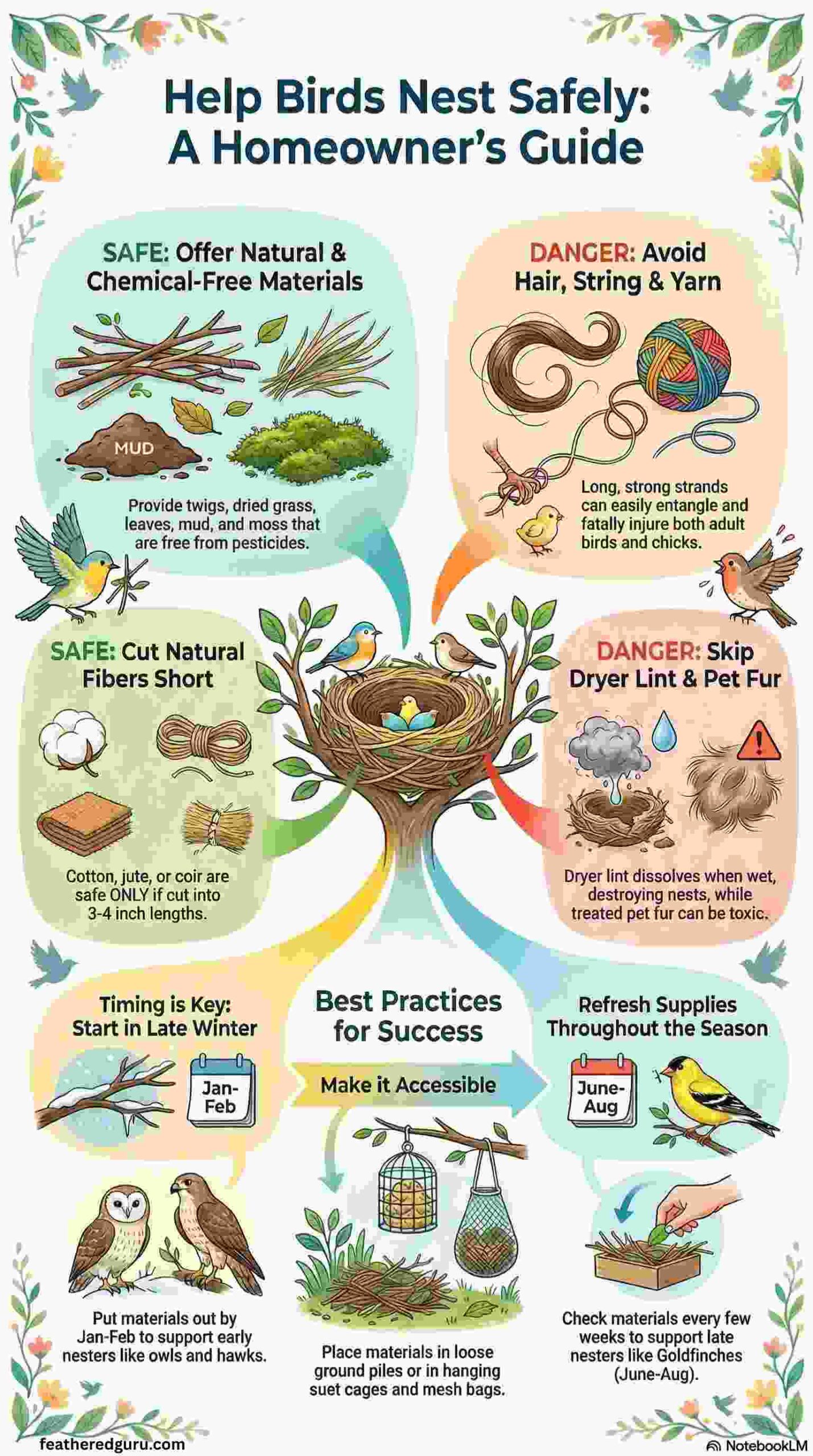
Nesting Materials at a Glance: Infographic
Here’s a visual summary showing the best timing, types, and safety tips for providing nesting materials to birds, all in one easy-to-follow infographic.
Conclusion
Providing nesting materials supports breeding birds when deployed with proper timing and safety consciousness. The key elements emerge consistently from research: offer materials by late January through February, refresh supplies every 3-4 weeks through the entire nesting season, provide only natural untreated materials, cut fibrous materials to 3-4 inches maximum, and avoid all synthetic materials regardless of appearance.
Success requires understanding that nesting season spans months, not weeks, with different species building on different schedules. Early deployment, consistent maintenance, and strict attention to material safety create genuine support for breeding birds rather than token gestures that birds ignore or that create hazards.
For those serious about supporting nesting birds, material provision represents one component of comprehensive habitat creation. Combined with native plant installation, elimination of pesticides, and appropriate nest box deployment, nesting material provision contributes meaningfully to creating functional breeding habitat that supports healthy bird populations throughout the nesting season.