
Identifying exactly where tufted titmice live throughout the changing seasons reveals a fascinating story of avian resilience. While most tiny songbirds abandon northern forests before freezing weather strikes, this non-migratory species stays put in its home territory all winter long.
Their year-round presence depends on a precise mix of mature forest canopies and reliable winter food networks. Mapping out these specific habitat boundaries shows how successfully these silver-gray birds master both wild and human-modified spaces.
Where are Tufted Titmice Found?
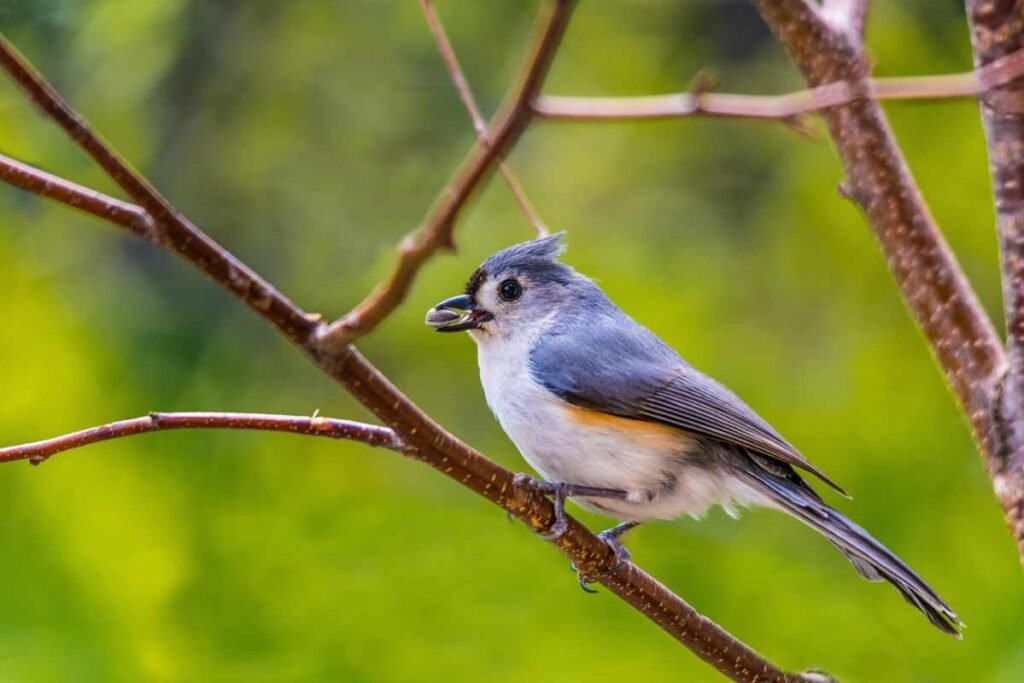
The Tufted Titmouse lives as a year-round resident across mature deciduous forests and suburban neighborhoods throughout the eastern half of the United States.
Their native range stretches from southern Maine down to the Gulf Coast and pushes west across the Great Plains border into eastern Nebraska, Kansas, and Texas.
Practical Video Tips for Spotting Backyard Titmice
Watch this short explainer video to see how easy it is to manage your backyard spacing properties. Learning about these crested characters helps you optimize your platform viewing angles and seasonal hardware choices cleanly.
The Kleptotrichy Mechanics of Mammalian Hair Harvesting
The nesting material choices of this small songbird involve an aggressive, highly dangerous behavioral trait that leaves standard birding blogs completely baffled. Reviewing our structural guide on tufted titmouse nesting habits behavior helps clarify how their intricate cavity construction timelines function across different territories.
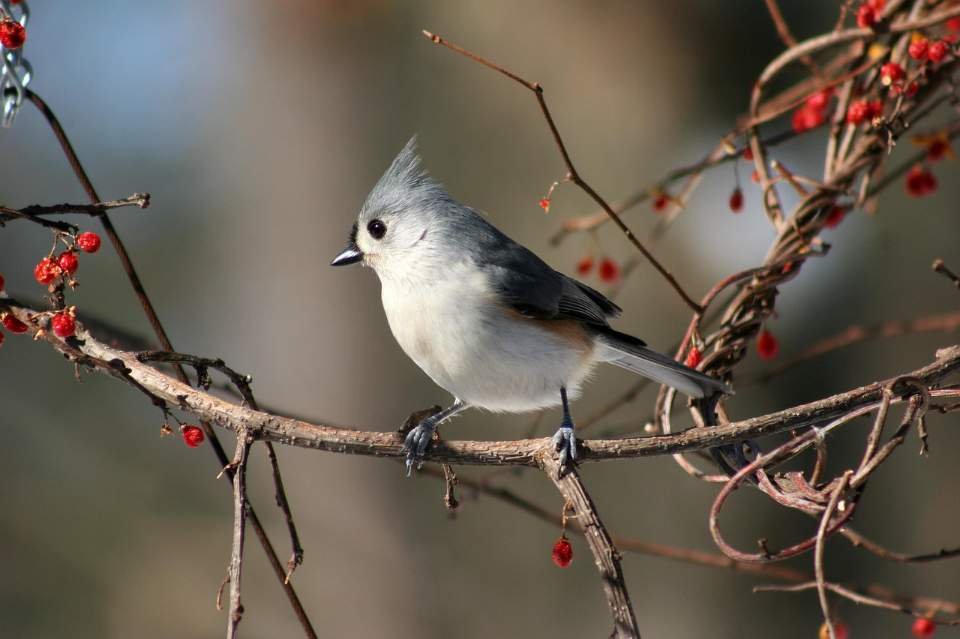
Instead of searching for loose shed fur on the ground, they practice an evolutionary behavior known as kleptotrichy. Titmice will boldly land directly on the backs of sleeping raccoons, foxes, domestic dogs, and even humans to pluck live hair straight from the mammal’s skin.
This risky harvesting strategy provides their blind nestlings with an ultra-dense, self-warming insulation barrier that repels early spring dampness. The live-plucked hair also retains strong mammalian predator scents that actively trick tree-climbing snakes into avoiding the nest entrance entirely.
The Kleptotrichy Mechanics of Mammalian Hair Harvesting
The nesting material choices of this small songbird involve an aggressive, highly dangerous behavioral trait that leaves standard birding blogs completely baffled. Reviewing our structural guide on tufted titmouse nesting habits behavior helps clarify how their intricate cavity construction timelines function across different territories.
Instead of searching for loose shed fur on the ground, they practice an evolutionary behavior known as kleptotrichy. Titmice will boldly land directly on the backs of sleeping raccoons, foxes, domestic dogs, and even humans to pluck live hair straight from the mammal’s skin.
This risky harvesting strategy provides their blind nestlings with an ultra-dense, self-warming insulation barrier that repels early spring dampness. According to data published in the peer-reviewed Ecological Society of America Ecology Journal Study, this targeted approach provides clear evolutionary benefits by lowering the heavy energy costs of searching for loose animal fur.
The collection of live hair is a highly deliberate process that occupies a massive portion of the female bird’s morning labor. Naturalists have found that nests built near urban areas hold specialized layers of thick dog fur, cat hair, and even strands of human hair collected from outdoor patios.
This diverse fiber selection is woven tightly into a foundational layer of damp moss and coarse tree bark. The resulting structure functions as a high-performance natural thermos that keeps fragile egg temperatures stable when parents leave to forage.
The Micro Spatial Biochemistry of Scattered Seed Caching
Titmice do not rely on luck or seasonal weather breaks to survive freezing winter months across their territory lines. To see how these food gathering choices shift when seasonal freezes strike your area, check our complete walkthrough on what do tufted titmice eat to optimize your winter seed selection choices.
They practice scatter-hoarding, which means they store only one seed per location under loose tree bark or fallen leaves rather than creating a single massive pile. This protective spacing pattern guarantees that if a competing squirrel discovers a cache, the rest of the winter pantry stays completely safe.
To find these hidden resources months later through heavy snow cover, their brains trigger a seasonal surge in spatial memory cells. This biological memory boost allows them to accurately recall the exact coordinates of thousands of hidden seeds across multiple acres of woodland.
This mental mapping system requires a massive expenditure of neurological energy during the peak autumn months. The physical size of the bird’s hippocampus expands significantly during the heavy seed-stashing window.
This temporary brain growth allows the titmouse to execute complex retrieval loops when winter ground ice blocks standard foraging tracks. Once spring resources return, the extra brain cells shrink back to conserve daily metabolic energy.
The Northern Expansion Story and Feeder Proliferation
The historical range boundaries of this crested songbird have undergone a dramatic northern shift over the past fifty years. Back in the mid-twentieth century, the species was strictly confined to the warm oak-hickory forests of the American South and Mid-Atlantic regions.
Field statistics published in The Northward Expansion of the Tufted Titmouse in Maine University Study confirm that human-supplied bird seed directly helps expanding populations manage competition in harsh northern climates. This continuous food availability acts as an artificial energy lifesaver that lets northern edge groups power through sub-zero winter nights.
This impressive geographic push represents one of the most successful avian population shifts in modern conservation history. As suburban neighborhoods expanded across New England, the birds utilized interconnected networks of backyard feeders like a private highway system.
The presence of continuous winter suet stations allowed traveling juveniles to survive inside high-latitude zones that were previously fatal. This expansion has permanently redrawn the range map, making them a common sight in areas that never saw a single crest fifty years ago.
The Suburban Sweet Spot and Canopy Maturity Requirements
Titmice have adapted beautifully to developed human landscapes, but they are incredibly selective about the specific neighborhoods they colonize. They will completely ignore new housing developments where young trees lack size and volume.
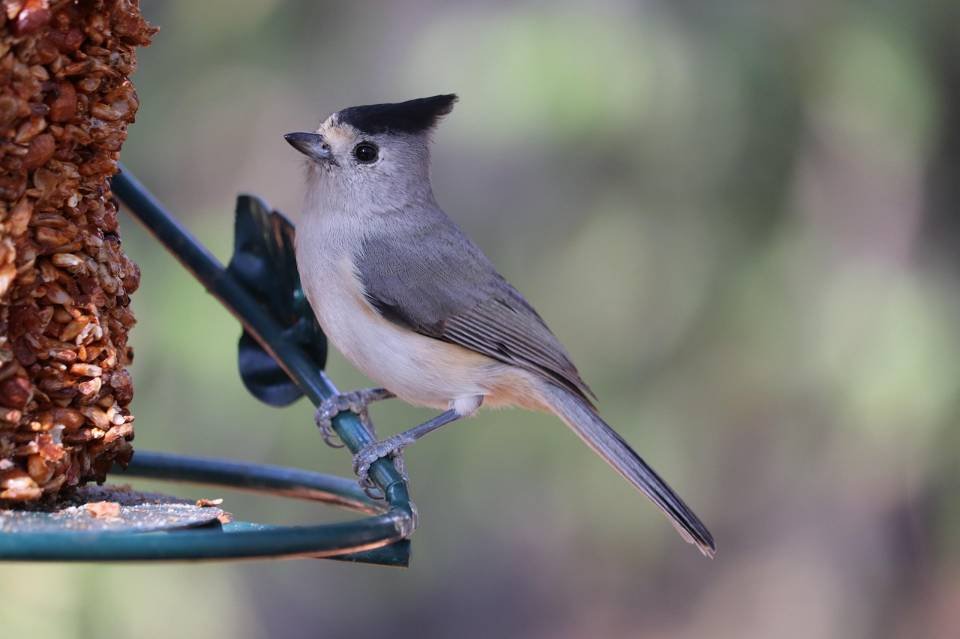
Real-time urban habitat mapping published by the National Audubon Society Field Guide demonstrates that titmice require a mature tree canopy to survive. They thrive in older suburban developments, mature city parks, and wooded cemeteries where thirty-year-old trees recreate a natural forest canopy.
These established trees provide the deep network of rotting branches and old woodpecker holes needed for safe nesting options. The mature foliage also supports the massive insect populations required to feed hungry spring broods.
Neighborhoods lacking tall tree clusters fail to provide the high-altitude escape paths the birds need to dodge hunting hawks. Titmice rely on dense, overlapping branches to move safely through their territory without dropping to the open ground.
This structural safety zone is the primary reason why they avoid modern, wide-open commercial developments. Preserving older tree trunks across your property lines is the single most effective way to invite local pairs into your yard.
Sub Canopy Micro Climates and Winter Thermal Selection
When a winter storm hits the eastern United States, titmice utilize the unique layout of mature forests to protect their bodies from fatal exposure. Consult our diagnostic manual on the tufted titmouse winter survival guide to safeguard your local winter flocks from severe sub-zero exposure events.
They completely abandon wide-open fields and high treetops to drop low into the sub-canopy layer. They actively seek out dense tangles of evergreen pines, thick river bottomlands, and low brush perimeters.
By spending their winter days inside these hidden thermal pockets, they cut their daily calorie burning rates significantly. This smart behavioral defense keeps them healthy when local foraging options are buried under ice sheets.
The selection of low-altitude shelter zones is a highly calculated thermodynamic strategy. High treetops expose small birds to intense, freezing wind gusts that strip away body heat in seconds.
Dropping into dense ground-level brush allows the birds to benefit from heat rising naturally from the forest floor. This micro-climate shelter network is a major reason why non-migratory populations can survive northern blizzards without freezing.
The Oak Tree Distribution and Acorn Processing Dynamics
The real-world distribution of the Tufted Titmouse matches the exact geographic footprint of native oak forests across North America. This deep biological link exists because oak trees function as their primary year-round survival base.
Biological baseline logs archived in the Cornell Lab All About Birds Tufted Titmouse Profile prove that white and red oak branches supply the primary raw calorie fats required by wintering populations. These specific hardwood varieties ensure a steady food grid when smaller ground seeds decay.
Because a titmouse possesses a small, slender bill rather than a heavy nut-cracking jaw, they use a unique physical trick to open these hard shells. They fly a single acorn to a secure branch, clamp it tightly between both feet, and use their bill like an industrial jackhammer to splinter the outer casing.
This physical pounding method requires an incredibly strong neck and skull structure to handle the repetitive impacts. The bird strikes the shell with rapid, rhythmic blows until the hard outer skin splits open completely.
This mechanical extraction process allows them to feast on high-lipid nut meats that smaller finches are physically forced to leave behind. It gives them an exclusive winter food monopoly across northern oak forests.
Cavity Competition Tactics and Multi Species Real Estate
Finding a safe place to lay eggs is a highly competitive game that forces titmice to operate as aggressive real-time strategists. Because they cannot drill out fresh nesting holes inside solid wood themselves, they rely entirely on existing natural cavities and old woodpecker holes.
This limitation drops them into direct territory battles against house wrens, chickadees, nuthatches, and flying squirrels. To win these housing wars, titmice rely on early nesting schedules to claim premium dead tree snags before migratory competitors return from the south.
They break up their winter family groups much earlier than other native songbirds to lock down local real estate. Once a pair selects a high-quality tree hollow, they guard the entrance aggressively against all intruders.
They will actively drag out competing moss and twigs dropped inside the hole by traveling house wrens. This defensive vigilance ensures they retain control of the best nesting sites in the neighborhood.
The Insect Energy Matrix of Spring Reproduction
The moment spring daylight hours lengthen, the adult titmouse completely drops its winter seed diet to transform into a dedicated insect hunter. This drastic dietary shift is mandatory to secure the raw protein values needed to build eggs and grow healthy chicks.
Adult pairs spend their mornings scanning the undersides of oak and maple leaves to harvest thousands of caterpillars, beetles, and aphids. These soft-bodied insects provide vital amino acids and high moisture levels that growing nestlings need to build strong bone frames.
If a homeowner uses heavy chemical sprays across their landscaping perimeters, it wipes out this essential spring food web. This dietary collapse forces adult pairs to abandon the neighborhood entirely to find safer, chemical-free forest zones.
The demanding feeding schedule requires the parents to make hundreds of hunting trips every single day. Nestlings grow at an explosive rate and require fresh insect protein every fifteen to twenty minutes.
Adult birds will even enlist the help of older juvenile helpers from the previous year’s brood to feed the new chicks. This cooperative family strategy increases the survival rate of the nestlings during unexpected spring rain storms.
Water Security Boundaries and Shallow Feeder Safety
Access to clean surface water plays a massive, often overlooked role in how titmice select their permanent home ranges. Because they stay in the same cold territories all year long, they need consistent water sources for drinking and bathing.
They prefer shallow, high-visibility water zones like slow streams, natural forest pools, and backyard birdbaths. Keeping their feathers completely clean through regular bathing is a vital survival task that preserves the insulation value of their down coats.
When visiting a suburban birdbath, they will actively avoid deep, steep-sided bowls where they risk getting trapped or waterlogged. Providing shallow basins paired with a moving water dripper creates an unmissable visual beacon that pulls local titmouse flocks straight to your yard.
Dirty feathers lose their ability to trap air pockets, leaving the bird vulnerable to hypothermia during freezing nights. A clean birdbath that stays melted all winter long is just as valuable as a full suet feeder.
Adding large, flat stones to the center of your water stations gives the birds a secure platform to land on. This simple adjustment lowers their bathing anxiety and protects them from hidden predators.
Reclaiming Your Yard for Native Wildlife
Supporting a healthy titmouse lifecycle requires moving past standard birding templates and focusing on true landscape diversity. Review our property blueprint outlining how to attract tufted titmice to integrate native plantings and deep shelter assets cleanly inside your local layout parameters.
Ditching chemical yard sprays protects the natural insect colonies thriving across your grass perimeters. Leaving dead tree snags standing on your property lines provides them with invaluable nesting spots and winter foraging tracks.
To support these birds when natural winter food resources drop, learn how to choose the right bird feeder to offer high-fat suet blocks securely. Providing clean water stations, protecting dead tree snags, and setting up proper backyard hardware ensures these crested characters can raise their families safely.
If you find wild waste material building up along your wooden property fences during these peak feeding windows, consult our sterilization checklist on how to clean up bird droppings to refresh your landscaping lines safely.