
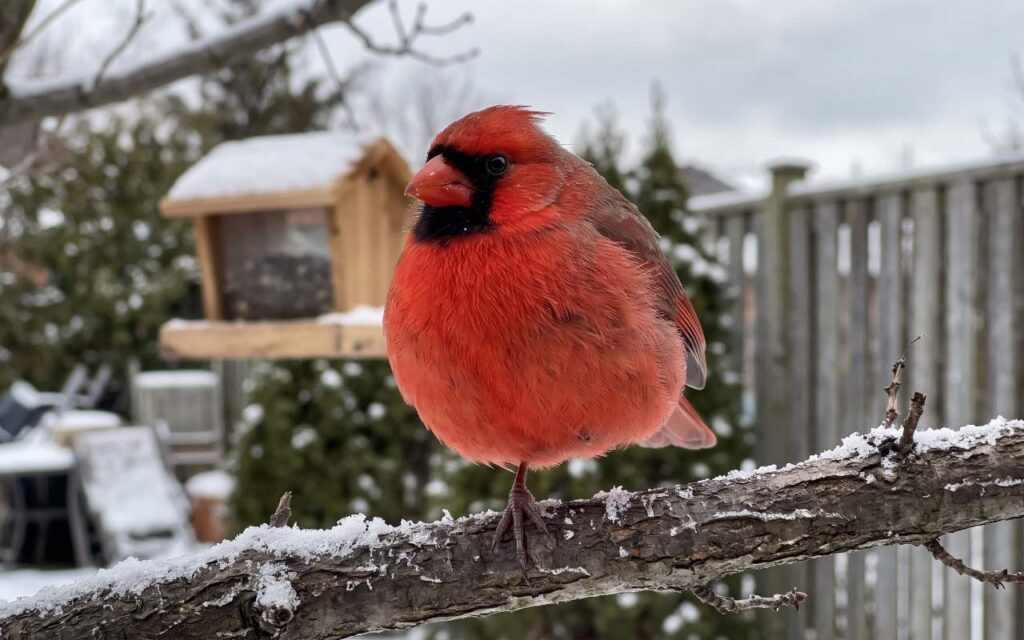
Backyard birds stand on one leg in freezing weather primarily to cut heat loss through their unfeathered legs and feet by roughly 50 percent. While a songbird’s body is wrapped in insulating down and contour feathers, its lower legs and toes are covered only in thin scales.
Tucking one limb up into warm belly plumage shields half of that exposed skin from sub-zero air while a built-in vascular heat exchanger and mechanical balance system keep the standing leg functional without tiring.
Quick-Glance Summary: The One-Legged Winter Stance
- Primary Purpose: Thermoregulation. Hiding one bare leg inside 104°F (40°C) belly feathers immediately reduces conductive and convective heat loss by half.
- Vascular Backup System: Birds use regional heterothermy and a countercurrent blood vessel network called the rete mirabile to cool blood heading to the feet and rewarm blood returning to the heart.
- Perching Balance Trick: When a perching bird bends its ankle, rear flexor tendons tighten automatically to curl its toes around a branch without active muscle strain.
- Leg-Switching Habit: Birds periodically alternate which leg is tucked depending on wind chill and feeder activity, giving both limbs equal rest and protection.
- When to Worry: Healthy one-legged birds switch feet, hop normally, and hold their feathers puffed symmetrically; a bird that refuses to put weight on a foot even when startled may have an injury or frostbite.
Cutting Extremity Heat Loss in Half
A bird’s core body temperature runs between 104°F and 109°F (40°C to 43°C), creating a steep temperature gap when winter air drops below freezing. Because avian tarsi (lower legs) and toes lack feathers and fat deposits, they act like uninsulated radiators in cold wind.
By pulling one leg straight up into its fluffed ventral feathers, a bird traps a pocket of still, body-warmed air around the tucked foot. Cutting exposed skin surface area by 50 percent saves critical calories during short winter days when songbirds must forage constantly to survive overnight.
Short-legged birds like Mourning Doves and chickadees often squat low so their belly feathers drape over both feet at once. Longer-legged visitors such as Cooper’s Hawks, Blue Jays, Northern Cardinals, and gulls cannot cover both feet simultaneously, so they rely on the single-leg tuck.
How the Standing Leg Survives Freezing Temperatures: Rete Mirabile
Tucking one leg solves half the problem, but the single leg left gripping a frozen branch or icy deck still faces sub-freezing temperatures. Birds prevent tissue damage and core hypothermia through regional heterothermy (allowing extremities to remain far cooler than the body core) powered by a specialized blood-vessel arrangement in their upper legs called the rete mirabile (Latin for “wonderful net”).
In this countercurrent heat-exchange system, warm arteries carrying blood down from the heart weave tightly alongside cold veins carrying blood back up from the feet:
- Heat Transfers Before Reaching the Foot: Warm arterial blood transfers its thermal energy directly into the adjacent cold venous blood on the way down.
- Feet Hover Barely Above Freezing: By the time arterial blood reaches the toes, its temperature has dropped to hover barely above freezing, preserving tissue function while minimizing the temperature gradient that causes rapid heat escape.
- Core Blood Returns Pre-Warmed: The cold venous blood absorbs that transferred heat before re-entering the body cavity, keeping the bird’s heart and vital organs from chilling.
How Sleeping Birds Balance on One Leg Without Falling
Watching a Dark-eyed Junco or House Finch doze on one foot in a gusty winter breeze looks like an exhausting feat of gymnastics, yet birds burn almost zero extra energy holding the pose. Two anatomical features handle the workload:
- Automatic Flexor Tendon Mechanism: In perching songbirds (passerines), two primary tendons, the flexor hallucis longus and flexor digitorum longus, run down the back of the leg and under the toes. When the bird squats slightly on its standing leg, the ankle joint bends and pulls these tendons taut. That tension curls the toes tightly around the perch automatically. The grip stays locked until the bird actively stands up straight to straighten its ankle.
- Low-Energy Center of Gravity: Pulling one leg tight against the breast shifts the bird’s center of mass directly over its single support foot. In addition, birds possess a specialized balance-sensing organ inside the lumbosacral region of their spine (the synsacrum, separate from the inner ear) that makes micro-adjustments to keep the body upright while the brain rests.
Other Reasons Birds Stand on One Leg (Even in Summer)
If you spot a heron, gull, or backyard robin standing on one leg during a mild July afternoon, temperature is not the only factor at play:
- Muscle Recovery and Comfort: Alternating weight between legs lets one limb rest completely while the opposite leg supports the body.
- Reduced Water Drag and Camouflage: Wading birds like Great Blue Herons and egrets stand on one leg in streams to cut water resistance in half and mimic a single stationary reed so fish swim closer.
- Drying Wet Plumage or Feet: Shorebirds and waterfowl frequently lift one wet foot out of cold water to air-dry while preening.
One-Legged Winter Resting vs. Leg Injury: How to Tell the Difference
Seeing a bird on one foot at your feeder rarely signals trouble, but winter injuries from window strikes, predator grabs, or severe frostbite do happen. Use these field signs to tell normal heat conservation apart from an injured leg:
| Behavior | Healthy Cold-Weather Stance | Possible Injury or Frostbite |
|---|---|---|
| Foot Switching | Alternates between left and right feet periodically throughout the day | Always favors the exact same leg, even on warmer afternoons |
| Movement When Startled | Drops both feet immediately to hop, scratch for seed, or push off into flight | Hops awkwardly on one foot or drags a limp leg when startled |
| Feather Posture | Body feathers fluffed evenly into a round ball; alert eyes | Asymmetrical wing droop, hunched posture, or swollen, discolored toes |
| Tucked Leg Position | Foot disappears completely inside warm belly plumage | Leg hangs loosely beneath the belly instead of tucking cleanly |
How to Help Backyard Birds Keep Their Feet Warm in Winter
You can make winter perching more comfortable and support heat conservation for one-legged visitors with three simple feeder adjustments:
- Offer Wide Wooden or Coated Perches: Thin metal feeder perches conduct heat rapidly away from bare feet and offer poor traction in icy winds. Choose feeders with wide wooden dowels, cedar platforms, or rubber-coated perches for better insulation and grip.
- Stock High-Fat Winter Fuel: Countercurrent heat exchange and shivering require constant metabolic fuel. Fill feeders with black oil sunflower seeds, suet cakes, and raw unsalted peanuts so birds can generate internal body heat before dusk.
- Provide Ice-Free Drinking Water: A thermostatically controlled heated birdbath keeps water liquid without overheating, letting birds drink and preen without wading into slush that can freeze onto their feathers.
Frequently Asked Questions
Why do birds hop on one foot in the snow?
During sharp cold snaps, small ground-foraging birds like Dark-eyed Juncos, White-throated Sparrows, and House Finches will sometimes hop short distances on one foot while keeping the other foot tucked in their feathers. Hopping lets them peck fallen seeds without exposing their warm tucked foot to sub-zero snow.
Do birds have a preferred leg when standing on one foot?
No. Peer-reviewed studies show that birds, including backyard songbirds, waterfowl, and flamingos, do not have permanent left- or right-leg dominance and divide their resting time evenly between both legs.
Can a bird’s feet freeze to a metal birdbath or feeder perch?
No. Despite a common backyard myth, bird feet lack sweat glands, stay completely dry, and are covered in scales that shed water immediately, so they do not stick or freeze to metal perches. Even so, wide wooden or coated perches feel warmer and give perching birds a steadier grip in winter wind.