
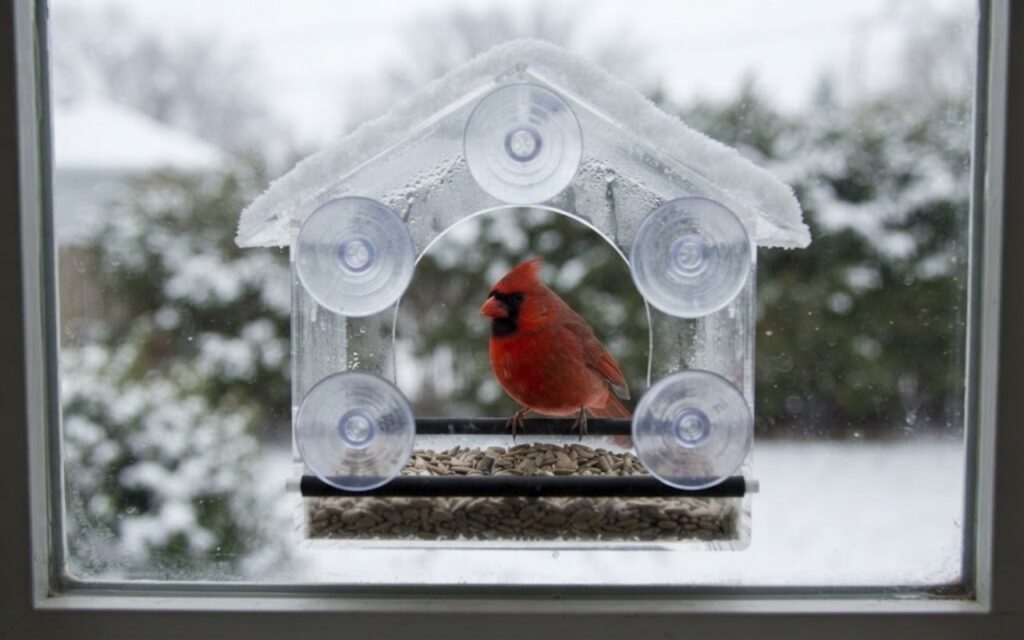
Setting up a window bird feeder in winter provides an intimate, front-row view of backyard avian survival during the harshest months of the year. Backyard birders frequently worry that sub-zero temperatures will cause suction cups to fail or that proximity to glass poses a collision hazard.
When engineered and installed with the right mechanical precautions, these compact acrylic stations are exceptionally reliable and safe. Understanding glass physics, avian aerodynamics, and feed hygiene ensures your winter setup withstands polar conditions without endangering backyard flocks.
Suction Cup Adhesion and Glass Thermal Contraction
Suction cup failures in winter stem directly from thermal expansion differentials and material stiffening. Standard polyvinyl chloride cups lose their flexibility as temperatures drop below freezing, turning brittle and losing the elastic seal required to hold a vacuum. At the same time, window glass contracts slightly, and any microscopic gap allows dry winter air to compromise the mounting pressure.
Community forum discussions frequently reveal a fatal installation mistake: applying saliva or water droplets to the suction cups in sub-freezing weather. While water provides a temporary seal in summer, liquid moisture freezes and expands into ice crystals under the rim in winter, prying the cup away from the pane.
To achieve an industrial-strength vacuum that endures freezing wind and heavy snow loads, prep your hardware using proven mechanical steps:
- Clean the exterior glass thoroughly using a high-purity isopropyl alcohol wipe to remove microscopic soot, grease, and grime without leaving a residue.
- Soak the suction cups in hot tap water for three minutes to restore durometer elasticity to cold-stiffened plastic before installation.
- Dry the suction cup faces completely, then spread a microscopic film of pure mineral oil around the rim with a fingertip to create an airtight seal that cannot freeze.
- Press the center of each cup firmly against the dry, cleaned glass to evacuate all trapped air before attaching the seed hopper.
If your window experiences direct wind chills below zero, consider upgrading to locking lever suction cups. These mechanical mechanisms use a manual cam to physically pull the center of the cup inward, sustaining high vacuum pressure regardless of ambient temperature drops.
The Three-Foot Rule and Collision Deceleration
Many birders worry that luring wild birds directly toward a pane of glass will cause fatal window strikes. However, extensive research conducted by ornithologists like Dr. Daniel Klem Jr. and supported by the National Audubon Society shows that window-mounted feeders actually prevent fatal collisions. Window strike mortality peaks when feeders are placed between 10 and 29 feet away from a structure, creating a dangerous launch zone.
At a distance of fifteen feet, a startled bird can reach maximum flight velocity before colliding with reflective glass that mirrors sky or foliage. In contrast, when a bird feeds at a window-mounted unit, it sits zero to two feet from the glass.
- Mounting a feeder within three feet ensures that a panicked bird cannot build enough momentum or kinetic energy to sustain a lethal head trauma impact.
- The physical silhouette of the feeder, perches, and feeding birds breaks up deceptive exterior reflections of trees and open sky.
- Birds take off at steep departure angles from glass-mounted perches, naturally directing their flight paths away from the flat pane.
If your window reflects clear sky across a large surface area, add ultraviolet decals or exterior vertical paracord lines spaced two inches apart around the feeder. These high-contrast markers make the surrounding glass immediately visible to passerines without obstructing your indoor view.
Reservoir Drainage and Aspergillus Pathogen Hazards
Winter brings freezing rain, drifting snow, and indoor-outdoor temperature differentials that threaten feed safety. Because the feeder is affixed to an exterior window pane, radiant heat escaping from your home creates a localized warm microclimate inside the tray. This thermal gradient causes condensation to pool in the bottom corners of plastic hoppers, turning dry seed into a frozen, moldy block.
Damp, decaying seed in poorly ventilated window trays provides an ideal breeding ground for Aspergillus flavus, a ubiquitous fungus. This pathogen produces lethal aflatoxins that damage avian respiratory tracts and livers, quickly spreading disease through dense backyard flocks. If melting snow cannot drain instantly, the entire tray becomes a biological hazard within 48 hours.
Maintain food hygiene and structural integrity throughout the winter using strict maintenance protocols:
- Clear and enlarge factory drainage holes using a hand drill with a quarter-inch bit to prevent freezing slush from sealing the tray bottom.
- Provide high-lipid black oil sunflower seeds, peanut hearts, or shelled sunflower chips rather than cheap filler mixes loaded with cracked corn and red milo.
- Empty wet seed immediately following snowstorms, scrubbing the tray with a standard 1:9 bleach-to-water dilution to kill fungal spores.
- Avoid using boiling water to rinse acrylic or polycarbonate hoppers, as sudden thermal shock causes the plastic to warp and crack along stress joints.
Never add commercial anti-freezing agents, salt, or glycerin to the seed tray or surrounding perches. Ingestion of salts causes fatal metabolic dehydration, while chemical additives ruin the waterproofing properties of avian feathers, causing deadly winter hypothermia.
Avian Shivering Thermogenesis and High-Lipid Nutrition
During severe winter conditions, wild passerines live on an extremely narrow metabolic margin. Small wintering species like the American Goldfinch naturally scale up their pectoralis muscle mass and shivering metabolic capacity by 20% to 30% to endure freezing nights. Shivering thermogenesis burns an enormous amount of stored body fat, requiring birds to replace their reserves during brief winter daylight hours.
A window-mounted feeder provides an indispensable, low-energy foraging station when deeper snow covers ground resources. Black-capped Chickadees, Tufted Titmice, and nuthatches can make rapid foraging loops to the feeder with minimal transit distance, minimizing exposure to raw crosswinds.
To maximize the caloric payoff for foraging birds during extreme cold snaps, stock your window tray with dense, highly digestible fuels:
- Black oil sunflower seeds, which contain high concentrations of crude fat and essential protein inside thin, easy-to-crack hulls.
- Clean sunflower hearts and chips, eliminating the energetic cost of cracking shells and preventing frozen hull piles from gathering on sills.
- High-fat rendered suet nuggets or peanut butter crumbles, providing concentrated fuel that remains soft and easily consumed at freezing temperatures.
- Safflower seeds with hard white shells that discourage nuisance birds like European Starlings while sustaining northern cardinals and chickadees.
Fill the tray early in the morning when wild birds emerge from their nighttime roosts in a state of near-starvation. Providing a reliable fuel depot during the first two hours of daylight can mean the difference between life and hypothermia for local songbirds.
Accipiter Ambush Dynamics and Structural Weight Loads
Window feeders change the spatial dynamics of your yard, creating unique challenges regarding predators and weight distribution. Cooper’s Hawks and Sharp-shinned Hawks regularly patrol residential yards, using the solid corners of houses to conceal their approach before ambushing feeding songbirds. Without sufficient cover nearby, feeding birds can become trapped against the glass.
Position brush piles or evergreen shrubs roughly eight to ten feet away from the window feeder. This distance provides songbirds with immediate protective cover from aerial predators, while keeping the brush far enough away to prevent hunting cats from staging an ambush.
Squirrels pose a major structural threat to window units during winter as natural caches freeze beneath snow cover. A single adult gray squirrel weighing over a pound can easily rip suction cups off cold glass through sheer kinetic force when jumping from a roof or sill.
- Install the window feeder at least ten feet away from adjacent tree trunks, downspouts, and low eaves that serve as mammalian jumping platforms.
- Mount an acrylic overhead weather dome with a minimum twelve-inch span above the feeder to deflect squirrels and block blowing snow from the tray.
- Add an exterior mirror film or pull indoor blinds slightly if housebound cats stalk the glass, preventing panicked bird collisions against the feeder frame.
By pairing durable suction mechanics with clean, high-lipid seed, window bird feeders serve as a secure, life-saving refueling station throughout the deepest winter freezes.