
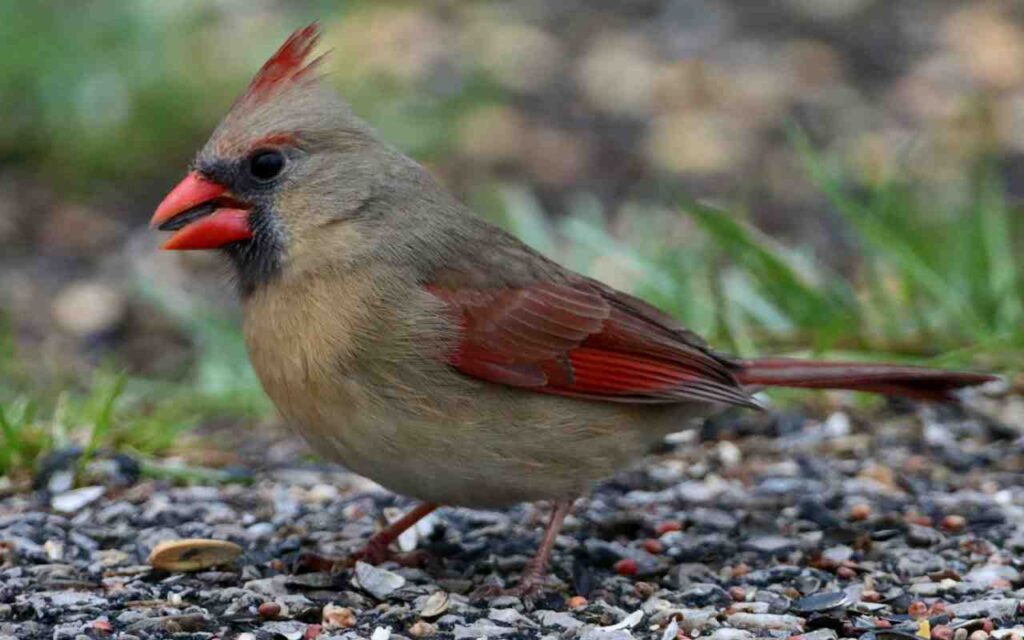
Reader Transparency: This birding guide contains paid affiliate links. If you click a link and make a purchase, I may receive a small commission at no extra cost to you. As an Amazon Associate, I earn from qualifying purchases. Your support helps keep Feathered Guru flying!
If you want to understand what cardinals eat and how their diet changes seasonally, you can easily transform your backyard into a seasonal sanctuary. While many birdwatchers experience frustrating weeks where local flocks vanish unexpectedly, tracking their selective eating habits ensures consistent daily visits based on factual seasonal data.
Beyond standard feeder mixes, establishing a true backyard avian sanctuary requires a closer look at changing wild nutrition limits and structural foraging preferences. By analyzing the precise seed-crushing mechanics of their thick cone bills and balancing their seasonal shifts from winter plant matter to spring insect hunting, you can design a highly optimized yard that supports breeding pairs year-round.
Quick Summary of Cardinal Dietary and Feeding Habits
Northern Cardinals are primarily granivorous birds that display a strong wild preference for white proso millet, safflower seeds, and black oil sunflower seeds spread on platform feeders.
While their annual diet consists of 70 percent seeds and fruit, they shift to a high-protein insect diet during spring nesting seasons, followed by persistent winter berries to survive freezing weather.
Watch: Northern Cardinal Feeding Habits and Diet
While the video provides a visual overview, the sections below offer a definitive breakdown of the specific seeds and seasonal foods cardinals need to thrive.
The Complete Seasonal Nutrition Guide for Northern Cardinals
Northern Cardinals eat a diverse diet consisting of roughly 71 percent seeds and fruits and 29 percent insects and invertebrates. While they are primarily granivorous, their eating habits are highly seasonal; they shift from nearly 90 percent vegetable matter in the winter to a heavy insect diet during the spring breeding season.
According to research published in Birds of the World, Cardinals switch from 88% vegetable matter in winter to consuming significantly more insects during breeding season. This dietary flexibility is exactly why cardinals can thrive as year-round residents throughout most of the eastern United States and beyond.
Their northern cardinal feeding behavior is opportunistic and adaptable. Cardinals forage primarily on or near the ground, hopping through leaf litter and low bushes. They use their powerful, cone-shaped bills to crack open seeds that many smaller birds can’t handle. This specialized bill structure isn’t just for show, it’s a precision tool evolved specifically for crushing tough seed coats and extracting kernels.
The cardinal food preferences also vary by individual, age, and even personality. I’ve watched young birds experiment with different foods while adults stick to proven favorites. Some cardinals in my yard absolutely mob the sunflower feeders while others prefer foraging naturally on the ground. Understanding these patterns helps you provide exactly what they need when they need it most.
What Do Cardinals Eat in the Spring?
In the spring, Northern Cardinals shift their diet to include up to 95 percent insects and animal matter to meet the high protein demands of the breeding and nesting season. Starting in March, cardinals transition from their winter seed-heavy diet into “insect-hunting machines” to provide essential nutrition for egg production and rapidly growing chicks.
During nesting and raising chicks, protein becomes absolutely essential. Male cardinals need extra energy to defend territories and court females. Females require massive amounts of nutrition to produce eggs and sit on the nest for 12-13 days straight. And once those chicks hatch? Game over. Baby cardinal food is almost exclusively insects.
According to the Cornell Lab of Ornithology, cardinal parents feed nestlings mostly insects, including beetles, crickets, katydids, grasshoppers, caterpillars, cicadas, flies, spiders, and even centipedes. Research shows nestling stomach contents contain 95% animal matter and only 5% vegetable matter. That’s a dramatic diet shift from winter seed-eating.
Why insects? Cardinal protein needs during breeding are enormous. Baby birds grow at an insane rate, they leave the nest in just 9-11 days after hatching. That kind of rapid muscle and feather development requires high-quality protein that only insects can provide. Seeds simply don’t cut it for growing chicks.
Here’s something most people miss: soft-bodied insects are especially important for very young nestlings. Think caterpillars, moth larvae, beetle grubs, and small spiders. These provide easily digestible protein without the tough exoskeletons that larger insects have. As chicks grow, parents introduce larger, harder-bodied insects.
Want to actually help cardinals during nesting season? Plant native plants that support insect populations. According to research by University of Delaware professor Doug Tallamy, a pair of Carolina chickadees must feed their nestlings between 6,000 and 9,000 caterpillars to successfully raise one clutch. Cardinals have similar requirements.
Your yard needs to produce thousands of insects, and only native plants can do that. For more information on creating habitat, check out native plants for birds.
Plant native trees like oaks, which support over 500 caterpillar species, or native shrubs like dogwood and elderberry. Skip the pesticides entirely, you’re literally killing the food source that cardinals desperately need to raise their young.
What Do Cardinals Eat in the Summer?
During the summer, Northern Cardinals eat a diverse mix of insects, wild berries, and seeds to support multiple nesting cycles and the beginning of their annual molt. This transitional period offers the highest dietary variety of the year; while adults increase their consumption of seeds and fruits like mulberries, they continue to hunt insects heavily to provide protein for second and third broods.
Adult cardinals increase their seed and berry consumption during summer, but they’re still heavily supplementing with insects. Why? Because insects are still crucial for second and sometimes third broods. Cardinals typically raise 2-3 broods per year, with second nests starting in late May through July. That means the intense protein demands of raising chicks continue well into summer.
Cardinal fruits and seeds become increasingly important as summer progresses. Wild fruits like mulberries, dogwood berries, hackberries, and sumac seeds provide essential nutrition. These fruits also contain carotenoids, the pigments responsible for maintaining that brilliant red plumage in male cardinals. According to ornithologist Gary Ritchison at Eastern Kentucky University, cardinals must ingest carotenoid pigments during their fall molt to maintain vibrant red coloring.
Attracting cardinals with seed during summer works well because they’re actively seeking out diverse food sources. Black oil sunflower seeds remain a top choice, but cardinals will also consume safflower seeds, cracked corn, and various native plant seeds. I’ve found that offering multiple seed types in different feeder styles keeps cardinals coming back throughout the day.
Summer is also when cardinal food backyard variety matters most. While adults increase seed consumption, remember they’re still hunting insects constantly to feed nestlings and fledglings. Creating a biodiverse yard with flowering native plants, berry-producing shrubs, and seed-bearing perennials ensures cardinals can find everything they need without flying long distances. For specific plant recommendations, visit bird-friendly garden design.
The combination of readily available insects, ripening berries, and abundant seeds makes summer a relatively easy time for cardinals, assuming your yard provides all three food types.
What Do Cardinals Eat in the Fall?
In the fall, Northern Cardinals shift their diet toward carotenoid-rich fruits and native seeds to build fat reserves and fuel their annual feather molt. As temperatures drop and insect populations decline, cardinals focus on berries from plants like dogwood, viburnum, and wild grape, which provide the essential pigments needed to maintain their vibrant red plumage.
This is prime time for frugivory in cardinals. They actively seek out cardinal berries like dogwood, viburnum, sumac, wild grape, blackberry, elderberry, and holly. These fruits provide not just calories but also the carotenoids cardinals need for their upcoming fall molt. Without adequate carotenoid intake during molt, male cardinals will grow duller, less saturated red feathers that make them less attractive to potential mates come spring.
Cardinal seed preferences become more pronounced in fall. Sunflower seeds remain the gold standard, but cardinals also consume seeds from native perennials like coneflowers, black-eyed Susans, asters, and goldenrod. I’ve watched cardinals work over dried flower heads systematically, extracting every single seed. This behavior peaks in late fall when other food sources dwindle.
Autumn backyard birds like cardinals are also building fat reserves for winter. They increase their overall food consumption and spend more time foraging. Peak feeding times are dawn and dusk, though cardinals will visit feeders throughout the day. I’ve noticed they’re often the first birds at my feeders in the morning and the last to leave at dusk, behavior that intensifies as winter approaches.
Fall is the perfect time to let your native perennials go to seed instead of deadheading them. Those dried flower stalks you might consider “messy” are actually essential food sources for cardinals and other common backyard birds. Leave them standing through winter. Cardinals will thank you by visiting daily to harvest seeds. Learn more about fall feeding strategies at fall bird feeding.
What Do Cardinals Eat in the Winter?
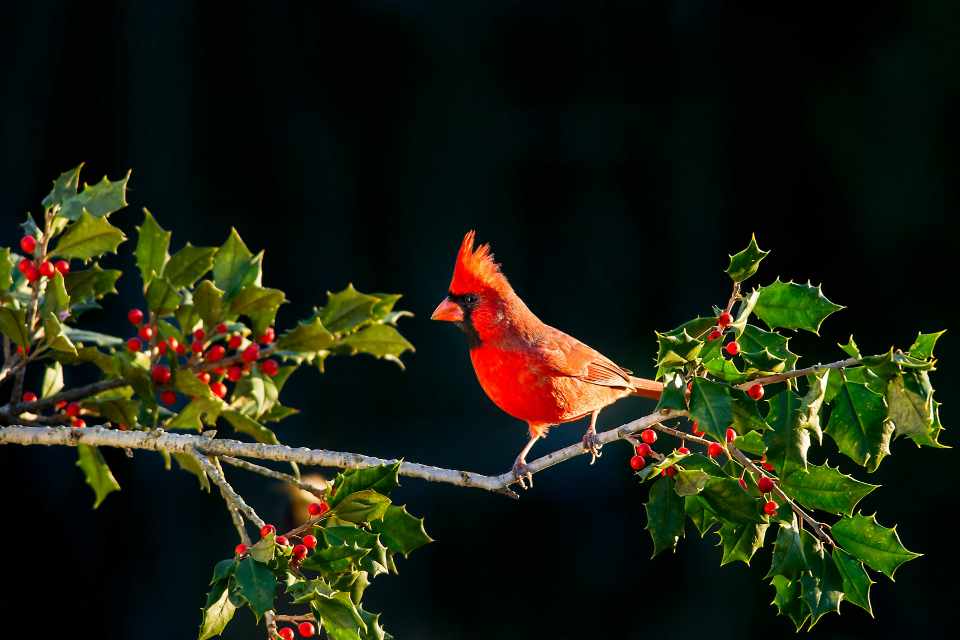
In the winter, Northern Cardinals rely almost exclusively on seeds and persistent berries, as vegetable matter comprises approximately 88 percent of their diet.
Cardinal diet in winter is heavily plant-based by necessity. With insect populations at their lowest, cardinals rely almost exclusively on seeds and whatever berries persist through freezing temperatures. According to research data, vegetable matter comprises approximately 88% of cardinal diet during winter months.
Winter bird feeding becomes critical during this season, especially during severe weather. Deep snow can bury natural food sources, making feeders literally life-saving resources. Cardinals have expanded their range northward over the past century partly because of reliable feeding stations that help them survive harsh winters.
Cardinal sunflower seeds are the ultimate winter food. Black oil sunflower seeds specifically are perfect, they’re high in fat and protein, have thin shells that cardinals can easily crack, and provide maximum calories for minimum effort. Safflower seeds work equally well and have the bonus of deterring squirrels and aggressive blackbirds that might monopolize feeders.
Other excellent cardinal feeder tips for winter include offering cracked corn (they love it), white proso millet, and hulled sunflower seeds for easy eating in extreme cold. Research shows that cardinal digestion efficiency is 16% higher at 77°F than at 32°F, meaning they must consume substantially more food during freezing weather to extract the same nutrition. Keep feeders consistently stocked.
Best bird feeders for cardinals in winter are platform feeders or hopper feeders that allow them to perch comfortably while eating. You can purchase platform feeders (ad) as the top choice for cardinals that prefer stable perches while eating.
Cardinals rarely hang upside-down like finches, they prefer stable perches. Large tray feeders work brilliantly because multiple cardinals can feed simultaneously, and dominant birds are less likely to monopolize the entire food source.
Ground feeding also works well. Cardinals naturally forage on the ground, so scattering seed directly on cleared snow or using a low-profile platform feeder (ad) attracts them reliably while keeping the seed dry. Just keep the area clean to prevent mold and disease transmission.
One winter I watched a male cardinal aggressively defend a sunflower feeder for three solid hours during a snowstorm, chasing off every other bird. That same cardinal was back at dawn the next morning, clearly recognizing the feeder as his critical survival resource. This isn’t just food, it’s survival. For additional winter strategies, check out feeding birds in winter.
Feeding Cardinals in Your Backyard: Optimal Setup Strategies
Getting cardinal backyard feeding right comes down to understanding their preferences and providing the right setup. Cardinals aren’t complicated, but they do have specific requirements that differ from smaller songbirds.
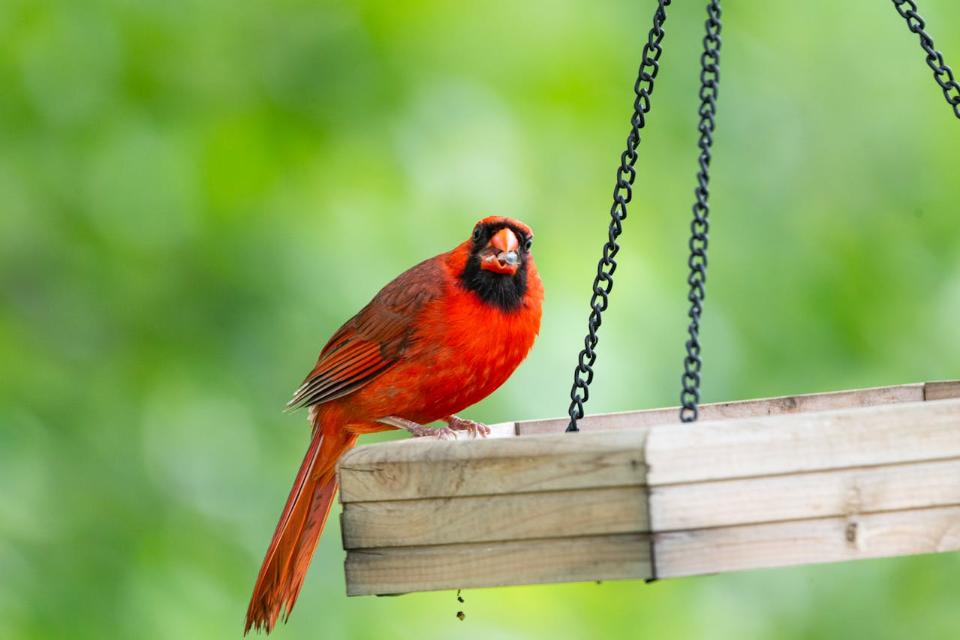
Best bird feeders for cardinals need to accommodate their size and feeding style. Platform feeders are hands-down the top choice. Cardinals prefer to perch while eating rather than hanging or clinging, so flat, stable surfaces work perfectly. Hopper feeders with wide perches are second best. Tube feeders? Cardinals will use them if desperate, but they’re awkward and uncomfortable for these larger birds.
Ground feeding stations work brilliantly because cardinals naturally forage on or near the ground. A simple platform feeder placed low (1-2 feet off the ground) or even directly on the ground attracts cardinals immediately. Just ensure good drainage and clean it regularly to prevent mold.
What is the Best Bird Seed for Cardinals?
Black oil sunflower seeds are the single most effective food for attracting Northern Cardinals to your backyard feeder. While they also enjoy safflower, white proso millet and cracked corn, black oil sunflower is the absolute favorite because its thin shell is easy to crack and its kernel is high in energy-dense fat.
Groundbreaking research by U.S. Fish and Wildlife Service scientist Aelred Geis conducted in the late 1970s on his Maryland farm tested 23 different seed ingredients and found that cardinals showed strong preferences for specific seed types, with black oil sunflower consistently ranking at the top.
Do Cardinals Eat Safflower Seeds?
Northern Cardinals eagerly consume safflower seeds, making them an ideal backyard option for property owners looking to deter nuisance species at their feeding stations. While many smaller songbirds struggle to open these thick, white hulls, cardinals possess massive, heavy beaks specifically evolved to crack tough seed coats with ease.
Utilizing safflower seeds offers a powerful tactical advantage for backyard birdwatchers. While cardinals love the taste of safflower, common feeder pests like eastern gray squirrels, grackles, and European Starlings find the bitter flavor profile highly unpalatable.
Transitioning your platform stations entirely to safflower will cause these invasive pests to eventually abandon your yard to forage elsewhere, leaving the resource completely clear for local breeding cardinal pairs to enjoy.
Water is just as important as food. Cardinals need fresh water year-round for drinking and bathing. A simple birdbath with a fountain or dripper attracts them reliably. In winter, I’ve found that a heated ground birdbath (ad) becomes a major attraction when natural water sources freeze solid. Learn more about water features at how to attract birds to bird baths.
Should You Feed Cardinals Year-Round?
Yes, you should feed cardinals year-round to provide a consistent food source, especially during the lean winter months and the high-energy breeding season. Cardinals are creatures of habit and will visit reliable food sources daily, often at the same times. Once you start feeding, maintain it, birds come to depend on those resources, especially during harsh weather.
Native Lipid-Rich Berries and Seed Plants Cardinals Love
Northern Cardinals are most attracted to native plants that provide lipid-rich berries and seeds, such as dogwood, serviceberry, and mulberry. Beyond feeders, native plants for cardinals provide the most sustainable, long-term food sources. These plants produce seeds, berries, and attract the insects that cardinals need year-round.
Top fruit-producing plants include dogwood (both flowering and alternate-leaf varieties), which produce lipid-rich berries that cardinals devour. Mulberry trees provide abundant fruit in early summer right when parent cardinals are feeding second broods. Serviceberry, also called Juneberry, produces sweet berries that cardinals and dozens of other bird species love.
Holly bushes (native species like American holly and winterberry) hold their berries well into winter, providing emergency food during harsh weather. Sumac species, especially staghorn sumac, produce massive seed clusters that persist through winter and feed cardinals when little else is available.
Cardinals and berries go together perfectly. Wild grape vines produce copious fruit that cardinals expertly peel, they discard the skin and consume the pulp and seeds. Elderberry shrubs provide both fruit for cardinals and support massive insect populations that feed nestlings. Blackberry and raspberry brambles offer double benefits: berries in summer and protective nesting cover.
Attracting cardinals naturally works better than feeders alone. Native plants don’t require constant refilling, don’t spread disease like dirty feeders can, and support entire ecosystems. A yard planted with native trees, shrubs, and perennials will attract more cardinals for less money and effort than relying solely on purchased seed.
Cardinal-friendly plants for seed production include native sunflowers, coneflowers (Echinacea), black-eyed Susans, asters, goldenrod, and native grasses. Let these go to seed in fall rather than cutting them back. Cardinals will spend hours working over dried seed heads, and you’ll enjoy watching their acrobatic balancing acts. For comprehensive plant lists, visit how to attract cardinals to your backyard.
The best cardinal yard combines diverse native plantings with supplemental feeding. This approach provides year-round food, nesting habitat, and supports the insect populations that make successful breeding possible.
Unsafe Foods and Common Feeder Contaminants to Avoid
Not all food is good food, and some things commonly offered at feeders can actually harm cardinals. Let’s talk about what to skip.
Bread and baked goods have zero nutritional value for cardinals and can cause serious digestive problems. They fill birds up with empty calories, preventing them from eating nutritious foods they actually need. Plus, moldy bread can produce toxins that make birds sick. Just don’t offer it.
Salted foods including salted peanuts, chips, crackers, or any processed human snacks are dangerous. Birds can’t process high sodium levels the way humans can, and excessive salt causes dehydration, kidney problems, and even death. Stick to unsalted nuts if offering peanuts.
Spoiled or moldy seed is a serious health hazard. Aflatoxins from mold can kill cardinals quickly. Check feeders regularly, especially during humid weather. If seed looks clumped, smells off, or shows visible mold, dump it immediately and clean the feeder thoroughly. Cardinal diet caution includes being vigilant about food quality.
Pesticides and herbicides aren’t food, but they contaminate the insects and plants that cardinals eat. Avoid chemical lawn and garden treatments entirely. You’ll kill the caterpillars, beetles, and spiders that cardinals need to feed their young. Unsafe foods for cardinals include any insects or plants contaminated with chemicals.
Chocolate, avocado, and onions are toxic to birds. Never offer these, even in small amounts. The compounds in these foods damage bird organs and can be fatal. Feeding cardinals tips number one: if it’s toxic to your pet dog or cat, it’s probably toxic to birds too.
Honey water instead of plain sugar water for hummingbird feeders can ferment and grow harmful bacteria. While cardinals don’t typically use hummingbird feeders, they occasionally do, so keep it simple with plain white sugar and water if offering liquid feeders.
IMO, the safest approach is sticking to high-quality commercial birdseed from reputable brands or offering whole, fresh foods like fruits and unsalted nuts. Simple is better, and birds evolved eating simple whole foods, not processed human snacks.
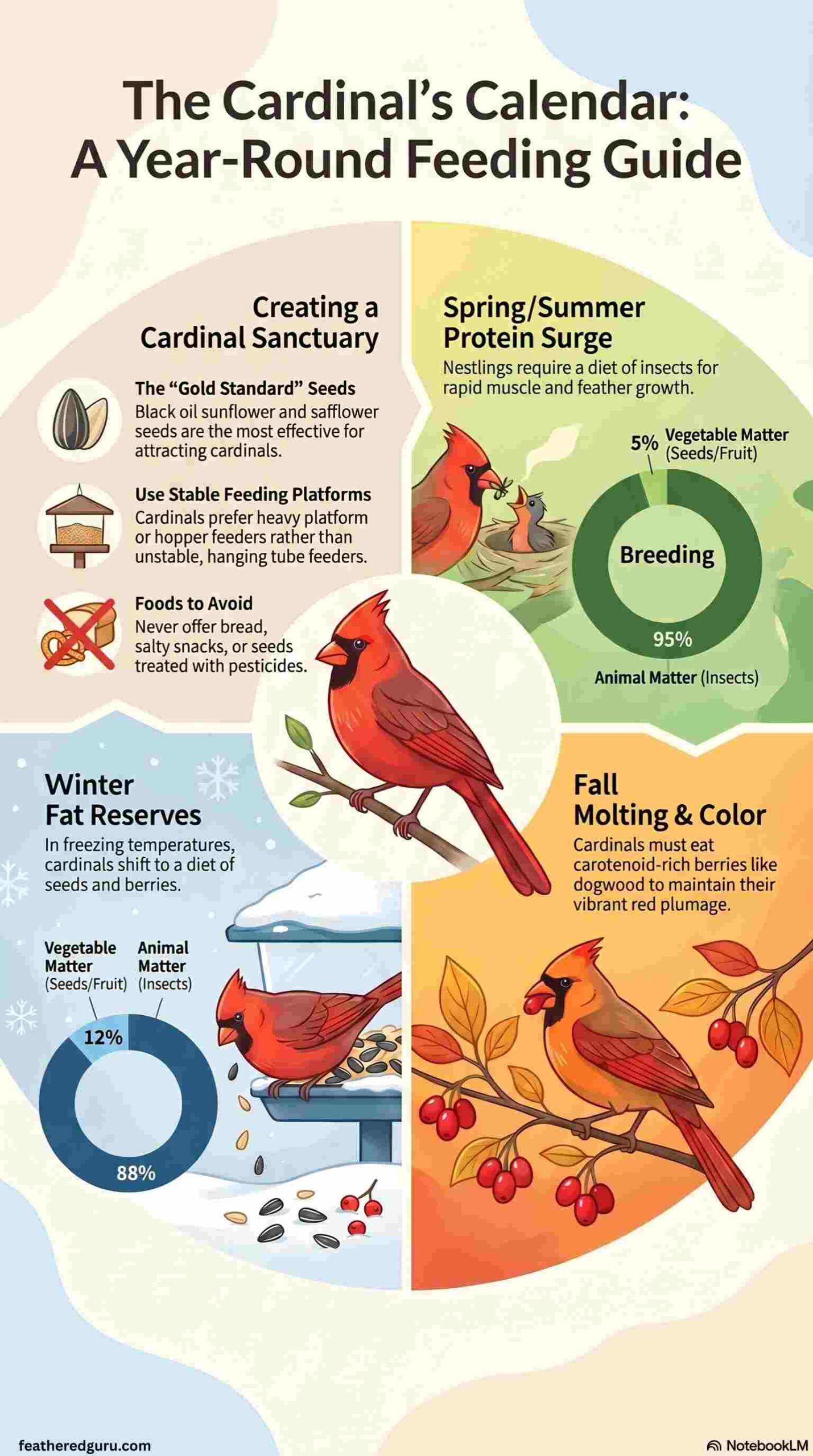
At a Glance: Northern Cardinal Diet Infographic
To summarize the seasonal shifts and feeding preferences discussed above, I have created this visual guide. It provides a quick reference for the specific seeds, fruits, and insects cardinals require throughout the year.
Frequently Asked Questions About Cardinal Diets
Do cardinals eat from the ground?
Yes, Northern Cardinals are natural ground-foragers. While they eagerly use platform and hopper feeders, they will frequently hop through leaf litter or peck at spilled seeds on the surface of the ground.
Why are some male cardinals not bright red?
A cardinal’s red color comes from carotenoid pigments found in their diet. If a male cardinal doesn’t eat enough carotenoid-rich fruits like wild grapes or dogwood berries during its fall molt, its new feathers may appear duller or more brownish-red.
Do cardinals eat suet in the winter?
Cardinals will occasionally eat suet during extreme cold snaps to get extra fat and calories, but it is not their first choice. They much prefer high-fat seeds like black oil sunflower and safflower that they can crack with their powerful beaks.
What is the best way to attract cardinals but not squirrels?
The most effective strategy is to fill your feeders with safflower seeds. Cardinals love the taste of safflower, but squirrels, grackles, and starlings usually find the bitter flavor unattractive and will eventually look elsewhere for food.
Do cardinals eat bread or kitchen scraps?
While cardinals might occasionally peck at bread, it provides very little nutritional value and can be harmful if it contains mold. It is much better to offer natural, high-energy foods like sunflower seeds, nuts, and dried fruits.
Why Understanding Cardinal Biology Secures Long-Term Backyard Success
Understanding feeding northern cardinals throughout the seasonal calendar isn’t complicated, it just requires paying attention to their changing nutritional needs. Spring and summer mean protein-packed insects for raising chicks. Fall brings fruits and seeds for fueling migration and molt. Winter demands high-fat, high-calorie seeds to survive freezing temperatures.
The secret to successfully attracting and supporting backyard birds like cardinals is providing diverse food sources year-round. Plant native trees, shrubs, and perennials that produce berries, seeds, and support insect populations. Supplement with quality seed at feeders, especially during winter and breeding season. Provide fresh water consistently. Skip the pesticides entirely.
Attract cardinals by thinking like a cardinal. They need food, water, cover, and nesting sites. Deliver all four, and you’ve created cardinal paradise. Miss even one element, and they might visit occasionally but won’t become regular residents.
Seasonal bird feeding doesn’t have to be expensive or time-consuming. Let native plants do most of the work. Fill a platform feeder with black oil sunflower seeds. Install a simple birdbath. That’s honestly 90% of what cardinals need.
Last February during a brutal cold snap, I counted eight cardinals simultaneously visiting my feeders, a record for my small urban yard. It happened because I’d planted native shrubs three years earlier, maintained consistent feeding, and created the layered habitat cardinals prefer. The payoff was watching brilliant red males and warm brown females brighten the dreariest winter day.
By providing the right food each season, you can enjoy cardinals in your yard all year long. These stunning birds aren’t demanding, they just need you to understand their biology and work with it rather than against it. Start with quality sunflower seed, plant a few native berry-producing shrubs, and watch what happens. The first time a brilliant red male cardinal lands at your feeder, you’ll be hooked.
Trust me, it’s worth every penny and every minute of effort 🙂