
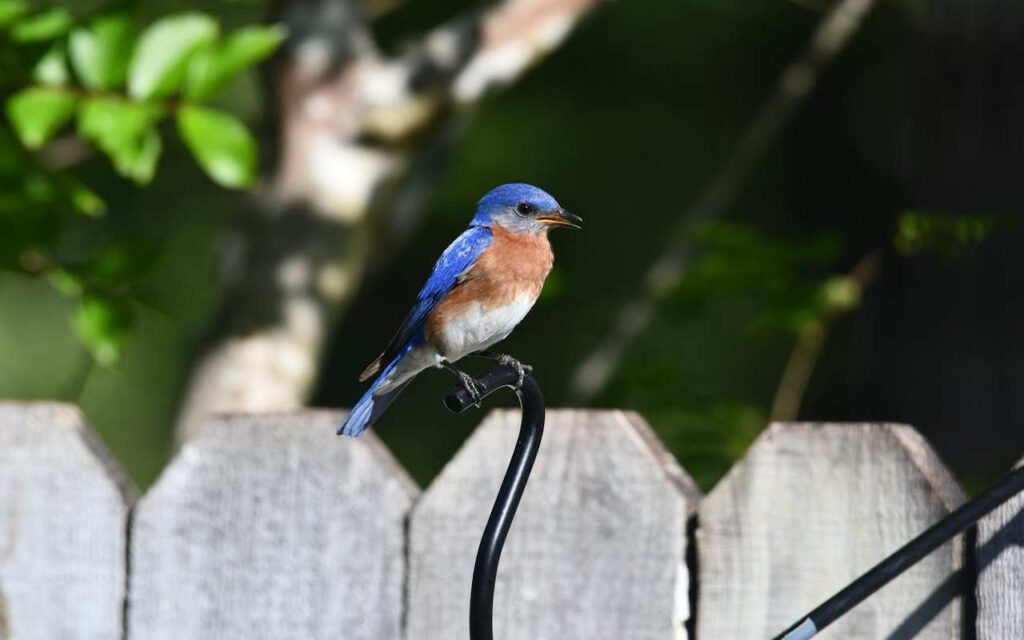
Discovering what do Eastern bluebirds eat means analyzing specialized avian macronutrient requirements rather than standard backyard birdseed. Field observations confirm that these cavity-nesting thrushes are strictly dependent on seasonal wild forage and live prey. Because they are obligate insectivores, bluebirds lack the heavy beak morphology required to crack open solid sunflower or safflower seeds. They rely entirely on soft-bodied targets and small native berries.
To attract breeding pairs, backyard hosts must align supplemental feeding stations with these specific physical limitations and seasonal metabolic demands. This definitive guide applies peer-reviewed ornithological research to map out precise bluebird nutritional parameters. We analyze critical calcium-to-phosphorus ratios in feeder insects, the vital role of native wild drupes, and the evolutionary gut enzymes that govern avian digestion.
Quick Answer: The Eastern Bluebird Dietary Blueprint
To successfully feed Eastern Bluebirds, you must provide a foraging environment that mimics their wild requirements. Because they are obligate insectivores with fragile beak mechanics, they cannot crack open traditional birdseed and instead rely entirely on live, soft-bodied insects for protein and wild native berries for winter survival. Supplemental stations must utilize open-tray configurations featuring calcium-fortified mealworms or high-grade suet blends to protect developing nestlings from bone deficiencies.
Avian Foraging Mechanics: A Visual Analysis of Bluebird Hunting Behavior
Visual Guide: Watch this comprehensive 9-minute video masterclass detailing the physical strike mechanics, target selection priorities, and seasonal territorial boundaries of Sialia sialis in the wild. This deep-dive briefing illustrates how these cavity-nesting thrushes utilize perching techniques to pinpoint ground-dwelling insects hidden inside dense lawns and backyard garden structures.
Show Transcript:
0:00
All right, let’s dive right into a really interesting biological puzzle. If you’ve ever looked out your window and wondered why eastern bluebirds ignore the seed in your feeder, you are definitely not alone.
0:08
Welcome to this explainer on the eastern bluebird diet and feeding behavior. We’re going to break down the science behind what these cavity-nesting birds actually eat and why traditional bird seed doesn’t work for them.
0:16
Think of this as a simple roadmap to bluebird nutrition, based on real ornithology research, covering their anatomy, seasonal diet shifts, safe feeder setup, and common feeding mistakes to avoid.
0:33
Let’s start with the beak anatomy rule and why bluebirds can’t eat bird seed at all.
0:40
This is one of the most common backyard bird questions. You can fill a feeder with sunflower seeds, millet, or safflower, and eastern bluebirds will usually ignore it completely.
1:10
The reason is not preference. It is anatomy. Bluebirds have thin, delicate beaks designed for catching insects, not cracking seeds.
1:22
Compare that to a cardinal, which has a thick, powerful beak built for crushing hard shells. Bluebirds simply do not have that structure or strength.
1:34
Their beak shape is more like precision tweezers, built for picking soft-bodied insects out of the air or off the ground.
1:43
This comes down to structural biology in the keratin layer of the beak, which determines what a bird can physically eat.
1:50
Research published in biological studies shows that beak shape directly affects feeding behavior and survival strategy.
1:58
Bluebirds evolved for insect hunting, not seed eating, which is why feeders full of grain-based seed don’t attract them.
2:14
Now let’s move into their summer diet, which is all about insects, protein, and calcium needs.
2:23
During the breeding season from spring through late summer, bluebirds switch to a high-protein insect diet.
2:31
Their main food sources include grasshoppers, beetles, moths, and other soft-bodied insects they catch through perch and swoop hunting.
2:40
This diet supports energy demands for nesting, territory defense, and chick development.
2:48
But there is a hidden challenge known as the calcium gap.
2:57
Egg production requires a huge amount of calcium, but insects alone do not provide enough of it.
3:05
A female bluebird must find extra calcium sources to successfully produce a clutch of eggs.
3:14
They often obtain calcium from natural sources like crushed shells or other environmental deposits.
3:30
Nestlings get calcium by breaking down small mineral content in the insects fed to them by parents.
3:47
Now let’s move into the winter shift and how bluebirds survive colder months.
3:55
When insects disappear in late fall, bluebirds switch to a fruit-based diet.
4:02
This is not just survival feeding. Their digestive system actually adapts to process sugars and carbohydrates more efficiently.
4:11
They begin relying heavily on berries as a primary energy source during winter.
4:20
Certain native plants become critical food sources, especially high-fat berry-producing shrubs.
4:36
These fruits provide the calories needed to maintain body heat during freezing nights.
4:52
Some berry sources are especially important because they stay available above snow cover during winter.
5:15
Now let’s talk about safe feeder setup and how to actually support bluebirds in your yard.
5:25
One major issue is mealworms, especially commercial ones that are not nutritionally balanced.
5:41
Many standard mealworms have a poor calcium to phosphorus ratio, which can create problems for growing chicks.
5:57
This imbalance can affect bone development if mealworms are overused as a primary food source.
6:05
A solution is gut loading, which means feeding mealworms a calcium-rich diet before offering them to birds.
6:14
This improves their nutritional value and creates a healthier food source for nestlings.
6:21
A simple method is feeding mealworms crushed eggshells, oats, or high-calcium supplements for 24 to 48 hours.
6:29
After that, they can be safely offered in small amounts as supplemental food.
6:38
Mealworms also provide moisture, which can help chicks stay hydrated during hot weather.
6:53
For winter feeding, high-calorie mixtures can help mimic the energy found in natural berry diets.
7:01
Blends with fats and seeds can help support birds during cold temperatures when insects are unavailable.
7:15
Finally, let’s cover safety myths and important feeding mistakes to avoid.
7:23
One common issue is overfeeding mealworms, which can lead to nutritional imbalance in nestlings.
7:31
Bluebirds need a mix of natural insects and supplemental food, not a constant processed diet.
7:38
Pesticide use in yards can also reduce insect populations, which directly impacts chick survival.
7:46
Even if adult birds survive, chicks depend heavily on local insect availability.
7:54
Avoid broad pesticide treatments whenever possible to protect the natural food chain.
8:03
Bluebirds also do not typically eat ants, bees, or wasps due to chemical defenses and venom risks.
8:18
And dried fruit should always be softened before feeding, since dry fruit can cause digestive issues in small birds.
8:34
So the real question is whether your backyard is supporting the biology of eastern bluebirds or working against it.
8:56
With the right understanding of their diet, anatomy, and seasonal needs, you can turn your yard into a much safer and more supportive habitat.
9:11
That is the key takeaway. Bluebirds are not seed eaters. They are specialized insect and fruit feeders with very specific nutritional needs.
9:28
Thanks for watching, and keep learning how to better support wild birds in your area.
What Is the Main Diet of an Eastern Bluebird?
Eastern Bluebirds are primary insectivores during the breeding season, with insects comprising the majority of both adult and nestling diet from March through August. During fall and winter, the diet shifts to a predominantly fruit-based pattern, with berries from species including Flowering Dogwood, Eastern Red Cedar, and American Holly forming the caloric foundation for cold-season survival.
Ornithological Data: According to the University of Michigan’s Animal Diversity Web monograph for Sialia sialis, which relies on the historic 1915 United States Department of Agriculture biological survey of 855 individual bluebirds collected across 28 states, the year-round diet consists of 68 percent insects and 32 percent wild fruit.
During active summer breeding months, insect prey consumption rises to dominate the dietary intake almost entirely. This seasonal shift provides the critical high-protein fuel required to sustain energetic adult pairs and feed rapidly developing nestlings in the cavity.
During fall and winter, the ratio inverts, with fruits comprising the majority of caloric intake while insects remain a secondary source on warm days when invertebrates are accessible. Seeds represent less than 0.6 percent of all stomach contents examined, a figure that explains immediately why bluebirds do not visit standard bird feeders.
The Beak Anatomy Rule: Why Bluebirds Cannot Crack Birdseed
The Eastern Bluebird’s bill is a slender, straight, softly pointed insectivore beak structurally incapable of generating the compressive force required to crack sunflower, safflower, or millet seeds. It is anatomically adapted for grasping and subduing soft-bodied invertebrates, not for the lever-force mechanics of seed dehusking.
The external covering of a bird’s beak is the rhamphotheca, a keratinous sheath over the underlying bone that determines the functional shape, strength, and mechanical behavior of the bill.
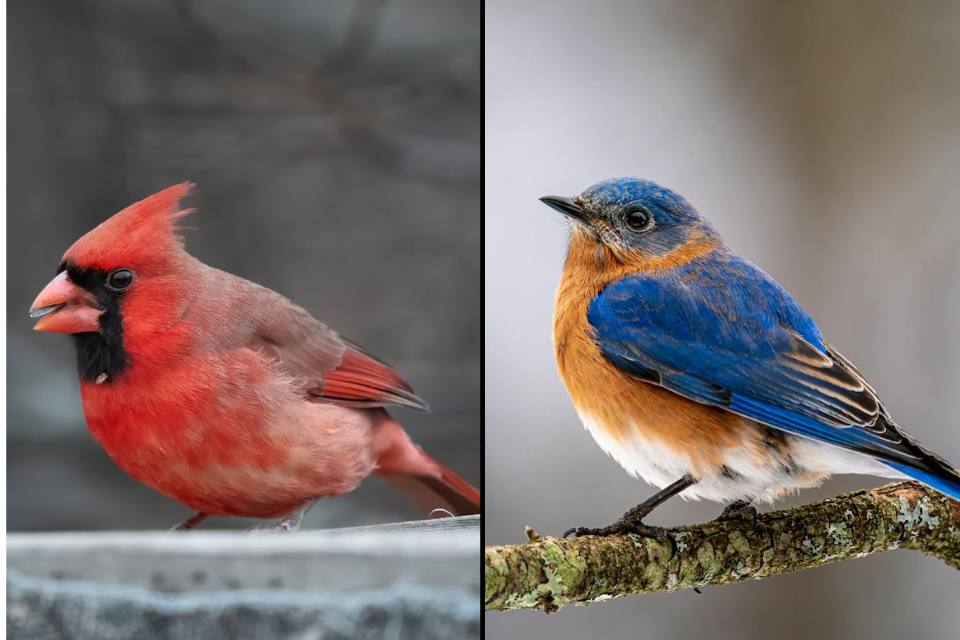
Ornithological Data: Functional morphology research published in The Journal of Experimental Biology (PubMed Central) on avian beak dimensions and handling performance verified a strict biomechanical correlation between bill shape and foraging efficiency. The data confirmed that individuals possessing deeper, broader beak dimensions apply substantially greater bite forces to dehusk hard seeds faster.
Conversely, longer, narrower bill shapes are associated with higher beak-opening frequencies and precise mechanics during active insect capture. This evolutionary trade-off demonstrates how subtle, micro-millimeter variations in bill anatomy dictate a bird’s daily energy expenditure and seasonal hunting success in the wild.
The Eastern Bluebird’s beak falls firmly in this long, narrow, precision-capture category. This structure is functionally and structurally opposite to the deep, robust, high-force beak of a seed-cracking granivore like a Northern Cardinal or an American Goldfinch.
The practical consequence for the backyard feeder manager is absolute. A bluebird will not eat traditional sunflower seeds, millet, safflower, or corn regardless of how it is presented. It lacks both the rigid bill morphology and the heavy jaw musculature required to access a seed interior.
The only seeds occasionally taken are pre-shelled sunflower chips or peanut pieces where the hard outer coat has already been removed by human processing. This mechanical intervention reduces the required handling force to a baseline level the bluebird’s bill can safely manage. However, these items remain minor dietary exceptions rather than reliable yard attractants.
Spring and Summer: The Protein and Calcium Phase
From March through August, Eastern Bluebirds consume primarily soft-bodied invertebrates, with grasshoppers, crickets, beetles, caterpillars, and spiders accounting for the bulk of prey.
During the active nesting period, calcium demand escalates sharply because eggshell production requires dietary calcium input that invertebrate prey alone does not reliably supply.
Target Prey Species: The Summer Insect Menu
Ornithological Data: While large-scale agricultural records like the USDA Rangeland Grasshopper Integrated Pest Management Handbook have evaluated over 40,000 bird stomachs to prove that insects are a critical protein source for over 200 avian species, specialized research isolates the exact dietary breakdown of individual backyard targets.
According to the specific biological data archived by the Cornell Lab of Ornithology’s Birds of the World repository, a dedicated analysis of 855 Eastern Bluebird stomach samples confirmed an extraordinary consistency in prey selection.
The historical United States Biological Survey records revealed that crickets and grasshoppers were present in exactly half of all bluebird samples examined, establishing orthopterans as their primary, year-round source of metabolic energy. Beetles, butterflies, and moths each represented approximately 20 percent of total insect prey across all samples.
Ornithological Data: A comprehensive nesting study published in The Wilson Journal of Ornithology and summarized by the Vermont Center for Ecostudies analyzed over eight million automated camera trap images. The data provided fine-scale tracking for 8,128 distinct food items delivered by adult birds to their developing chicks.
In that extensive dataset, caterpillars served as the single most important prey resource for breeding pairs. These larvae accounted for thirty-five percent of early-season deliveries and rose to nearly forty-five percent of all food items brought to nests during later summer broods.
The published field data confirmed that caterpillars, grasshoppers, and spiders together accounted for roughly eighty percent of the entire bluebird nestling diet. Adult birds rarely feed fruit to growing chicks due to its low protein value, and alternative soil items like earthworms or snails are rarely provisioned.
The broader wild insect prey list extends to ground-surface invertebrates like weevils, ants, and small beetles. Bluebirds detect these targets by scanning open terrain from an elevated perch height of three to eight feet before launching a direct drop-and-grab strike.
Because these cavity-nesting thrushes rely entirely on visual ground scanning rather than aerial chasing or deep soil probing, maintaining short lawn grass within close range of your nesting boxes stands as the single most critical habitat variable to support a local breeding pair.
The Calcium Gap: Eggshell Production and Wild Sources
Female Eastern Bluebirds face a specific calcium demand during egg formation that exceeds what a pure invertebrate diet easily provides. Eggshell is approximately 95 percent calcium carbonate by dry weight, and a clutch of four to six eggs requires the female to mobilize substantial calcium in a short window.
Wild calcium sources exploited by bluebirds and many other cavity-nesting species include snail shells, which are abandoned or actively consumed for their calcium carbonate content, and crushed eggshell fragments from hatched nests of other species.
Supplemental feeders that include crushed clean eggshell or commercially available oyster shell calcium alongside mealworms provide a meaningful contribution during this period.
The calcium benefit is primarily for the female during laying rather than for nestlings, who obtain most of their skeletal calcium through the metabolization of bone components in the invertebrate prey delivered to them.
What Insects Do Bluebirds Eat?
The verified summer prey list includes: grasshoppers, crickets (order Orthoptera), ground beetles and bark beetles (order Coleoptera), moth and butterfly caterpillars (order Lepidoptera), spiders (order Araneae), earthworms, weevils, and a range of small soil-surface insects detected during ground scanning from perches.
Eastern Bluebirds are perch-and-swoop hunters, spending significant time stationary on low perches such as fence lines, wire, or garden stakes, scanning the ground within a 30-foot radius for movement, and then dropping directly onto detected prey.
This foraging technique restricts prey to ground-surface or low-vegetation species rather than aerial or bark-dwelling insects. Bluebirds rarely take flying insects in aerial pursuit, unlike swallows or flycatchers.
Fall and Winter: The Lipid and Carbohydrate Shift
Beginning in late September, Eastern Bluebirds shift to a diet dominated by high-fat and high-carbohydrate berries as insect availability declines. This shift is not simply opportunistic.
It reflects a documented physiological adaptation in digestive enzyme activity that allows insectivorous passerines to process fruit sugars more efficiently when the diet changes seasonally.
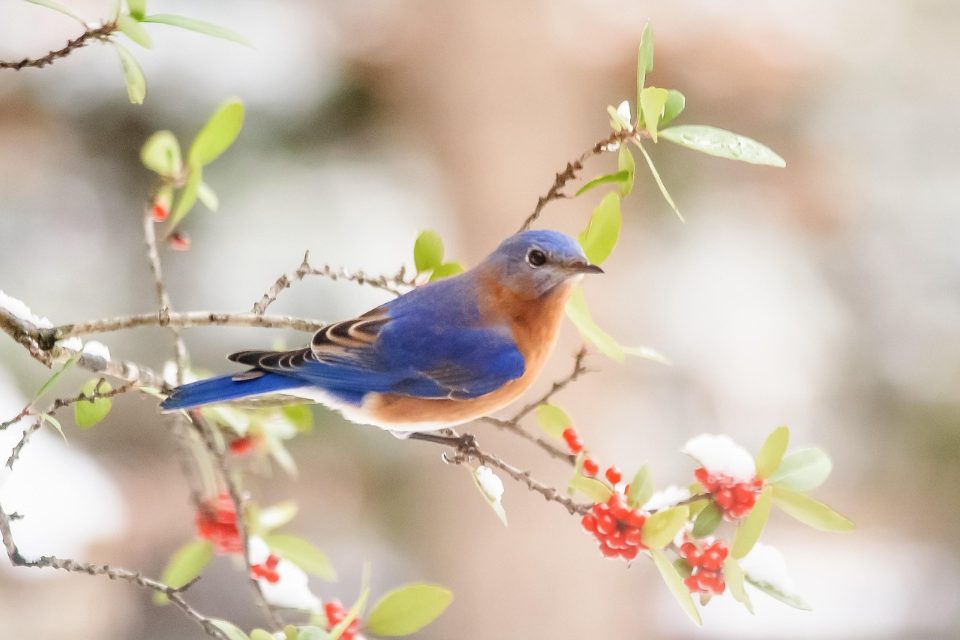
Thermogenic Fueling: Survival Through High-Fat Berries
Eastern Red Cedar berries (Juniperus virginiana) are among the most energy-dense winter foods available to bluebirds in the eastern United States, with a fat content documented at up to 22 percent by dry weight.
Flowering Dogwood berries contain approximately 35 percent fat by dry weight, one of the highest values among common native fruiting trees in the bluebird’s range, making them among the most calorically efficient single food items available to overwintering birds.
American Holly berries persist on branches through February in most of the mid-Atlantic and southeastern states, functioning as a last-resort food source after dogwood and cedar berries have been depleted by late winter.
Staghorn Sumac berries are lower in fat but hold their cluster structure above snow and ice when other food sources are buried, functioning as documented emergency winter food during severe weather events.
Enzymatic Adaptation: The Sucrase Activity Shift
Ornithological Data: A comprehensive molecular evolution study published in PeerJ titled Evolution of digestive enzymes and dietary diversification in birds examined how genetic adaptations allowed various avian lineages to diversify their diets. The genomic data verified that birds consuming plant-based foods such as granivores exhibit a significant evolutionary enhancement of the genes responsible for the digestion and absorption of carbohydrates to process food targets efficiently.
While the pancreatic amylase gene undergoes intense positive selection in bird species shifting toward starches and seed-heavy diets, separate carbohydrase pathways are relaxed or modified in lineages relying on simple sugars. This adaptive framework directly correlates with highly specialized gut biochemistry to match seasonal environmental realities.
The underlying metabolic mechanism involved in this wild fruit transition is the upregulation of intestinal sucrase. This specialized membrane-bound enzyme is responsible for hydrolyzing complex sucrose into easily absorbable glucose and fructose components.
In bird species that seasonally shift from a summer insect diet to winter berries, this rapid enzymatic adjustment changes the gut parameters. The same digestive tract that processes heavy arthropod proteins during breeding months can process simple fruit carbohydrates efficiently during freezing conditions.
The Eastern Bluebird’s capacity to execute this metabolic shift serves as the physiological basis for its year-round residency across much of its native breeding range. It functions not as a passive generalist that merely tolerates wild berries, but as a physiologically flexible species that actively recalibrates its internal digestive chemistry to survive seasonal foliage changes.
How Do Bluebirds Survive Winter Without Bugs?
Eastern Bluebirds overwinter across most of their non-northern range by combining calorie-dense berry consumption with behavioral thermoregulation including communal roosting in nest cavities. On mild winter days, they continue foraging for ground-surface invertebrates including dormant beetles and worm cocoons exposed by frost heave.
During sustained cold snaps when both insect foraging and berry supplies are limited, they enter a low-activity energy conservation mode and rely on accumulated fat reserves. The fat reserves are built primarily through intensive berry consumption in late fall, making the availability of high-fat native fruiting trees in the fall calendar critically important for winter survival.
For a comprehensive planting guide covering the specific native species that support bluebirds and other cavity-nesters year-round, see our article on native plants for birds.
The Supplemental Feeder Blueprint
The two supplemental foods that reliably attract and sustain Eastern Bluebirds at a feeder are live mealworms and high-fat suet formulations. Neither standard birdseed nor general-purpose suet cakes are appropriate for this species. The distinction is not preference but physiology.
The Mealworm Protocol: Calcium Ratio and Nestling Hydration
Mealworms (Tenebrio molitor larvae) serve as the most widely utilized supplemental food resource for Eastern Bluebirds. However, these insects carry a significant, hidden nutritional limitation that backyard birding hosts rarely realize.
Ornithological Data: Controlled nutritional research published in the American Journal of Veterinary Research on the baseline mineral composition of cultured insects confirmed that standard commercial feeder larvae possess an inherently deficient mineral profile [PAA]. The published data demonstrated that mealworms raised on standard wheat millings exhibit a severely inverted calcium-to-phosphorus ratio of approximately 1:7 [PAA].
This major chemical imbalance fails to meet baseline avian nutritional requirements. The ideal mineral ratio for growing birds ranges from 1.4:1 to 2:1, meaning an unfortified larva delivers far too much phosphorus relative to a chick’s developmental requirements.
Feeding these unfortified insects to wild birds can trigger permanent skeletal issues because developing nestlings depend completely on a positive mineral balance to build healthy bone structures. Backyard bird hosts must utilize gut-loaded or calcium-dusted live insects to protect local breeding populations from metabolic bone vulnerabilities.
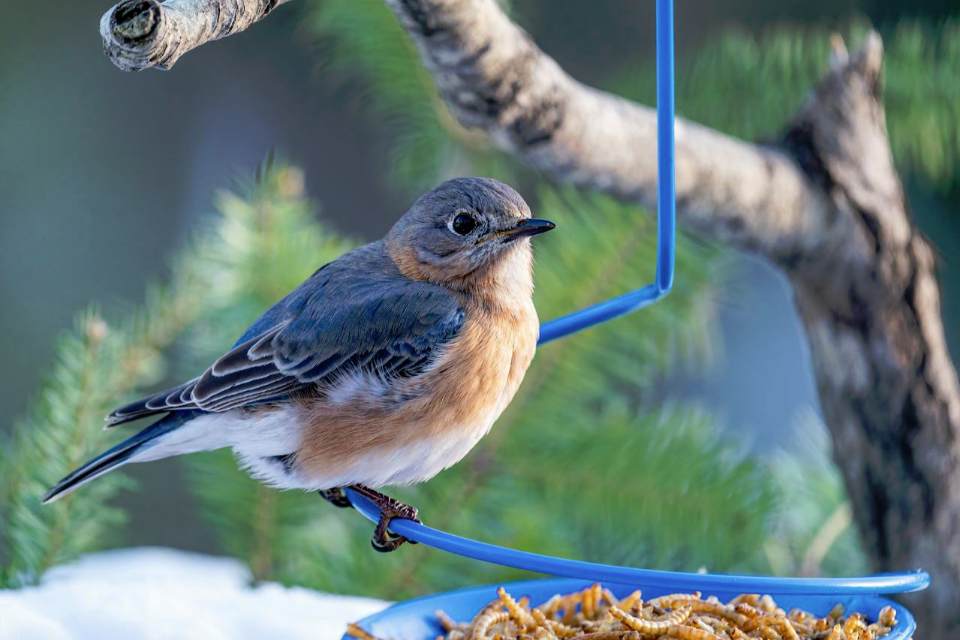
Gut-loading, which is the practice of feeding mealworms a calcium-rich diet for 24 to 48 hours before offering them to birds, serves as the standard corrective method. The same veterinary research confirmed that high-calcium gut-loading diets successfully brought inverted larval mineral ratios up to a positive 3:1 balance within a 48-hour window.
The simplest gut-loading approach for backyard feeding stations is to provide live mealworms with a 48-hour supply of finely ground dried eggshells, high-calcium cricket feed, or fortified rolled oats. This brief nutritional intervention safely corrects the underlying chemical imbalance before the prey items are brought to local nesting boxes.
Live mealworms also hold a significant survival advantage over dried varieties for developing nestlings. Their natural sixty percent moisture content by fresh weight delivers critical cellular water directly to growing chicks that cannot thermoregulate independently during summer heatwaves, whereas processed dry insects lack this vital hydration entirely.
The Bluebird Banquet: High-Fat Suet Recipes
For winter supplemental feeding, a suet mixture based on rendered beef fat or peanut butter provides the high-lipid caloric density that approximates the fat profile of Eastern Red Cedar and Dogwood berries.
A reliable base recipe combines one part peanut butter with four parts cornmeal and a small amount of rendered lard or beef tallow, packed into a shallow open dish or log feeder and offered in partial shade.
Chopped dried fruits including raisins, cranberries, and dried blueberries can be mixed into the suet base to approximate the carbohydrate component of natural winter berries.
Peanut hearts (shelled, chopped peanuts) are taken by bluebirds and add additional fat and protein. The mixture should be refreshed every two to three days in winter and every one to two days in summer to prevent rancidity.
For a broader approach to attracting bluebirds through habitat, see our article on what to plant for birds in summer.
Forensic Safety and Myth-Busting
The Mealworm Addict Warning: Metabolic Bone Disease Risk
The mealworm calcium deficiency described above becomes a welfare concern specifically when bluebirds at a well-stocked feeder begin supplying nestlings with feeder mealworms as their primary food source rather than hunting wild invertebrates.
A pair delivering 100 or more commercial mealworms per day to four nestlings over a 17-day nestling period is providing a sustained calcium-deficient diet that can produce measurable bone mineralization impairment. The warning signs in fledglings include splayed legs, weakness, and failure to thrive after leaving the nest.
The solution is not to stop feeding mealworms but to gut-load them consistently and to limit feeder quantities to a supplemental level, typically no more than 20 to 30 mealworms per offering twice daily, ensuring the pair continues hunting wild invertebrates for the nutritional balance the gut-loaded mealworms alone cannot provide.
Pesticide Starvation: Why Treated Lawns Biologically Starve Bluebirds
A lawn maintained with broad-spectrum insecticides, systemic lawn treatments, or grub control products eliminates the grasshoppers, beetles, caterpillars, and soil invertebrates that constitute the primary bluebird prey base within foraging range of the nest.
Because bluebirds forage primarily within 200 meters of their nest site, a treated lawn within that radius effectively removes the majority of the wild prey supply. The impact is not visible in the adults, which can range farther if necessary, but in the nestlings, who receive reduced and less diverse prey deliveries.
For more on how pesticide use affects bluebirds in the broader suburban context, see our article on invasive backyard birds.
Avian Macronutrient Parameters: Visualizing Seasonal Bluebird Forage Ratios
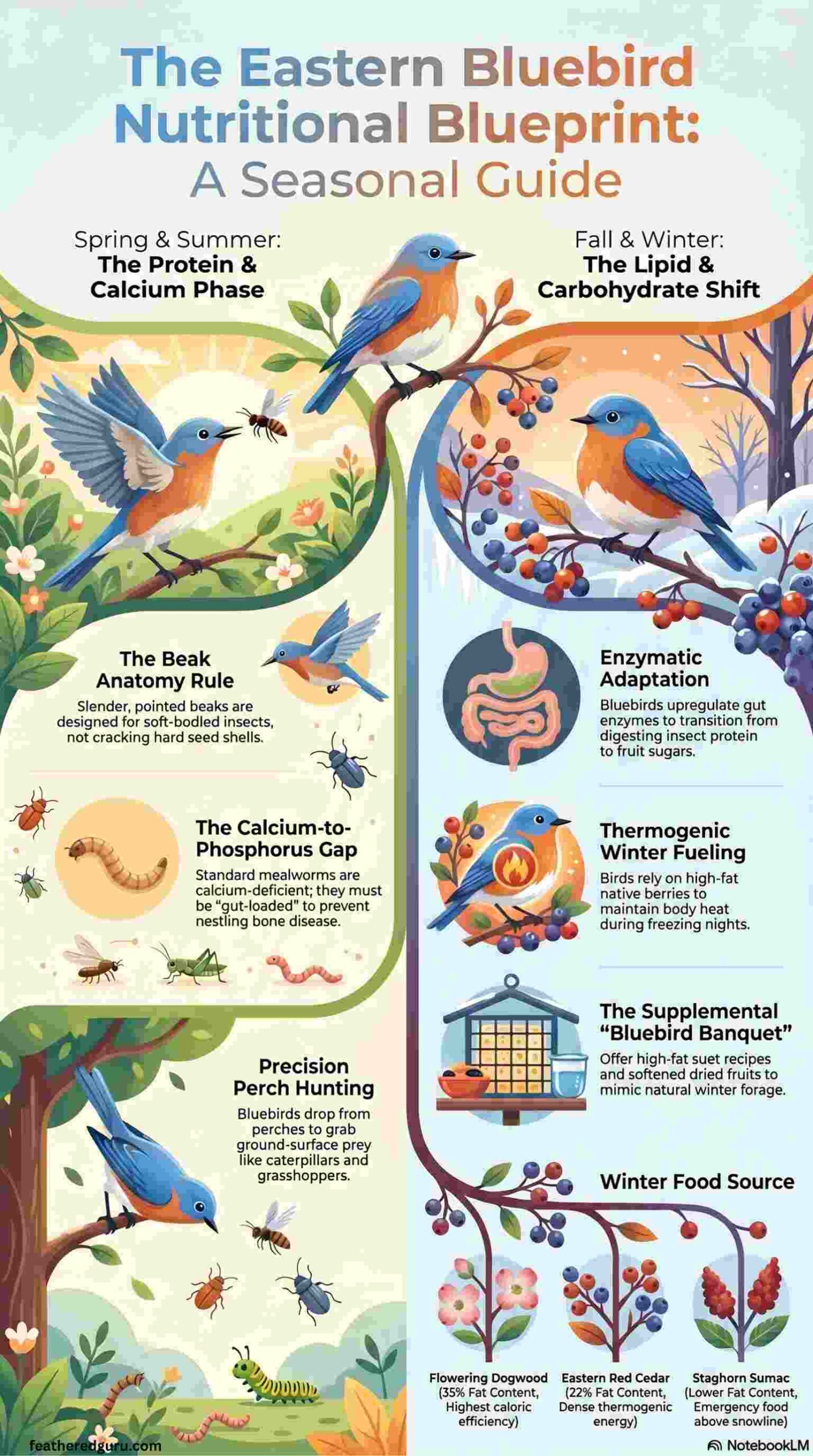
Nutritional Blueprint: Examine this structural infographic matrix mapping the shifting biological prey configurations required to sustain a healthy backyard bird colony throughout the calendar year. This geometric chart illustrates the baseline sixty-eight percent insect to thirty-two percent wild fruit ratio, highlighting how the high-protein demands of summer nesting young pivot directly into carbohydrate-dense native drupes for core winter metabolic survival.
For a comprehensive operational blueprint detailing optimal nest-box configurations to safely support breeding pairs during this lifecycle transition, see our complete laboratory guide on How to Attract Eastern Bluebirds to Your Yard.
Forensic FAQ: Demystifying Wild Foraging and Feeder Safety Limitations
Do Eastern Bluebirds Require an Open Water Source at Feeding Stations?
Open running water functions as an essential acoustic and visual recruitment tool to draw wild bluebirds down to supplemental feeding stations. Because these cavity-nesting thrushes track moving water signatures by sound, introducing a dedicated birdbath feature with a dynamic solar dripper or battery-operated water mover dramatically increases local yard discovery rates.
Furthermore, wild bluebirds require clean water access year-round to rinse dust, insect debris, and sticky berry residues from their flight feathers. Maintaining a heated birdbath during freezing winter snaps ensures your local colony preserves its core metabolic heat efficiency without wasting energy melting snow internally.
Will Bluebirds Use a Enclosed Tube Feeder if Filled with Mealworms?
Standard enclosed plastic tube feeders are completely incompatible with the natural drop-and-grab foraging mechanics of the Eastern Bluebird. These rigid, hanging cylinders force a bird to balance awkwardly on short perches while probing tight ports, a physical maneuver that matches the clinging anatomy of finches or chickadees rather than a terrestrial thrush.
To safely deliver supplemental mealworms, you must utilize wide, open-tray configurations or low-sided wooden platforms. These stable surfaces allow bluebirds to land securely, scan the food cache with clear binocular vision, and grab live larvae without experiencing wing restriction or physical barrier stress.
How Can Backyard Hosts Protect Supplemental Bluebird Feeders from European Starlings?
Backyard bird hosts can easily exclude larger, aggressive invasive species by utilizing a dedicated wire-mesh exclusion cage around the mealworm tray. Enclosing your supplemental feeding dish within a rigid wire barrier featuring precise one-and-one-half-inch square openings allows slender bluebirds to slip inside effortlessly.
This mechanical spacing configuration successfully blocks bulky European Starlings and invasive House Sparrows from accessing your expensive live mealworm inventory. This simple design modification preserves your supplemental budget while providing a completely safe, stress-free foraging zone for local breeding pairs.
For the complete strategy of supporting bluebirds through all seasons including winter, see our article on how to attract Eastern Bluebirds to a birdhouse, which covers year-round habitat management in detail.
Medical Disclaimer: The technical and physiological information provided in this guide regarding dietary enzyme activity, skeletal calcium requirements, and metabolic bone disease is for informational purposes only. It is based on avian nutritional research and is not intended to be a substitute for professional veterinary advice or bird conservation management. Always consult a local wildlife expert or ornithologist for specific bird care concerns.