
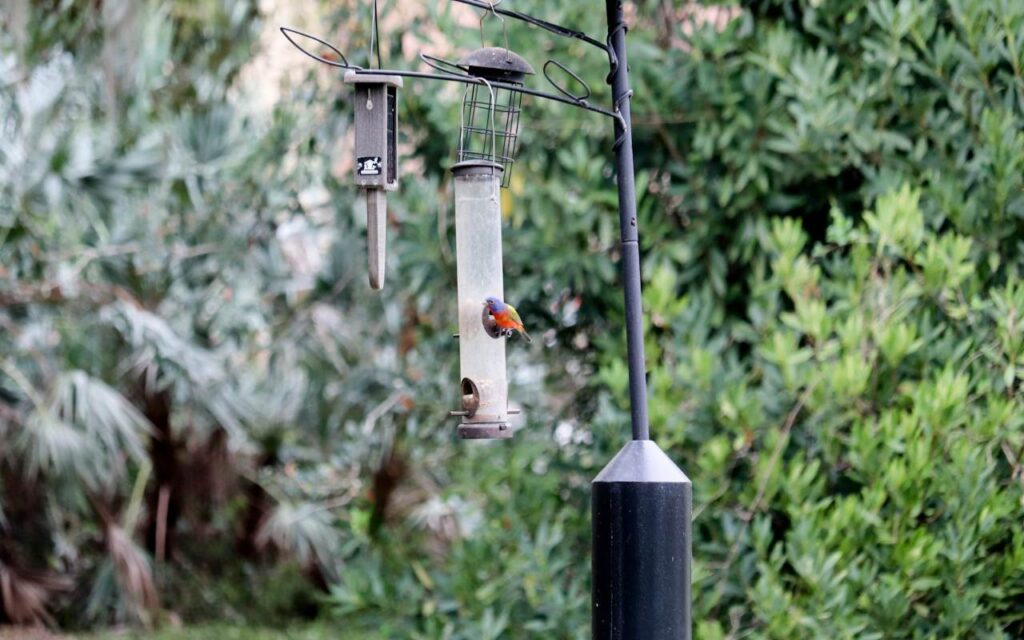
Earwigs, ants, and climbing beetles present a severe seasonal disruption for backyard bird enthusiasts who need to keep earwigs and insects off bird feeder poles during the peak summer months of July and August.
In the intense summer heat, discarded seed hulls, residual berry oils, and sweet suet drippings accumulate on mounting hardware, releasing a powerful organic scent that attracts columns of nocturnal crawling pests.
To protect your yard and save your backyard sanctuary, you must use targeted physical water barriers and tactical open-air spacing adjustments. This simple setup keeps your seed supply safe from invading colonies.
Quick Answer: How do you keep earwigs and insects off bird feeder poles?
You keep earwigs and insects off bird feeder poles by creating a mechanical barrier block using an inverted baffle lined internally with weather-resistant insect glue. Wrapping your mounting hardware in tight bands of slick, non-porous heavy-duty aluminum foil coated in food-grade silicone spray completely destroys the vertical claw traction required by climbing pests. These targeted, non-toxic physical interventions disrupt insect crawling paths cleanly without introducing dangerous chemical pesticides to your local backyard bird habitat.
Learning how to intercept these crawling pests requires moving entirely away from synthetic lawn poisons, powder insecticides, or toxic chemical sprays. Applying those items near a bird feeder is an automatic death sentence for local wildlife, as songbirds will quickly ingest the toxic chemical residues while picking fallen seeds off the ground.
Summer Pole Protection Management Metrics
- Primary Targeted Threats: European Earwigs (Forficula auricularia), Carpenter Ants, and Climbing Beetles
- Core Vulnerability Target: Physical foot-pad adhesion limits and slick vertical surface friction
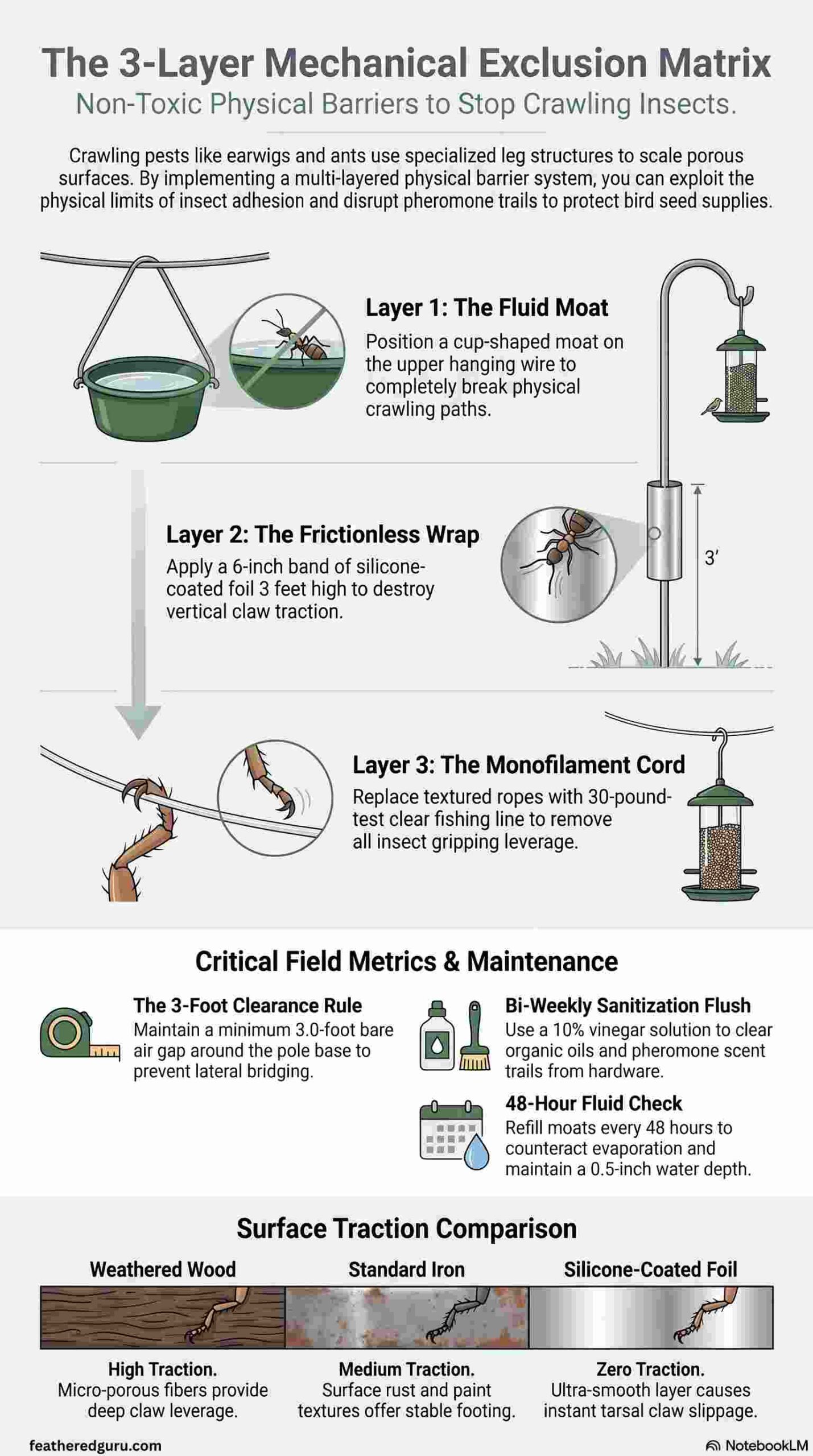
- Optimal Foil Band Width: Minimum of 6.0 inches of vertical coverage wrapped tightly around the post
- Sanitization Frequency: Bi-weekly high-pressure washing with a natural 10 percent vinegar flush
- Ground Vegetation Clearance: Minimum of 3.0 feet of completely open, bare air gap around the pole base
The Micro-Physics of Insect Pole Climbing Adhesion
Understanding why crawling pests can scale your backyard hardware so effortlessly requires a close look at the micro-physics of insect locomotion. Earwigs, ants, and beetles possess specialized leg structures called tarsi, which terminate in a pair of sharp, flexible claws combined with a micro-rough adhesive pad called an arolium.
These structures allow crawling pests to utilize micro-roughness on seemingly smooth surfaces to climb vertically. They find excellent leverage on weathered wooden 4×4 posts, rusted iron shepherd hooks, and braided mounting cords.
When a single earwig scout scales your station at night and finds an oily suet scrap or a cracked sunflower seed, it deposits a persistent chemical trail using specialized pheromone trail markers. This trail guides the rest of the colony directly out of the cool lawn grass and straight up your mounting hardware in a continuous column.
Unlike a flying songbird that cleanly lands on a perch from the open air, crawling pests require an uninterrupted solid pathway to travel. Once they crowd inside seed tubes, their bodies introduce dangerous mold spores, moisture, and bacteria into the grain supply, causing the seed to spoil.
Songbirds possess highly sensitive digestive systems and will completely refuse to visit a tray infested with crawling bugs or contaminated with insect feces.
The Frictionless Foil and Silicone Traction Block
The most cost-effective way to intercept a column of climbing pests is to create a slick, low-friction vertical zone that exploits the physical limits of insect foot-pad adhesion. You can build an incredibly effective mechanical exclusion barrier using heavy-duty kitchen aluminum foil and a high-performance food-grade silicone spray.
Wrap a sheet of heavy-duty aluminum foil tightly around your bird feeder pole exactly three feet above the ground, securing the top and bottom edges with weather-resistant outdoor tape. The foil band must cover at least 6.0 inches of vertical space on the pole to ensure insects cannot simply stretch across the barrier.
| Hardware Surface Type | Insect Traction Level | Physical Gripping Mechanics |
|---|---|---|
| Weathered Wood Posts | High Traction | Micro-porous natural wood fibers provide deep claw leverage |
| Standard Iron Hooks | Medium Traction | Surface rust patterns and standard paint textures offer stable footing |
| Silicone-Coated Foil | Zero Traction | Ultra-smooth boundary layer causes instant tarsal claw slippage |
Once the foil wrap is locked down, spray the exterior surface with a thin, even coat of food-grade silicone spray. This application fills in the microscopic imperfections on the foil surface, creating an ultra-smooth boundary layer that leaves zero surface tension or leverage for insect claws.
When earwigs or ants attempt to cross onto the silicone-coated foil band, their tarsal claws slip completely on the low-friction surface, forcing them to drop back down to the ground long before they ever reach your upper seed trays.
Inverted Baffle Barriers and Insect Glue Linings
When a severe, long-term infestation requires a more heavy-duty defense, an inverted predator baffle can be converted into an active insect trap. A standard metal or plastic cylinder baffle designed to block squirrels can be easily modified to catch thousands of nocturnal crawling pests simultaneously.
Install an inverted, cone-shaped or cylinder-style baffle onto your mounting pole at least four feet above the ground line. Before securing the hardware, apply a continuous 2.0-inch wide ring of weather-resistant, non-toxic sticky insect glue directly onto the inside under-rim of the baffle.
| Baffle Setup Parameter | Exact Field Metric | Target Wildlife Impact |
|---|---|---|
| Baffle Placement Height | Exactly 4.0 feet above ground | Prevents ground pests from leaping past the shield |
| Internal Adhesive Ring | 2.0 inches wide sticky insect glue | Stops nocturnal crawling columns instantly |
| Permitted Target Species | Cardinals, Chickadees, Goldfinches | Completely unaffected by hidden under-rim shields |
| Excluded Yard Nuisances | Earwigs, Ants, Stink Bugs, Weevils | Intercepted and trapped completely out of bird reach |
As nocturnal earwigs climb up the main metal column at night, they are forced to travel inside the hollow interior of the hanging baffle to continue upward. Once they hit the top under-rim, they walk straight into the sticky adhesive ring, which stops their advance instantly.
Because the glue ring is placed deep inside the dark underside of the metal shield, it stays completely protected from drying summer sunlight and remains 100% out of reach of your birds, ensuring no songbird feathers ever contact the sticky adhesive.
Eliminating Lateral Bridging Vulnerabilities
If you set up your bird feeder poles directly against a low garden fence, a dense bush, or under hanging tree branches, your ground-level barriers will completely fail. Earwigs are highly active nocturnal foragers that climb local trees, house siding, and garden plants daily looking for shelter.
When a leaf, twig, or vine touches your feeder frame, it creates a hidden structural bridge that allows crawling insects to skip your ground shields entirely. They will walk along the overhanging leaves and drop straight into your seed trays from above.
To eliminate these bridging paths, maintain a strict ground vegetation clearance zone around your feeding stations. Keep your mounting poles at least three to five feet away from any surrounding plants, wooden deck rails, or building walls.
Drive your smooth metal shepherd hooks deep into open, bare ground areas. This forced exposure requires insects to make a long journey across the open lawn to reach your pole base, making them highly vulnerable to natural daytime yard predators like ground beetles and robins.
Scraping and Flushing Organic Seed Oils
Climbing insects do not target your feeder poles by random chance; they follow the intense scent of decaying organic waste. As birds feed throughout the hot summer weeks, their beak movements throw out broken seed hulls, fine grain dust, and oily suet fragments that stick to the pole brackets and collect at the base of the post.
During humid July heatwaves, these trapped organic oils spoil rapidly, creating a powerful scent trail that draws hungry insect colonies straight across your yard. According to the official Audubon Society General Feeder Cleaning Manual, regular cleaning is vital to stop bird diseases and eliminate the built-up organic residues that function as visual and olfactory attractants for common yard insects.
Mix a natural, non-hazardous cleaning solution using one part white vinegar to nine parts hot water. Use a stiff wire brush to scrub away any sticky suet grease or caked seed dust hiding inside the metal brackets or along the wooden grain lines.
Flush the entire mounting pole down with a garden hose to clear away any lingering pheromone trail markers left behind by previous insect scouts. This cleaning routine keeps your feeding equipment smelling clean and fresh, reducing initial pest attraction safely without using harsh household bleach or synthetic lawn sprays.
Rebalancing Your Backyard Resource Distribution
To successfully manage an intense earwig or ant population over the summer, you must look at how resources are distributed across your entire property. If you completely block them from scaling your main bird feeder pole, hungry colonies may try to crowd under your patio doors or target your summer vegetable gardens.
You can solve this problem by setting up a designated decoy habitat at the far back edge of your property line. Place a small pile of damp, decaying logs, wet newspaper rolls, or loose corrugated cardboard sheets directly on the ground in a shady corner of your yard.
Earwigs love dark, tight, moist spaces to hide during the hot daylight hours and will naturally flock to this easy ground-level shelter. By checking and clearing out this decoy trap once a week, you can safely remove thousands of pests from your yard while keeping your main bird feeding area clean and quiet for your songbirds to enjoy.
Your Quick Checklist for a Bug-Proof Feeder Pole
Setting up these protective layers is easy once you know the exact steps and simple chores to keep them working all summer. This handy visual guide sums up the whole system so you can see exactly how to protect your bird food in just a few minutes.
Connecting Your Summer Property Strategies
Securing your bird feeder poles from climbing insects is just the first step in maintaining a healthy, high-performance backyard wildlife habitat.
Protect Your Summer Bird Baths
Once you secure your seed stations from crawling pests, you should check your backyard water features to ensure big, aggressive flocks of summer birds aren’t ruining your clean pools. To keep your backyard water stations safe and quiet for small songbirds, read our complete guide on how to keep starlings away from bird baths.
Secure Your Sugar Feeding Stations
In the peak heat of July, sweet nectar reservoirs are highly vulnerable to flying and crawling intruders. To explore more advanced ways to protect your hummingbirds from seasonal insect swarms, check out our guide on how to keep ants out of hummingbird feeders to keep your garden sanctuary running safely all season long.
Frequently Asked Questions on Managing Pole Insects
Can I use petroleum jelly on my bird feeder poles to stop earwigs?
No. You must never smear petroleum jelly, grease, or motor oils directly onto a bird feeder pole or suspension hook. In hot summer temperatures, these heavy greases melt and drip down the column, where they can easily transfer onto a songbird’s delicate feathers, ruining their natural insulation and flight control.
Do earwigs fly onto bird feeders from above?
Although European Earwigs possess fully functional wings folded beneath their protective shells, they are exceptionally clumsy fliers that rarely use flight. They travel almost exclusively by crawling along solid structural pathways, meaning ground-level blocks and branch trimming will stop them.
Will a copper pipe pole stop ants better than a steel shepherd hook?
Copper pipes develop a natural surface oxidation layer that can be slightly smoother than rusted iron, but crawling insects can still easily scale clean copper. You must still apply a slick silicone layer or install an under-rim glue trap to achieve complete protection.