
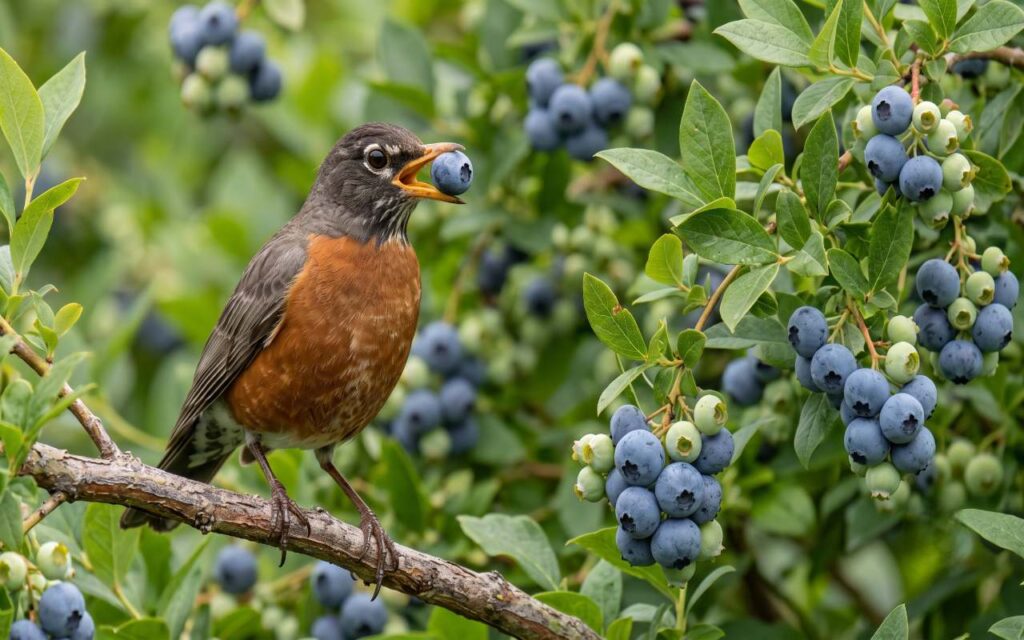
Few things are more disappointing than waiting all season for blueberries, only to have hungry flocks beat you to the harvest. If you want to know how to stop birds from eating your blueberries, the right combination of covers, deterrents, and timing can make all the difference.
Deploying independent physical boundaries ensures you block local pests from stripping your bushes before you can pick them. This guide breaks down the simple elevated netting setups and strategic shielding methods you need to protect your berry harvest this season.
Quick Answer: What is the most effective way to stop birds from eating your blueberries?
The single best method is constructing a rigid, low-profile PVC pipe hoop house directly over your rows, wrapping it tightly with 1/2-inch knitted HDPE netting, and anchoring the bottom hems flush to the soil line using landscape pins.
To build a comprehensive backyard defense, layer this structural frame by staking spinning holographic Mylar flash tape along your lawn borders and setting up a separate feeding station with a bird bath zone and a solar water fountain pump on the opposite side of your property.
Why Backyard Blueberry Bushes Face Constant Bird Attacks
Standard orchard techniques fail when applied to low-stature highbush or lowbush blueberry patches. Because these woody shrubs sit directly along the grass line, they face an intense onslaught from ground-dwelling birds rather than high-canopy flyers. Managing this specific garden layout requires counteracting several unique bush vulnerabilities:
Birds Walking Under Loose Nets: Thrushes and sparrows rarely dive onto blueberry bushes from above. Instead, they walk straight through your open lawn grass and slide directly underneath loose, unpinned netting hems at the base of the shrub.
The Blue Color Signal: The sudden visual transition from hard, hidden green pellets to large, dust-covered blue globes acts as an immediate flashing light for local bird flocks, drawing them to your garden from miles away.
Heavy Netting Weighing Down Branches: Flimsy, loose garden nets compress and crush the outer leaf layers. This allows lightweight finches to land directly on top of the sagging mesh, using their body weight to pull branches down to the dirt while they peck the fruit cleanly through the holes.
Cultivating high-yield berry bushes successfully requires stepping away from standard backyard gardening assumptions. To see how these compact, acid-loving shrubs fit into a complete multi-row layout, combine your seasonal defenses using our comprehensive Keep Birds Out of Your Backyard Berries and Fruit Trees master hub guide.
If you want to identify which specific bird groups are nesting near your garden borders and driving this intense summer feeding pressure, study our detailed Backyard Birds Checklist. This field ledger allows you to identify your local avian population before purchasing yard hardware.
Your Backyard Blueberry Variety Protection Guide
Use this specialized variety index to align your physical defense barriers with the exact blueberry types growing in your garden:
| Blueberry Growth Habit | Dominant Avian Threats | Specialized Exclusion Tool | Critical Installation Window |
|---|---|---|---|
| Dwarf Highbush (Top Hat) | Gray Catbirds, Song Sparrows | Low-profile PVC micro-hoops | Immediately following blossom drop |
| Standard Highbush (Bluecrop) | American Robins, Eastern Towhees | Rigid conduit walk-in cages | Two weeks before the initial color shift |
| Rabbit-Eye (Climax Varieties) | Cedar Waxwings, European Starlings | Taut branch-level knitted sleeves | Onset of early translucent pink blush |
The 3 Best Ways to Protect Your Blueberry Crop
1. How to Set Up PVC Hoop Nets on the Ground
How you pin your mesh relative to the soil line completely dictates whether you save your crop or harvest empty twigs.
Building PVC Ground Hoop Frames: Bending flexible plastic conduit pipes into arches directly over your low blueberry bushes forms a sturdy, rounded canopy shield. This structural setup holds the mesh netting completely suspended in the air, preventing birds from landing on the material and pecking the blue clusters through the holes.
Stapling the Mesh Flat to the Dirt: You must secure the bottom hem of your netting completely flat against the soil using heavy metal landscape pins spaced exactly 12 inches apart. Leaving any loose gaps along the grass line creates an accidental entry tunnel that traps ground-hopping robins and sparrows directly inside your berry row.
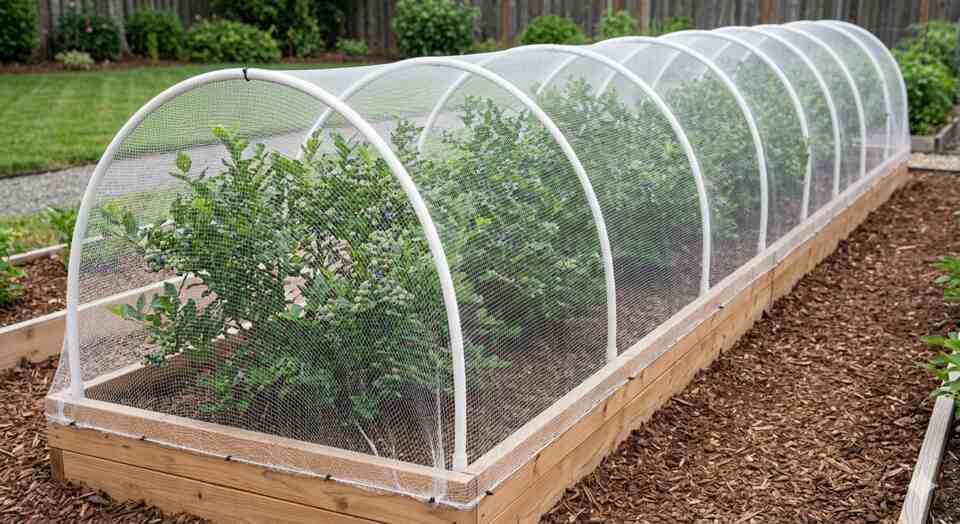
If you notice birds breaching your rows, look closely at where they enter. If they are hopping inside the stems, your ground staples are missing. If they are feeding from the outside, your net lacks a rigid hoop support framework.
2. How to Use Shiny Flash Tape to Scare Birds Away
Using reflective ribbon creates a highly visible boundary that scares fruit-eating birds away from your low-lying berry patches.
Hanging Twisted Ribbon Strips: Tie reflective silver-and-red holographic tape pieces directly to tall bamboo stakes driven into the soil at the ends of your blueberry rows. The slightest summer breeze causes these ribbons to spin and flash erratically, creating sharp bursts of light and metallic crinkling sounds that scare birds away before they can land in your bushes.
Catching the Early Morning Sun: Refractive flash tape must be placed completely clear of fence line tree shadows so it catches the very first rays of morning sunlight. This specific placement timing is critical because it matches the exact dawn hours when ground-foraging songbirds launch their heaviest daily feeding raids on your berry patch.
3. Giving Birds Alternative Food and Water Locations
Setting up separate feeding and watering areas on the opposite side of your yard naturally draws hungry pests away from your high-value blueberry bushes.
Using a Solar Water Fountain: Small songbirds frequently raid ripening summer berries simply because they are thirsty during hot dry spells. Installing a clean bird bath equipped with a moving solar fountain pump on the far side of your lawn easily satisfies their thirst, keeping them completely away from your juicy berry rows.
Setting Up Separate Feeding Stations: Placing a high-volume bird feeder filled with black oil sunflower seeds on the other side of your property satisfies common species before they ever land near your fruit garden. To track how these local birds travel between your feeding stations and the rest of your yard, check out our guide on Bird Identification by Habitat.
How Low-Stature Bush Defenses Differ from Tall Fruit Trees
Securing a ground-level berry patch requires a completely separate set of physical structural boundaries than a deep-rooted orchard canopy.
If you also cultivate taller stone fruits on your property alongside your standard bush rows, your overhead netting layout needs a completely different configuration to handle canopy-diving pests.
To properly protect your larger orchard investments from destructive high-altitude raids this summer, read our companion guide on How to Stop Birds From Eating Your Cherries to lock down your upper perimeters correctly.
Similarly, implementing a flexible conduit hoop structure over your garden rows will fail if you attempt to apply it directly to low-growing runner varieties that fruit flat against the soil line.
To prevent small ground sparrows and crawling pests from walking right beneath your branch canopy, check out our specialized consumer manual on How to Stop Birds From Eating Your Strawberries to build rigid cedar frame shields.
Common Netting Mistakes Backyard Beginners Make
Missing rapid environment shifts along the floor layer will corrupt your harvest. Beginners frequently misinterpret active bird movements inside low fruiting branches. To avoid common field errors, study our breakdown of How to Identify an American Robin to understand their hidden ground and canopy hunting patterns. Use these three original field rules to spot when your ground-level protection plans need immediate calibration:
Letting Birds Walk Under Loose Netting Gaps: Small songbirds will land several feet away from your blueberry rows in open grass, fold their wings, and walk completely flat along the lawn to slide beneath unpinned netting. This low approach bypasses overhead scare flags completely, allowing pests to feed hidden beneath the outer leaves.
The Fix: Never allow netting hems to loosely bunch on top of the grass. Always use a rigid physical perimeter or driven sod hooks to seal the mesh layer completely flush to the dirt.
Letting Fine Mesh Rest Directly on the Fruit: Flimsy, lightweight plastic netting without a supporting framework will droop over time, resting directly against the outermost blueberry clusters. Small finches will land right on top of the loose mesh web, using their body weight to pull the branches down while pecking berries cleanly through the square holes.
The Fix: Ensure your netting acts as a self-supporting wall that remains separated from all fruiting wood. Maintain a minimum 4-inch clearance envelope between your mesh and your exterior berry clusters.
Netting Your Bushes Too Late in the Season: Thick, unpruned highbush blueberry shrubs create dense interior micro-climates that match the exact nesting site preferences of small backyard birds. If you wait too long to install your barriers, parent birds will establish territory inside the bush, trapping themselves behind your nets once deployed.
The Fix: Execute thorough inner-branch visual inspections before wrapping any frames. Clear out all old winter debris early in spring to discourage local species from choosing your production rows as nesting shelters.
Case Study: How Catbirds Quietly Wipe Out Blueberries
Managing bird pressure across home fruit gardens requires analyzing specific flock traits. While common starlings arrive in loud, obvious groups, local Gray Catbirds execute food raids with silent, individual precision. They slip quietly into dense lower foliage from underneath to strip interior branches bare.
Field observations confirm that nesting catbirds completely ignore stationary visual scarecrow fixtures once fruit sugar levels spike. If your property faces heavy bird pressure, standard yard toys will fail completely. The only way to save your yield is to enforce a strict physical barrier that isolates the low fruiting branches from the surrounding grass line.
The Science and Research Behind Protecting Bush Fruits
Real-world agricultural studies show that keeping birds away from low-growing berries depends entirely on understanding how small crop patches behave:
Why Small Backyard Patches Get Attacked Harder: Field research published by the Michigan State University Extension Service reveals that small, isolated backyard berry patches suffer much worse bird damage than giant commercial farms. Because your home garden provides a highly concentrated food source, birds will use nearby fences and trees as staging zones to launch non-stop raids on your rows the second sugars begin to form.
Why Homemade Fruit Sprays Fail Quickly: Agronomic testing hosted through the UMass Extension Center reveals that alternative chemical washes, such as table sugar solutions or grape-flavored methyl anthranilate formulas, function as effective short-term taste irritants to common avian pests. However, these surface coatings break down rapidly under heavy morning dew or summer rainfall, requiring constant reapplication routines unless backed up by a structural framework net.
Why Knitted Nets Help Fruit Ripen Naturally: Microclimate research published in MDPI Plants demonstrates that the specific choice of protective layout cover changes the temperature and light exposure of highbush shrubs. While heavy plastic sheet hoods reduce sunlight and alter internal growth, lightweight polymer netting preserves vital light spectrum entry. This balanced airflow allows blue crop varieties to finish their sugar development naturally while enforcing a strict physical wall against foraging birds.
Frequently Asked Questions About Keeping Birds Off Blueberries
Will Hanging CD Discs Keep Birds Away From My Blueberries Permanently?
No. Soft-fruit eaters will avoid hanging discs for 24 to 48 hours due to the sudden flashing reflections. However, once they realize the objects are stationary and harmless, they will fly right past them. The official Audubon Birding Hub confirms that wild birds naturally adapt to static visual anomalies very quickly when a high-value food source is readily available.
What Net Mesh Size Is Best for Small Finches?
You must use a strict 1/2-inch or 3/4-inch knitted mesh size. This tiny spacing prevents small finches and sparrows from squeezing their heads through the holes, stopping dangerous neck trapping while blocking pests cleanly.
Can I Use Individual Mesh Fabric Bags on Blueberry Clusters?
Yes, this works exceptionally well on small dwarf or young bushes. Wrapping individual fruiting branches in breathable nylon organza mesh bags blocks all pest birds completely while letting sunlight and air through for perfect ripening.
Summary Checklist for a Bird-Free Blueberry Harvest
Setting up your blueberry protection in layers creates a reliable shield that handles changing bird habits easily. Your low-tunnel hoop frames, ground anchors, and reflective Mylar flash ribbons stay useful through intense summer sun, sudden morning dew, and active migrations.
Stay consistent with your setup order each season. Build your rigid low-tunnel hoop frames first, pin down your lower mesh soil-anchors second, and rotate your flash ribbons third. Encasing your rows inside a steady low-tunnel PVC framework safely isolates your entire ripening bush canopy from active summer fledgling groups.