
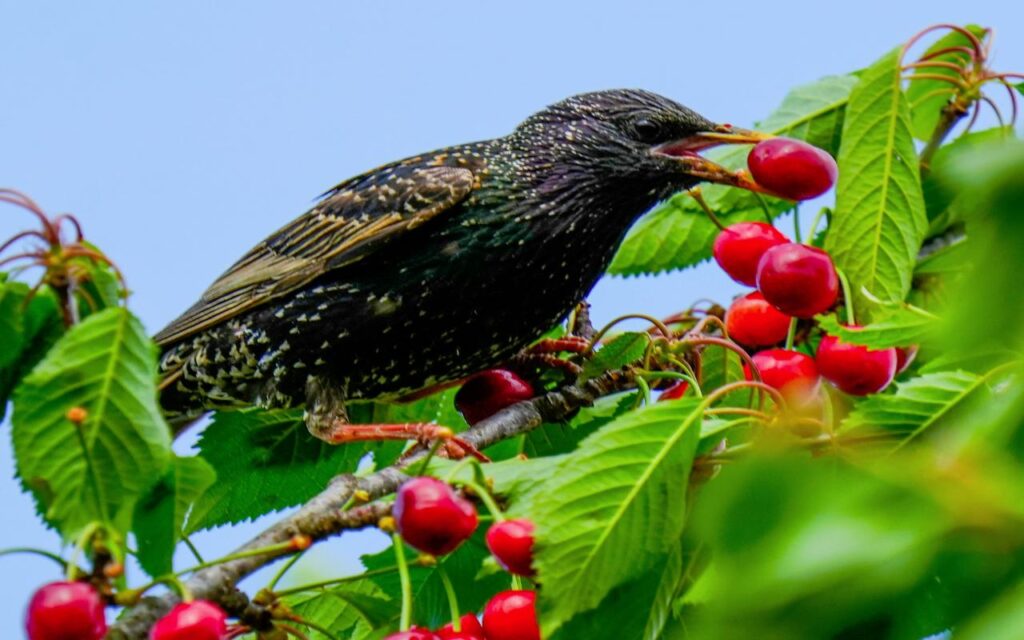
Protecting cherries from birds is all about timing. Once the fruit begins to ripen, local flocks quickly learn where an easy meal is waiting. If you want to know how to stop birds from eating your cherries, deploying the right defenses before the skin changes color makes all the difference.
This guide explains proven methods that protect your crop while keeping backyard birds safe. Utilizing independent physical boundaries ensures you block pests from stripping your branches without trapping wildlife or ruining your harvest window.
Quick Answer: What is the most effective way to stop birds from eating your cherries?
The single best method is encasing the fruiting tree canopy inside a rigid PVC pipe conduit cage framework wrapped tightly in 3/4-inch knitted High-Density Polyethylene (HDPE) netting.
To build a layered yard defense, pair this physical frame with food-grade methyl anthranilate taste-aversion sprays after rain events, and rotate dynamic holographic Mylar flash ribbons to disrupt bird flight approaches.
Why Targeted Cherry Trees Need Custom Protection Plans
Standard soft-fruit solutions fail when applied to large, tall sweet cherry canopies. Unlike low-stature blueberry rows, cherry trees present an expansive, highly visible target for birds. Protecting this specific crop requires understanding the unique vulnerabilities of stone fruits:
- Brix Color Milestones: Fast-rising sugar content hidden inside the flesh draws avian scouts long before the outer skin shows a deep red hue.
- Vertical Invasions: Large canopy pests drop down directly onto top branches, utilizing the tree’s own woody structure as secure perches while they feed.
- Decoy Immunity: Fixed scare devices lose all effectiveness in hours because tree-dwelling birds quickly map safe zones within a yard.
Your Backyard Cherry Defense Guide
Use this specialized cultivar cheat sheet to coordinate your defense layers based on the exact cherry varieties growing on your property:
| Cherry Tree Cultivar | Primary Avian Threats | Optimal Defense Tool | Precise Setup Window |
|---|---|---|---|
| Sweet Red (Bing / Stella) | Crows, Ravens, European Starlings | PVC box-frame knitted netting | Shell-hardening phase (Early June) |
| Sour / Tart (Montmorency) | Cedar Waxwings, House Finches | Branch-level mesh exclusion sleeves | Yellow background color transition |
| Sweet Yellow (Rainier) | Robins, Blue Jays, Grackles | Individual organza fruitlet cluster bags | Three weeks prior to final picking date |
Deploying the Three Cherry Protection Barriers
1. Canopy Framework Netting: Frames vs. Bare Draping
The physical shape of your netting determines whether you save your fruit or create a backyard trap.
- Conduit Netting Cages: Building a square frame from PVC pipes around the canopy keeps your mesh completely suspended away from the outermost leaves. This framework prevents starlings from landing on the netting and pecking the cherries right through the holes.
- The Bottom Trunk Gather: If you must drape mesh directly onto dwarf trees, wrap the excess lower netting tightly around the main trunk. Tie it securely with twine to block birds from hopping up into the leaves from below.
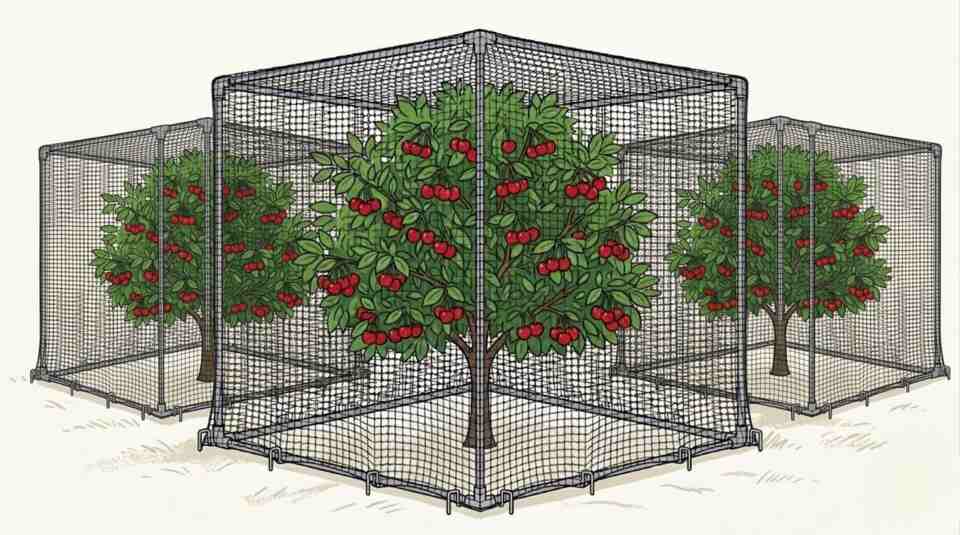
If you notice pests reaching the fruit, look closely at where they enter. If they are inside the branches, your trunk ties are loose. If they are feeding from the outside, the net is resting against the cherry clusters.
2. Sensory Taste-Aversion Sprays: Methyl Anthranilate vs. Home Remedies
Natural chemical washes offer an invisible shield when a cherry tree grows too massive for physical nets.
- Facial Receptor Rejection: Food-grade concord grape extracts create a safe, temporary sensory reaction on a bird’s tongue. Birds find the taste highly irritating, causing them to leave the branches immediately without altering the internal quality of the cherry crop.
- The Moisture Reapplication Rule: These organic taste barriers sit entirely on the exterior skin of the fruit. You must spray the tree canopy again after any heavy summer downpour to keep the bitter coating active against incoming scouts.
3. Dynamic Scare Tactics: Flight Disruption vs. Fixed Objects
To keep visual deterrents working, you must exploit a bird’s natural fear of erratic movement.
- Holographic Mylar Ribbons: Tie long, reflective flash tape strips to the tips of exposed outer branches so they can twist freely. The quick flashes of light and loud crinkling sounds disrupt flight approaches.
- The 48-Hour Rotation Routine: Motion-activated sprinklers, hawk kites, and scarecrows must be physically moved to different sides of the tree every two days. Shifting their positions stops resident bird groups from getting used to them.
If large canopy invaders are persistently breaking your yard boundaries, you can learn how to manage and identify these larger species by visiting our profile on Crow vs Raven.
What Are the Most Common Mistakes Beginners Make When Protecting Cherries?
Failing to read early-summer changes will ruin your harvest yield. Beginners frequently misinterpret active bird movements inside fruiting branches.
To avoid common field errors, study our breakdown of How to Identify an American Robin to understand their hidden ground and canopy hunting patterns. Watch out for these three specific cherry illusions to keep your trees protected:
- The Unripe Green Skin Illusion: Warm early-summer weather forces rapid sugar development inside sweet cherries long before the outer skin changes color. This brings in birds to peck at firm, green fruit weeks before you expect them.
- The Correction: Do not wait for a red blush to appear on your cherries. Cover your tree frames with knitted netting the moment the green fruitlets reach their maximum physical size.
- The Monofilament Entanglement Trap: Cheap, loose black plastic netting snags avian wings and feet very easily. A panicked bird will thrash around in the thin mesh, creating a dangerous tangle that harms wildlife and ruins your yard layout.
- The Correction: Throw away loose monofilament mesh. Upgrade to premium, 3/4-inch knitted High-Density Polyethylene (HDPE) netting that stays highly visible to birds and blocks pests cleanly.
- The High-Canopy Perched Scout Anomaly: In early June, crows and grackles will sit openly on the highest bare tips of your cherry trees. This behavior often causes growers to panic, thinking their entire harvest is under active attack.
- The Correction: Look past the high perching spots. A bird sitting exposed on a top twig is simply resting or scouting. It only becomes an active threat when it slips silently down into the inner leaf layers where the fruit clusters hide.
Case Study: The Great Cherry Orchard Robin Raid
Backyard cherry crops face a distinct threat compared to wide-open berry patches. While starlings travel in massive, noisy groups, local American Robins hunt with silent precision.
They slip quietly into the lower canopy from underneath, systematically stripping fruit from inner branches. Orchard field data confirms that robins ignore visual tape once high-sugar fruit is ready to pick. If your property experiences high bird activity, basic scare tools will fail.
To learn more about their breeding season timelines and when their nesting cycles drive intense feeding pressure, check out our guide on American Robin Nesting Behavior to secure your perimeter layout properly.
The Science Behind Cherry Tree Protection
Successful orchard defense relies on matching your protective steps to the distinct feeding habits, pressure thresholds, and biological traits of migratory fruit pests:
- Orchard Population Yield Pressures: Comprehensive field surveys published via the University of Nebraska-Lincoln Digital Commons show that sweet cherry trees experience some of the highest economic feeding pressure among all stone fruits, with localized crop losses ranging anywhere from 5% to 30%. Because cherry canopies represent such a high-priority biological target, passive yard tools cannot withstand the intense seasonal feeding demand.
- Species-Specific Alarm Vulnerabilities: Avian behavioral testing hosted by the Oregon State University Extension Service demonstrates that fruit-eating birds are highly sensitive to species-specific acoustic distress signals. Broadcasting specific alarm calls triggers immediate predator avoidance reactions across robin and starling groups, though these sound devices must be paired directly with physical netting structures to stop juveniles from entering the canopy.
- Canopy Exclusion Dynamics: Pruning and framework field evaluations compiled by the University of California IPM Program prove that supporting your mesh sheets with a self-supporting skeleton is the single most reliable way to preserve market yield. Keeping the net layers completely suspended away from the outer branches stops heavy-bodied corvids from using the mesh webs as perches to peck fruit out of the leaf cluster zones.
Shifting Protection Tactics for Low-Stature Berry Bushes
Suspending high-clearance netting frameworks around a tall stone-fruit orchard canopy requires an entirely different physical setup than shielding compact fruit rows along the ground.
If your home landscape includes low-profile berry patches alongside your tall cherry trees, using overhead drapes will fail because ground-hopping pests will simply walk underneath the loose bottom hems.
To properly lock down your ground-level fruit investments from silent, low-altitude foraging raids this summer, check out our companion guide on How to Stop Birds From Eating Your Blueberries to anchor your floor perimeters securely.
For property owners who are also cultivating trailing, ground-hugging perennial runner crops right along the mulch layer, even a low bush hoop canopy will fail because walking pests can easily slide under the bottom fabrics.
To properly protect your soil-line fruit investments from silent, low-altitude creeping raids, follow our dedicated field blueprint on How to Stop Birds From Eating Your Strawberries to lock down your wooden box screens.
Frequently Asked Questions: Stopping Birds From Eating Cherries
Will Fake Plastic Owls Keep Birds Out of My Cherry Tree?
No. Frugivorous birds will avoid a plastic decoy for 24 to 48 hours due to the unfamiliar shape. Once they see it stays completely still, they will fly right past it. Tips hosted on the Audubon Birding Hub confirm that wild birds naturally adapt to static visual anomalies very quickly when a high-value food source is readily available in the canopy.
Is There an Organic Homemade Spray to Protect Cherry Trees?
Yes. Mixing garlic juice, cayenne pepper, and water with a few drops of dish soap creates a basic sensory spray. However, it washes off very easily in rain or dew and can alter the taste of the cherry skins if applied too close to your harvest date.
Can I Use Individual Mesh Bags to Protect Cherry Clusters?
Yes, this works exceptionally well on small dwarf or young cherry trees. Wrapping individual fruiting branches in breathable nylon organza mesh bags blocks all pest birds completely while allowing sunlight and air through for perfect ripening.
Conclusion: Mastering Your Cherry Tree Routine
Setting up your cherry tree protection in layers creates a reliable shield that handles changing bird habits easily. Your netting, frames, and repellent sprays will keep your harvest safe through heavy summer sun, morning dew, and active migrations.
To see how this canopy protection strategy integrates into a comprehensive, property-wide seasonal exclusion plan, review our master directory on Keep Birds Out of Your Backyard Berries and Fruit Trees.
Stay consistent with your setup order each season. Build your rigid canopy support frames first, tie off your lower trunk mesh gathers second, and rotate your taste repellent sprays third.