
Reader Transparency: This birding guide contains paid affiliate links. If you click a link and make a purchase, I may receive a small commission at no extra cost to you. As an Amazon Associate, I earn from qualifying purchases. Your support helps keep Feathered Guru flying!
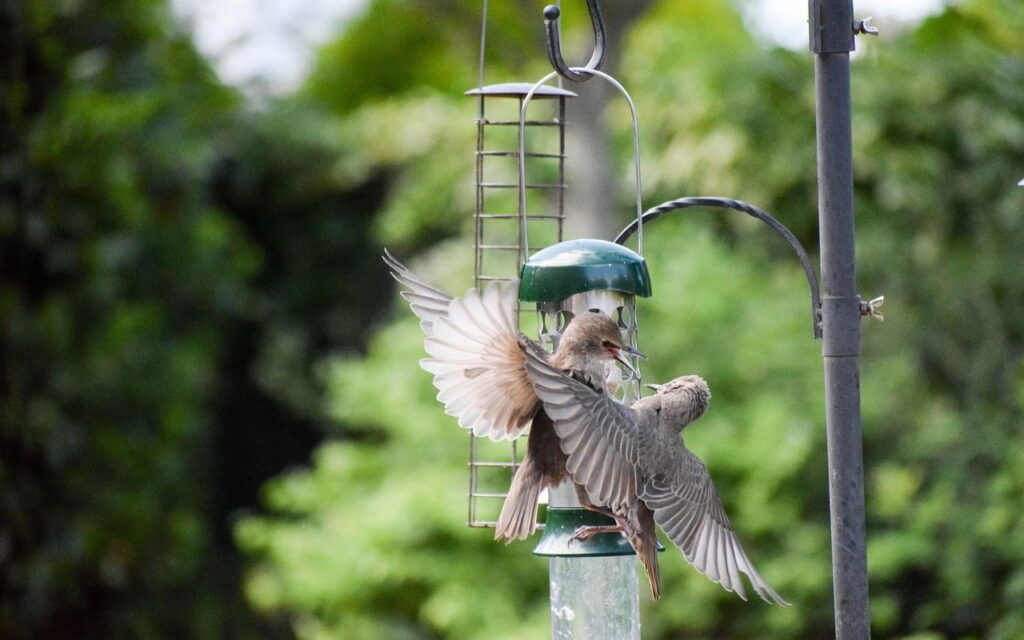
You know that frustrating feeling when a chaotic mob of giant, aggressive birds sweeps down and kicks your chickadees out of the yard? If you are wondering how keeping bully birds away from feeders can rescue your yard, realizing that these pests rely on specific physical dimensions can save you hundreds of dollars in seed bills.
The truth is that you do not have to stop feeding your favorite songbirds just to get rid of the hogs. When a massive flock of starlings or grackles takes over, they are simply exploiting open, unrestricted hardware designs that give them an unfair mechanical advantage.
How to Take Control of Your Hanger Stations
The Quick Answer: The most reliable method for keeping bully birds away from feeders is to temporarily switch your stations to straight safflower or white proso millet, which larger starlings and grackles instinctively reject. However, if your yard is being swarmed by aggressive flocks, you must apply the “3-inch geometric perch restriction formula” detailed below to physically bar them from landing without scaring off your favorite songbirds.
The Dietary Shield: Switching to Bitter Safflower Oil
The absolute fastest way to clear an aggressive mob out of your yard layout is to leverage a natural chemical defense that nuisance species absolutely despise. Common backyard bullies like starlings, grackles, and Brown-headed Cowbirds are visual foraging opportunists that look for sweet, high-carb corn blends or soft suet cakes.
However, they possess an intense physical aversion to the bitter, hard-shelled seeds of the safflower plant (Carthamus tinctorius). While your brilliant northern cardinals, tufted titmice, and chickadees will happily crush the white hulls to reach the rich inner nutmeat, larger blackbirds find the bitter taste completely unpalatable.
According to historical avian diet studies published by The National Audubon Society, high-volume commercial seed blends are frequently filled with cheap commodity grains like milo and wheat. Researchers explicitly label these cheap fillers as “real losers” that few wild birds actually enjoy eating.
Dumping out these cheap mixed grains and packing your tubes exclusively with pure safflower seeds creates an immediate dietary wall that forces larger, aggressive foraging flocks to permanently look elsewhere for food.

– Bitter taste stops starlings and squirrels
– 100% pure with zero filler chemicals
– High fat fuels cardinals and chickadees
– Universal fit works in all tube feeders
The 3-Inch Geometric Perch Restriction Formula
If changing the seed mix is not enough to clear out your yard, you must deploy the “3-inch geometric perch restriction formula” to physically block large birds from landing. This strategy relies on the strict structural differences between small clinging songbirds and heavy, long-bodied nuisance species.
- Step 1: Measure the length of the metal or plastic perches on your hanging vertical cylinders. Bulk grocery store units usually come with three-inch to four-inch rods to fit large birds.
- Step 2: Use a hacksaw or pliers to trim or push the perches inward until they extend exactly one inch out from the clear seed wall shield.
- Step 3: Small, light birds like finches, chickadees, and nuthatches can easily clamp onto a tiny one-inch peg because their center of gravity sits close to their tiny feet.
- Step 4: Giant, long-tailed grackles and starlings need at least three inches of perch space to support their heavy chest muscles.
If they try to land on a restricted one-inch peg, they will lose their balance, tilt backward, and fall right off the station. This simple mechanical layout change blocks large pests from landing while keeping your favorite songbirds feeding in total peace.
Managing these hardware parameters helps establish baseline defenses, a critical focus when teaching homeowners how to choose the right bird feeder.
Upgrading Your Stations to Heavy Duty Exclusion Cages
When persistent bullies try to hover or hang onto the side walls of your feeding columns, you must drop an architectural cage around the food source. Specialized exclusion hardware features an outer grid wall of vinyl-coated wire wrapped entirely around a standard inner seed cylinder.
By using custom adjustable settings, you can tighten or expand the grid wire gaps. Forcing the spacing down creates an absolute physical barrier against large pests while creating a VIP entrance for your favorite local songbirds. Small-bodied birds can easily hop straight through the wire gaps to eat safely inside the cage.
Large-bodied starlings and blue jays simply cannot fit their shoulders or ribcages through the narrow wire mesh, isolating them outside where they cannot reach the ports. This structural layout adjustment is a cornerstone strategy featured heavily in my specialized blueprint on how to deter starlings from bird feeders.

– 3 lb capacity clear inner seed tube
– Adjustable grid with three size settings
– Steel cage stops squirrels and starlings
– Weatherproof rust-resistant outer shell
Eliminating Flat Open Landing Platforms
The biggest architectural invitation for bully birds is a wide-open flat surface. Traditional wooden hoppers, open ground trays, and wide plastic seed catchments provide an easy landing zone for large flocks to sit side-by-side, kick seed onto the grass, and aggressively keep smaller birds away.
To stop this behavior, remove every open tray from your hanger poles. If you must use a tray to catch falling debris, choose a model that features a slick, steeply angled clear plastic dome directly above the perches.
Forcing large birds onto slick, vertical surfaces or narrow wire ports makes it impossible for them to build a territorial feeding line. Shifting their physical feeding angles completely breaks their bullying momentum, a mechanical change I cover step-by-step in my guide on how to prevent bird seed waste.
The Ground Scavenger Decoy Zone Rule
If you still want to feed large, colorful native birds like Northern Flickers or Blue Jays without letting them overrun your small songbird stations, you should set up a separate “decoy zone.” Bullies are naturally lazy and will always gather at the easiest, most accessible food source they can find in your yard.
Set up a heavy-duty open tray platform at the absolute furthest edge of your property line, at least thirty feet away from your main songbird columns. Fill this decoy station with low-cost cracked corn, raw peanuts, and whole striped sunflower seeds.
The loud, high-volume flocks will naturally swarm this accessible ground buffet, leaving your primary small-perch tube stations completely clear for your chickadees and finches to visit safely. This dual-zone approach creates a balanced, peaceful yard environment, a strategy I map out step-by-step in my guide on managing blue jays and peanuts.
Defending Smaller Species from Visual Exclusion
When massive nuisance flocks overwhelm a yard, the damage isn’t just physical seed loss; it creates a psychological exclusion zone where small songbirds feel too threatened to forage. House Sparrows and starlings will crowd perch ports and use aggressive vocalizations and wing-flicking displays to project dominance. If smaller passerines are constantly chased away, they will remove your coordinates from their daily foraging routes.
Breaking this dominance loop requires tactical target feeding. By pairing small-port tube units with species-specific counter-measures, you can maintain continuous access for native songbirds. If your yard has been completely overrun by aggressive, non-native species, you can deploy the species-focused tactics mapped out in my troubleshooting guide on how to deter house sparrows.