
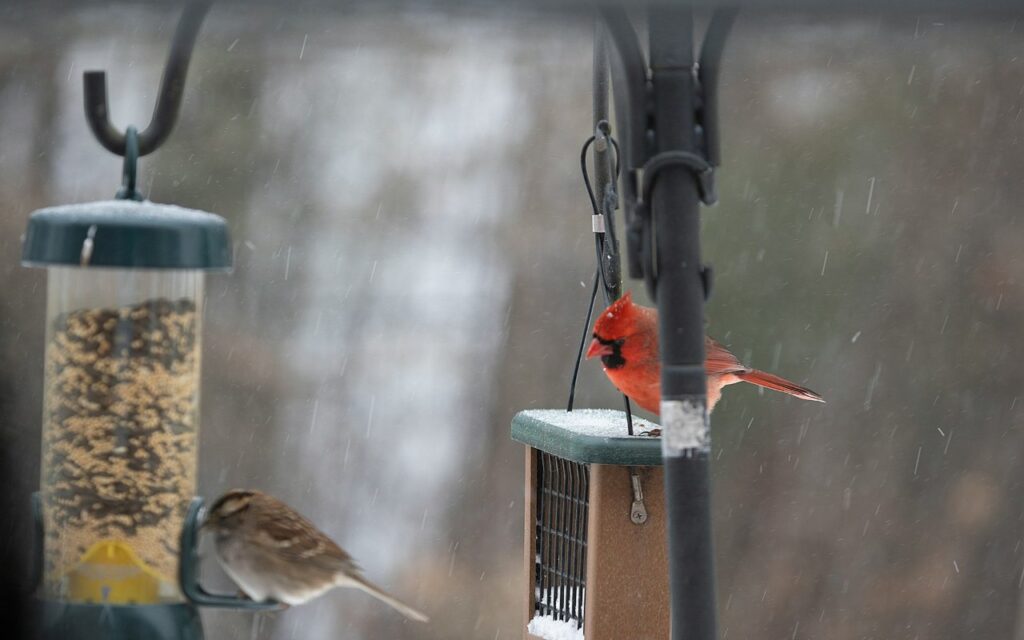
When cold fronts descend across the continent, learning how to winterize bird feeders and properly prepare your backyard stations is essential for supporting local wildlife during severe caloric deficits. Wintering songbirds must rapidly consume high-density fuel to sustain high body temperatures through freezing nights.
Failing to winterize your feeding stations can introduce deadly mold spores, freeze hydration sources, and expose vulnerable birds to opportunistic predators. Addressing hardware durability, sanitization, and feed formulation beforehand ensures your yard becomes a safe haven throughout the deepest freezes.
Polycarbonate Decontamination and Deep Cleaning Protocols
Before loading fresh seed for the season, every feeding tube, hopper, and tray requires aggressive sanitization. Summer humidity leaves behind stubborn debris and fungal residue that rapidly turns toxic when sealed under winter snowpacks.
Submerging non-porous components in a 1:9 unscented household bleach-to-water dilution soaking solution remains the gold standard for neutralizing pathogens. Avoid pouring boiling water into polycarbonate plastic reservoirs or acrylic hoppers, as sudden thermal shock permanently warps and clouds the material.
Thorough mechanical scrubbing prevents microscopic outbreaks of Aspergillus flavus, a soil-borne fungus that thrives in damp organic matter and synthesizes lethal aflatoxins. Pay special attention to suet cages where rendered fat hardens into seams, harboring dangerous bacteria if neglected.
Key cleaning steps to complete prior to your first winter refill include:
- Soak dissembled plastic and metal feeder parts in a 1:9 bleach solution for ten full minutes.
- Scrub seed ports, drainage holes, and perch crevices using a stiff bottle brush to dislodge hardened residues.
- Rinse all components with cold running water until no chlorine odor remains detectable.
- Allow every piece to air dry completely in sunlight before reassembling to eliminate internal moisture traps.
Reassembling a damp feeder is a catastrophic mistake in sub-freezing weather. Any residual moisture inside a closed tube freezes the seed into a solid block, rendering ports completely inaccessible.
Geometry and Hardware Baffles for Rodent and Weather Defense
Winter brings famished squirrels, raccoons, and rodents directly into conflict with songbirds at elevated stations. Upgrading physical barriers ensures target species retain access while keeping seed protected against drifting snow and freezing rain.
A wide baffle or overhead shelter keeps seed dry during heavy precipitation. Live forum hobbyists consistently find that standard 12-inch or 18-inch weather dome spans provide the best coverage against angular sleet and high winds.
Recommended hardware clearances and spatial configurations include:
- Suspend wide acrylic weather domes three to four inches above hopper openings to divert rain without blocking landing pathways.
- Position pole-mounted cylindrical torpedo baffles at least five feet above ground level to stop jumping rodents.
- Ensure feeder poles stand at least ten feet away from tree trunks, gutters, or fence rails to prevent aerial leaps.
- Wrap vulnerable wooden or PVC mounting posts in 0.25-inch hardware cloth to stop climbing squirrels and mice.
Distance relative to your home windows also dictates winter bird safety. Following standard Audubon window placement guidelines, position feeding stations either within three feet of glass or beyond thirty feet away. Placing feeders within three feet prevents birds from gaining enough flight speed to sustain fatal collisions if startled.
Seed Lipids, Moisture Drainage, and Nyjer Preservation
Avian thermoregulation in sub-zero temperatures requires immense caloric expenditure. Wintering passerines like the American Goldfinch naturally scale up pectoralis muscle mass and shivering metabolic capacity by 20 to 30 percent to withstand severe cold.
To fuel this intensive shivering thermogenesis, replace carbohydrate-heavy filler seeds like red milo and oats with dense lipids. High-oil seeds supply sustained calories that metabolize rapidly into life-saving body heat.
Core winter seed selections ranked by caloric and operational value include:
- Black oil sunflower seeds offer the highest lipid and protein ratio with a thin shell that small bills can readily crack.
- Safflower seeds provide dense nutrition while naturally deterring invasive European Starlings and nuisance squirrels.
- Nyjer seed delivers concentrated fats for siskins and redpolls but requires specialized micro-mesh ports to avoid spillage.
- High-grade beef suet cakes supply instant, easily digestible fats during acute sub-zero windchills.
Moisture management inside the seed reservoir is crucial when wet snow melts against cold plastic. Experienced backyard birders regularly drill supplemental 0.125-inch drainage holes through the lowest plastic base plates to let intruding meltwater drain instantly. Nyjer seed will spoil within forty-eight hours if damp, forming clumping masses that choke feeding slots.
Winter Nectar Thermodynamics and Cold-Snap Feeder Maintenance
Overwintering Anna’s Hummingbirds along the Pacific coast and lingering late-season stragglers depend on consistent liquid sucrose. A standard 4:1 water-to-sugar solution begins to freeze and slush at approximately 27 degrees Fahrenheit (-2.8 degrees Celsius).
To counteract acute freezes, backyard caretakers can mix a richer 3:1 winter solution, which lowers the freezing threshold down to approximately 22 to 25 degrees Fahrenheit. This higher concentration remains biologically safe while preserving the unique fluid mechanics of hummingbirds, who utilize elastic groove trapping along their tongue structures to extract calories.
Critical nectar maintenance protocols during winter cold snaps include:
- Switch to a 3:1 refined white sugar solution during sustained temperatures below 28 degrees Fahrenheit.
- Attach incandescent bulb feeder heaters or UL-listed outdoor heat tape underneath glass nectar reservoirs to prevent freezing.
- Rotate two identical nectar feeders between indoors and outdoors so hummingbirds always find liquid food at dawn.
- Inspect feeding ports daily for fuzzy white blooms of Candida albicans, a yeast infection that causes fatal tongue swelling.
Never introduce commercial antifreeze additives or glycerin into a bird bath or nectar solution under any circumstance. Glycerin coats and mats avian contour feathers, destroying their insulating micro-structure and leading to rapid, fatal hypothermia. Pure sucrose and clean thermal heating are the only safe methods to manage sub-freezing nectar.
Ground Debris Management and Multi-Port Excluder Cages
Winter snow blankets the ground, hiding dropped shells and seed detritus that rapidly accumulate beneath active perches. As snow thaws and refreezes, this debris bed creates an ideal incubation zone for pathogenic bacteria like Salmonella and Trichomonas.
Shoveling the impact zone directly beneath your hanging stations prevents birds from foraging in contaminated slush. Installing low-profile ground catch trays directly beneath tubular feeders traps falling debris before it mingles with snow and droppings.
Key structural configurations for ground sanitation and flock management include:
- Fasten wide seed-catching hoop trays beneath primary hoppers to intercept falling hulls and droppings.
- Install wire excluder cages with 1.5-inch mesh grids around tube feeders to allow titmice and nuthatches inside while locking out starlings.
- Shovel a four-foot perimeter around ground-level feeding stations after every major snowstorm to expose bare ground.
- Scatter coarse sand or food-grade pine wood shavings over slippery feeder approaches to provide clean, stable footing.
Raking wet hulls away from ground patches reduces the risk of respiratory illness among ground-feeding sparrows, juncos, and towhees. Combining mechanical exclusion cages with rigorous site sanitation ensures your feeders support vulnerable winter visitors cleanly and safely through the harshest season.