
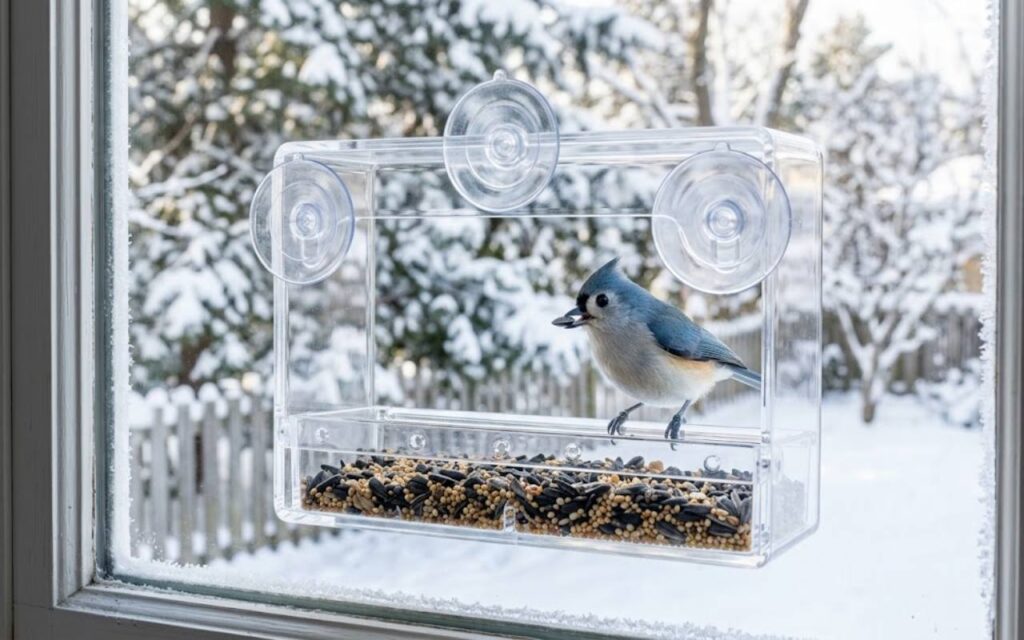
Building a custom DIY window bird feeder offers an intimate, unobstructed view of avian foraging behaviors during the harshest months of the year. Backyard birders frequently discover that commercial plastic units fail under sub-zero temperatures, dropping unexpectedly onto frozen patio pavers.
Designing your own rigid acrylic feeder allows you to fine-tune structural thickness, perching ergonomics, and water displacement channels. By understanding the thermodynamic and behavioral challenges unique to window feeding, you can assemble a safe, long-lasting observation station right against your living room pane.
Acrylic Thickness and Solvent Welding Against Thermal Shear
Forum builders routinely make the mistake of using ultra-thin 0.08-inch extruded acrylic sheets, which warp rapidly under solar exposure and brittle winter winds. Selecting 0.125-inch or 0.187-inch cast acrylic sheets provides the structural rigidity necessary to bear the weight of heavy seed loads and visiting flocking species.
Cast acrylic also machines cleanly with standard carbide-tipped woodworking blades, preventing the edge micro-fractures typical of extruded hobby plastics.
Using silicone caulk or standard superglue to bond clear panels is a primary failure mode discussed across wildlife maker forums. Acrylic requires solvent cementing with chemical bonding agents like methylene chloride, which softens and fuses the plastic mating surfaces into a continuous, singular molecular joint.
Capillary solvent applicators pull the liquid weld directly into clamped, squared joints, establishing an airtight seam that will not pop loose during deep-freeze thermal contraction cycles.
Key fabrication parameters for long-term acrylic structural integrity include:
- 0.187-inch cast acrylic panels for the load-bearing base and mounting backplate
- 0.125-inch cast acrylic for overhead weather canopies and interior seed baffles
- Weld-On capillary solvent cement to fuse joined edges chemically
- Scrap hardwood backing boards clamped during drilling to prevent blowout fractures
Never expose newly solvent-welded assemblies to birds immediately after construction. Allow the acrylic housing to cure and outgas in a well-ventilated workshop for a minimum of 48 hours. This mandatory cure window ensures all volatile solvent vapors dissipate completely before coming into contact with sensitive avian respiratory systems.
Suction Cup Physics and Sub-Zero Glass Adhesion Failures
The most frequent complaint on backyard birding boards involves loaded window feeders detaching unexpectedly on freezing mornings. Standard clear polyvinyl chloride suction cups lose their elastomer flexibility below freezing, turning rigid and breaking their atmospheric seal against cold glass. Upgrading to heavy-duty industrial silicone suction cups ensures the mounting hardware retains suppleness down to well below zero degrees.
Proper glass preparation governs holding capacity just as much as cup compound chemistry. Surface oils, ambient soot, and outdoor pollen residues create micro-voids across the glass surface that slowly bleed ambient air into the vacuum chamber. Clean the exterior window pane thoroughly with a 50-50 mix of pure isopropyl alcohol and distilled water, drying the area completely with a lint-free microfiber towel.
To prevent cold-weather shear stress and disastrous detachment events, implement these mounting standards:
- Heavy-duty silicone suction cups rated for at least ten pounds of individual vertical load
- Threaded post suction cups with knurled plastic thumb nuts to clamp the backplate rigidly
- Application of a microscopic film of pure vegetable oil to the cup rim for sealing microscopic glass fissures
Avoid using saliva or water droplets to seat suction cups during sub-freezing installations. Water freezes between the cup rim and the pane, creating ice crystals that physically lever the rubber away from the glass. Tighten knurled thumb nuts evenly across all mounting points to eliminate mechanical leverage caused by active perching birds.
Audubon Collision Geometry and Strike Mitigation Realities
Ornithological safety guidelines established by the Audubon Society state that window feeders must sit either within three feet of glass or further than thirty feet away. Placing your acrylic feeder directly mounted to the pane holds birds well inside the safe three-foot perimeter zone. At this intimate distance, birds departing from or arriving at the perches cannot accelerate to velocities high enough to cause fatal cranial trauma upon striking the glass.
However, the pane surrounding the acrylic housing still presents a strike hazard due to localized sky and canopy reflections. Birds startled off the feeder by territorial rivals or neighborhood raptors often glance off the immediate glass perimeter in blind panic. Affixing tight visual markers on the glass adjacent to the feeder breaks up misleading structural reflections without obscuring your viewing portal.
Install these localized bird-safe strike deterrents around the mounted acrylic housing:
- Vertical paracord zen curtains suspended across the outer frame spaced two inches apart
- Densely spaced ultraviolet window decals placed within two inches of the acrylic backplate perimeter
- Matte window screening positioned to absorb specular glare from surrounding tree cover
Interior window dressings also influence avian approach behavior and collision rates. Leaving vertical blinds tilted slightly open breaks up internal room depth, which prevents approaching birds from viewing a false corridor through your home. Keeping indoor pets shielded from the direct window sightline reduces startle-flush panic flights into the glass pane.
Tray Drainage Hydraulics and Aflatoxin Mold Prevention
Moisture accumulation in poorly ventilated feeder basins is a leading catalyst for severe avian disease outbreaks. When melted snow and driven rain collect in the corners of acrylic troughs, damp grain facilitates the rapid proliferation of Aspergillus flavus. This ubiquitous mold produces dangerous aflatoxins, which induce fatal organ damage and immune suppression across common winter finches and sparrows.
Drilling a handful of small downward holes in a solid acrylic floor is insufficient to handle winter storm runoff. Trapped seed husk fragments quickly plug tiny holes, creating an impermeable sludge barrier that drowns unconsumed seed. The most reliable community hack involves cutting out the floor center and fitting a removable insert made of perforated vinyl or stainless hardware mesh.
Implement these structural sanitation and drainage design measures:
- Removable sub-floor inserts cut from rigid 0.25-inch stainless steel hardware cloth
- Beveled corner relief slots to discharge driven condensation before it pools
- An overhanging acrylic weather roof extending at least two inches past the front perching edge
Sanitizing acrylic equipment requires gentle, chemical-specific cleaning protocols to preserve material longevity. Never soak acrylic feeders in boiling water, as thermal shock warps cemented joints and crazes clear panels.
Submerge the entire assembly every two weeks in a standard 1:9 bleach-to-water dilution, scrub out all organic debris, and let it air-dry completely before refilling.
Winter Lipid Feed Formulation and Micro-Debris Management
Winter bird survival hinges on efficient caloric intake, meaning your feeder offerings must deliver concentrated lipids rather than empty carbohydrate fillers. Commercial bargain blends packed with red milo, cracked corn, and oats should be strictly avoided in window trays. Birds eagerly shovel these filler grains out of the basin onto window sills and ground plants, attracting nocturnal rodents directly to your foundation.
Black oil sunflower seeds represent the gold standard for high-fat winter foraging, containing roughly 25 to 38.5 percent lipid content by weight. However, discarded outer hulls can quickly pile up, trapping moisture and making regular tray cleaning frustratingly tedious.
Offering hulled sunflower chips eliminates messy shell accumulation and saves small-bodied birds critical metabolic energy during extreme cold snaps.
Select your winter feeder offerings according to these nutritional and operational parameters:
- Hulled black oil sunflower chips for maximum energy density without hull debris
- White safflower seeds to provide high lipids while deterring invasive house sparrows and squirrels
- Whole raw peanut splits to attract high-metabolism nuthatches, chickadees, and tufted titmice
Avoid adding supplemental kitchen scraps, processed breads, or any feed mixtures containing liquid glycerin. Glycerin transfers directly from seed surfaces onto avian feathers, destroying the plumage’s interlocking barbule structure.
Matted feathers lose their insulating waterproofing capacity, quickly leading to fatal hypothermia when ambient temperatures drop overnight.