
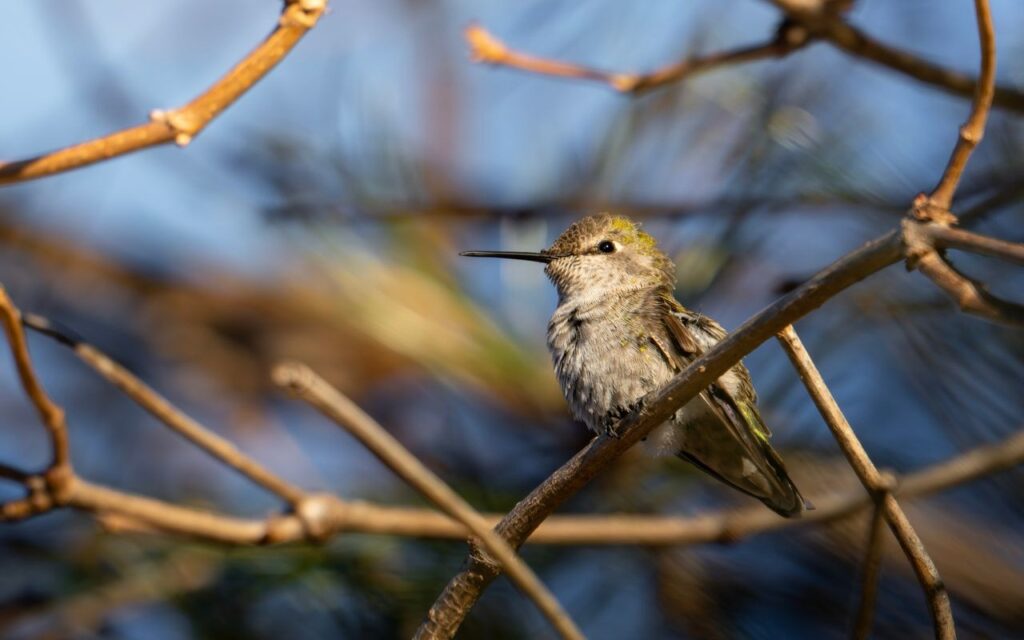
ackyard birders often wonder can hummingbirds freeze to death in fall frost conditions when sudden cold snaps hit migratory corridors. While freezing weather places immense physiological stress on these tiny creatures, healthy individuals rarely freeze solid overnight on a branch. Their immediate survival relies entirely on specialized metabolic adaptations and accessible food at dawn.
Understanding these extreme biological thresholds helps caretakers provide practical backyard assistance without disrupting natural migration cues. This strategic knowledge prevents unnecessary interference while keeping vulnerable lingering birds perfectly secure. Making a few basic seasonal adjustments ensures local travelers survive the frost safely.
Quick-Glance Field Summary
Hummingbirds survive early fall frosts by entering a deep, energy-saving metabolic state called torpor, but they can succumb to hypothermia if their evening caloric reserves run dry or if their morning nectar remains frozen solid. Caretakers must prioritize maintaining liquid feeding stations and preserving roosting cover rather than attempting to capture seemingly lethargic birds.
- Nectar Freezing Threshold (Standard 4:1 Mix): 27°F (-2.8°C)
- Nectar Freezing Threshold (High-Density 3:1 Mix): 22°F to 25°F (-5.5°C to -3.9°C)
- Safe Supplemental Heat Source: 7-watt incandescent C7 bulb or plumber pipe-heating cable secured to feeder base
- Lethal Additive Hazard: 0% glycerin or artificial oils (causes feather matting and rapid fatal hypothermia)
- Feeder Distance Safety Window: Within 3 feet of exterior windows, or greater than 30 feet away
Nocturnal Torpor Physiology and Cold-Snap Metabolic Shutdown
When an early arctic blast drops ambient temperatures below freezing, hummingbirds trigger a controlled hypothermic state known as torpor. During torpor, an individual bird lowers its core body temperature from its standard daytime baseline of approximately 104°F down to as low as 48°F.
This drastic reduction slashes heart rates from several hundred beats per minute down to around 50 beats per minute, conserving up to 95 percent of the bird’s metabolic energy overnight.
Discussions on forums like r/backyardbirds frequently feature anxious posts from caretakers who find a hummingbird hanging upside down by its feet, completely unresponsive on a branch or feeder perch.
Community members often assume the bird froze to death overnight, but this limp posture is a hallmark of deep torpor. The bird’s digital flexor tendons lock its claws around the perch automatically, allowing it to hang suspended without expending muscular energy until dawn warmth triggers internal rewarming.
The dangerous failure point occurs when a bird enters torpor with depleted fat reserves. If an early frost strikes before an immature or exhausted migrant has built sufficient fuel, its core temperature can drop below its physiological revival threshold.
When metabolic reserves hit zero before ambient temperatures rise, the bird slips from controlled torpor into irreversible hypothermic death.
Nectar Thermodynamics and Feeder Fluid Freezing Thresholds
A common community complaint across Pacific Northwest backyard bird groups centers on feeder slush rendering liquid inaccessible right when birds need it most. Standard four-to-one nectar, made of four parts water to one part pure white sucrose, begins forming ice crystals at roughly 27°F.
When slush forms inside the reservoir, hummingbird tongue mechanics fail completely. Hummingbirds do not suck nectar like a straw; instead, their split tongues utilize elastic groove trapping to passively draw fluid into micro-lamellae.
Slush or solid ice crystals block these micro-channels, preventing fluid capture and scraping sensitive keratin sheaths. If a bird expends critical dawn calories attempting to lap frozen slush, it rapidly burns the last of its liver glycogen without taking in fresh sucrose.
To buy extra thermal tolerance during unseasonable frosts, ornithologists recommend temporarily adjusting nectar density to a three-to-one ratio. This richer solution depresses the freezing point down to between 22°F and 25°F while delivering concentrated carbohydrates to cold-stressed birds.
The following benchmarks detail fluid behavior across autumn temperature drops:
- Pure water freezes solid at 32°F (0°C), locking out hydration and immediate fuel.
- Standard four-to-one sucrose mix begins slushing at 27°F (-2.8°C), impeding tongue groove filling.
- Dense three-to-one sucrose mix stays liquid down to approximately 22°F (-5.5°C), providing critical calories during dawn thaws.
After temperatures normalize above freezing, caretakers should return to the standard four-to-one ratio to ensure optimal hydration and avoid kidney strain.
Safe Feeder Thermal Regulation Versus Dangerous Household Hacks
Desperate to keep feeders liquid during sudden freezes, hobbyists sometimes turn to unverified online shortcuts that prove disastrous for avian health. Forum moderators frequently intervene when well-meaning users suggest adding small amounts of glycerin to keep nectar liquid at sub-zero temperatures.
Glycerin is toxic if ingested in quantity, and if it splashes onto plumage, it destroys feather barbule cohesion, causing immediate hypothermia in damp fall weather. Safe thermal regulation relies entirely on external, dry heat sources.
A standard DIY hack popularized across regional birding groups involves securing a vintage 7-watt incandescent C7 holiday light bulb beneath the feeder basin using heat-resistant tape or zip ties. The radiant heat from the small incandescent bulb keeps the nectar chamber liquid down into the mid-teens without melting plastic components.
Commercial feeder heaters, such as the widely praised Hummers Heated Delight or clamp-on thermal pads, offer reliable plug-and-play freeze protection. If electrical cords are impractical, experienced caretakers practice a two-feeder dawn rotation.
- Store a secondary feeder inside your home overnight at standard room temperature.
- Swap the indoor feeder outside 15 minutes before civil dawn, bringing the frozen unit inside to thaw.
- Never use hand warmers with exposed adhesive, which can attach to breast feathers and strip plumage.
This physical swap ensures that returning migrants receive warm, easily metabolized nectar at the exact moment their torpor cycle breaks.
Pathogen Proliferation and Hygiene Protocols in Cool Weather
While autumn frosts slow bacterial growth, cold damp weather introduces severe fungal vectors that are easily overlooked. Candida albicans, a yeast pathogen responsible for avian candidiasis, survives chilly conditions and flourishes around damp feeding ports.
When infected, a hummingbird’s tongue becomes swollen and hard, preventing it from retracting into the beak and leading to slow starvation. Caretakers frequently make the mistake of using boiling water to sanitize plastic feeders, only to warp delicate polycarbonate threads and break vacuum seals.
Warped threads cause slow leaks, which drip sticky sugar water onto birds’ feet and flank feathers during cold feeding attempts. Contaminated feathers rapidly lose their interlocking structure, stripping away vital insulation during freezing nights.
To sterilize gear without compromising hardware geometry, follow a rigorous cold-water chemical soak rather than heat sterilization:
- Rinse all components with clean tap water until zero chlorine or vinegar odor remains before refilling.
- Dismantle the entire feeder and soak all parts in a 1:9 bleach-to-water dilution for 15 minutes. Alternatively, to avoid potential long-term plastic degradation from bleach, a 1:4 warm white vinegar solution may be used as a safe, material-friendly alternative.
- Scrub feeder flower ports thoroughly using dedicated nylon micro-brushes to strip invisible biofilm.
Roosting Microclimates and Fall Migration Fuel Management
Hummingbirds do not shelter in enclosed wooden nest boxes; their instinctive morphology requires open-air perches within dense natural shelter. During severe frosts, birds seek out microclimates within dense evergreens, junipers, or tangled rhododendrons that block biting wind and reduce radiative heat loss toward the open night sky.
Preserving dense native brush in your yard provides vastly superior freeze protection compared to artificial roost boxes. Urban yards present additional collision hazards when birds are sluggish from cold morning conditions.
Exhausted hummingbirds flying toward feeders at dawn are prone to window strikes because low light compromises their visual processing speed. According to bird conservation guidelines from the Audubon Society, bird feeders must sit within 3 feet of your home’s exterior glass or further than 30 feet away.
Feeder placement closer than 3 feet prevents birds from building enough aerodynamic momentum to sustain fatal impacts if startled from the perch.
- Maintain dense evergreen windbreaks within 15 to 20 feet of feeding zones to reduce transit exposure.
- Mount exterior feeders directly to glass panes using industrial suction brackets to eliminate strike momentum.
- Avoid hanging plastic ribbons or scare tape near feeding areas, as sudden flutter movements trigger costly panic flights.
By pairing safe physical placement with reliable dawn nectar, you give autumn hummingbirds the exact energetic buffer required to survive unseasonal freezes and continue their seasonal journey.