
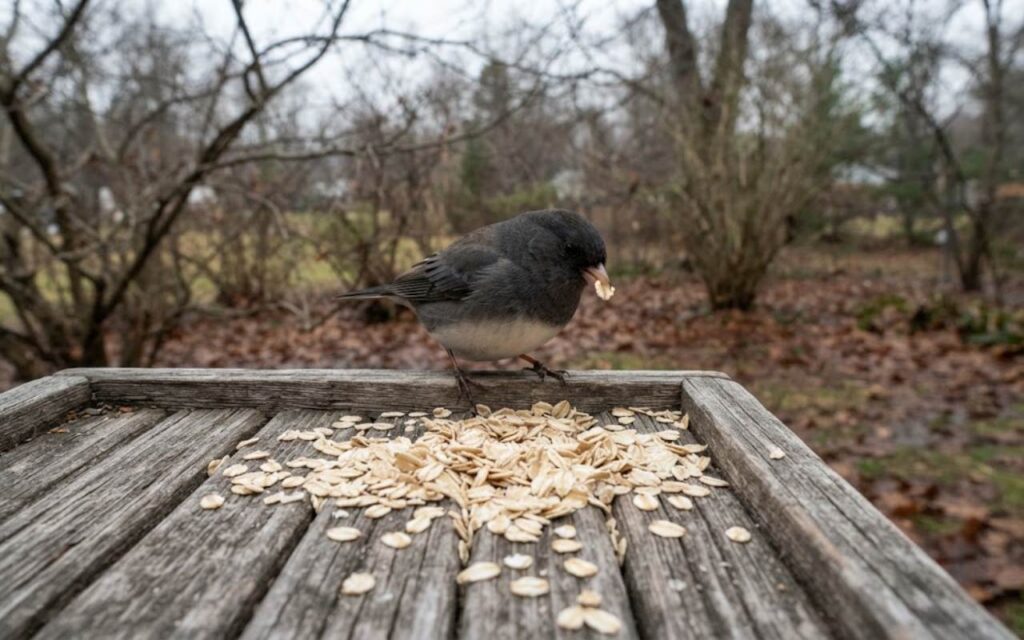
Kitchen pantries are often packed with plain rolled oats or instant oatmeal packets, making them an incredibly convenient option for a quick backyard bird snack. However, if you are wondering can wild birds eat raw oats and oatmeal, avian physiological mechanics and gizzard biology reveal specific structural rules you must follow before scattering these grains across your lawn.
While birds can easily exploit raw oats as an elite, cold-weather energy resource, commercial flavorings and poor feeder deployment present serious metabolic risks. Beginners on birding platforms often worry that dry grains will dangerously swell and rupture an avian crop, a widespread internet myth that completely mischaracterizes how a songbird’s stomach processes starchy carbohydrates.
TL;DR / Quick Verdict: Are Oats and Oatmeal Safe?
- The Crop Rupture Myth (Debunked): Raw oats do not explode or rupture a bird’s stomach; natural gastric fluids and internal grit stored inside the gizzard break them down efficiently.
- The Sugar Trap (Flavored Packets): Commercial instant oatmeal packets are saturated with refined sugars and sodium that songbird kidneys cannot physically excrete, creating an immediate metabolic hazard.
- The Fungal Hazard (Damp Caking): Leaving raw oats inside closed tube feeders during wet weather turns the starch into a solid, fermenting mass that breeds lethal fungal colonies.
Interactive Tool Integration
Unsure if other raw grains, cereals, or processed breakfast foods in your pantry harbor hidden sodium spikes or dangerous chemical preservatives? Do not gamble with your local wildlife populations. Run your specific leftovers through our fully loaded, veterinary-backed 100-Food Avian Toxicity & Nutritional Diagnostic Index for an instant, color-coded safety tier rating and pathological analysis.
| Oat Preparation Type | Moisture & Consistency Matrix | Avian Foraging Benefit | Primary Avian Survival Risk |
|---|---|---|---|
| Uncooked Rolled / Steel-Cut | Completely dry, loose grain flakes; slides cleanly without binding. | Supplies stable, slow-release carbohydrate fuel for ground foragers. | Extremely low; easily cracks and breaks down inside the avian gizzard. |
| Cooked Breakfast Oatmeal | Thick, gelatinous, hyper-sticky glutenous starch paste. | None; forms an unmanageable adhesive mass. | Mats breast feathers, glues mandibles shut, and harbors toxic surface molds. |
Gizzard Biology: How Birds Safely Process Raw Starches
The enduring internet panic that dry, uncooked oats will absorb moisture, expand, and expand to the point of exploding a bird’s stomach is entirely false. Unlike mammals, a bird’s digestive tract is built around a two-part stomach layout optimized for grinding raw agricultural crops: the glandular stomach (proventriculus) and the muscular stomach (gizzard).
When native sparrows, juncos, or doves swallow raw rolled oats, the dry flakes move briefly into the crop before sliding into the gizzard.
- The Mechanical Process: The gizzard contains thick muscular walls and tiny, deliberately swallowed stones or grit that act like an internal stone mill.
- The Chemical Breakdown: Strong gastric acids instantly break down the complex starches, liquefying the hydrated grain before it can cause any form of structural crop impaction.
Because of this specific grinding mechanic, plain raw oats serve as an exceptional source of bioavailable starches. They provide quick-access carbohydrates that ground-foraging birds desperately need to preserve their core body temperatures during harsh winter freezes or intense spring migrations.
The Instant Packet Danger: Refined Sugar and Sodium Overload
While plain rolled oats or steel-cut groats are completely safe, commercial flavored instant oatmeal packets are highly toxic to wild songbirds. These convenient grocery items are heavily processed and formulated exclusively for human biology.
Refined Cane Sugars
Flavored packets (such as apple cinnamon or maple brown sugar) are packed with concentrated refined sugars and synthetic sweetening syrups. A songbird’s pancreas is not built to handle extreme spikes in processed glucose, which can lead to metabolic shock, behavioral disorientation, and long-term organ damage.
Hidden Sodium Loads
To preserve the shelf life of instant oatmeal, manufacturers add high concentrations of sodium. Terrestrial songbirds do not possess the specialized salt glands required to filter excess sodium out of their bloodstreams. Feeding them these salty instant mixes forces rapid tissue dehydration and puts extreme filtration stress on their minuscule kidney structures.
How to Feed Oats to Wild Birds Safely
You can safely supplement your local bird population with oatmeal, provided you stick strictly to raw, plain varieties and deploy them on the correct style of feeding platform to prevent mold growth and physical injury.
Safe Bird-Approved Alternatives
- Plain Raw Rolled Oats & Pinhead Oatmeal: The gold standard for oatmeal supplementation. Offer them entirely raw and unflavored on open, well-drained platform trays or ground feeding stations. Pinhead oatmeal (coarsely steel-cut raw groats) is especially prized by fine-billed ground foragers like Juncos, Towhees, Robins, and Mourning Doves.
- Strictly Avoid Cooked Porridge: Never feed cooked oatmeal to wild birds. As cooked oats dry out, they turn into a highly sticky, cement-like paste. This paste can easily glue a bird’s beak shut, block its nostrils, or cake onto its plumage, permanently destroying the critical insulating and waterproofing properties of its feathers.
- Avoid Deep Tube Feeders: Never pour loose raw oats into deep, closed tube reservoirs. Ambient humidity and rain will cause the starch to cake together into a dense, solid block, cutting off airflow and turning the feeder into a dangerous breeding ground for lethal Aspergillus mold colonies.
- Plain Air-Popped Popcorn: If you want to offer another fun, grain-based kitchen novelty, pop whole corn kernels completely plain using heat alone. This provides a safe, high-fiber carbohydrate that larger birds like jays love to dismantle.