
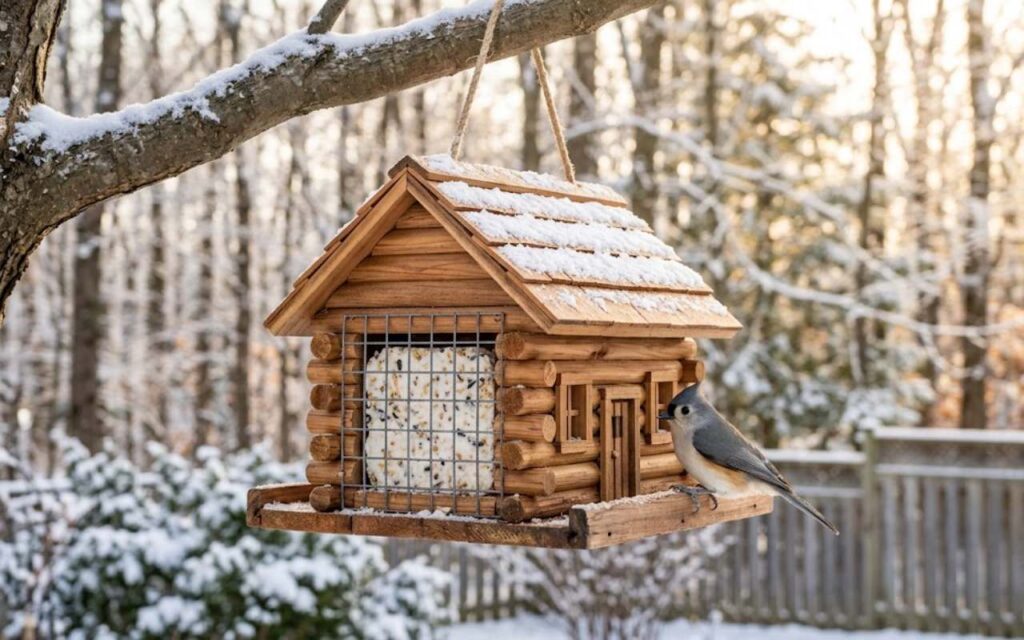
Crafting a custom DIY log cabin suet feeder transforms an ordinary backyard yard project into a dedicated foraging station for insect-gleaning birds. Natural timber feeders appeal directly to the evolutionary anatomy of woodpeckers, nuthatches, and creepers, allowing them to brace their zygodactyl feet or stiff rectrices against genuine tree bark.
Unlike industrial plastic-coated wire cages that leave high-energy rendered fat exposed to wind and rain, a log cavity design protects dense calorie reserves from weather degradation. As winter arrives and natural insect larva numbers plummet, providing shelf-stable animal lipids inside natural wood helps resident avian species survive sub-zero nights.
Timber Selection and Natural Bark Retention for Native Clinging Species
Selecting the proper raw wood species dictates the long-term durability of the feeder and determines which wild birds will successfully land on it. Softwoods with thick, corrugated bark provide the exact structural purchase required by downy woodpeckers, hairy woodpeckers, white-breasted nuthatches, and brown creepers.
- Untreated deadfall oak limbs retain tight bark furrows that survive multi-season freezing and thawing cycles.
- Eastern white pine offers soft heartwood that drills effortlessly, though sap pockets must be fully dried before deployment.
- White cedar contains natural rot-resistant thujaplicins that prevent fungal decay without toxic synthetic sealants.
- Birch logs feature papery outer bark that strips quickly under precipitation, making them a poor choice for high-moisture climates.
Avoid pressure-treated dimensional lumber or chemical-treated utility poles, as arsenic, copper, and chromium formulations leach directly into moist suet blends. Rough-sawn logs harvested from backyard blowdowns or seasoned firewood piles deliver the safest and most natural foraging texture.
Ensure the bark remains firmly attached along the trunk circumference during processing. Bark detachment eliminates natural footholds and forces smaller species to expend unnecessary energy balancing while they forage.
Drill-and-Fill Bore Geometry and Cavity Spacing Metrics
The physical geometry of the drilled boreholes controls suet capacity and determines whether competing invasive birds can exploit the feeder. Drilling holes with a Forstner bit or spade bit creates flat-bottomed reservoirs that keep the suet plug securely seated against gravity and wind shear.
- Bore diameter: 1.0 inch to 1.5 inches to match the bill length and tongue reach of small-to-medium picids.
- Bore depth: 1.0 inch to 1.25 inches into the log core to prevent suet from spilling outward when softened by sunlight.
- Cavity spacing: 3.0 inches to 4.0 inches of vertical separation between holes to preserve log structural integrity.
- Entry angle: 10 degrees upward toward the center axis to ensure rainwater sheds outward rather than pooling deep inside.
Do not install dowel perches beneath the drilled holes. Woodpeckers and nuthatches naturally cling to bark surfaces using sharp talons, while perches merely invite non-clinging competitors to monopolize the calorie source.
Leaving the lower six to eight inches of the log free from holes provides an essential stabilization zone. Larger birds like pileated and red-bellied woodpeckers require this open bark surface to prop their tail feathers for balance while feeding.
High-Calorie Rendered Tallow Formulation and Melting Point Management
Commercial suet cakes often rely heavily on cheap filler grains such as cracked corn and millet, which clinging insectivores routinely discard onto the soil below. Creating a customized, pure beef kidney suet core provides dense saturated fats that support shivering thermogenesis during extreme cold snaps.
- Raw beef kidney tallow rendered twice through cheesecloth to produce pure stearic acid triglycerides with high melting thresholds.
- Unsalted natural peanut butter or sunflower seed butter to introduce rich plant proteins and monounsaturated fatty acids.
- Pure black oil sunflower meats crushed into small meal to offer immediate caloric density without shells.
- Dried mealworms or black soldier fly larvae integrated directly into the warm mixture to mimic natural winter wood-boring prey.
Pure rendered beef tallow has a high melting point between 113 and 122 degrees Fahrenheit, maintaining structural solidness through mild spring temperatures better than raw beef fat or pork lard. Never incorporate liquid vegetable oils or glycerin into wild bird suet, as non-drying lipids coat avian feathers and destroy their waterproofing and insulating properties.
Pour the rendered lipid mixture directly into the drilled log holes using an ordinary batter syringe or let the fat cool until pliable enough to pack by hand. Refrigerating the packed log for two hours before outdoor hanging sets the lipids into firm, resilient plugs that resist high winds.
Starling Deterrence and Predator Baffle Hardware Integration
Unprotected suet feeders attract aggressive feeding flocks of European starlings and common grackles, which can strip an entire feeder clean within hours. Ground squirrels, eastern gray squirrels, and raccoons will also target the calorie-dense log if mechanical barriers are omitted from the suspension system.
- Heavy-duty zinc-plated screw eyes rated for at least fifty pounds embedded two inches deep into the top log grain.
- Stainless steel aircraft cable with swaged loops to prevent mammalian pests from chewing through standard hanging twine.
- Minimum 18-inch torpedo baffle installed below pole-mounted systems or suspended over tree limb wires.
- Inverted hanging configuration using bottom-facing bores to exploit the upside-down clinging agility of chickadees and nuthatches.
Hanging the log vertically from a branch outrigger rather than mounting it flush against a tree trunk eliminates highway access for squirrels and mice. Maintain a horizontal clearance of at least ten feet from surrounding launch points to neutralize squirrel jumping trajectories.
If starlings continue to mob the bores, drill your suet holes strictly on the downward-sloping underside of a horizontally suspended log. Starlings lack the foot dexterity to hang inverted for prolonged feeding periods, leaving the fat deposits exclusively to agile native species.
Sanitation Protocols and Fungal Spoilage Mitigation in Porous Substrates
Because natural timber is biologically porous, damp environmental moisture and old fat remnants create ideal conditions for harmful fungal pathogens. Stagnant moisture inside organic wood pockets can harbor Aspergillus flavus, a mold species capable of producing lethal aflatoxins that poison songbirds.
- Inspect the bore cavities weekly for signs of black film, blue-green mold spores, or rancid, sour fat odors.
- Scrape old, uneaten lipid residues completely clear using a narrow putty knife or stiff brass wire bore brush.
- Soak the empty wooden log every two months in a standard 1:9 bleach-to-water dilution to eliminate bacterial biofilms.
- Air-dry the sanitized log in direct sunlight for twenty-four hours before repacking with fresh, clean tallow.
Avoid cleaning natural wood feeders with boiling water, as extreme thermal shock can cause unseasoned green wood to split along radial growth rings. Rinsing thoroughly with clean water following chemical sanitization guarantees that no residual chlorine fumes linger to irritate sensitive avian respiratory tracts.
During warm, rainy intervals, pack only as much suet as your resident backyard birds can consume within three to four days. Careful sanitation alongside targeted bore placement ensures that your handmade wooden feeder remains a safe, dependable nutrition depot through the toughest winter months.