
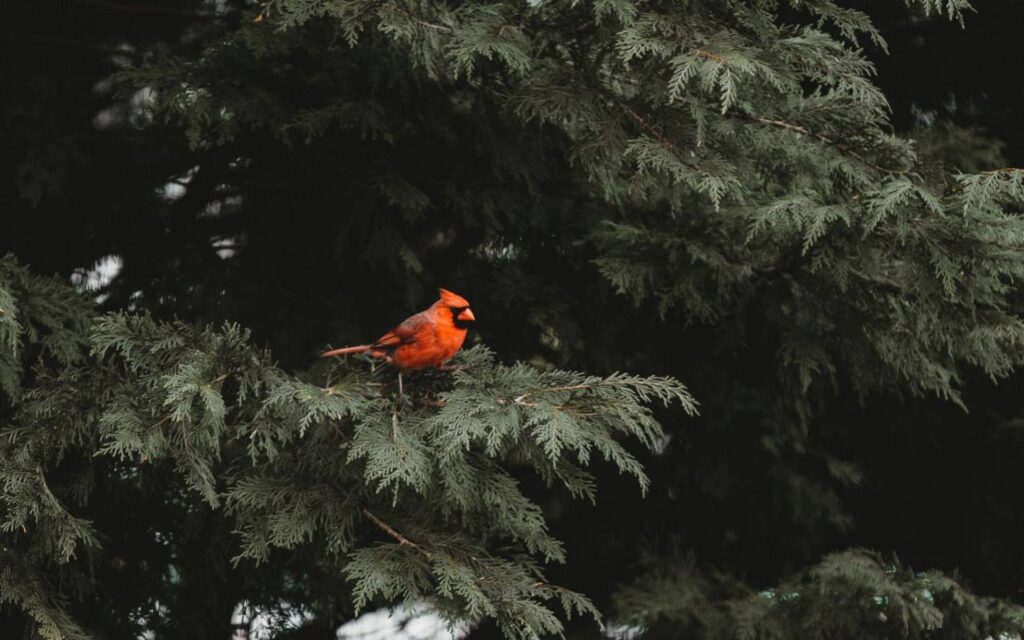
Selecting the right native evergreen trees for birds that provide the best winter shelter requires looking past mere landscape aesthetics and evaluating structural thermal geometry. During severe sub-zero cold snaps, small songbirds lose core body heat at an alarming rate if they are exposed to wind shear. High-density native conifers and broadleaf evergreens drastically reduce convective heat loss, creating microclimates that birds rely on to survive until dawn.
Backyard wildlife watchers often observe that birds completely abandon exposed feeders during freezing storms unless dense evergreen cover sits within a brief flight path. Incorporating trees with proven needle retention and structural baffles turns an exposed property into a functioning sanctuary. The seven native species examined below offer superior windbreak performance, snow shedding capabilities, and roosting density.
Thermal Windbreak Architecture and Core Roost Temperatures
Conifers with wide profiles and tiered branch whorls disrupt high-velocity winter winds and establish a calm interior microclimate. When ambient winds reach high velocities, the core of a dense conifer can reduce air movement to a near standstill. Songbirds take advantage of this barrier by perching directly against the tree trunk, where bark radiates residual heat collected during the day.
The Eastern White Pine (Pinus strobus) serves as a premier example of this thermal canopy structure. Its long, flexible needles bundle in groups of five, softening wind impact without shearing off under gust pressure. Mourning doves and northern cardinals routinely select the inner crotches of mature white pines for sheltered winter roosting, while solitary screech owls utilize the deep interior branches for thermal cover.
White Spruce (Picea glauca) provides an even denser windbreak due to its stiff, four-sided needles arranged radially around every twig. This rigid architecture prevents deep wind penetration, keeping core roost temperatures significantly warmer than external conditions. Backyard birders frequently report finding winter flocks of black-capped chickadees wedged tightly along spruce trunks during blizzards.
- Horizontal Platforms: Eastern White Pine branch tiers provide wide horizontal platforms for winter roosts.
- Wind Speed Reduction: White Spruce needle density drastically dampens interior wind speeds.
- Micro-Foraging Sites: Natural bark crevices on mature trunks offer foraging sites for nuthatches and brown creepers.
These architectural elements prevent the dangerous wind chill effects that deplete vital avian lipid stores during extended storms.
Dense Conifer Needles and Snow-Load Canopy Protection
Heavy snowfall poses a serious threat to roosting birds by collapsing flimsy perches and burying ground cover. Evergreen species with downward-sweeping, flexible branches adapt to heavy snow by creating sheltered ground skirts. As upper limbs bend under the weight, they form an insulated barrier that locks out wind and keeps the ground below largely clear.
The Douglas-Fir (Pseudotsuga menziesii) excels at supporting snow loads while preserving sheltered spaces beneath its canopy. The flat, spirally arranged needles create a thick, umbrella-like ceiling that intercepts sleet and accumulating snow. Dark-eyed juncos, varied thrushes, and winter wrens readily forage across the bare leaf litter maintained beneath mature Douglas-fir branches.
Western Hemlock (Tsuga heterophylla) complements this protective strategy in northwestern climates through its feathery, flattened sprays of short needles. The pendulous leader and drooping branches shed excessive pack before limb failure can occur. Kinglets and pine siskins regularly roost within the compact foliage layers, completely sheltered from driving sleet.
- Bough Mechanics: Flexible bough mechanics prevent structural limb failure under heavy, wet snowfall.
- Ground Pockets: Dry ground pockets beneath low-sweeping branches allow for ground feeding during blizzards.
- Ice Defense: Layered needles shed freezing rain and prevent ice from glazing over internal roosting perches.
Without these natural overhead snow barriers, ground-foraging birds must expend excessive energy digging through crusted snowdrifts to find fallen seeds.
Broadleaf Evergreen Geometry and Natural Predator Barriers
Winter shelter requires more than thermal protection; it must also serve as a defensive fortress against raptors. Sharp-shinned hawks and Cooper’s hawks target backyard bird flocks when deciduous trees drop their leaves. Broadleaf evergreens provide visual occlusion and physical barriers that discourage aerial predators from mounting high-speed ambush attacks.
The American Holly (Ilex opaca) is an unmatched native broadleaf shelter option across eastern and southern regions. Its thick, leathery leaves feature sharp, spiny margins that form an impenetrable thicket for larger birds of prey. Songbirds quickly maneuver through the small perimeter gaps, leaving trailing raptors unable to penetrate the armored foliage.
Small passerines wedged inside holly trees are exceptionally well-protected during winter hawk pursuits. Furthermore, the waxy coating on holly leaves sheds freezing precipitation, preventing birds from suffering plumage soaking during ice storms. Persistent red holly drupes also serve as a vital emergency caloric reserve for robins and mockingbirds when other foods are buried.
- Mechanical Barriers: Spiny leaf margins create physical blockades that deter predatory accipiters.
- Rigid Deflection: Rigid, non-flexible leaf structures deflect heavy ice accumulation during freezing rain.
- Deep-Canopy Sleep: Dense inner branching configurations offer secure perching crotches.
The combination of dense visual shielding and mechanical thorns makes the American Holly an essential defensive component in any bird-friendly winter landscape.
Scale-Leaf Evergreens and Microclimate Air Trapping
Trees featuring overlapping, scale-like leaves create an intricate series of baffled air cells that maximize insulation. Rather than deflecting air around a smooth perimeter, these scale networks break gusts into tiny, harmless micro-eddies. This unique leaf morphology retains pockets of trapped air that slow conductive heat loss for roosting flocks.
The Eastern Redcedar (Juniperus virginiana) is widely recognized by wildlife biologists to be one of the single most valuable winter cover plants. Its compact, prickly juvenile foliage transitions to tight adult scales, forming an impenetrable barrier against bitter northern winds. Roosting cedar waxwings, bluebirds, and evening grosbeaks crowd into redcedar groves, consuming the nutrient-dense seed cones while staying warm.
Northern White-Cedar (Thuja occidentalis), often called eastern arborvitae, functions similarly with its flattened, fan-like sprays of scale leaves. These evergreen fans overlap shingle-style, creating a continuous exterior wall that stops wind penetration entirely. In severe northern winters, multiple bird species will put aside territorial disputes to share the interior branches of a single white-cedar hedge.
- Air Trapping: Overlapping scale leaves trap stagnant, warm air layers close to the inner branch framework.
- Nocturnal Protection: Dense cedar foliage completely obscures roosting birds from nocturnal predators.
- On-Site Energy: Female seed cones provide an immediate energy source that eliminates risky foraging flights.
Planting scale-leaf native evergreens provides an immediate solution for properties lacking the vertical space required for full-sized pines or spruces.
Sap Hazards, Branch Spacing, and Winter Survival Realities
While native evergreens provide lifesaving refuge, landscaping decisions must address real-world yard hazards. Conifer resin production presents an underreported threat to winter songbirds. Improperly timed pruning or physical damage leaves open wounds that weep heavy, sticky sap; if a bird coats its flight or down feathers in pine pitch, the feather barbules lock up, causing rapid and fatal hypothermia.
Homeowners should prune native pines and spruces only in late spring or midsummer when resin flow crystallizes rapidly, or avoid pruning altogether unless necessary. Lower dead branches on conifers should also be selectively preserved rather than stripped clean for an artificial garden look. Small songbirds use these bare interior twigs as crucial staging platforms to preen, dry their plumage, and survey for predators before taking flight.
Placement geometry relative to home structures is equally critical for flock safety. Evergreens that harbor high bird activity must follow standard collision prevention rules: position dense trees either within three feet of glass windows or farther than thirty feet away. Placing shelter trees within the dangerous five to twenty-foot zone creates deceptive foliage reflections that cause fatal window strikes when birds flush in panic.
- Pruning Schedule: Avoid late autumn or winter pruning to prevent raw resin reservoirs that can foul avian plumage.
- Staging Platforms: Retaining bare interior structural twigs gives birds necessary staging zones inside the safety of the tree.
- Installation Buffers: Safe installation buffers keep birds either too close to build strike speed or far enough to perceive glass barriers.
Understanding these structural and physiological nuances ensures that the native evergreen trees planted to protect winter birds perform as genuine lifelines throughout the season.