
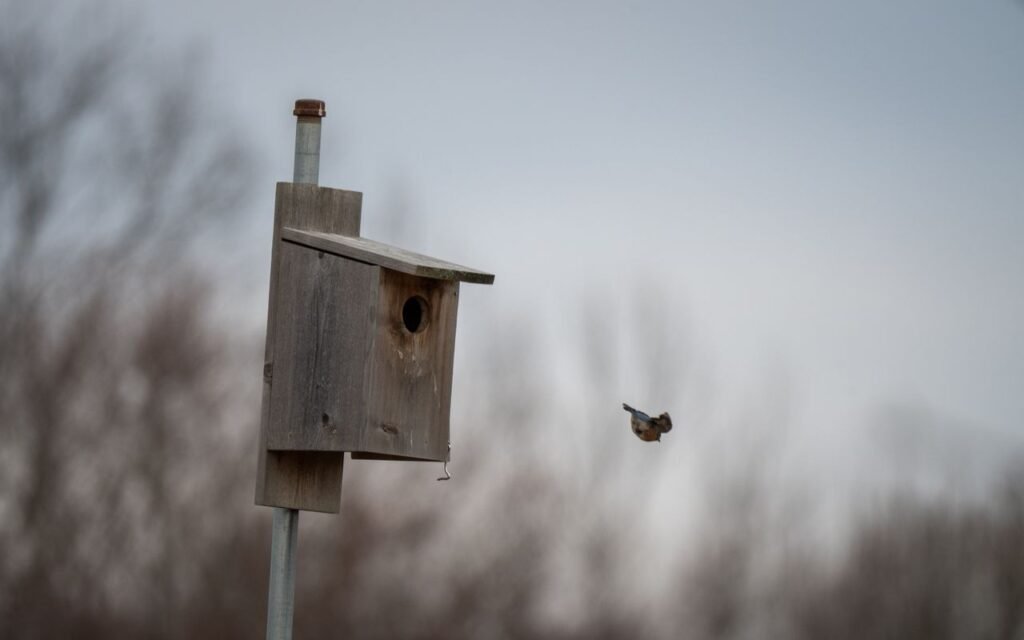
Mounting a backyard nesting box with a heavy ladder is a major hassle. If you are searching for a birdhouse height guide, you are likely stuck choosing between predator safety and easy maintenance. Wild species select different vertical zones to avoid territorial competition. Finding the sweet spot requires balancing these natural preferences with your lawn’s layout.
By matching exact vertical baselines to your target species, keeping entry points clear of low brush lines, and using manageable pole mounts, you can easily guarantee high occupancy. Here is how to configure your mounting heights to provide maximum safety for developing families.
How High Should a Birdhouse Be Mounted?
The standard optimal mounting elevation for most backyard songbirds is 5 to 10 feet off the ground, which places the entrance portal well above the vertical jumping reach of common land pests.
While smaller birds like wrens thrive at an accessible 5-foot baseline, larger cavity species like wood ducks or screech-owls require structural heights between 12 and 20 feet mounted along quiet forest lines.
1. The 5 to 6 Foot Baseline (The Low Brush Zone)
Small, nimble cavity nesters like House Wrens, Black-capped Chickadees, and Tufted Titmice possess a highly compact wing framework designed for tight maneuvers. They actively forage within the lowest understory layers of dense suburban woodlands, meaning they naturally seek out nesting sites tucked down near the ground. For these specific ground-foraging species, an installation height of 5 to 6 feet is structurally ideal.
According to empirical data published in the environmental study Landscape-level thresholds of habitat cover for woodland-dependent birds, bird communities rely heavily on specific micro-elevations and landscape stratification rules to survive. Replicating this low-level segment increases occupancy because it mirrors the natural rotted tree stumps smaller birds search for in wild forests.
This range is also exceptionally convenient for backyard conservationists, as it sits right at chest height. It allows you to monitor the brood easily and handle mandatory autumn cleanouts safely without ever having to touch or haul out a heavy extension ladder.
However, because this elevation sits close to the lawn surface, it requires total isolation from any nearby horizontal launch pads like porch railings, stone walls, or patio chairs.
2. The 6 to 10 Foot Range (The Open Meadow Zone)
This middle tier is the absolute gold standard for iconic backyard favorites like the Eastern Bluebird, Western Bluebird, Tree Swallow, and White-breasted Nuthatch. These insect-hunting species operate on completely different flight physics than wrens; they are high-speed, direct-line flyers that require wide, open air space directly outside their door to drop down and launch safely without hitting thick garden vegetation.
Keeping your pole mounted between 6 and 10 feet provides excellent vertical separation from roaming domestic cats. At the same time, it keeps the box roofline comfortably beneath the higher leaf canopy branches where predatory hawks or owls look for movement.
Furthermore, mounting at 8 to 10 feet keeps the structure stable against high wind drag. Because meadow boxes are installed out in open spaces without natural windbreaks, keeping them at this intermediate height prevents the mounting pole from vibrating violently during severe spring thunderstorms, which can break fragile eggs inside.
If you are setting up a multi-box grid in this zone to house bluebirds and swallows simultaneously, make sure to cross-reference your structural spacing and boundary distances inside our comprehensive companion guide on best birdhouse placement.
3. The 10 to 15 Foot Range (The Woodland Margin)
As your installation height passes the 10-foot boundary, you enter the mid-canopy layer required by larger cavity dwellers like Northern Flickers, Great Crested Flycatchers, and Purple Martins. Purple Martins, in particular, demand a strict mounting height of 12 to 15 feet out in completely open spaces.
These highly social colonial birds feature long, narrow wings optimized for high-speed glide ratios, making them clumsy and awkward when navigating close to ground level. They require a significant vertical drop-off to accumulate horizontal velocity when diving out of their entryway.
If their multi-room housing complex is set lower than 12 feet, they cannot clear the ground fast enough to evade ambush threats. Additionally, mid-canopy boxes must be oriented cleanly away from any overhanging tree limbs.
Overhanging branches within 15 feet grant climbing red squirrels or crows an easy diving platform directly onto the box roof, exposing the nest to aerial raids.
4. The 15 to 20+ Foot Zone (The High Canopy)
This extreme elevation range is reserved for your largest woodland cavity nesters, such as the Eastern Screech-Owl, American Kestrel, and Wood Duck. These larger birds look for deep, natural hollows in ancient hardwood trunks or along isolated wetland marsh lines.
Because of their massive body weights, these birds cannot simply take off instantly from a stationary position. They rely on gravity—needing a massive vertical drop zone to plunge downward out of the entry hole, build up momentum, and spread their wings into a level flight path.
Installing a Screech-Owl box down at a songbird’s 8-foot level is a fatal error; it leaves the exiting parent completely vulnerable to ground hazards. These heavy, deep-cavity houses must be bolted using industrial lag screws directly into straight, mature hardwood tree trunks or secured to heavy-duty industrial pipe installations.
While these high canopy structures boast high wildlife occupancy rates due to their extreme isolation, they require specialized maintenance strategies since they cannot be reached using basic household step ladders.
5. Cat and Raccoon Launch Clears: The 8-Foot Radius Rule
Understanding vertical height limitations requires looking at the surrounding horizontal landscape. A birdhouse set at a safe 10-foot elevation can still be compromised if it sits next to an object that a predator can climb or jump from.
Domestic cats can achieve a vertical leap of up to 5 feet from a total standstill, while a motivated raccoon or opossum can stretch or drop down onto a structure from nearby limbs with ease.
Always apply the 8-foot horizontal radius rule when setting your mounting height. Ensure that the ground space and airspace within an 8-foot circle surrounding your mounting pipe is completely free of jumping platforms. This includes wood privacy fences, stone retaining walls, garden sheds, patio umbrellas, or low-hanging orchard limbs.
By isolating the pole vertically and removing these horizontal runways, you prevent predators from leaping onto the side walls of your bird box.
⚠️ CRITICAL ELEVATION WARNING: Do Not Mount on Live Tree Bark
Never use nails or screws to mount a small songbird box directly onto a live tree trunk, regardless of the height. Tree bark offers perfect claw traction for every climbing predator in your neighborhood, making the entrance door an easy target. According to placement data tracked by the Cornell Lab of Ornithology, boxes should be isolated on standalone poles. If you must use a tree trunk for deep-woods owls, you must wrap a 3-foot wide sheet metal guard entirely around the trunk below the box to break the path of climbing pests.
6. Designing for the Fledgling Fall Line
The physical height of your box dictates the safety of the nestlings on the day they take their very first flight. When young birds get ready to fledge, they do not simply fly out of the hole smoothly. Their flight muscles are weak, their feathers are uneven, and they have zero real-world navigation experience. Instead, they jump from the portal rim, flapping their undeveloped wings in a steep downward drop toward the ground.
If your box is set at an extreme height (like 12 to 14 feet) over a flat, manicured clay lawn, the fledglings will crash hard onto the grass. This hard landing can stun them or damage their delicate flight feathers, leaving them completely helpless against roaming backyard pets or low-flying crows.
To give your fledglings a safe landing zone, ensure the area directly underneath your high boxes features a soft buffer layer of dense, low-growing native shrubs, clover patches, or tall un-mowed grasses. This vegetation acts as a biological safety net, catching falling chicks softly and providing immediate cover where they can hide while their parents continue to feed them on the ground.
7. Telescoping Pole Systems: Bridging High Birds and Low Humans
The ultimate challenge of managing proper birdhouse heights is solving the maintenance paradox. Wild birds demand high, secure, and isolated boxes during the spring nesting rush. However, people require easy, safe, and ground-level access to those same boxes when the season ends.
An empty box left up at 12 feet for multiple seasons without care quickly turns into a hazardous wasteland filled with parasitic blowfly larvae, avian mites, and aggressive paper wasp nests.
To bridge this gap cleanly, you should avoid static wood posts and use a heavy-duty steel telescoping metal mounting pole.
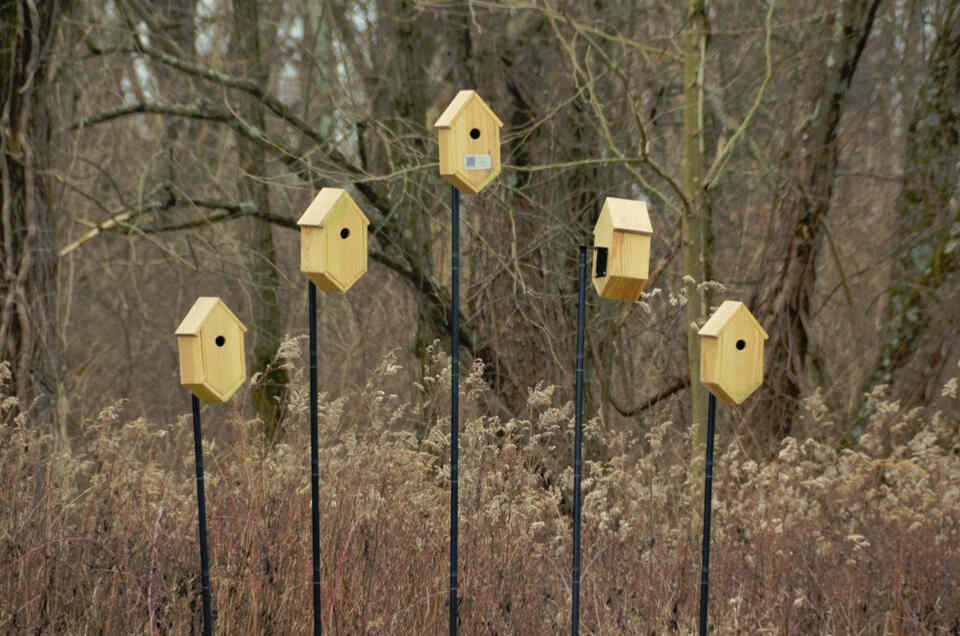
Utilizing adjustable telescoping metal pipe systems allows you to easily customize vertical height settings to match specific target bird profiles.
These multi-stage steel pipe configurations utilize locking collar bolts or heavy thumb pins. This lets you raise and lock the nesting box into a highly secure 10 to 14-foot vertical zone for the spring breeding season, safely away from lawn activity.
Then, when autumn arrives and the birds have fully migrated south, you can loosen the collar locks to slide the entire pipe downward to chest height. This allows us to handle our mandatory cleaning, scraping, and vinegar sanitation steps safely with our feet planted firmly on the grass.
For a complete blueprint on coordinating these safe vertical setups with thick insulating wood materials and protective structures, refer back to our foundational birdhouse guide for beginners.