
Summer presents unique challenges and opportunities for attracting songbirds to residential properties. Learning how to attract songbirds in summer requires more than just hanging a feeder; it involves understanding seasonal dietary shifts, water requirements during heat stress, and the critical role of native plants in supporting insect populations.
Songbirds tend to shift their diet in summer to eat more insects, which provide protein to feed their young. This fundamental seasonal change demands different approaches than traditional winter bird feeding, with emphasis on habitat quality rather than feeder placement. Understanding these summer-specific requirements transforms ordinary yards into productive songbird habitat during the breeding season’s most demanding period. 🙂
- Songbirds eat mostly insects in summer to feed their young.
- Native plants provide caterpillars and insects essential for nesting.
- Offer shallow, clean, and moving water for drinking and bathing.
- Provide shade and shelter with trees, shrubs, and layered vegetation.
- Leave leaves, twigs, and dead flowers to support nests and insects.
- Avoid pesticides that reduce the insects birds need for food.
- Minimize disturbances to nesting birds and fledglings.
- Observe bird activity and adjust plants, water, and shelter accordingly.
- Focus on creating natural habitats rather than relying on feeders.
Watch: Tip to Attract Songbirds This Summer
In this video, we show step-by-step tips for providing water, shade, and native plants to create a thriving summer habitat for songbirds.
Show Transcript:
0:00
Hey, if you love having birds at your feeder, I’ve got something that might blow your mind. What works in the winter could actually be failing our songbirds in the summer. Let’s get into it and figure out what our feathered friends really need to make it through the hottest time of year.
0:17
So let me ask you a question. How do you help birds in the summer? Many of us think we just keep the feeder full. That’s great, but it’s not the whole story. It’s not even close.
0:32
If your summer plan is only about seed, you’re missing the real story. You’re missing what birds are desperately searching for during their busiest, most demanding season. It’s time to rethink what summer bird care is all about.
0:46
For birds, summer isn’t just winter with the heat turned up. It’s a whole different ballgame. This is baby season. Birds are in non-stop, intense activity, and their nutritional needs are completely different when they are trying to raise a family.
1:02
In winter, high-calorie seeds are lifesavers. They work like energy bars that help birds pack on fat to stay warm. In summer, the focus flips completely. It is all about protein, specifically protein-rich insects. That’s what fuels the explosive growth of baby birds. Seeds simply don’t have what it takes for the little ones.
1:26
This need for insects leads us to what I call the 9,000 caterpillar problem. And this is where it gets really interesting. Research shows that 96 percent of songbird species feed their young insects, not seeds. No bugs, no baby birds. Period.
2:05
Where do all these bugs come from? The answer is yards with more native plants. Native plants produce more caterpillars. More caterpillars mean more food for breeding chickadees. More food means more baby chickadees survive. It’s a perfect chain of life, all starting with the right plants.
2:26
To raise one family of chicks, a single pair of chickadees needs to find between six and nine thousand caterpillars. That is a staggering amount of hunting and gathering. Your bird feeder offers zero.
2:52
Food is intense, but it’s not the only concern. Summer heat brings another urgent need: water. Water becomes a matter of life and death. Thermoregulation is the fancy term for controlling body temperature. Birds need water to drink and bathe. Bathing keeps them cool and their feathers in top shape for flying.
3:40
Small songbirds without water will not survive more than a few hours when temperatures reach 104° Fahrenheit, or 40° Celsius. The solution is simple: provide the perfect bird bath. Four rules to follow: keep it shallow, a half inch to one inch deep; keep it moving with dripping water or a small fountain; keep it clean with a weekly scrub to prevent disease; and keep it safe, at least 10 to 15 feet away from dense shrubs where predators could hide.
4:17
Now let’s tackle the 9,000 caterpillar problem. The solution isn’t a fancy feeder, it’s planting your own bird food. Science gives a target: at least 70 percent of your yard’s plants by biomass should be native. Trees, shrubs, flowers—below 70 percent, and your yard becomes a food desert.
4:58
Native plants are critical. A single native oak tree can host over 500 species of caterpillars. A common non-native tree might support five. Native plants are the engine of the local food web.
5:23
Start with keystone species. These are native plants that support the most insects. Trees like oaks, willows, cherries. Flower beds with milkweed and sunflowers are powerhouses for the insects birds need.
5:46
Pulling this all together, summer bird care is more than putting out a feeder or a bird bath. It’s about creating a thriving habitat. Your summer checklist: create shade with layers of native plants; avoid pesticides; embrace leaf litter as an insect buffet; delay major pruning until fall for shelter; and reconsider summer seed feeders to reduce crowding and disease.
6:33
When a mother bird searches for thousands of caterpillars over your property, what does she see? A food desert with one seed feeder, or a five-star resort full of food, water, and shelter? The choice is ours to make.
Understanding Summer Songbird Dietary Needs
The dietary requirements of songbirds change dramatically between winter and summer seasons. According to Washington Department of Fish & Wildlife, songbirds tend to shift their diet in summer to eat more insects, which provide protein to feed their young. Research demonstrates that the vast majority of North American songbirds rely on insects during breeding season regardless of their winter feeding habits.
The Critical Role of Insects
According to the Cornell Lab of Ornithology’s Bird Academy, a whopping 96% of all non-shore North American songbird species consume insects for at least part or all of their lives. During summer breeding season, even seed-eating species like finches and sparrows require massive quantities of soft-bodied insects to feed rapidly growing nestlings.
Research published in Biological Conservation by Narango, Tallamy, and Marra found that Carolina chickadees foraging in Washington, D.C. backyards showed strong preferences for native trees and shrubs, which hosted far more caterpillars than non-native ornamental plants. The study demonstrated that yards with higher percentages of native plants supported more breeding chickadees, directly linking plant nativity to songbird reproductive success.
National Wildlife Federation research confirms that a single pair of Carolina chickadees requires between 6,000 and 9,000 caterpillars to successfully raise just one brood of young. This staggering number illustrates why simply offering seed at feeders fails to meet summer songbird needs. The insects that provide essential protein come almost exclusively from native plant communities.
Seasonal Dietary Shifts
According to research on reed warblers published in PMC, insectivorous songbirds show subtle seasonal changes in diet composition related to prey availability. The study used DNA metabarcoding to identify prey species and found that adult, juvenile, and nestling warblers consumed different suites of prey based on age and seasonal abundance patterns.
This research highlights that successful summer songbird attraction requires supporting diverse insect populations throughout the breeding season, from early spring emergence through late summer fledgling periods. Understanding what birds eat during different seasons helps create appropriate habitat year-round.
Water: The Summer Priority
While food resources shift toward naturally available insects, water becomes the critical limiting factor for songbirds during summer heat.
Physiological Water Requirements
According to research published in the journal Ecography, the probability of water usage by birds was positively related to temperature, which further emphasizes the importance of water under future climate-warming scenarios. The study found that birds usually need water for two major reasons: drinking and bathing, and each activity plays critical roles in thermoregulation and feather maintenance.
Research from SongBird Survival documents that songbirds (passerines) lose more water than non-passerines due to their biology, requiring more frequent replenishment. Water loss occurs through droppings, respiration, and evaporation, with rates increasing dramatically during hot weather.
According to NASA research on desert songbirds, at about 40 degrees Celsius (104 degrees Fahrenheit), songbirds start panting, which increases the rate of water loss very rapidly. Most animals can only tolerate water losses resulting in 15 or 20 percent loss of body mass before they die, meaning an animal experiencing peak temperatures during a hot summer day with no access to water will not survive more than a few hours.
Providing Effective Water Sources
National Wildlife Federation guidance recommends specific water feature characteristics for summer effectiveness. Water depth should range from one-half inch to one inch in most cases, with sloping sides allowing birds of various sizes to access their preferred depth. Deeper basins discourage small birds from bathing, while very shallow containers dry out quickly on hot days.
To keep birdbaths cool and full even in extreme heat, add a large chunk of ice to the bath each morning (freeze water in a plastic bowl the night before). As it melts, the ice will refill and refresh the bath without creating dangerous temperature shock that small ice cubes can cause.
Moving water provides particularly powerful attraction during summer. According to the same National Wildlife Federation article, splashing sounds and glittering reflections attract birds, making drippers, misters, or fountains especially effective during hot weather when birds actively seek hydration sources. For detailed guidance on water features, see our article on how to attract birds to bird baths.
Water Maintenance Requirements
Proper hygiene becomes critical during summer heat when pathogens thrive. According to Audubon guidance, bird baths should be cleaned regularly to help prevent disease spread. Daily rinsing helps keep baths cleaner, with thorough scrubbing at least once weekly recommended when temperatures and usage rates peak. Learn more about proper maintenance in our guide on how to clean a bird bath without chemicals.
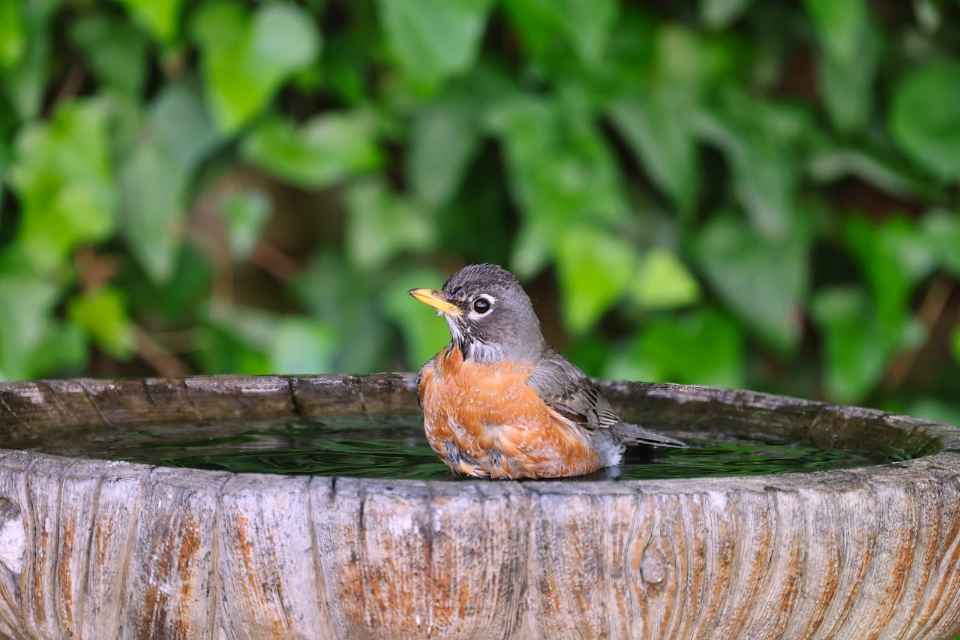
Research on small passerine birds shows that vigilance increases when visibility around key resources like water is limited, indicating that birds factor sightlines and predator awareness into where they choose to drink and bathe. Optimal positioning includes placing bird baths near shrubs or trees offering quick escape routes but not so close that predators can use vegetation as an ambush point, with 10-15 feet from dense cover representing the ideal balance.
Native Plant Communities: The Foundation
Creating productive summer songbird habitat requires establishing native plant communities that support the insect populations birds need for successful reproduction.
The 70% Native Plant Threshold
According to research highlighted by the Cornell Lab’s Growing Wild program, native plants help maintain or recreate ecological systems and food webs that have evolved over thousands of years to allow birds and biodiversity to thrive. Those insects and their caterpillars simply will not be present if birds lack the right kinds of plants.
The research establishes that properties should aim for approximately 70% native plant biomass to adequately support insectivorous bird populations. Below this threshold, insect populations decline to levels insufficient for successful songbird breeding, even when other habitat elements like nest boxes and water sources are present. For comprehensive guidance on selecting appropriate species, see our article on native plants for birds.
Keystone Plant Species
Not all native plants provide equal value for supporting summer songbirds. Cornell Lab research identifies that one native oak can support over 500 species of caterpillars, making oaks among the most valuable trees for bird habitat. According to the National Wildlife Federation, those caterpillars are a critical food source for over 96 percent of songbirds.
Regional keystone species vary by geography. In eastern North America, Living Bird magazine documents that trees like willow, cherry, birch, and oak top the list for hosting juicy caterpillars. Swamp milkweed attracts loads of insects that hungry birds feed on in spring and early summer while also providing nesting material for American Goldfinches later in the season.
For Midwest and Great Plains regions, grasses and herbaceous plants gain importance. Switchgrass and little bluestem provide nesting habitat for ground-nesting birds like sparrows and Northern Bobwhite, while early-fall-flowering plants such as common sunflower and gray goldenrod attract insects that sustain nesting songbirds while offering fall and winter seed sources.
Spring is an excellent time to add flowering natives that will mature in time for summer nesting season. Our guide on best plants to attract birds in spring provides specific recommendations for establishing productive plantings.
Summer Plant Management
Summer plant care directly impacts songbird attraction. According to Cornell’s Bird Academy, messy is beautiful when naturescaping for birds. Leaf litter provides habitat for insects, snails, and spiders that become bird food. Dead flower heads continue providing seeds even in winter, and leaving them on plants through summer supports ongoing insect activity while ensuring fall and winter food availability.
Avoiding excessive tidying during summer protects the complex food web. Birds use dead leaves for nest building, leaf litter cools and protects soil while releasing nutrients, and fallen tree limbs create habitat for invertebrates that birds consume. These “messy” elements represent essential summer songbird habitat rather than landscape deficiencies.
Reconsidering Summer Feeding Practices
Recent research challenges traditional assumptions about supplemental feeding during summer months, with important implications for songbird health.
Disease Transmission Risks
According to research published in Philosophical Transactions of the Royal Society B, there is an increasing body of scientific evidence linking garden feeding to detrimental impacts including enhanced disease transmission and competition between species. The study found that feeding birds during very hot periods can increase disease spread risk, with avian diseases such as Salmonella and Trichomonosis increasing as garden feeding has become more prevalent.
Dr. Alexander Lees, Reader in Biodiversity at Manchester Metropolitan University, notes that feeding garden birds represents the most common opportunity for nature connection but carries consequences. Research links supplemental feeding to enhanced disease transmission and competition between species, contributing to steep declines in several once-common species like willow tits and greenfinches.
Natural Food Abundance
SongBird Survival guidance explains that in summer months, plenty of insects, berries, and seeds occur naturally, eliminating the need for supplemental food. Research shows that feeding birds in summer may upset the delicate natural balance of different bird types in local areas while increasing disease spread risk.
For gardeners who choose to maintain feeders during summer, offering fresh water rather than food provides greater benefit. The charity recommends putting out shallow dishes of clean water for drinking and bathing, cleaned weekly to prevent disease, as the primary summer support strategy. Those interested in year-round feeding should review our article on responsible bird feeding for guidance on minimizing disease risks.
Creating Shade and Shelter
Summer heat stress makes shade as valuable as water for songbird attraction and survival.
Shade Requirements
According to National Wildlife Federation research, as temperatures climb, shade becomes just as valuable to birds as water. Creating deeply tiered landscaping with broad-leafed native plants, adding vegetation around tree trunks or alongside buildings, provides crucial shelter from heat.
Native trees, shrubs, and vines prove particularly useful for providing shade, shelter, and food simultaneously. A dense, fruiting shrub can offer all three elements at once: protection from heat, protection from predators, and a food source during the breeding season. For comprehensive strategies, see our guide on how to keep birds hydrated during summer.
Behavioral Adaptations
U.S. Fish & Wildlife Service guidance explains that many birds avoid sun by limiting daytime activity, foraging in early morning, evening, or throughout the night to conserve energy and rest during the warmest times of day. Providing shade from shrubs and trees offers places to escape the sun’s rays.
If planning to prune, trim, or remove limbs or brush piles, delay these activities until temperatures cool off in fall. Summer pruning eliminates the very shelter structures that help songbirds cope with heat stress during the season’s most demanding period.
Supporting Nesting Activities
Summer encompasses the breeding season for most songbird species, requiring specific habitat elements that support successful reproduction.
Nesting Material Availability
While birds collect most nesting materials themselves, gardens can provide natural resources that facilitate nest construction. According to The Forest Preserve District of Will County, leaving natural materials such as twigs, moss, and dried grass accessible in your yard helps birds gather nest-building materials efficiently.
For gardeners interested in providing nesting materials, natural fibers work best, but the primary focus should remain on establishing native plant communities that provide materials as part of their natural growth and decay cycles.
Minimizing Disturbance
Summer garden activities can inadvertently disrupt nesting attempts. Many species continue nesting well into July and even August in northern regions. Preparing your garden for nesting birds before the breeding season begins helps, but maintaining awareness throughout summer is essential. Routes for regular walking paths should avoid dense shrub plantings and other prime nesting habitat. Pets, particularly cats and dogs, should be restricted from areas where ground-nesting species might establish territories during the critical breeding window.
Summer-Specific Landscaping Strategies
Effective summer songbird landscaping differs from general bird-friendly design through emphasis on heat mitigation and insect productivity.
Multi-Layer Vegetation Structure
Creating vertical habitat structure with ground cover, low shrubs, tall shrubs, understory trees, and canopy trees supports diverse songbird communities with varying nesting and foraging preferences. According to bird-friendly garden design principles, this structural diversity provides nesting sites at multiple heights while creating the microclimates that allow birds to thermoregulate effectively.
Ground cover and low shrub layers offer crucial shade near ground level where temperatures peak. Mid-story shrubs create protected corridors for movement between feeding and nesting areas. Canopy trees provide the highest shade value while hosting the greatest diversity of insect prey.
Avoiding Pesticides
Chemical pest control undermines summer songbird attraction by eliminating the insects that birds need for nestling nutrition. According to Cornell Lab guidance, 95-98% of North American songbirds feed insects to their young, and those insects need native plants to thrive.
Accepting higher insect populations benefits songbirds directly. Research documents that birds function as natural pest control, with species like chickadees, warblers, and vireos removing thousands of caterpillars and other insects from gardens throughout summer. This natural predation provides more sustainable pest management than chemical applications while supporting successful bird reproduction.
Monitoring and Adjusting Summer Strategies
Evaluating which approaches prove most effective requires observation and willingness to modify techniques based on results.
Observing Bird Activity
Monitor which areas of your property attract the most songbird activity during summer months. Species foraging actively in specific locations indicate successful insect populations supported by appropriate native plantings. Repeated nest construction in particular shrubs or trees suggests those plants provide optimal structure and security.
Document fledgling sightings as indicators of successful breeding. Young birds recently out of nests often remain in natal territories for weeks, providing extended observation opportunities. Their presence confirms that your property provides adequate food, water, and shelter to support complete breeding cycles.
Seasonal Comparisons
Compare bird diversity and abundance across seasons. Properties supporting diverse songbird communities in summer while also attracting different species during migration and winter periods demonstrate well-rounded habitat quality. If summer songbird presence remains low despite adequate winter populations, focus improvements on native plant establishment and water source enhancement.
Understanding common backyard birds throughout the year helps identify which species successfully breed on your property versus those that only visit during migration or winter.
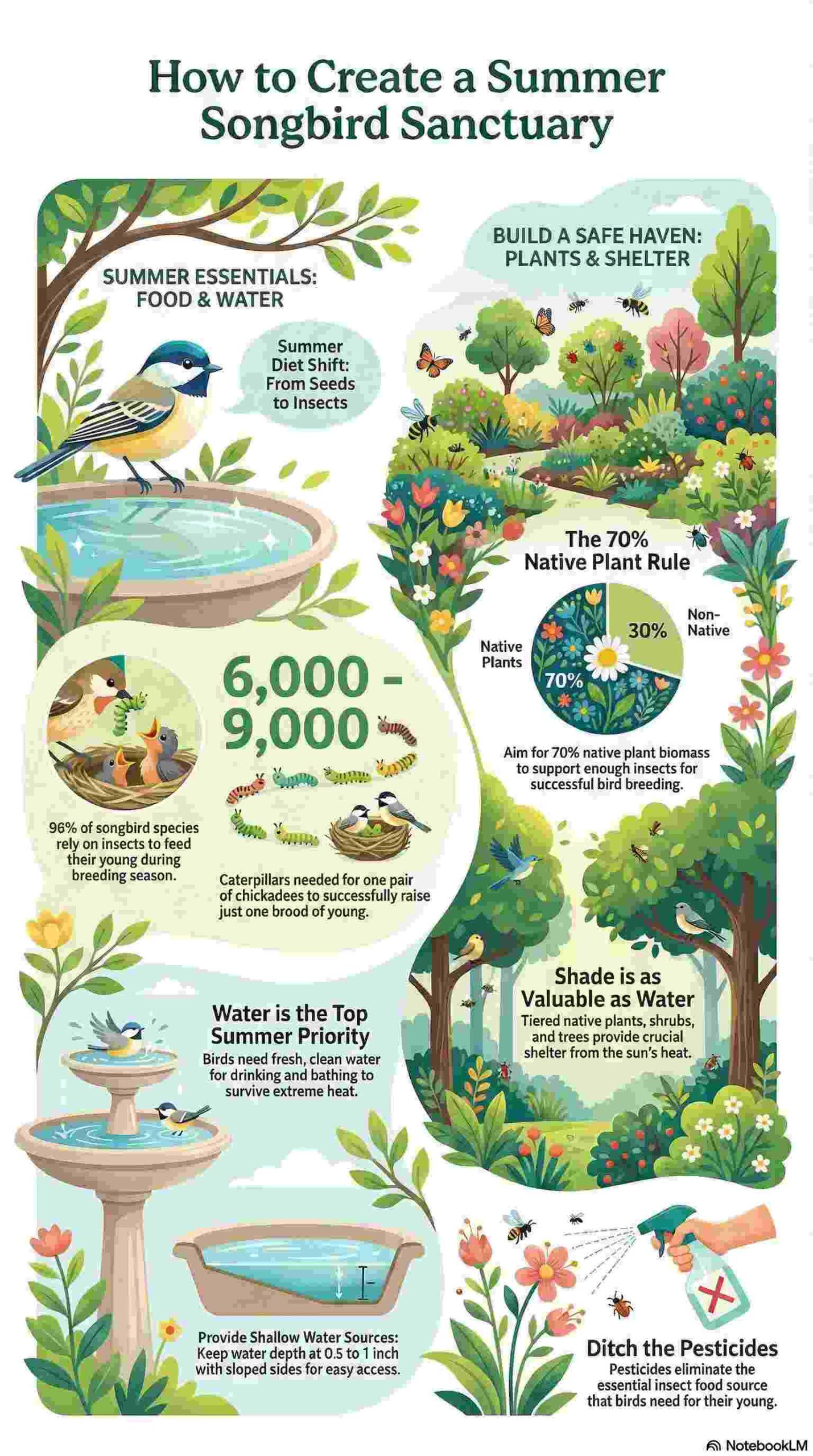
How to Attract Songbirds in Summer: Visual Guide
Here’s an infographic that shows at a glance how to attract songbirds this summer, covering water, shade, native plants, and other key tips for a bird-friendly backyard.
Conclusion
Attracting songbirds during summer requires fundamentally different strategies than winter feeding approaches. The season’s emphasis shifts from supplemental seed provision to creating conditions that support natural insect populations through native plant communities. Water availability becomes the critical limiting factor, with clean, shallow sources providing essential hydration and bathing opportunities during heat stress.
Research consistently demonstrates that properties dominated by native plants, particularly keystone species like oaks, cherries, and willows, support exponentially higher caterpillar populations that enable successful songbird reproduction. The 96% of songbird species that feed insects to their young cannot successfully raise broods in landscapes dominated by non-native ornamentals, regardless of how many feeders homeowners install.
Summer water features require daily maintenance, with regular cleaning preventing disease transmission during the season when birds congregate at limited water sources. Providing shade through tiered native plantings offers thermal refugia that allows birds to escape peak temperatures while still accessing food and water resources.
The most effective summer songbird attraction strategies work with natural seasonal patterns rather than against them, recognizing that summer represents the breeding season when birds require protein-rich insects, abundant water, protective shade, and undisturbed nesting habitat. Properties providing these elements through thoughtful native plant selection and water feature placement support thriving songbird populations while contributing to broader conservation goals during the season when successful reproduction determines long-term population trends.