
Every spring and fall, billions of birds migrate thousands of miles between breeding and wintering grounds. For these travelers, your backyard isn’t just a brief stop, it can mean the difference between survival and death. As natural stopover habitats disappear due to development, learning how to prepare your yard for migrating birds has become increasingly important during this vulnerable stage of their journey.
By turning your yard into functional stopover habitat, you can provide food, water, and shelter when migrating birds need them most. This guide draws on peer-reviewed research to explain effective habitat features, thoughtful plant choices, reliable water sources, and practical management steps that create real conservation value. 🙂
- Yards can serve as critical stopover habitat for migrating birds.
- Provide food with native plants supporting insects and fruits.
- Offer water in shallow basins, fountains, or bird baths.
- Create cover with dense shrubs, trees, and ground litter.
- Use layered vegetation: canopy, mid-story shrubs, and ground plants.
- Delay pruning and cleanup during peak migration periods.
- Supplemental feeding with high-protein foods supports refueling.
- Small yards still provide big conservation value if structured well.
- Adapt plant and habitat choices to your regional migration corridor.
How to Prepare Your Yard for Migrating Birds: Video Explainer
Watch this explainer video to learn how to prepare your yard for migrating birds step by step.
Show Transcript:
0:00
Have you ever looked out at your yard and just seen grass? Well, what if I told you that very space could be a critical, life-saving oasis for literally billions of migrating birds? In this explainer, we’re going to dig into the science that proves it and show you exactly how you can help.
0:16
Let’s start with a number: 85 percent. Just let that sink in for a second. That huge number represents how much of a bird’s migration isn’t actually spent in the air. Most of it happens on the ground at stopover sites, where birds rest and refuel. This fact completely changes how we think about their journey.
0:49
To understand why these stops are so vital, we first need to look at the journey itself. Migration is one of the most dangerous undertakings in the natural world. We’re not talking about a few birds here or there; billions of birds navigate what is basically a continental obstacle course, facing predators, brutal storms, and the constant threat of starvation.
1:16
Stopover sites aren’t just nice to have—they are essential. A good-quality site allows birds to eat, rest, and continue their journey. A poor site, or worse, no stopover at all, can mean the journey ends right there. With so much natural habitat shrinking, the challenge can feel overwhelming, but here’s the hopeful part: this is where you come in.
1:44
Research shows that in developed landscapes, birds don’t just fly over neighborhoods; they actively seek them out. Your yard, my yard, has the potential to be a five-star stopover right on the migratory highway. Small patches like these act like sponges, concentrating and supporting huge numbers of migrants. Every patch counts.
2:17
So, how do you turn your yard into a critical stopover site? It comes down to three essentials, like a good hotel: fuel, water, and shelter. A high-energy meal, a clean drink, and a safe place to rest. Get these right, and you’ve created a functional oasis.
2:40
When it comes to fuel, one factor stands out: native plants. They can support up to 50 times more insect life than non-native ornamental plants. For a starving bird, that’s the difference between an all-you-can-eat buffet and an empty vending machine. This difference comes from co-evolution. Native plants and local insects developed together over thousands of years, creating highly specialized food webs. For example, a native oak tree can host over 500 species of caterpillars—pure protein for birds. A non-native ginkgo tree, by comparison, supports almost none. The choices we make at the garden center have huge consequences.
3:29
Water doesn’t have to be complicated. A shallow bird bath works perfectly. Keep it clean and place it near shrubs so birds feel safe. Pro tip: the sound of dripping water acts like a neon sign for thirsty migrants—they can’t resist it.
3:50
Next is shelter. The best yards mimic natural forest layers. High tree canopies provide safety and perching spots, dense shrubs offer cover, and a healthy ground layer supplies both food and refuge. Leaving leaves in the fall is critical, as it provides food and shelter exactly when migrating birds need it most. Timing matters too. Avoid major yard work during spring and fall migration peaks. You can save heavy cleanup for winter when it’s less critical for the birds.
4:42
When you put it all together, your yard transforms. You’re no longer just a homeowner with a patch of grass. You become a steward of wildlife. Your small patch of land isn’t isolated; it’s a vital node in a continent-spanning support system for billions of birds. The choices you make directly impact one of nature’s greatest spectacles.
5:07
So here’s the final question: when you start seeing your yard as critical infrastructure, everything changes. It’s no longer just about appearance. It’s about function, survival, and life itself. How will you manage it this year?
Understanding Stopover Ecology and Migration Needs
Before implementing yard modifications, understanding what migrants require during stopover helps prioritize effective interventions.
The Critical Function of Stopover Sites
According to research examining stopover ecology, migrants use stopover sites primarily for refueling, resting, and recovering from the physiological stresses of sustained flight. The quality and availability of stopover habitat directly affects migration success, with inadequate stopovers forcing birds to continue flying with insufficient energy reserves, dramatically reducing survival probability.
Research on optimal migration strategies shows that migratory birds spend the vast majority of their journey at stopover sites rather than in active flight, with models estimating that 85% or more of total migration time is devoted to resting and refueling. More recent synthesis research confirms that stopover duration, fuel accumulation, and habitat quality are primary drivers of migration success, often exerting a stronger influence than conditions on breeding or wintering grounds.
Groundbreaking research published in PNAS created the first comprehensive map of autumn stopover hotspots across the eastern United States. The study found that migratory landbirds concentrate at areas with higher forest cover, and even small forest patches within agricultural or deforested landscapes are important for supporting these stopovers. In regions with limited forest, birds rely heavily on the remaining habitat, highlighting the conservation value of every patch.
What Migrants Seek in Stopover Habitat
Food availability represents the primary requirement migrants evaluate when selecting stopover sites. Birds must rapidly replenish energy stores depleted during flight, with some species needing to gain 30-50% of body weight during just a few days of stopover.
Native insects provide the protein-rich nutrition most migrants require. While some species consume fruits or seeds during migration, the majority rely heavily on caterpillars, spiders, and other arthropods for rapid refueling. This makes native plant communities essential, as research consistently demonstrates native plants support 10-50 times more insect biomass than non-native ornamentals.
Water sources for drinking and bathing prove equally critical. Migrants arrive at stopovers dehydrated from sustained flight and require immediate water access. Bathing maintains feather condition, which directly affects flight efficiency for subsequent migration legs.
Cover providing protection from predators and weather allows birds to rest safely between feeding bouts. Dense vegetation offering concealment from hawks and shelter from wind and precipitation creates the secure environment migrants need during vulnerable stopover periods.
Native Plant Foundation for Migration Habitat
Creating effective stopover habitat begins with strategic native plant selection supporting robust insect populations.
Selecting Plants for Insect Abundance
Research on bird-plant-insect relationships examining agricultural stopover habitats found that habitat and diet preferences predict which species use particular areas during migration. This underscores the importance of matching plantings to the ecological requirements of target migrants.
Native trees represent the cornerstone of migration habitat. Oak trees alone support over 500 species of caterpillars and other insects, providing concentrated food sources migrants exploit during stopover. Willows, cherries, birches, and maples similarly support exceptional insect diversity.
Native shrub layers provide mid-story foraging opportunities while creating structural complexity migrants seek. Viburnums, dogwoods, elderberries, and native roses produce both insects and fruits valuable to different migrant species.
Herbaceous native plants create ground-level insect habitat while many produce seeds consumed by migrating sparrows, finches, and other granivorous species. Goldenrods, asters, sunflowers, and native grasses all contribute to comprehensive stopover habitat.
For detailed guidance on native plant selection, explore native plants for birds.
Timing Plantings for Migration Windows
Spring migration occurs March through May across most of North America, with peak activity in April and early May. Fall migration spans August through October, peaking in September. Plants should provide maximum insect abundance during these critical windows.
Early-season native plants like willows and serviceberries support insects during spring migration. Mid-season bloomers including viburnums and dogwoods peak during late spring. Fall-fruiting natives like arrowwood viburnum and winterberry provide energy during autumn migration.
Water Provision for Migrating Birds
Water availability often limits stopover quality more than food during migration periods, particularly during dry conditions.
Strategic Water Feature Placement
Position water sources in semi-open areas where birds can approach cautiously while maintaining visual contact with escape cover. Migrants arriving at unfamiliar stopover sites remain highly vigilant for predators, requiring water placement that accommodates this wariness.
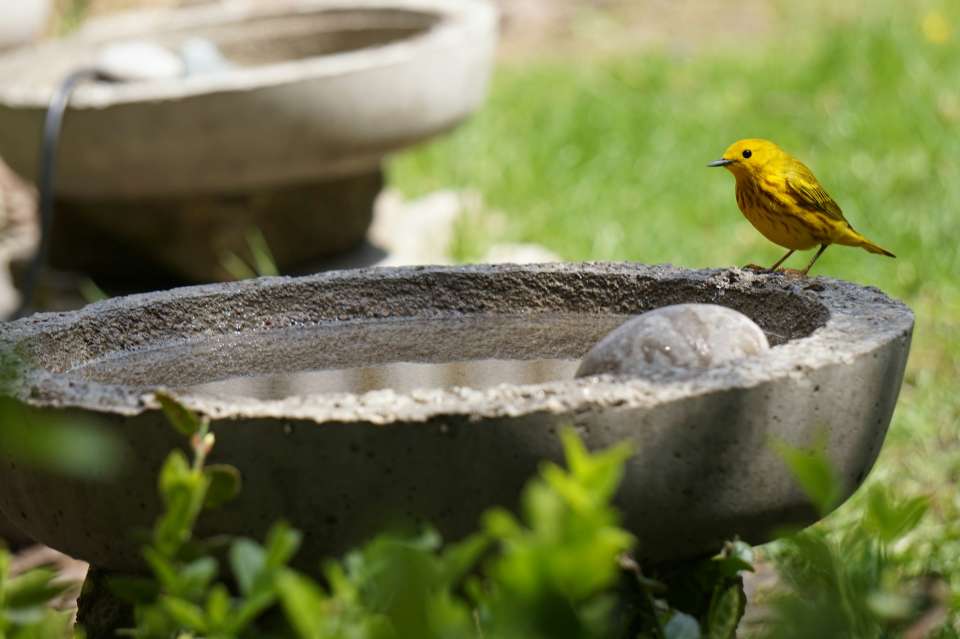
Shallow basins 1-2 inches deep with gradually sloping edges accommodate the widest range of species. Small birds prefer very shallow water while larger migrants use slightly deeper areas.
Moving water attracts migrants more effectively than still water. The sound of dripping or splashing carries substantial distances, advertising water availability to passing migrants. Simple solar-powered fountains or drip systems dramatically increase usage.
Maintaining Clean Water Sources
During migration peaks, water sources can host hundreds of individual birds daily. This concentrated use requires frequent cleaning preventing disease transmission.
Clean water features every 2-3 days minimum during migration periods, increasing to daily cleaning during heavy use. Scrub surfaces removing visible contamination and biofilm, rinse thoroughly, and refill with fresh water.
For comprehensive water management guidance, see attracting birds to bird baths.
Supplemental Feeding During Migration
While natural food sources should form the foundation of stopover habitat, strategic supplemental feeding provides additional support during migration peaks.
Winter Bird Feeding Station Tips for Migration
Many of the same principles that apply to winter feeding stations also benefit migrating birds. Using multiple feeder types to serve different species, placing feeders strategically to prevent window collisions and predation, and keeping them clean all remain important during migration.
However, migration feeding emphasizes different foods than winter. High-protein options like mealworms supplement natural insects, suet provides concentrated calories for rapid refueling, and fresh fruits attract frugivorous migrants such as thrushes and waxwings.
Position feeders near natural cover where migrants already forage to create comprehensive feeding zones that combine natural and supplemental resources. For guidance on feeder types, placement, and maintenance, see our guide on creating a winter bird feeding station.
Creating Layered Vegetation Structure
According to University of Delaware research on migration stopover, small forest patches embedded in developed landscapes support disproportionately high migrant densities because they “wick up all the birds in a larger landscape.” Creating complex vertical structure maximizes your yard’s value within the broader landscape.
Canopy Layer
Tall trees forming canopy provide upper-story foraging opportunities while creating the forest character many migrants seek. Even small yards can accommodate one or two canopy trees significantly enhancing stopover value.
Native oaks, maples, and other deciduous trees support the greatest insect biomass. Position canopy trees to create shade and visual screening, making the yard feel more forested and secure to migrants.
Mid-Story Shrub Layer
Understory shrubs create the structural complexity research shows correlates with higher migrant use. Dense shrub layers provide concealment from predators while offering rich foraging at heights many migrant species prefer.
Group shrubs in clusters rather than spacing evenly, creating dense patches mimicking natural forest understory. This clustering provides better cover and more concentrated foraging opportunities.
Ground Layer
Leave some leaf litter and natural debris rather than maintaining pristine lawns. Ground-foraging migrants including thrushes and sparrows actively search leaf litter for insects and other invertebrates.
Native groundcovers and low herbaceous plants create habitat while reducing lawn area requiring mowing. This benefits both migrants and reduces maintenance while supporting insects.
Timing Yard Management for Migration
When you implement yard maintenance significantly affects stopover habitat quality during critical migration periods.
Spring Preparation
Complete major pruning, cleanup, and landscape modifications by early March before spring migration begins. Migrants arriving in April expect to find established vegetation with active insect populations.
Delay cutting down dead plant stems until late spring after migration concludes. Many insects overwinter in hollow stems, emerging during spring to provide migrant food. Early cutting eliminates these critical protein sources precisely when migrants need them most.
Fall Management
Resist fall cleanup urges during September and October when fall migration peaks. Fallen leaves, seed heads, and natural debris all support insects migrants require for refueling.
Postpone major yard work until November after migration concludes. This timing allows full migration period to pass before disturbing habitat while positioning the yard for next spring’s migration.
Regional Migration Considerations
Optimal yard preparation varies by region based on migration routes, timing, and species composition.
Eastern Migration Corridor
The Mississippi River serves as a major migration pathway, with concentrations also following the Atlantic Coast. Eastern yards benefit from emphasizing deciduous forest character matching natural habitats migrants evolved using.
Spring migration peaks late April through mid-May. Fall migration extends August through October with peak late September. Time habitat preparation and management around these periods.
Western Migration Routes
Western migrants follow more dispersed routes with concentrations along major river valleys and mountain chains. Western yards should emphasize riparian character where applicable while accommodating the more arid-adapted species using the region.
Mild Winter Regions
Southern regions host winter residents while also serving as stopover sites for species migrating to Central and South America. These areas require year-round habitat management supporting both wintering birds and migrants passing through during spring and fall.
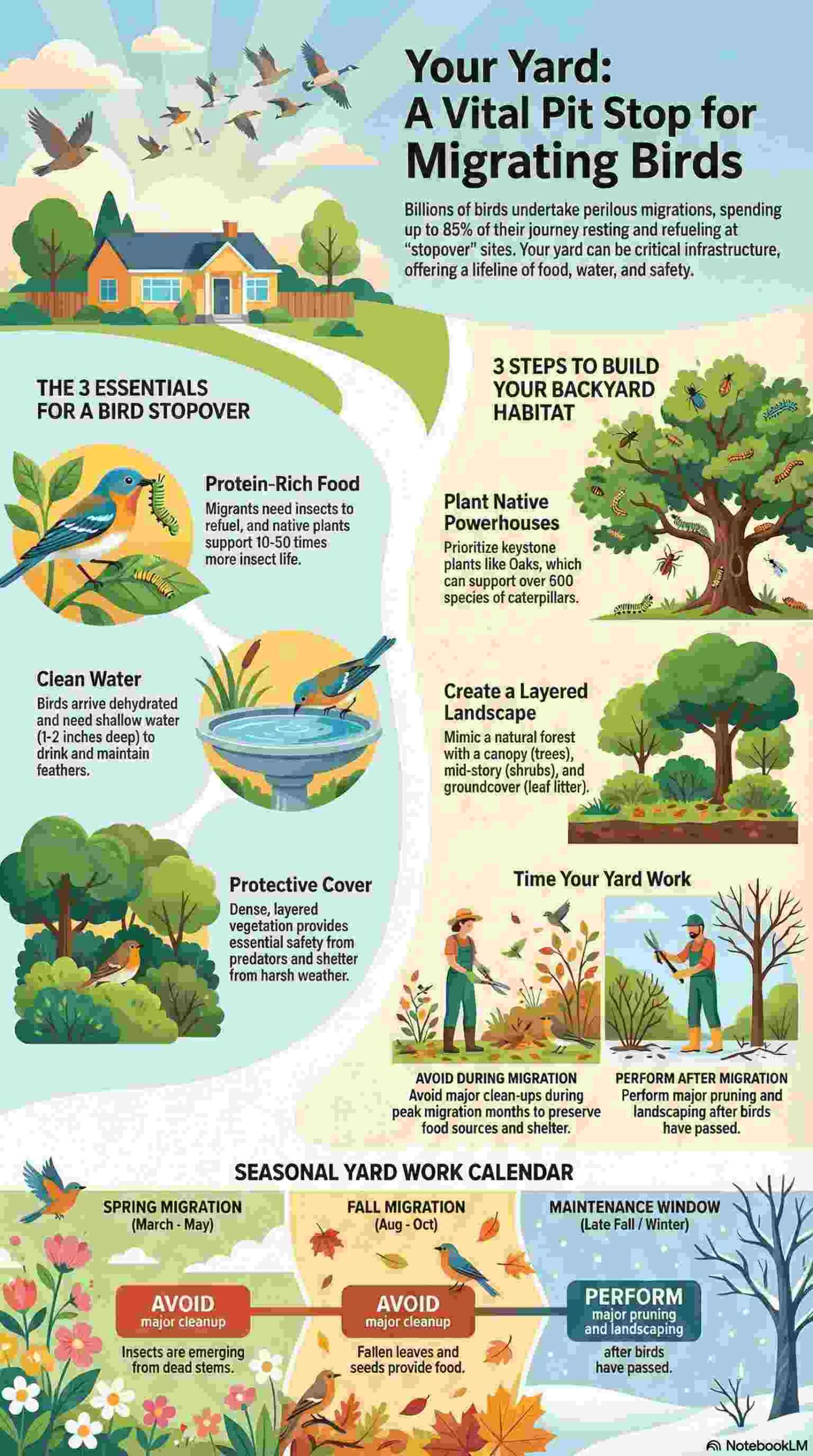
Essential Guide: Preparing Your Yard for Migrating Birds
The following infographic summarizes the essential steps to support migrating birds in your backyard at a glance.
Conclusion: Your Yard as Migration Infrastructure
The research compellingly demonstrates that residential properties represent critical migration infrastructure when designed and managed appropriately. Even small yards contribute meaningfully to continental migration networks when they provide the food, water, and cover migrants require during stopover.
Begin by assessing current habitat value. Does your yard offer native plants supporting insects? Are water sources available? Does vegetation structure provide the layered complexity migrants seek? Identify gaps and prioritize modifications providing maximum benefit.
Start simple with one or two native trees and a water feature, expanding based on results and available space. Let migrant use guide further development rather than implementing elaborate plans before understanding which species visit.
The goal involves creating functional stopover habitat genuinely supporting migration success, not merely attracting birds for observation. When your yard allows migrants to rapidly refuel and continue their journeys safely, you’re contributing to bird conservation at a continental scale.
For additional guidance on creating comprehensive bird habitat, explore bird-friendly garden design and creating bird sanctuaries.