
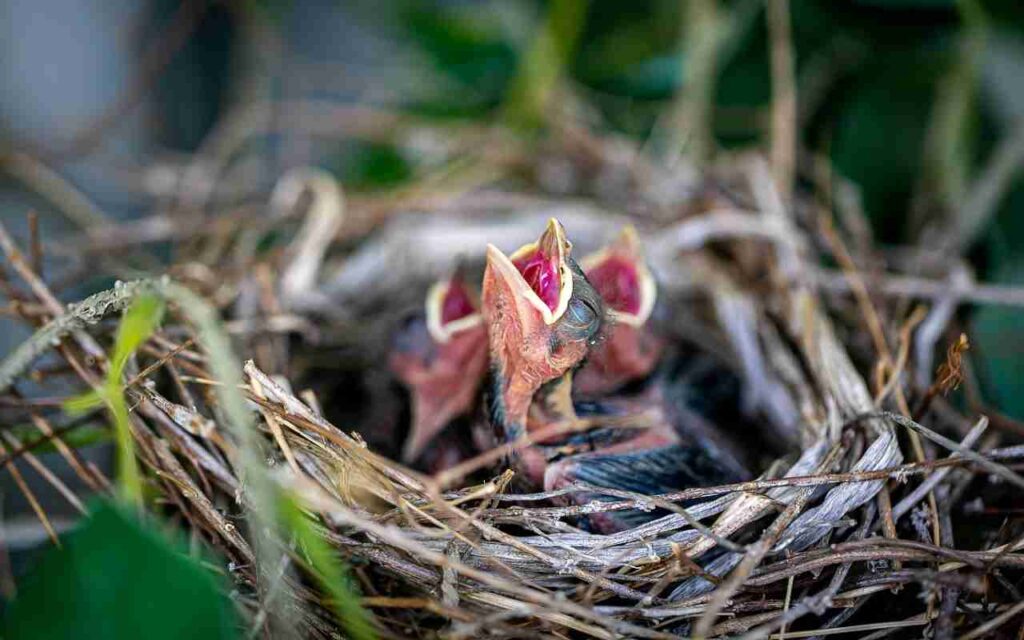
I watched a pair of cardinals build a perfect little nest in my honeysuckle bush last spring, twigs, grass, the whole deal. Three days after the eggs appeared, it was empty. No shells, no mess, just gone. That awful moment when you realize a predator got there first? Yeah, I’ve been there.
If you’ve ever wondered how to protect cardinal nests from predators, you’re definitely not alone. Cardinal nesting season is tougher than it looks. Research from central Ohio found that only about 27% of cardinal nests actually make it all the way through their 21-day nesting cycle. The main reason they fail? Predators. We’re talking crows, jays, squirrels, raccoons, snakes — even the neighbor’s cat.
The good news? You can make a difference. With a few smart choices, better nest spots, simple deterrents, and a more bird-friendly yard — you can give cardinals a real shot at raising their young safely right where you are.
- Only ~27% of nests survive the 21-day cycle.
- Main threats: cats, dogs, squirrels, raccoons, snakes, crows, jays.
- Use dense, thorny native shrubs for cover and escape routes.
- Keep cats indoors, supervise dogs, secure feeders and trash.
- Observe nests from a distance and provide insects, seeds, water.
Understand Common Predators of Cardinal Nests
Before you can protect cardinal nests effectively, you need to know what you’re up against. Bird nest predation comes from multiple directions, and different predators require different management strategies.
Show Transcript
How to Protect Cardinal Nests from Predators | Feathered Guru
0:00 – Introduction
If you’re a bird lover, you know the feeling: spotting a Northern Cardinal nest in your yard is thrilling, but then checking a few days later and finding it empty—heartbreaking! Today, we’ll show you how to protect cardinal nests and give these birds a real chance to successfully raise their young.
0:30 – The Reality of Cardinal Nesting
On average, only about 27% of cardinal nests survive to fledge chicks. That means almost three out of four nests fail—primarily due to predators. Understanding the threats is the first step toward protection.
1:00 – Common Cardinal Nest Predators
- Cats and Dogs: Cats hunt eggs and nestlings, while dogs can knock nests down accidentally. Keep cats indoors and supervise dogs near nesting areas.
- Squirrels and Raccoons: Agile climbers that raid nests. Use pole baffles and thorny shrubs to deter them.
- Snakes: Climbing snakes like rat snakes can reach nests; place nests at safe heights and remove nearby brush piles.
- Bird Predators: Blue jays, crows, and grackles watch for nests from above. Dense vegetation and distraction feeding reduce risk.
- Ground Mammals: Chipmunks can prey on low nests. Raise nests above 2 feet and provide dense cover.
2:20 – Creating Safe Nesting Locations
- Plant dense, layered native shrubs like ninebark, viburnum, and elderberry.
- Avoid isolated bushes—they act like neon signs for predators.
- Offer multiple nesting options with escape routes.
- Keep feeders 10–15 feet away from nests to avoid attracting predators.
3:00 – Active Yard Defenses
- Secure Your Yard: Lock trash cans, bring pet food indoors, remove attractants.
- Install Deterrents: Motion-activated sprinklers or lights scare nocturnal predators.
- Add Barriers: Thorny shrubs create a natural wall around nests.
3:50 – Pro Tips for Nest Survival
- Cardinals don’t usually use birdhouses, but protecting boxes for other birds reduces predator traffic.
- Avoid pesticides to support insects that nestlings need.
- Limit direct nest visits; repeated checks leave scent trails for predators.
- Keep cats indoors—this single action has the biggest impact on nest survival.
- Provide supplemental protein like mealworms and clean water sources for parents.
5:00 – Conclusion
By designing a predator-safe yard, using active defenses, and avoiding common mistakes, you can turn your yard into a cardinal sanctuary. Here, cardinals can safely raise a family, and you can enjoy the joy of watching fledglings take their first flight.
Are you ready to become a backyard guardian? Start today and give cardinals the best chance at a successful nesting season.
Cats and Dogs
Let’s start with the most controversial predators: domestic pets. Research documenting video evidence of nest predation in Ohio found that domestic cats (Felis catus) are verified predators of cardinal nests, accounting for a significant portion of documented predation events. Even well-fed outdoor cats hunt, it’s instinct, not hunger.
Dogs cause problems too, though usually not by directly eating eggs or chicks. Large dogs jumping at low shrubs can knock nests down or disturb them enough that parents abandon them. I’ve seen my neighbor’s retriever accidentally destroy a cardinal nest just by investigating the interesting bird scent in a bush. The dog meant no harm, but the result was the same.
Backyard bird safety starts with managing pets. Outdoor cats should be kept indoors during nesting season (March through August), full stop. If you absolutely must let cats outside, use a breakaway collar with a bell and supervise outdoor time. Dogs should be leashed or supervised when cardinals are nesting in accessible shrubs.
Squirrels and Raccoons
Eastern gray squirrels and raccoons are opportunistic mammal predators of birds that devastate nest success rates. According to the Malpass et al. 2017 study, gray squirrels were among the six most common documented nest predators in urban Columbus, Ohio, accounting for numerous confirmed predation events on cardinal nests.
Squirrels raid nests for eggs and sometimes nestlings. They’re agile climbers with excellent spatial memory who remember productive food sources. Once a squirrel discovers that cardinal nests contain edible protein, it will systematically check other nests in your yard. Common nest predators cardinals face include both fox squirrels and gray squirrels, depending on your region.
Raccoons are nocturnal wildlife risks to bird nests that can climb, dig, and manipulate objects with dexterous front paws. They’re incredibly intelligent and persistent. A raccoon that finds a nest will often return night after night, systematically raiding every accessible nest in the area. Tracks near destroyed nests often reveal the culprit, raccoon prints look like tiny human hands.
Snakes and Other Wildlife
Snake threats to nests are real but region-dependent. Rat snakes, corn snakes, and other climbing species actively hunt bird nests. They’re phenomenally good at it too, silent, patient, and able to access nests that mammalian predators can’t reach. Snakes swallow eggs whole and can consume entire clutches plus nestlings in a single visit.
Blue jays, crows, and grackles are bird nest predators too. Video documentation has confirmed that these corvids and larger songbirds depredate cardinal eggs and nestlings. Jays in particular are notorious nest robbers. I’ve watched a blue jay methodically search shrubs in my yard, clearly hunting for nests. They’re smart, visual hunters that remember locations.
Chipmunks, despite their cute appearance, also raid ground-level or low nests. Any nest within two feet of the ground faces elevated predation risk from ground-dwelling mammals. The threats to cardinal eggs are literally everywhere, ground, air, and trees. For more on common predators, visit how to protect baby birds from predators.
| Predator | Nest Threat | Effective Deterrents |
|---|---|---|
| Domestic Cats | Eat eggs & chicks, disturb nests | Keep indoors, supervise outdoor time, bell collars |
| Dogs | Knock nests, disturb incubating birds | Supervise or leash near nesting shrubs |
| Squirrels | Raid eggs & nestlings | Metal baffles on poles, thorny shrubs, remove easy access points |
| Raccoons | Nocturnal raiders, persistent | Pole baffles, motion-activated lights/sprinklers, remove food sources |
| Snakes | Swallow eggs & nestlings | Pole baffles, inaccessible nesting height, remove brush piles |
| Blue Jays / Crows | Egg & chick predation | Dense vegetation, distraction feeding away from nests |
| Chipmunks / Ground Mammals | Eat eggs in low nests | Raise nest sites above 2 ft, dense cover, thorny shrubs |
Choose Safe Nesting Locations
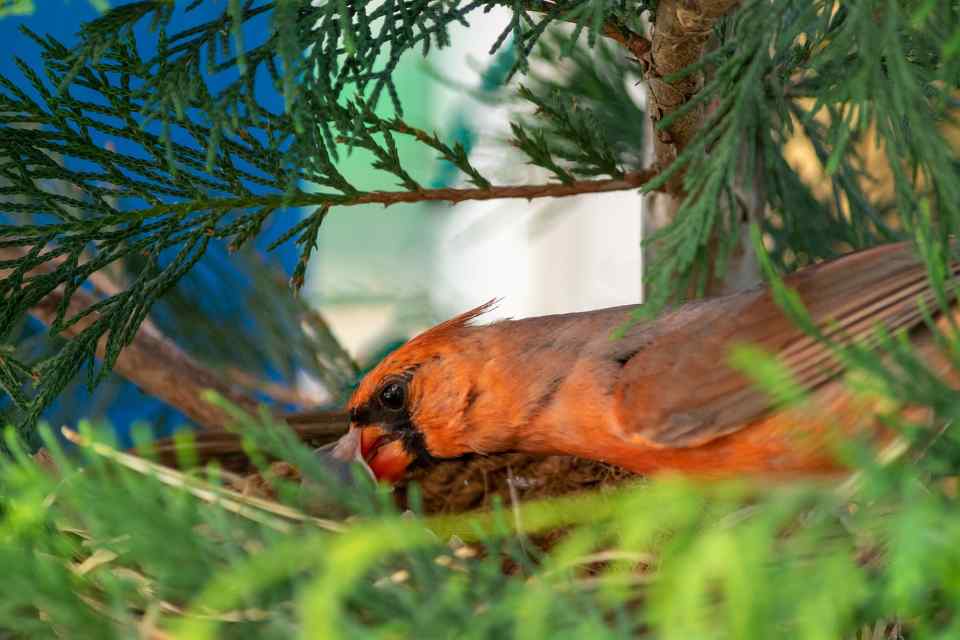
Cardinals can’t read your carefully researched “best practices” guide, but you can influence where they nest by managing habitat strategically. Cardinals nest site selection follows predictable patterns based on vegetation density, cover, and foraging opportunities.
Safe nesting habitat for cardinals requires dense, mid-level shrubs with good concealment. Research from Birds of the World indicates that territories with successful nests have significantly higher foliage density and patchiness at 2 meters throughout the territory compared to territories with unsuccessful nests. This means thick, layered vegetation matters more than specific nest site characteristics.
In a 1994 study published in The Condor, researchers found that the nesting success rate of Northern Cardinal nests in southwestern Ohio was only about 15%. All known or suspected failures were due to predation. The authors concluded that, because of the wide number of predator types, there may be no reliably “safe” nest site, only sites that simply avoid detection by the particular predator present.
So what does this mean practically? Create best nesting spots for cardinals by providing multiple options. Plant dense native shrubs like ninebark, viburnum, elderberry, and spicebush in clusters. Avoid planting invasive exotic shrubs like Amur honeysuckle, which research shows actually increases nest predation rates despite cardinals preferring to nest in them. That’s called an ecological trap.
Low-risk nest placement means offering nests between 3-10 feet high in dense vegetation with multiple escape routes. Cardinals need to see predators approaching and have clear flight paths to escape. Single isolated shrubs in open lawns are terrible nest sites, they’re like putting a neon sign saying “EGGS HERE” for every predator in the neighborhood. For detailed information on cardinal nesting preferences and typical locations, check out where do northern cardinals build their nests.
Secure nesting locations also include thorny or dense shrubs that physically impede predator access. Native hawthorn, blackberry, and raspberry brambles make excellent nest sites because squirrels and raccoons hesitate to navigate the thorns. The concealment strategies for bird nests that evolution favored are the same ones you should promote: density, thorns, and multiple nest site options. Learn more at how to encourage birds to nest in your garden.
Use Nest Boxes and Predator Guards
Cardinals don’t typically use enclosed nest boxes, but if you’re providing houses for other species, you need predator guards for bird nests to prevent the nest box from becoming an easy buffet for predators.
Birdhouse predator guard installation involves adding physical barriers that prevent predators from reaching into the entrance hole. Metal predator guards extend the entrance tunnel by 1.5-2 inches, making it impossible for raccoons to reach inside with their long arms. These guards are essential for any nest box and cost less than ten bucks.
Mounting height matters enormously for nest box protection cardinals and other species. Boxes should be mounted 5-8 feet high on metal poles, not wooden posts that squirrels and raccoons easily climb. A properly installed pole baffle below the box creates an impassable barrier for climbing mammals. Cone-shaped or cylindrical baffles at least 4 feet off the ground work best.
Snake-proof birdhouse for cardinals (or other species) requires both a pole baffle and a predator guard. Snakes can climb smooth metal poles if they’re determined, but baffles make it extremely difficult. Some people use greased poles, but this is messy and needs frequent reapplication. A quality baffle is the better solution.
Safe nesting boxes should also be positioned away from tree branches that predators could use as launching platforms. Place boxes at least 10-15 feet from trees and buildings. If a squirrel can jump to your nest box, it’s not properly protected. Protective birdhouses combine proper mounting, baffles, predator guards, and smart placement.
While cardinals won’t use these enclosed boxes, protecting the nest boxes in your yard reduces the overall predator population pressure. Every predator that successfully raids a nest box is a predator that might have targeted your cardinal nest instead. For specific feeder and housing tips, check out how to choose the right bird feeder.
Deter Predators Naturally
You can’t eliminate predators, nor should you try, they’re part of the ecosystem. But you can make your yard less attractive to them through natural predator deterrents for cardinals that don’t harm wildlife.
How to deter raccoons from bird nests starts with eliminating food sources. Secure garbage can lids with bungee cords or locking lids. Don’t leave pet food outside. Remove bird feeders at night if raccoons are visiting them, feeders attract raccoons, which then discover nests. Electric fencing around compost bins prevents raccoon access to another food source.
Motion-activated deterrents work surprisingly well for backyard predator management. Motion-activated lights startle nocturnal predators like raccoons and opossums. Motion-activated sprinklers are even more effective, predators learn quickly that your yard equals an unwelcome shower and move on. These are humane wildlife protection methods that don’t harm animals.
Keep cats away from bird nests by making your yard less appealing to roaming cats. Motion-activated sprinklers work brilliantly here too. Citrus-scented deterrents (cats hate citrus) around the perimeter may help. Thorny or dense shrubs create physical barriers. Some people successfully use ultrasonic deterrents, though results vary.
Non-lethal predator control for snakes is trickier. Snakes are protected in many states, and they’re actually beneficial for controlling rodents. The best approach is making nest sites inaccessible rather than trying to exclude snakes from your entire yard. Keep grass mowed short near nesting areas, snakes prefer cover. Remove brush piles and wood stacks near where cardinals nest.
For bird predators like jays and crows, the most effective predator-friendly bird habitat strategy is distraction. Provide alternative food sources away from nesting areas. Dense vegetation makes it harder for visual hunters to spot nests. There’s not much else you can do, these birds are native, protected, and have every right to be there.
IMO, the key is creating a humane wildlife protection strategy that balances the needs of all species. You want cardinals to succeed, but that doesn’t mean declaring war on every predator. Smart habitat design reduces predation naturally without requiring constant intervention. For additional protective strategies, visit bird-friendly garden design.
Maintain a Predator-Safe Yard
Long-term cardinal nesting season safety requires thinking about your entire yard as an interconnected system. Predator-resistant yard design considers sight lines, escape routes, food sources, and predator movement patterns.
Safe garden practices for birds start with yard layout. Position bird feeders 10-15 feet from dense shrubs where cardinals nest. This seems counterintuitive, but here’s why it works: feeders attract predators. If feeders are right next to nesting habitat, you’re essentially ringing a dinner bell for raccoons and squirrels. Separate feeding stations from nesting areas.
Cardinal-friendly landscaping includes creating “layers” of vegetation. Groundcovers, low shrubs, medium shrubs, and small trees provide multiple hiding spots and escape routes. Cardinals need to move between these layers safely. A yard with just mowed lawn and one shrub offers zero predator protection.
Shrub density matters more than you’d think. Secure backyard habitat means planting shrubs in clusters of 3-5 individuals, not spacing them evenly across your lawn like a grocery store parking lot. Clustered shrubs create what biologists call “structural complexity”, multiple routes in, out, and through. Predators have to work harder, which often means they move on to easier targets.
Safe flight paths between cover are essential for wildlife-friendly nesting for cardinals. Cardinals are ground foragers but need quick escape routes to elevated cover. Plant shrubs and small trees to create “stepping stones” across your yard. Cardinals hopping on the ground should never be more than 10-15 feet from protective cover.
Human tips protect bird nests include minimizing disturbance during nesting season. Don’t prune shrubs between March and August. Avoid walking near active nests repeatedly, your scent trail can actually lead predators directly to nests. If you must check a nest, approach from different directions each time.
Backyard predator control also means managing the habitat edges. Thick borders of thorny shrubs like native raspberry or blackberry create natural barriers that deter mammalian predators from entering your yard. These edge plantings work as the first line of defense in your predator-resistant yard design.
Monitor and Support Nesting Success
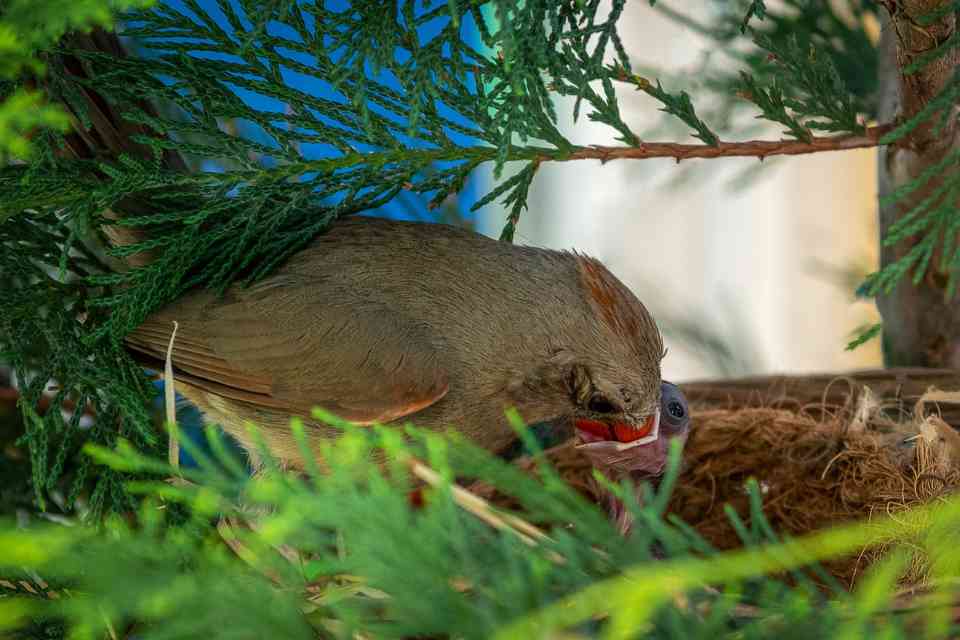
Watching cardinals nest in your yard is exciting, but you need to balance your curiosity with the birds’ need for minimal disturbance. Cardinal nest protection requires knowing how to observe without interfering.
How to safeguard cardinal nests means monitoring from a distance. Use binoculars from inside your house rather than approaching nests. Every time you visit a nest, you potentially leave scent trails that some predators can follow. You also risk flushing the incubating female, leaving eggs or nestlings exposed.
Monitor cardinal activity by watching parent behavior rather than checking the nest directly. Adults making frequent trips with food in their beaks? Chicks have hatched and are being fed. Female sitting tight on the nest? She’s probably incubating. Both parents acting agitated and giving alarm calls? A predator is nearby.
Support successful nesting by providing resources nearby without disturbing the nest site. Fresh water in a birdbath 20-30 feet from the nest helps parents stay hydrated during long incubation stints. Supplemental high-protein food like mealworms can help parents feed growing chicks more efficiently.
Caring for backyard cardinals during nesting means being their silent partner. Deter predators through habitat management, not by physically guarding nests. Cardinals evolved to deal with predation pressure, your job is reducing that pressure through smart yard design, not standing guard 24/7.
Nest observation tips for the curious: limit checks to once every 3-4 days maximum. Never touch the nest, eggs, or chicks. Don’t clear vegetation for a “better view”, that concealment is literally protecting the nest. If parents are nearby giving alarm calls, you’re too close. Back off immediately.
Bird breeding support extends beyond the nest itself. Maintain pesticide-free habitat that produces abundant insects. Parents need thousands of caterpillars to successfully raise a brood. Chemical-free yards support cardinal reproduction far more than anything else you can do. Learn more about supporting birds year-round at complete backyard birding guide.
Foods and Water for Nesting Cardinals
Cardinal diet during nesting shifts dramatically toward high-protein insects. While adults still eat seeds, they feed nestlings almost exclusively insects and spiders. Supporting this dietary shift is crucial for successful nesting.
Supplemental feeding for cardinals during breeding season should focus on providing the insects they need. Skip the pesticides entirely, every caterpillar, beetle, and spider in your yard is potential food for cardinal nestlings. According to research, cardinal nestlings consume approximately 95% animal matter and only 5% vegetable matter.
Best seeds for breeding cardinals for the adults include black oil sunflower seeds and safflower seeds at platform feeders. Adults need high-fat, high-protein seeds to maintain their own condition while working incredibly hard to feed chicks. Bird feeder tips for cardinals include keeping feeders consistently stocked but positioned away from nest sites to avoid attracting predators. For comprehensive strategies on attracting and keeping cardinals in your yard year-round, visit how to attract cardinals to your backyard.
Water sources for nesting birds are critically important but often overlooked. A birdbath with fresh water provides drinking water for dehydrated parents and bathing opportunities that help adults control feather parasites. Position water sources 20-30 feet from known nest sites, close enough to be convenient, far enough to avoid leading predators to nests.
Feeding for nestling growth happens naturally if you’ve created insect-rich habitat. Plant native trees (especially oaks), shrubs, and perennials that support caterpillars and other insects. Avoid ornamental plants, they support almost no insect life. One study found that native oaks support 511 species of caterpillars while non-native ginkgos support 5 species. That difference matters when you need to produce thousands of insects for hungry chicks.
Offering mealworms at feeders can supplement natural insect populations, especially if your yard is still transitioning toward native plantings. Live mealworms work better than dried because parent birds preferentially feed live, moving prey to nestlings. However, natural insect populations from native plants are always superior. For more feeding guidance, see what do cardinals eat: a seasonal guide.
Common Mistakes to Avoid
Even well-intentioned backyard bird enthusiasts make mistakes when protecting cardinal nests that actually decrease nest success. Let’s talk about what NOT to do.
Pesticide risks to birds cannot be overstated. Insecticides kill the food that cardinal nestlings desperately need. Herbicides eliminate the native plants that produce insects. Mosquito spraying services kill beneficial insects along with mosquitoes. Harmful backyard practices that use chemicals create deserts for wildlife while providing zero actual benefits to nest success.
Over-checking nests is another common bird nesting error. I get it, you’re excited and invested in “your” cardinals. But repeatedly visiting nests leaves scent trails, causes stress, and can lead to nest abandonment. Some predators, particularly corvids, watch human behavior and investigate locations where humans repeatedly go.
Pruning or “tidying up” during nesting season ranks high on the list of threats from backyard mismanagement. Cardinals often nest in vegetation that humans consider “messy” or “overgrown.” Resist the urge to clean up until after nesting season ends in late summer. That tangled honeysuckle might look ugly to you, but it’s perfect cover for a cardinal nest.
Feeding bread or inappropriate foods is a human impact on nesting cardinals that seems helpful but causes problems. Bread has zero nutritional value and can fill up birds on empty calories when they need protein and fat. Stick to proper birdseed or let natural food sources do their job.
Placing feeders directly adjacent to nesting habitat seems logical but attracts predators to the exact location where cardinals are most vulnerable. Backyard predator management requires separating feeding stations from nesting areas by at least 15-20 feet.
Allowing outdoor cats during nesting season is probably the single biggest mistake when protecting cardinal nests. Free-roaming cats kill billions of birds annually in North America. Your sweet indoor/outdoor cat is a highly efficient predator whether you see evidence or not. Keep cats inside from March through August minimum. FYI, this is the most effective single action you can take for nest success 🙂
Conclusion
Cardinal conservation in suburban and urban yards comes down to creating predator-safe backyard environments through smart habitat design and management. You can’t eliminate nest predation, it’s been the primary selective pressure shaping cardinal evolution for millions of years. But you can increase nesting success by stacking the odds in their favor.
Protecting birds in your yard requires understanding the predator guild, providing dense native vegetation, managing pets responsibly, and maintaining pesticide-free habitat. Safe bird habitats combine physical cover, abundant insect food, fresh water, and minimal human disturbance. These elements work together synergistically.
Support breeding cardinals by thinking long-term about habitat rather than trying to protect individual nests. Create yards with multiple potential nest sites in thorny, dense native shrubs. Maintain these shrubs year-round without excessive pruning. Eliminate pesticides completely. Manage pets strictly during nesting season. Provide supplemental seeds and water away from nest sites.
Backyard bird protection isn’t complicated, but it does require commitment. Research shows that even with perfect habitat, only 15-25% of cardinal nests successfully fledge young in human-dominated landscapes. Those aren’t great odds, but cardinals are adapted to it, they’re multi-brooded, quick to renest, and persistent. Your job is giving them the best possible foundation for those repeated attempts.
Last June, I watched a pair of cardinals successfully fledge four chicks from a nest in my native viburnum after two previous nest failures. The parents had tried nesting in an exotic burning bush (predated by a squirrel) and then in an isolated forsythia (predated by something nocturnal, probably a raccoon). The third attempt succeeded because it was in dense, thorny native vegetation positioned with good sight lines and multiple escape routes. Location, vegetation, and luck finally aligned.
That success didn’t happen by accident, it happened because I’d spent three years converting my yard to native plants, eliminating pesticides, managing my cats, and creating layered habitat with multiple nesting opportunities. The cardinals had options, and eventually one option worked.
By implementing these predator deterrence strategies and creating secure nesting habitat, you can help more cardinals successfully raise their young. Start with dense native shrubs, keep cats indoors, skip the chemicals, and let nature handle the details. Those bright red flashes of color visiting your yard deserve every advantage you can give them.
Trust me, watching fledglings take their first wobbly flights from a nest you helped protect? Absolutely worth every bit of effort.