
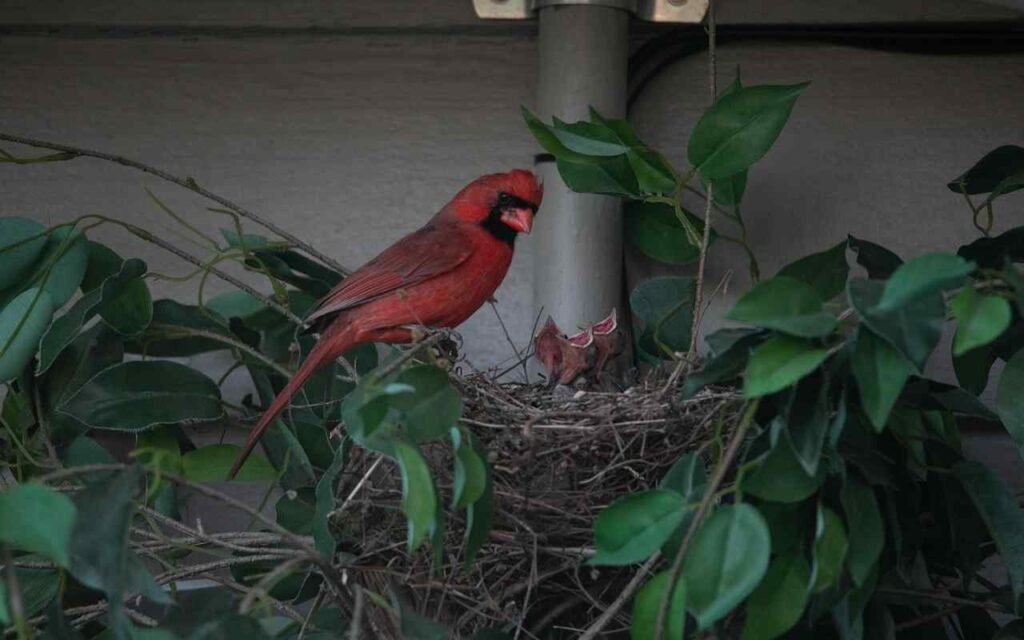
Learning to locate where northern cardinals build their nests transforms a standard backyard walk into an insightful look at avian survival strategy. While many birdwatchers expect these vibrant red songbirds to choose high, exposed tree branches, cardinals are exceptionally practical and selective when choosing a secure physical location for their eggs.
Analyzing these unique nesting choices across diverse suburban landscapes requires tracking specific localized vegetation layers. To spot these hidden structures safely without disturbing the breeding pairs, you must learn to recognize subtle camouflage signs, unique vegetation preferences, and the exact nesting materials they rely on to shield their offspring from predators.
Quick Answer to Cardinal Nesting Zones
Northern cardinals build their nests primarily in dense tangled shrubs and low-to-mid-level branches measuring one to fifteen feet off the ground while utilizing thick vegetation like rose, honeysuckle, dogwood, and grapevine for maximum visual concealment.
While females construct the three-layered cup nest using twigs, leaves, and soft grass linings, males guard the territory fiercely from March through August to protect multiple consecutive broods from local predators.
Watch How to Safely Spot a Northern Cardinal Nest
This brief field video demonstrates how to locate active breeding territories without disturbing local wildlife. Watching these behavioral nesting cues in real time helps you apply the visual tracking tips outlined below.
Typical Nesting Locations for Northern Cardinals
Understanding local vegetation structures provides critical contextual data for tracking nesting pairs throughout the spring breeding season. Their presence relies entirely on thick visual concealment elements that shield their fragile offspring from passing aerial and ground predators.
To help map these spatial shifts accurately, you can learn more about typical cardinal nesting locations and other interesting cardinal facts to build your baseline field data.
Dense Tangled Shrubs and Concealed Garden Bushes
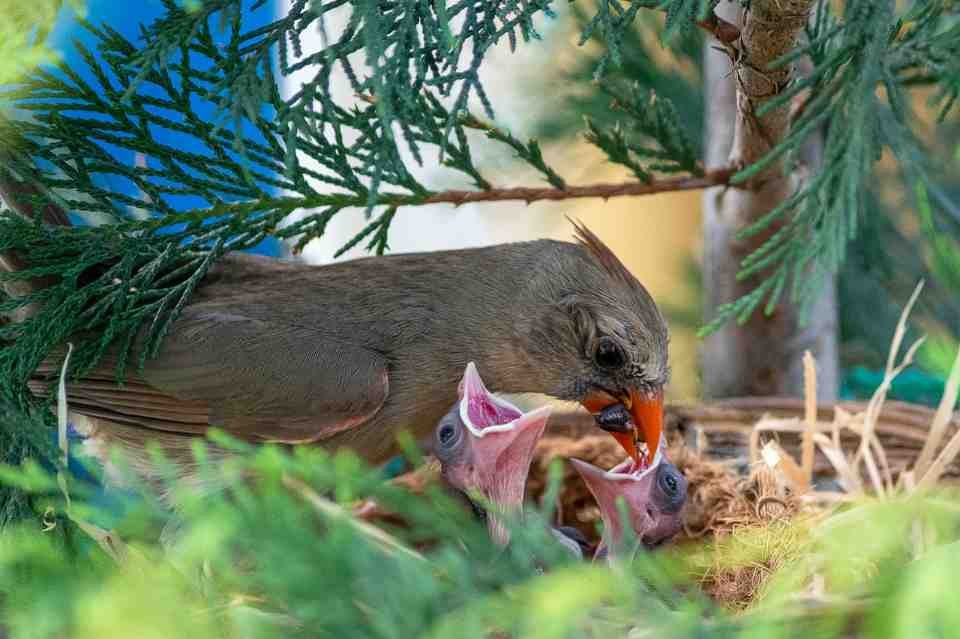
Densely packed shrubbery serves as the primary nesting choice for this species. Cardinals actively seek out thick foliage configurations because the tangled branches provide an ideal combination of natural camouflage and physical cover. Properties featuring mature honeysuckle, flowering dogwood, multi-flora rose bushes, and thick privet hedges provide the exact privacy layers needed to attract nesting pairs.
Low Tree Branches and Mid Level Foliage Canopies
Unlike cavity-nesting birds or species that seek towering tree tops, these songbirds prefer low to mid-level branches situated between one and fifteen feet off the ground. Positioning their nests within this lower vertical tier keeps them closer to active ground food resources. When inspecting oak, maple, or pine trees, birdwatchers should focus their attention strictly on the lower branch whorls rather than scanning upper canopies.
Tangled Vine Fortresses and Border Fence Hideouts
Thick vine jungles offer exceptional security for developing broods. Grapevines, Virginia creeper, and dense English ivy growing along perimeter fences form a natural fortress that is incredibly difficult for heavy predators to navigate safely. These dense, overlapping vine structures provide excellent structural anchor points that hold up well against heavy wind and spring rainstorms.
Creative Human Made Structures and Porch Overhangs
When natural vegetation layers are scarce, breeding pairs occasionally utilize stable artificial structures. They will construct nests inside hanging flower baskets, wide window ledges, dense potted porch ferns, and abandoned farm equipment. While these locations are rare, they occur when human spaces provide the exact height boundaries and overhead shelter that match their survival checklist.
Structural Architecture and Layered Materials of a Cardinal Nest
Understanding the precise physical architecture of these structures provides a valuable biological baseline for sorting them from general forest debris. Far from a random cluster of twigs, the construction follows a highly organized, four-stage layout pattern that ensures maximum weather resistance and insulation for developing eggs.
Their standard nesting profile relies on a predictable sequence of building materials:
- The Foundational Layer: Coarse outer twigs and grapevine bark strips are crushed by the female’s beak to form a pliable, heavy structural base.
- The Intermediate Barrier: A dense matting of compressed leaves and dried weed stalks provides windbreak protection and stabilizes the bowl shape.
- The Soft Inner Lining: Fine rootlets, pine needles, hair, and soft grasses line the deepest section of the cup to shield hatchlings from moisture.
- The Geometric Proportions: The finished nesting cup maintains a tight shape measuring roughly four inches across with an overall height averaging three inches.
The structural construction process depends entirely on a strict division of labor during breeding periods. While the male cardinal aggressively patrols nearby trees to defend territory, the female remains the primary mason who weaves, shapes, and stamps the pliable twigs into a dense cup using her feet.
Strategic Criteria for Choosing Optimal Breeding Habitats
Transforming a standard backyard into an inviting nesting sanctuary requires a strategic addition of dense, structural vegetation layers. Property owners can fast-track local territory establishment by cultivating a diverse mix of early-blooming flora, thick horizontal branch networks, and persistent winter berry crops that native wildlife recognize instinctively.
Implementing these targeted landscaping adjustments will encourage local birds to establish roots:
- Cultivate Low Foraging Thickets: Planting thick rows of native serviceberry, red-osier dogwood, and spicebush provides an ideal mid-level visual canopy that female cardinals prioritize during spring site scouting.
- Establish Thorny Perimeter Shields: Adding dense clusters of multi-flora roses or defensive winterberry holly along open fence lines creates a physical fortress that blocks domestic cats and aerial hawks.
- Maintain Soft Wood Snags: Leaving dead tree stumps standing provides an active foraging ground for wood-boring insects, offering an essential high-protein food resource during the peak nesting season.
Integrating these specialized vegetation layouts ensures your yard provides year-round resource stability rather than leaving hazardous nutritional gaps.
To learn exactly how to match your local soil type with the specific regionally adapted flora that North American songbirds have relied on for thousands of years, review our foundational guide on native plants for birds to build a thriving backyard habitat ecosystem.
Annual Breeding Seasons and Multiple Consecutive Broods
Northern cardinals maintain a surprisingly early and highly productive reproductive schedule compared to other native songbirds. According to the field data archived in the comprehensive Birds and Blooms Cardinal Nesting Guide, their active nesting season kicks off as early as March and extends straight through the late summer months of August.
Their intensive annual reproductive timeline relies on several predictable biological behaviors:
- Multiple Annual Broods: Healthy breeding pairs routinely raise two to three separate sets of fledglings during a single calendar year to maximize overall population survival rates.
- Total Nest Abandonment: They almost never reuse an old structure twice, meaning the adults will abandon the old bowl immediately after the first clutch fledges to begin constructing a fresh replacement nearby.
- Rapid Lifecycle Turnaround: The male bird often takes over feeding the initial fledglings while the female immediately begins building a new nest cup a few feet away to host the next consecutive brood.
Observing a pair of adult birds consistently patrolling the inner branches of a single yard bush for weeks indicates an active territory.
To track how these summer nesting shifts fit into the birds’ year-round behavior patterns and northern range expansions, check out the comprehensive species maps maintained in the National Audubon Society Northern Cardinal Guide.
Maintaining an undisturbed perimeter during these crucial summer weeks ensures the nesting pair can successfully raise their multiple broods back to back without suffering predator disruptions.
Safe Field Tracking Tips for Spotting Wild Nests
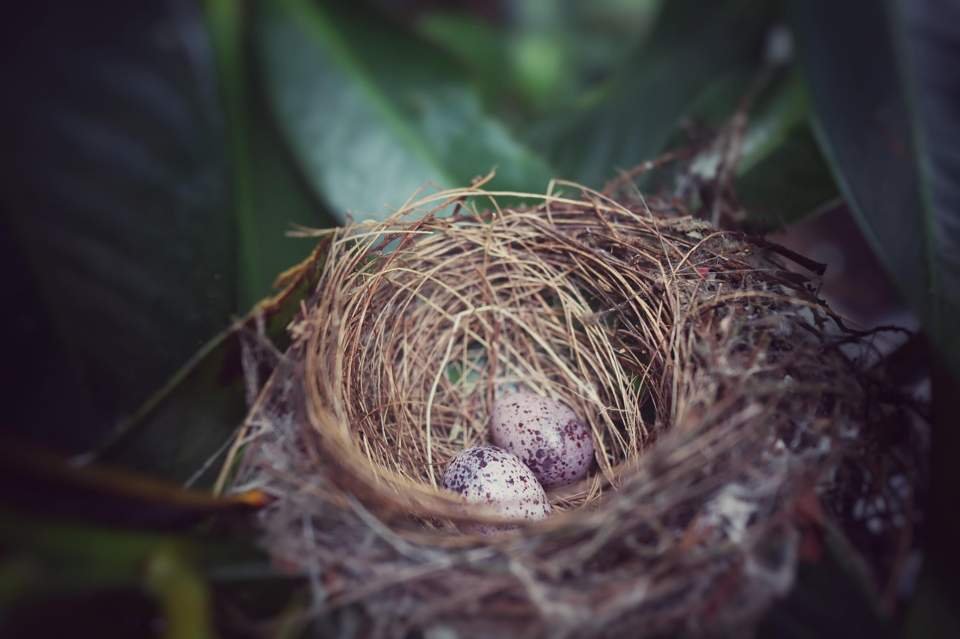
Observing active nesting sites requires strict adherence to ethical wildlife viewing practices to prevent adult parents from abandoning their eggs. Introducing sudden human disturbances or leaving clear foot trails near low foliage can inadvertently lead backyard predators directly to the concealed breeding zone.
Implementing these low-impact field habits allows you to verify a nest location safely from a distance:
- Track Material Transport: Monitor the movements of the female cardinal when she is actively gathering nesting materials. Following her flight path as she carries long grass stems or grapevine bark pieces will reveal the exact structure location without requiring you to search the brush manually.
- Listen for Low Intensity Vocalizations: Focus your auditory tracking on soft, metallic chip notes. Adult cardinals frequently communicate using these quiet, repetitive contact calls when approaching the nest perimeter to keep a low profile.
- Scan Lower Vegetation Strata: Direct your field optics strictly at dense mid-level thickets and the lower forks of small trees. Remember that these birds focus their construction efforts between three and ten feet off the ground rather than scanning high forest canopies.
- Maintain Strict Physical Distance: Avoid approaching the nesting structure closely or touching the surrounding branches to inspect the egg clutch. Getting too close leaves a distinct scent trail for raccoons and outdoor cats, creating a severe survival hazard for the developing brood.
Utilizing a quality pair of binoculars or a long-range camera lens allows property owners to monitor fledgling development safely from a porch or window line. Prioritizing this passive observation strategy protects the vulnerable breeding pair from unnecessary stress, ensuring a successful hatching cycle for all consecutive summer broods.
Practical Landscaping Strategies to Attract Nesting Breeding Pairs
Transforming a standard backyard into an inviting nesting sanctuary requires a strategic addition of dense, structural vegetation layers. Property owners can fast-track local territory establishment by cultivating a diverse mix of early-blooming flora, thick horizontal branch networks, and persistent food crops that native wildlife recognize instinctively.
Implementing these targeted landscaping adjustments will encourage local birds to establish roots:
- Cultivate Low Foraging Thickets: Planting thick rows of native serviceberry, red-osier dogwood, or compact evergreens provides the exact mid-level visual canopy that female cardinals prioritize during spring site scouting.
- Provide Resource Stability: Maintain a reliable freshwater bird bath alongside a heavy-duty platform feeder stocked with black oil sunflower seeds to sustain adult energy levels throughout the demanding breeding season.
- Establish Quiet Perimeter Zones: Restrict heavy foot traffic and noisy outdoor machinery around the edges of dense property borders to provide a calm environment where scouting pairs feel secure enough to build.
- Avoid Installing Enclosed Nesting Boxes: Refrain from purchasing or mounting commercial birdhouses for this specific species, as they are open-cup nesters that strictly avoid dark, enclosed cavities.
Integrating these specialized vegetation layouts ensures your yard provides year-round resource stability rather than leaving hazardous nutritional gaps.
Common Misconceptions About Cardinal Nesting Biology
Widespread myths regarding avian breeding habits frequently confuse property owners attempting to support local wildlife. Clarifying these common biological misunderstandings ensures that homeowners can manage their yards effectively without relying on inaccurate tracking assumptions.
Backyard birdwatchers should evaluate the factual data behind these frequent misconceptions:
- The Supposed Tree Top Location: A common assumption suggests that these bright red songbirds seek out towering tree tops to raise their young. In reality, they are strictly low-to-mid-level nesters that focus their construction efforts between three and ten feet off the ground to stay close to rich insect foraging zones.
- The Perceived Annual Structure Reuse: Many observers believe that returning pairs save energy by occupying an abandoned mud bowl from the previous summer. In truth, they build a completely fresh open cup for every single breeding attempt, frequently constructing three independent nests across a single warm calendar season.
- The Human Scent Abandonment Myth: A long-standing old wives’ tale claims that touching a nest transfers human scent, forcing the adult birds to permanently reject the clutch. While North American passerines actually possess a highly limited, weak sense of smell, the physical act of trampling surrounding brush can scare adults away or leave clear trails for hunting predators.
Understanding these underlying nesting traits helps property owners accurately interpret backyard avian activity. Recognizing that these birds prioritize dense, low-profile privacy over high forest canopies allows you to plan highly effective yard conservation strategies all year long.
Why Understanding Cardinal Nest Placement Essentializes Backyard Conservation
Reviewing the advanced survival mechanics, distinct visual markings, and unique habitat selections of this resilient species proves that they are a cornerstone of North American backyard ecology. From the specific low-profile vegetation choices that drive female site selection to their highly predictable multi-brood annual cycles, these birds demonstrate superior environmental adaptability across both wild and suburban landscapes.
By shifting your approach from casual observation to structured field tracking, you can easily read local ecosystem health through the daily habits of your resident avian populations.
Maintaining an active awareness of their baseline biological markers ensures you can quickly classify individual yard visitors across all breeding stages. Verifying a secure open-cup configuration nestled within dense honeysuckle or lower pine branches provides immediate visual validation.
Furthermore, combining these vegetation checks with auditory monitoring of low-intensity chip notes and observation of female material gathering maneuvers guarantees total identification accuracy under any field conditions.
Documenting local sightings also allows property owners to participate directly in real-world conservation data tracking. Keeping a careful watch for active nesting sites or tracking the arrival of spring breeding pairs yields valuable data for regional researchers.
Ultimately, building a deep familiarity with this common red songbird transforms a standard neighborhood landscape into an engaging, active classroom for studying evolutionary success and avian biodiversity.