
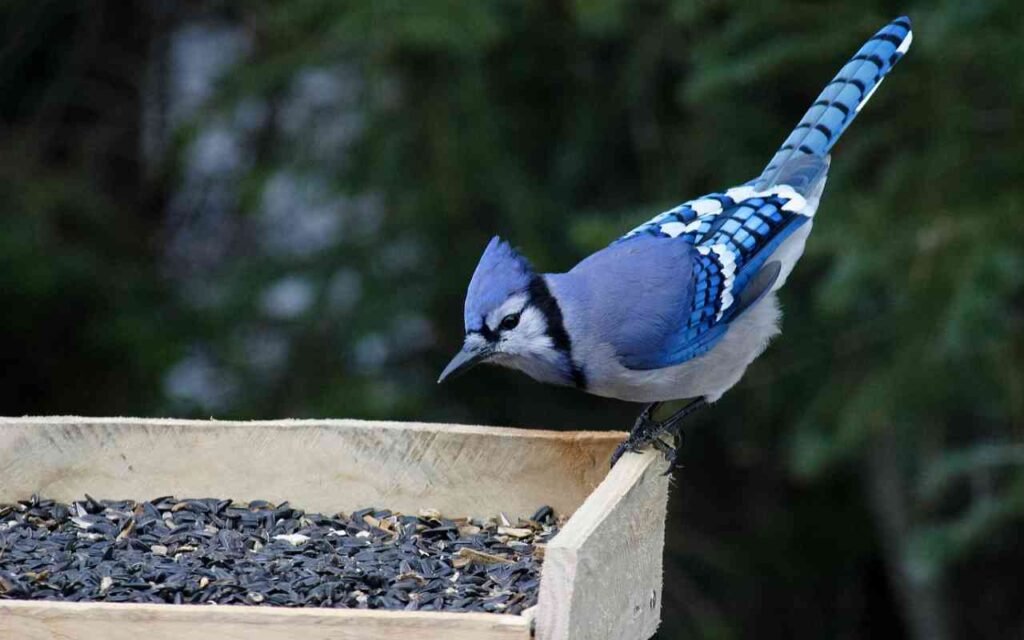
Observing a colorful corvid strutting confidently across your lawn makes it easy to see why birders love studying interesting facts about Blue Jays in the wild. These aggressive, round-chested visitors possess an incredibly bold intelligence that often catches backyard birdwatchers completely off guard.
When one dominated my platform feeder, its intense posture and field marks forced me to analyze its behavior. These birds use complex vocalizations and specialized foraging habits that will change how you view your backyard ecosystem.
What Are the Most Interesting Facts About Blue Jays?
The most surprising fact about Blue Jays (Cyanocitta cristata) is that their feathers contain zero blue pigment, appearing vibrantly blue solely due to structural light scattering within their feather barbs over brown melanin.
These highly intelligent corvids use deceptive hawk mimicry to clear feeders, perform bizarre “anting” rituals to neutralize formic acid, and will even intentionally consume limestone-rich residential house paint to satisfy spring calcium spikes.
Video Guide: Amazing Blue Jay Behaviors and Habits
To see these dynamic traits in action, watch our field breakdown highlighting the unique visual markers and aerodynamic survival strategies of these birds.
The Structural Optical Illusion of Blue Jay Plumage and Crest Communication
While the striking appearance of a Blue Jay suggests their features exist purely for visual display, their physical anatomy serves deep evolutionary and communicative functions. The most notable biological quirk is that their feathers contain zero blue pigment.
Instead, their plumage relies on structural light scattering where microscopic air pockets within the keratin feather barbs reflect light wavelengths. You can explore this science further in the Nature Canada Blue Jay Guide, which explains how microscopic structures make the feathers appear vibrantly blue over a base layer of dull brown melanin.
If a feather is removed from the bird and light cannot pass through it structurally, the optical illusion collapses and the feather reverts to its true grayish-brown appearance.
Beyond this unique feather physics system, their physical anatomy incorporates a highly visible, reactive crest on top of the head that functions as a primary tool for flock communication. This specialized tuft of feathers operates as an immediate visual indicator of the bird’s internal state and social standing.
According to comprehensive field data logged by the Cornell Lab of Ornithology All About Birds, Blue Jays dynamically raise the crest to maximum height when they are highly excited, agitated by local predators, or actively demonstrating dominance within their regional flock hierarchy.
Conversely, they flatten the crest smoothly against the skull when resting, foraging peacefully, or submissively interacting with breeding partners.
The Advanced Cognitive Problem-Solving Skills and Behavioral Intelligence of Blue Jays
Blue Jays display exceptional cognitive capabilities and problem-solving skills that mirror the advanced intelligence found across the entire Corvidae family. As documented in the comprehensive wildlife analysis by the Forest Preserve District of Will County, their sharp tactical intelligence allows them to navigate complex social hierarchies and manipulate their surroundings with ease.
This environmental adaptability relies heavily on highly advanced vocal mimicry tools. Blue Jays routinely imitate local predatory hawk calls to intentionally scatter smaller songbirds away from crowded backyard feeding stations, and they can even learn to replicate domestic sounds like barking dogs or residential car alarms.
Beyond their deceptive vocalizations, their complex foraging habits prove they are master spatial planners. A single bird can cache thousands of acorns and beech nuts over a single autumn season, meticulously burying them across hundreds of distinct subterranean hiding spots to ensure winter survival.
Field researchers have demonstrated that Blue Jays maintain a highly sophisticated spatial memory, allowing them to locate these hidden stashes months later with incredible accuracy. This intense, calculated resource management makes them incredibly successful backyard survivors.
This calculated intelligence also drives their vital role as local ecosystem sentinels. When an apex predator enters the area, Blue Jays immediately issue piercing, distinct alarm calls that function as a community warning system for all local wildlife.
While their assertive swoop-in style can easily dominate a standard backyard tray feeder, their calculated maneuvers are a reflection of superior problem-solving skills rather than malicious intent. Understanding these advanced behavioral traits confirms why they remain a uniquely fascinating subject for backyard birdwatchers.
The Complex Social Structures and Cooperative Behavioral Dynamics of Blue Jays
Blue Jays operate within highly intricate social hierarchies that blend cooperative community behavior with intense localized resource competition. As detailed in the wildlife feature by The Bird House, these vibrant corvids balance an active communal flock structure with deeply complex, calculated field interactions.
During the late autumn and winter seasons, separate breeding pairs merge into larger communal flocks to scout for shared food supplies and maintain a collective winter survival strategy.
Within these larger groups, individual birds rely on highly organized cooperative defense mechanics to neutralize environmental threats. When a local apex predator like a Cooper’s hawk or a feral cat invades their territory, passing Blue Jays quickly band together to aggressively mob the target.
They loop high-pitched alarm calls and execute synchronized diving passes to force the larger predator out of the immediate nesting area. This collective tactical approach provides vital, passive protection to all neighboring songbird species sharing the canopy ecosystem.
However, their social dynamics incorporate a fiercely competitive drive whenever high-value foraging assets or specific nesting sites are at stake. Dominant pairs routinely engage in intense physical posturing to claim backyard platform trays, actively driving away larger mammals like eastern gray squirrels and smaller competing passerines alike.
This calculated shift from communal defense to aggressive individual dominance reveals that Blue Jays do not merely react to their surroundings by instinct. Instead, they navigate their environments using a sophisticated social intelligence that ensures they consistently thrive in diverse suburban landscapes.
The Flight Physics and Aerial Agility of Blue Jays in the Wild
While many common backyard bird species rely on basic hopping or fluttering movements, Blue Jays display exceptional agility and physical dexterity in their daily navigation. Their complex maneuvers make them some of the most nimble and visually impressive flyers in suburban environments.
Their physical agility relies on several distinct behavioral habits:
- Vertical Foraging: They comfortably climb thick tree trunks and hang completely upside down to access hidden wood-boring insects or pinecone seeds.
- Mid-Air Catching: When feeding on a platform tray, they frequently toss loose nuts into the air and catch them mid-flight with expert precision.
- Rapid Evasion: Their specialized wing shapes allow for sharp, immediate directional shifts while flying through tight forest canopies to escape hunting raptors.
These impressive backyard logistics are driven by unique physical aerodynamic mechanics. Unlike other large corvids, a Blue Jay’s flight path relies on exceptionally steady, direct wing flapping transitions layered with light, undulating glides.
Boasting a massive 13-to-17 inch wingspan relative to their body size, they possess the precise wing-loading capacity required to stall completely mid-air, allowing them to drop vertically out of predator sightlines into dense brush.
Observing these birds closely at a backyard station reveals a masterful demonstration of aerial mechanics. Their specialized combination of power, balance, and quick reflexes confirms that their bold reputation is backed by superior physical capability.
What Do Blue Jays Eat and Their Seasonal Foraging Habits
While many birdwatchers assume Blue Jays survive on acorns alone, their multi-tiered wild diet is exceptionally varied. This high level of environmental adaptability explains why these adaptable corvids thrive across diverse regional ecosystems.
Their typical annual forage profile relies on several core components:
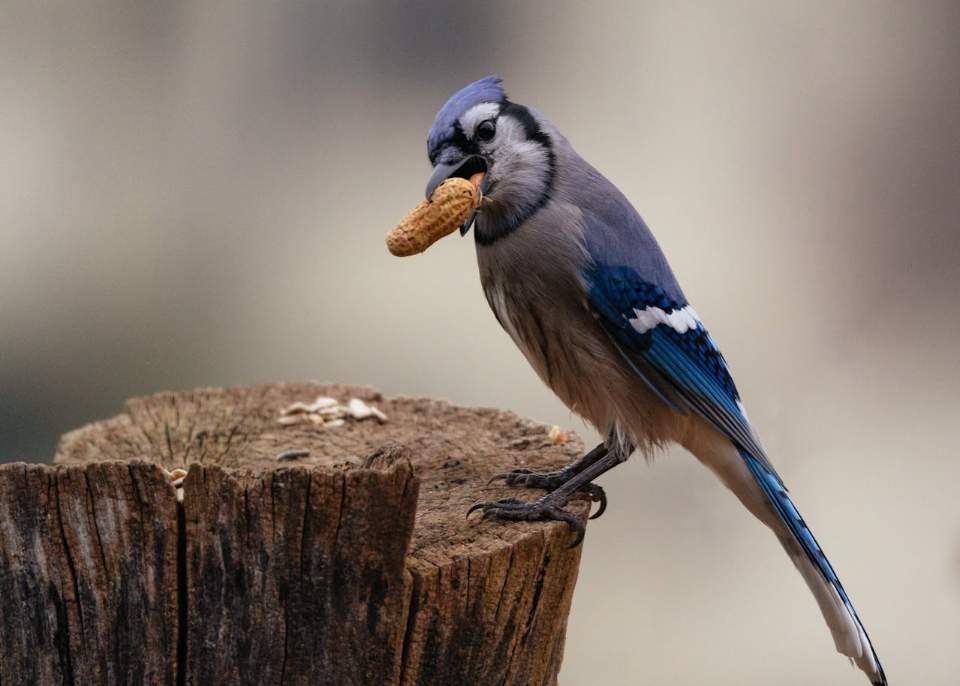
- Nuts and Seeds: High-fat acorns, beech nuts, and backyard peanuts provide vital caloric energy.
- Fruits and Berries: Wild cherries, elderberries, and apples offer essential seasonal vitamins.
- Insects and Small Vertebrates: Beetles, caterpillars, grasshoppers, and small frogs supply critical protein.
- Opportunistic Forage: In rare, desperate circumstances, they will consume eggs or nestlings from open cup nests.
Beyond these typical forage choices, breeding females exhibit a shocking dietary behavior driven by critical metabolic demands. Because passerines cannot store calcium efficiently within their skeletal frames, female Blue Jays desperately seek out external minerals during the spring nesting window to harden their eggshells.
This drive causes them to intentionally chip away and consume light-colored residential house paint, targeting the limestone fillers used in exterior coatings to satisfy their seasonal calcium spikes.
This opportunistic approach to nutrition also explains their most bizarre entomological interaction, a behavior ornithologists classify as “anting.” When foraging for insects, a Blue Jay will intentionally capture live ants and vigorously rub them across its plumage before swallowing them.
This precise ritual physically drains the insects of their toxic, bitter formic acid defenses, simultaneously conditioning the bird’s feathers and rendering the prey significantly more palatable.
Their extreme resourcefulness and willingness to harvest what is locally available reveals that Blue Jays are highly successful survivors rather than malicious garden raiders. This adaptive intelligence makes them one of the most resilient backyard birds in North America.
The Unpredictable Migration Patterns and Seasonal Movements of Blue Jays
Unlike the highly predictable seasonal journeys of waterfowl or monarch butterflies, Blue Jays exhibit erratic, irregular migration patterns that continue to baffle field researchers. Ornithologists classify their seasonal movements as an “irruptive migration,” meaning their decision to travel south shifts dramatically from year to year based on localized environmental resource pressures rather than a strict genetic calendar.
As documented by the Natural Resources Council of Maine, these daytime travelers often form cohesive bands of thirty or more birds moving intently across forest canopies during their late spring returns.
These complex seasonal movements rely on several distinct field behaviors:
- Partial Migration Habits: A significant percentage of the regional population remains completely sedentary year-round, particularly within the southern boundaries of their geographic range.
- Erratic Flock Trajectories: In the autumn, select flocks will suddenly initiate southward journeys, while other cohorts from the exact same breeding territories choose to stay put.
- Variable Flight Distances: When resource shortages trigger a mass movement, passing flocks can comfortably travel hundreds of miles to secure winter forage biomes.
This extreme behavioral variation explains why spotting a Blue Jay at a winter backyard feeder is entirely normal across most northern regions. Rather than following fixed long-distance flight tracks, these resourceful corvids continuously adapt their geography to changing mast crops, proving that their seasonal survival strategy relies entirely on real-time resource assessment.
What Do Blue Jays Symbolize in History and Folklore?
Beyond their biological attributes, Blue Jays maintain a prominent position within regional folklore, cultural literature, and symbolic traditions. In traditional Native American legends, Blue Jays are rarely depicted as simple symbols of clarity or fearlessness.
According to historical analysis compiled by the World History Encyclopedia, indigenous oral histories, particularly within Chinookan and Salish societies, most frequently portray this corvid as a major trickster figure, complex gossip, or mischievous thief due to its raucous vocal calls and aggressive foraging behavior.
These elaborate cultural narratives utilize the bird’s natural environmental intelligence to teach community lessons regarding deception, resourcefulness, and social awareness.
In broader contemporary symbolism, these birds are frequently associated with courage, assertiveness, and calculated determination. This modern interpretation stems directly from their highly visible field behaviors, including their fierce territory defense and unyielding posture when encountering larger backyard predators.
Because of their striking plumage and bold, instantly recognizable personas, Blue Jays serve as highly popular subjects across modern storytelling mediums, children’s literature, and animated media. Studying these cultural connections transforms standard backyard tracking into an appreciation for a deeply embedded historical narrative.
How to Attract Blue Jays to Your Yard with Habitat and Feeder Setup
Transforming a standard residential landscape into an active habitat for Blue Jays requires a strategic combination of high-calorie food sources, specialized feeding gear, and native structural vegetation. By understanding their specific environmental preferences, you can encourage consistent daily visits.
Specialized Food and Feeding Gear
Blue Jays possess large, strong bills tailored for heavy items, making whole peanuts in the shell their ultimate backyard attractant. Supplement this by offering black oil sunflower seeds, striped sunflower seeds, and high-energy beef suet blocks.
Because of their size and aggressive landing style, prioritize heavy, open-platform tray feeders or specialized metal peanut wreaths. Mounting these stations at least six to eight feet above the ground on a baffled metal pole protects the food source from raiding squirrels and local predators.
Structural Habitat and Plant Selection
To establish long-term residency, enhance your yard with native, resource-rich flora. Planting oak trees (Quercus) is the single most effective landscaping choice, as they provide an endless seasonal supply of high-value acorns.
Additionally, incorporate a dense layer of native shrubs and thick evergreens like dogwood, hawthorn, or cedar trees. This thick understory delivers the essential physical concealment Blue Jays demand for resting, roosting, and building their bulky twig nests.
Clean Water Sources
Maintaining a reliable, shallow water source is critical for attracting corvids throughout the year. Utilize a sturdy birdbath with a maximum water depth of two to three inches, as deep basins can deter smaller songbirds and make bathing difficult.
Clean the bath regularly to prevent mold buildup, and consider adding a moving water feature, such as a dripper or solar-powered bubbler, because the sound of rippling water acts as a powerful audio beacon for passing flocks.
Establishing Territory and Patience
While Blue Jays are bold around other backyard birds, they are naturally cautious and highly alert when entering a new territory. It often takes one to two weeks of consistent feeding for scouting pairs to map your yard as a safe forage zone. Maintain a quiet, predictable routine around your stations, and your property will quickly become a central hub in their daily territorial routes.
Blue Jay Myths and the Reality of Their Aggressive Behavior
Separating anthropomorphic myths from verified scientific data is essential for understanding true corvid behavior. While popular folklore often vilifies Blue Jays, field observations paint a far more complex picture of their ecological role.
The Myth of Constant Nest Predation
A widespread misconception is that Blue Jays survive primarily by raiding the nests of other songbirds to consume eggs and nestlings. While they are opportunistic omnivores and will occasionally engage in nest predation if resources are entirely depleted, extensive biological studies prove this behavior is incredibly rare.
A comprehensive analysis of Blue Jay stomach contents conducted by field ornithologists revealed that avian prey and egg matter account for less than one percent of their total annual diet. The remaining 99 percent consists entirely of insects, wild fruits, and mast crops like acorns.
Aggression Versus Territorial Defense
Blue Jays are routinely categorized as naturally mean or aggressive backyard bullies due to their bold, physical behavior at bird feeders. In reality, their behavior is driven by highly calculated territorial defense mechanics rather than unprovoked malice.
They operate within deep-set flock hierarchies and act as protective sentinels for their breeding pairs. Their assertive posturing at feeding stations is a survival strategy designed to secure seasonal resources, and they display the same intense focus when defending their young from apex predators.
Deceptive Call Mechanics and Communication
Many homeowners view the harsh, loud squawks of a Blue Jay as meaningless noise pollution. However, their vocal repertoire is a highly sophisticated communication network.
Their signature piercing alarm calls function as a vital neighborhood watch system that alerts all local songbird species to the exact location of nearby hawks or feral cats.
Furthermore, their complex vocal toolsets allow them to coordinate flock movements over vast distances and perfectly execute protective territory warnings.
Mind-Blowing Facts About Blue Jays You Probably Didn’t Know
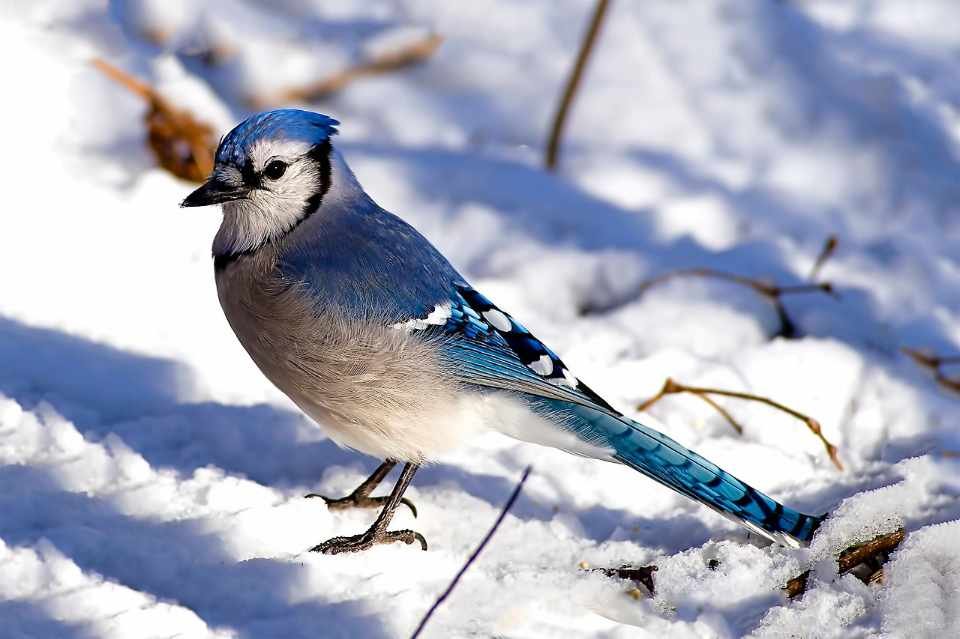
Beyond their complex social structures and foraging habits, Blue Jays possess several unique physiological traits and advanced survival mechanisms that set them apart from other common backyard songbirds.
These advanced biological behaviors rely on several distinct field traits:
- Predatory Vocal Deception: They display highly refined vocal cords that allow them to accurately imitate local hawk species, using these deceptive alarm calls as a calculated tactic to scare away competing birds from food sources.
- Advanced Spatial Cognitive Retention: They maintain a superior spatial memory system tailored for autumn hoarding, allowing individual birds to map and recall thousands of subterranean nut caches across several months.
- Facial Recognition Capabilities: Field studies have confirmed that Blue Jays possess the advanced cognitive power required to recognize and remember individual human faces, altering their local flight behaviors to actively avoid specific humans who previously threatened them.
These distinct physical capabilities and intellectual traits confirm that Blue Jays function as master operators within their native suburban ecosystems. Their combination of advanced memory, deceptive vocal toolsets, and acute facial awareness proves that their bold reputation is backed by superior neurological evolution.
Why Blue Jays Remain One of the Most Fascinating Backyard Birds
Reviewing the advanced biological systems, intricate community traits, and sophisticated memory tools of these brilliant corvids proves that they are far more than standard backyard visitors. From the structural physics that create their vibrant plumage illusion to their calculated tactical foraging maneuvers, these resourceful birds consistently demonstrate superior environmental adaptability.
The next time you spot one in your yard, observe their physical responses and communication patterns carefully. Tracking the dynamic movements of their head crests, listening for their deceptive predatory hawk mimicry calls, and watching their precise aerial mechanics highlights their complex survival strategies.
If you are ready to enhance your property into a welcoming refuge for these birds, implement a dedicated habitat plan using open-platform tray feeders, whole peanuts in the shell, and native oak vegetation. Maintaining a predictable, safe sanctuary allows you to enjoy endless opportunities to study their advanced spatial intelligence and rich behaviors firsthand.
Blue Jays are exceptionally bold, highly intelligent, and vital contributors to local forest ecosystems. By understanding their true biological needs and separating factual science from common misconceptions, you can fully appreciate their remarkable resourcefulness and evolutionary success.