
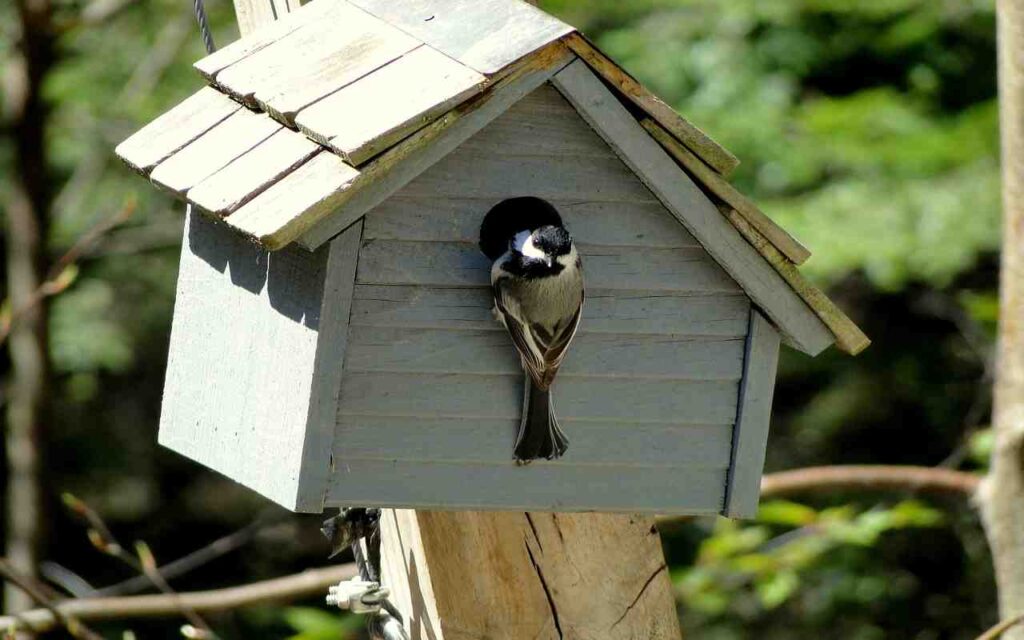
That tiny bird excavating a hole in your dead tree isn’t being destructive, it’s being a chickadee. Nesting habits of chickadees in backyard settings are fascinating to watch up close. Last spring, I saw a pair spend an entire week hollowing out a cavity in my old fence post, carrying away wood chips one beakful at a time like tiny feathered carpenters. Three weeks later, six fuzzy chicks were peeking out of that same hole, and I’ve never felt so proud of doing absolutely nothing.
Understanding chickadee nesting season makes everyday birdwatching so much more interesting. These tiny birds are strategic nest builders, carefully choosing safe spots, gathering materials, and guarding their young with surprising intensity. Once you notice their patterns, you realize how much drama and determination play out right in your backyard 😄.
- Nesting season runs April–July, peaking in May.
- They choose soft, rotted wood or nest boxes 6–10 ft high.
- Females excavate and build with moss, fur, and plant fibers.
- Clutches average 6–8 white eggs with reddish spots.
- Incubation: 12–13 days; fledging: 16–18 days later.
- Hole size: 1⅛ in. — keeps predators and competitors out.
- Use predator guards and keep cats indoors for safety.
- They don’t reuse nests but return to the same area yearly.
- Native trees, shrubs, and feeders help attract them to nest.
- Avoid disturbing active nests for the best success 🙂
When Do Chickadees Start Nesting? (Seasonal Timing)
Show Transcript
0:00 – 0:08
Hey everyone! Today, we’re going to become backyard architects for one of the most clever and charming birds out there—the chickadee. By the end of this video, you’ll have the complete blueprint to not only attract them but help their families thrive.
0:08 – 0:18
You’ll get a front-row seat to their incredible nesting process. When you see a tiny bird chipping away at a dead tree or old fence post, it’s not destruction you’re witnessing—it’s creation. That’s a chickadee, building a home pretty much from scratch.
0:18 – 0:47
To ensure we have accurate information, we’re referencing the experts at Feathered Guru. Their insights guide us through the chickadee nesting process.
0:47 – 1:17
First, it all begins with the search. Between April and early July, chickadees are on a mission for the perfect nesting spot. They’re strategic cavity nesters, looking for enclosed spaces—old woodpecker holes, rotting stumps, or in our backyards, fence posts, shed corners, or nest boxes. The magic words for them? Safe, dry, and just the right size.
1:17 – 1:52
While natural cavities are good, a properly designed nest box can be even better. It allows control: the entrance hole can be small enough to keep out predators, and the structure protects from rain and wind. Understanding what they need is half the battle.
1:52 – 2:07
Here’s where you, the backyard architect, come in. You can create a five-star chickadee residence that they’ll return to year after year.
2:07 – 2:41
The blueprint is a simple four-step process:
- Entrance hole: exactly 1 1/8 inch in diameter to keep predators out.
- Bedding: fill the box halfway with wood shavings so the female can shape the nest.
- Mounting height: securely place the box 5–15 feet off the ground.
- Location: near trees or shrubs to provide a safe, covered flight path.
2:41 – 3:15
Once the home is ready, the nesting cycle begins. The female does most of the nest building, which can take up to two weeks. She then incubates the eggs for another two weeks. After hatching, both parents feed the chicks non-stop for about seven weeks until they fledge.
3:15 – 3:51
Chickadee chicks are altricial—born featherless, blind, and completely dependent on their parents for warmth and food. To feed their young, a pair of parents may make up to 70 trips a day, hunting insects and caterpillars. This is a remarkable display of parental dedication.
3:51 – 4:15
Key nesting numbers: a typical clutch has 6–8 eggs, incubation lasts 12–13 days, and nestlings need 16–18 days of care before they’re ready to fly. These stats drive the entire nesting cycle.
4:15 – 5:07
Your role shifts from architect to guardian. Protecting the nest is crucial:
- Add a metal guard to the entrance hole to stop squirrels.
- Install a baffle on the mounting pole to deter raccoons and snakes.
- Keep cats indoors during nesting season.
- Observe from a distance—using binoculars—so you don’t stress the parents or risk nest abandonment.
5:07 – 5:53
Think bigger: turn your entire yard into a year-round chickadee haven. Keep feeders stocked with sunflower and safflower seeds. Leave safe dead trees or snags for natural nesting. Plant native shrubs for cover and insects. Avoid pesticides to maintain their food supply. The reward? Front-row seats to one of nature’s most charming nesting spectacles, knowing you helped make it happen.
5:53 – 6:09
Now that you know how simple it can be to provide a safe, supportive home for these amazing little birds, the real question is: could your yard be their next home?
Chickadee breeding season typically runs from April through early July, though timing varies dramatically by region and elevation. In southern parts of their range, chickadees might start investigating nest sites in late March. Northern populations wait until mid-April or even early May when temperatures moderate and insect populations emerge.
When do chickadees lay eggs depends primarily on photoperiod (day length) and temperature. Research shows that chickadees respond to lengthening days as a primary cue for reproductive readiness, but actual egg-laying timing adjusts based on spring temperatures and food availability. Warm springs advance laying dates, while cold, stormy springs delay them.
The chickadee nesting season April to June window represents peak activity, with most eggs laid in May. According to the Harvard Arboretum, black-capped chickadees begin nesting between mid-April and May in most regions, with egg-laying continuing through early July for late or replacement clutches.
Chickadee nesting timeline follows predictable patterns. Late March through April involves site selection and excavation. Early to mid-May focuses on nest construction and egg-laying. Mid to late May covers incubation. June brings hatching and the intensive nestling period. By mid-to-late June, most first broods fledge, though some pairs attempt second broods.
Temperature and daylight influence breeding at multiple levels. Cold temperatures delay insect emergence, reducing food availability for chicks. Extended cold snaps during critical periods can cause nest abandonment or chick starvation. Conversely, early warm springs trigger early breeding, which can backfire if late cold snaps occur after eggs are laid.
Regional differences in chickadee breeding season are substantial. Northern populations (Alaska, northern Canada) might not begin until mid-May, while southern populations (Tennessee, North Carolina) start in early April. Elevation matters too, mountain chickadees at higher elevations nest weeks later than populations just a few thousand feet lower. For comprehensive species information, see black-capped chickadee facts.
Where Chickadees Prefer to Nest
Cavity-nesting chickadees are incredibly selective about nest locations, and understanding their preferences helps you create attractive habitat. These aren’t birds that will nest anywhere convenient. They have standards.
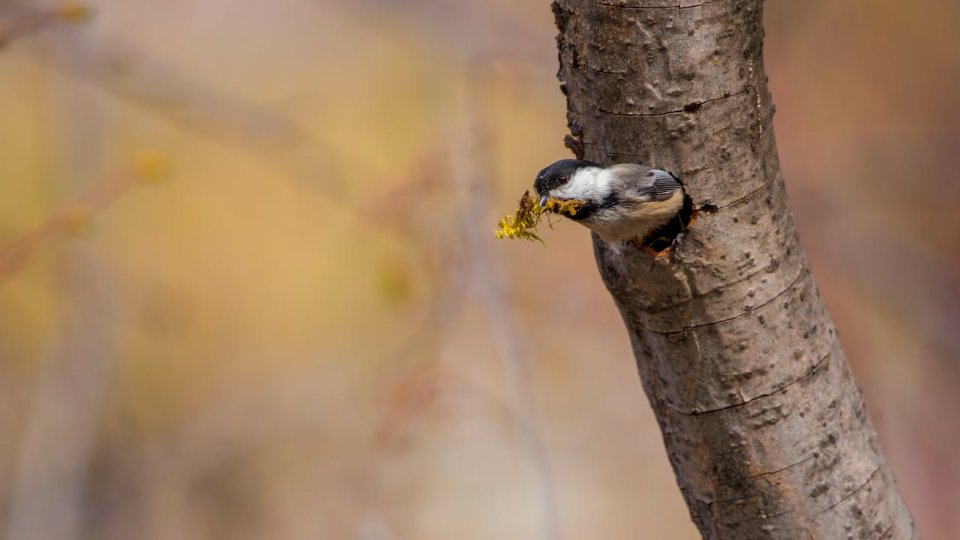
Chickadee nest sites in natural settings include dead trees (snags), rotting stumps, and holes in living trees where decay has created soft excavation opportunities. According to research published in Behavioral Ecology, females control nest location decisions, and they’re particular about it. They investigate multiple potential sites, test excavate several cavities, and then select the final location based on criteria that ornithologists are still working to fully understand.
Tree cavities provide essential features: protection from weather, insulation from temperature extremes, concealment from predators, and darkness for nestlings. Chickadees prefer cavities in birch, alder, aspen, and sugar maple because these species develop soft, rotted wood that chickadees can actually excavate. Their tiny bills can’t penetrate hard wood like woodpeckers can.
Nesting in old woodpecker holes is common, especially downy woodpecker cavities which match chickadee size requirements perfectly. However, research from Ohio State University found that 87% of black-capped chickadee pairs excavated their own cavities rather than using existing holes. They prefer the security of fresh excavation that predators haven’t previously discovered.
Backyard nest locations can include fence posts, old gateposts, rotted shed corners, and properly designed nest boxes. I’ve seen chickadees nest in remarkably creative locations, inside rolled-up awnings, in drain pipes, even in holes in stacked firewood. If it’s dry, dark, and roughly the right size, chickadees will at least investigate it.
Ideal nest height ranges from 4-15 feet above ground, though chickadees occasionally nest as low as ground level or as high as 20+ feet. The sweet spot seems to be 6-10 feet, high enough to avoid ground predators, low enough to avoid aerial predators and harsh winds. Nests too low face raccoon and snake predation. Nests too high face increased exposure to weather and potentially limited access for parents during provisioning.
Why chickadees avoid open or exposed areas relates directly to predation pressure. Cavities in isolated dead trees standing in open fields offer no escape cover for adults. Parents approaching nests in exposed locations must fly long distances without concealment, advertising nest locations to every predator watching. Chickadees strongly prefer nest sites with nearby vegetative cover that provides approach routes and escape options. For related nesting information, check out when do birds start nesting in the spring.
Chickadee Nest Box Setup in Your Backyard
Want to attract chickadees to nest in your yard? Chickadee nest box dimensions matter enormously. Get them wrong, and chickadees will ignore your box completely, or worse, larger, more aggressive species will move in.
Nest box hole size for chickadees should be exactly 1 1/8 inches in diameter. Not 1 1/4 inches. Not 1 1/2 inches. Exactly 1 1/8 inches. This specific measurement excludes larger cavity nesters like bluebirds and house sparrows while allowing chickadees comfortable access. Larger holes invite competition from species that will evict chickadees or destroy their nests.
Best location for chickadee house involves multiple considerations. Mount boxes 5-15 feet high on metal poles or directly on trees. Orient entrance holes facing northeast to southeast to avoid afternoon sun and prevailing winds. Place boxes at least 60 feet into wooded areas rather than at forest edges to discourage house wrens, which aggressively compete for nest sites.
How to attract chickadees to nest box requires thinking like a chickadee. Fill the box halfway with wood shavings (not sawdust) before mounting it. Chickadees prefer to “excavate” even in nest boxes, and boxes with shavings attract them more readily than empty boxes. They’ll toss out shavings as they customize the cavity depth, satisfying their excavation instinct.
Chickadee birdhouse plans should include these specifications: interior floor dimensions of 4×4 inches, interior height of 8-10 inches, entrance hole 6-8 inches above the floor, and ventilation holes near the roof. Use untreated wood like cedar, pine, or exterior plywood. Avoid pressure-treated lumber, the chemicals can harm birds. Never add perches, they only help predators.
Materials and design tips for successful boxes include ensuring the roof overhangs the entrance hole by at least 2 inches to prevent rain entry, making one side or the roof hinged for annual cleaning, and drilling 1/4-inch drainage holes in the floor. Rough-cut lumber on the interior helps chicks climb to the entrance hole when fledging. For more on attracting chickadees year-round, visit how to attract chickadees to your yard.
Mount boxes on metal poles with predator baffles rather than directly on trees when possible. Pole-mounted boxes with cone or cylinder baffles below them prevent climbing predators from reaching nests. If mounting on trees, choose locations where squirrels can’t jump to boxes from nearby branches.
What Chickadees Use to Build Their Nests
Chickadee nesting materials are surprisingly specific and labor-intensive to collect. Chickadee female nest building is a solo endeavor taking 3-4 days up to two full weeks depending on material availability and weather.
The foundation layer uses moss as the primary structural material. Females make dozens of trips collecting moss from tree bark, rocks, and logs. This coarse layer fills the bottom of the cavity and creates the nest’s basic cup shape. Some populations substitute pine needles or shredded bark when moss is scarce.
The middle layer adds plant fibers, strips of soft inner bark, dried grasses, and sometimes spiderweb silk for binding. This layer provides insulation and structure. The construction is actually quite sophisticated, chickadees adjust nest depth and width based on cavity dimensions, meaning they’re problem-solving in real time.
The innermost layer where eggs will rest gets lined with feather lining, animal fur, rabbit hair, deer hair, dog hair, cattail down, and plant down. This soft, insulating layer keeps eggs at consistent temperatures during incubation and provides cushioning. Female chickadees are hilariously persistent about collecting fur, they’ll pull it directly from living rabbits, pluck it from dead animals, and gratefully accept offerings from humans who provide it.
Nesting construction process involves the female making countless trips from the nest site to material sources and back. She stuffs her bill full of moss or fur, flies to the cavity, arranges the material inside, and immediately flies back for more. Males sometimes accompany females on gathering trips but don’t actually collect or place materials.
How long it takes to complete a nest varies from 4-7 days for efficient builders with abundant materials to two weeks for birds facing material scarcity or frequent interruptions from bad weather or predators. IMO, the speed variation shows how adaptable chickadees are to local conditions.
Signs chickadees are building in your yard include adults carrying beakfuls of moss, fur, or feathers. Watch for repeated flights to the same location. Chickadees often pause on nearby branches before entering nest cavities, checking for threats. Once you identify this pattern, you can usually locate the exact nest site by following their flight path. For information on what chickadees eat during this demanding period, see what do chickadees eat.
Eggs, Incubation, and Fledging
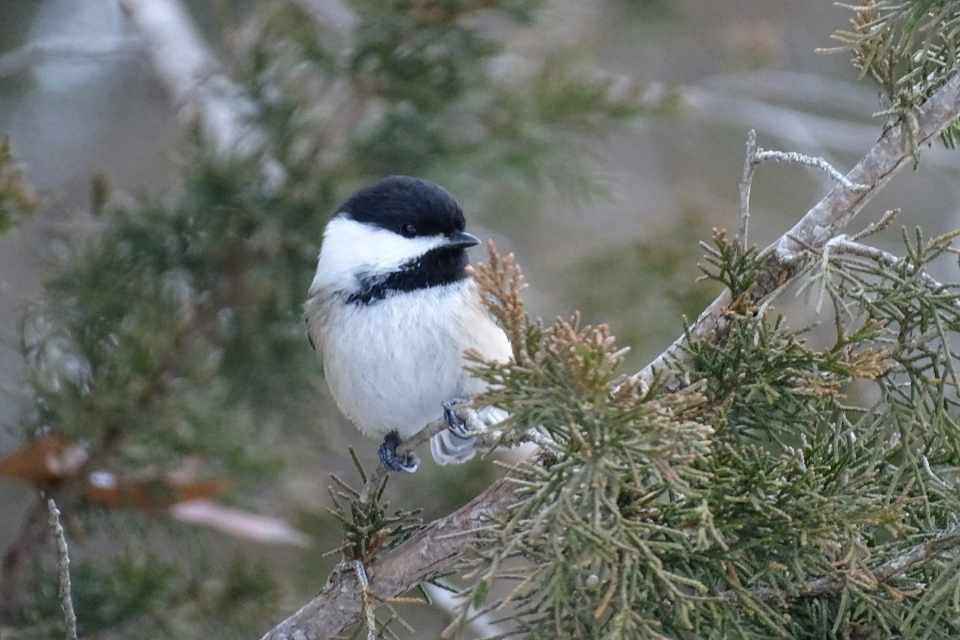
Chickadee eggs are tiny, about 15mm long and 12mm wide, smaller than a dime. They’re white to creamy white with fine reddish-brown speckles concentrated toward the larger end. Clutch size typically ranges from 6-8 eggs, though clutches of 5-9 eggs occur. Larger clutches appear in years with abundant food, while smaller clutches result from poor conditions or late-season nesting attempts.
Females lay one egg per day, usually in early morning. She doesn’t begin incubation until laying the penultimate or final egg, ensuring synchronous hatching. Before incubation begins, she covers eggs with nest material whenever leaving the cavity, clever camouflage that also maintains egg temperature.
Incubation period lasts 12-13 days. The female alone incubates, developing a brood patch by losing belly feathers to create direct skin-to-egg contact for efficient heat transfer. She sits almost continuously, taking only brief breaks for feeding and defecation. On warm days, females spend more time off the nest; on cold days, they barely leave at all.
Male’s role in feeding is critical during incubation. He brings food to the incubating female multiple times per hour, allowing her to maintain body condition while sitting. This courtship feeding continues from pair formation through incubation, representing significant parental investment. Males also defend territory vigorously, chasing off intruders and predators.
Eggs hatch asynchronously over 12-30 hours. Baby chickadee care is intensive, newly hatched chicks are altricial (naked, blind, helpless) and require constant brooding for warmth and regular feeding for growth. Both parents provision chicks once hatching occurs, making up to 70 food deliveries daily at peak feeding periods according to researchers at Harvard’s Arnold Arboretum.
When chicks fledge depends on development rate, food availability, and disturbance levels. The typical chickadee fledging time is 16-18 days after hatching, though it ranges from 14-21 days. Well-fed chicks in optimal conditions fledge earlier; stressed or underfed chicks fledge later if they survive at all.
Chickadee nesting cycle from egg-laying to fledging spans about one month. Add in the week for excavation and another week for nest construction, and you’re looking at 6-7 weeks from site selection to empty nest. It’s an exhausting process that requires everything to go right at every stage.
How to Protect Chickadee Nests in Your Backyard
Protect chickadee nests from predators through strategic planning and defensive installations. Common threats include squirrels, raccoons, cats, snakes, house wrens, and even other chickadees from competing territories.
Predator guard installation on nest boxes dramatically improves survival rates. Metal entrance hole guards extending the entry tunnel by 1.5-2 inches prevent raccoons from reaching inside with their long arms. These cost under $10 and install in minutes. Snake baffle devices include cone or cylinder baffles mounted on poles below nest boxes. Properly installed baffles make pole climbing nearly impossible for snakes and mammals.
Squirrel deterrent strategies for nest boxes include using metal poles instead of wood posts (squirrels climb wood easily), maintaining clear zones of at least 10 feet from any launchable surfaces, and using squirrel baffles below boxes. Some people grease poles, but this requires frequent reapplication and can actually trap birds’ feet.
Cat proof nest box placement means mounting boxes high enough (8-15 feet) that cats can’t jump to them and away from structures cats can climb. The single most effective strategy? Keep cats indoors during breeding season. Period. Free-roaming cats are documented nest predators, and even well-fed cats hunt.
Chickadee nest safety requires keeping the area quiet during nesting. Excessive disturbance causes nest abandonment, especially during early incubation. Avoid checking boxes more than once every 3-4 days, and never check within 3 days of expected fledging date, you might cause premature fledging where chicks leave before they’re ready to fly.
Why not to open the box too often relates to stress and predator cues. Every time you open a nest box, you potentially leave scent trails that predators can follow. You also stress adults who may be watching. Some species abandon nests after repeated disturbance. Once eggs hatch, limit checks to once per week maximum, and stop entirely after day 12 when chicks could prematurely fledge from disturbance. For more protective strategies, see how to protect baby birds from predators.
Do Chickadees Reuse Nests or Move Each Year?
Chickadee reuse nests is rare, less than 10% of pairs use the same cavity in consecutive years according to Cornell research. Cavity reuse typically occurs only when alternative sites are unavailable or when the previous nest was exceptionally successful.
Do chickadees return to same spot is more common than actual nest reuse. Successful pairs often establish territories in the same general area year after year, and they may investigate or even excavate near previous nest sites. But they typically create fresh cavities rather than reusing old ones.
Why avoid reuse? Parasite loads accumulate in used nests. Mites, lice, fleas, and fly larvae infest old nesting material, potentially harming or killing nestlings in subsequent broods. Fresh excavation or selection of clean cavities reduces these risks.
Second broods are rare in chickadees compared to many songbirds. Most pairs raise one brood per season and then focus on survival and preparing for winter. However, research on mountain chickadees found that double-brooding occurred frequently in years with early breeding, warm spring temperatures, and high food availability from insect outbreaks. Black-capped chickadees occasionally attempt second broods under similar optimal conditions.
Cleaning boxes after nesting season is essential for encouraging future use. Remove old nesting material in late summer or early fall after you’re certain birds have finished breeding. Scrub the interior with a 10% bleach solution, rinse thoroughly, and allow to dry completely before closing. This eliminates parasites and disease organisms.
Encouraging them to return with year-round habitat support means maintaining nest boxes, preserving dead trees (when safe), providing consistent food through feeders, offering water, and planting native vegetation. Chickadees have excellent spatial memory and return to productive territories. Make yours productive.
Chickadee nesting habits year to year show remarkable site fidelity at the territory level even if specific nest cavities change. Successful breeders often remain in or near their breeding territories throughout winter, defending them against intruders. This year-round territorial behavior differs from migratory species that abandon breeding territories after nesting.
How to Attract Chickadees to Nest in Your Yard
Attract nesting chickadees requires creating complete backyard habitat that provides food, water, shelter, and nesting sites. You can’t just put up a nest box and hope for the best. Chickadees evaluate entire territories.
Backyard habitat needs native trees and shrubs that provide year-round food and shelter. Plant native trees for chickadees like birch (excellent cavity excavation sites), oak (supports massive insect populations), pine (winter cover and seeds), maple, and alder. These species support the insects chickadees need for feeding nestlings.
Chickadee feeder placement affects nesting success. Locate feeders 50-100 feet from nest sites rather than directly adjacent. Feeders attract predators and competitors, so some separation protects nesting birds. That said, maintaining feeders during breeding season helps adults supplement their diet efficiently between nest provisioning trips.
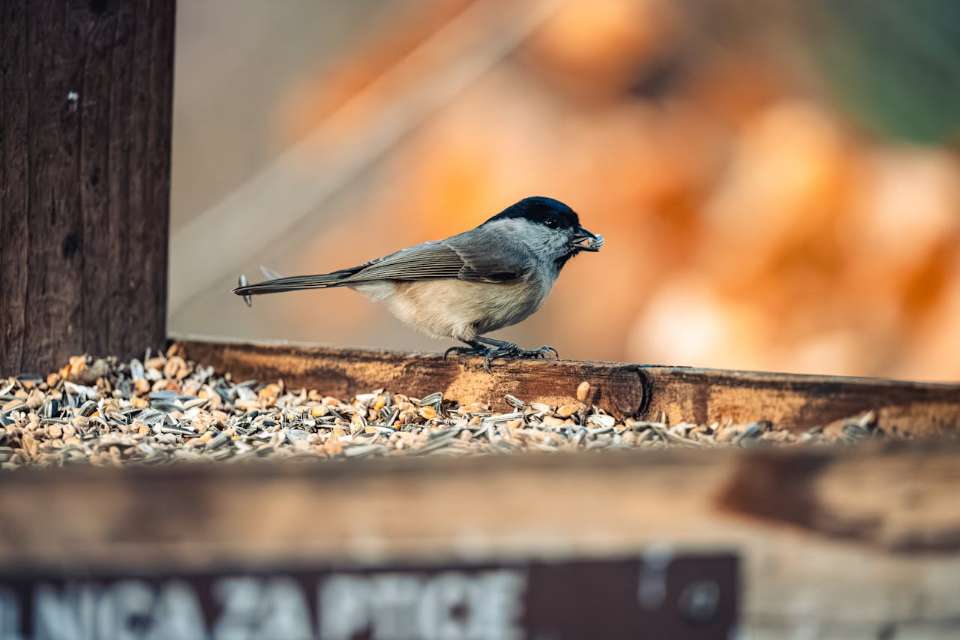
Offer black oil sunflower seeds, suet, and mealworms at feeders. Research by wildlife biologist Gene Planker found that chickadees strongly prefer sunflower seeds above all other options. During nesting season, live mealworms provide crucial protein for chicks.
Native shrubs for chickadees create foraging habitat and nest concealment. Plant elderberry, viburnum, serviceberry, dogwood, and holly. These provide berries, support insects, and create the dense cover chickadees need for approach routes to nests. Bird-friendly yard design layers vegetation from groundcovers through canopy, mimicking natural forest structure.
Offer natural materials for nesting by putting out animal fur, feathers, and soft plant fibers in early spring. Use suet cage feeders or mesh bags hung near nest sites. I put out dog hair from spring grooming sessions, and chickadees clean it out within days. They’ll also pull fur from dried rabbit or squirrel carcasses if you happen to have those lying around (hopefully you don’t, but nature provides).
Keep cats indoors during breeding season, April through July at minimum. This single action does more for nesting success than any other intervention. Free-roaming cats devastate songbird populations, and even cats that “never catch birds” are nest predators and a constant source of stress for breeding adults. For comprehensive strategies, check out how to encourage birds to nest in your garden.
Fascinating Facts About Chickadee Nesting
Black-capped chickadee facts related to nesting reveal remarkable behaviors and adaptations that most people never notice.
How chickadees excavate cavities involves selecting soft, rotted wood and pecking away tiny chips that they carry away from the site. Unlike woodpeckers, chickadees make almost no noise during excavation, their excavation is subtle and secretive. They can’t penetrate hard wood, so they target areas where fungal decay has softened the wood structure. Excavation takes 7-10 days of persistent work.
Both parents feed chicks after hatching, unlike during incubation when only males provision. Parents make coordinated feeding trips, often approaching the nest from different directions. This tag-team approach maximizes food delivery while minimizing predator attention to any single approach route.
Communication during nesting involves specialized vocalizations. The “broken dee” call given by females signals fertility and readiness for copulation. Quiet contact calls coordinate pair activities during nest construction and provisioning. Alarm calls warn of predators, triggering appropriate responses from mates and chicks. According to research on mountain chickadees, family groups maintain vocal contact that may help fledglings learn survival skills from parents post-fledging.
Rare behaviors include removing unhatched eggs from nests after successful eggs hatch. This housekeeping prevents bacterial growth that could sicken nestlings. Chickadees also perform “decoy calls” that misdirect predators away from nest sites, territorial males will sometimes sing or call from locations far from actual nests, drawing attention away.
Chickadee intelligence extends to spatial memory during nesting. Females remember the locations of multiple excavated cavities and can relocate them weeks after initial excavation. They also assess cavities based on complex criteria including entrance size, cavity depth, surrounding vegetation, and proximity to food sources.
Winter roosting vs nesting uses similar cavities but without nest construction. Chickadees roost in tree cavities during winter for thermal protection but don’t build nests inside these roost sites. Come spring, they abandon winter roost cavities and either excavate new nest cavities or use different pre-existing cavities for breeding.
Conclusion: Helping Chickadees Thrive in Your Backyard
Backyard bird conservation for chickadees doesn’t require heroic efforts or specialized knowledge. It requires understanding their needs and providing the basics: nest sites, food, water, and cover.
Chickadee nesting success in backyard settings depends on habitat quality. Preserve dead trees when safe to do so, they’re essential for natural cavity excavation. Install properly designed nest boxes with correct dimensions and predator guards. Plant native trees and shrubs that support insect populations. Avoid pesticides completely. Maintain year-round feeding stations with quality seed and suet.
Providing safe habitat means thinking like a chickadee. They need concealment while approaching nests, escape cover from predators, abundant insects for feeding chicks, and clean cavities free from parasites. Your yard can provide all these elements with thoughtful planning.
Supporting local wildlife through chickadee-friendly habitat creates benefits far beyond chickadees alone. The same features that attract nesting chickadees support woodpeckers, nuthatches, wrens, and dozens of other cavity-nesting species. Native plants support entire food webs from insects through mammals.
Responsible observation during nesting season means maintaining distance and minimizing disturbance. Watch from windows with binoculars rather than approaching nests directly. Check nest boxes infrequently and gently. Never handle eggs or nestlings unless absolutely necessary for banding or research purposes. Your restraint directly increases survival rates 🙂
The chickadees that nested in my fence post last spring returned this year to excavate a new cavity in a dead branch I’d left standing. Watching them work for a week, then seeing six fuzzy heads eventually appear at the entrance hole, then witnessing the chaos of fledging day, it’s entertainment you can’t buy. Plus you’re actually contributing to conservation of species that face increasing pressure from habitat loss and climate change.
Create the habitat, install the boxes, plant the trees, and be patient. The chickadees will find you. And when they do, you’ll have front-row seats to one of nature’s most charming reproductive spectacles.