
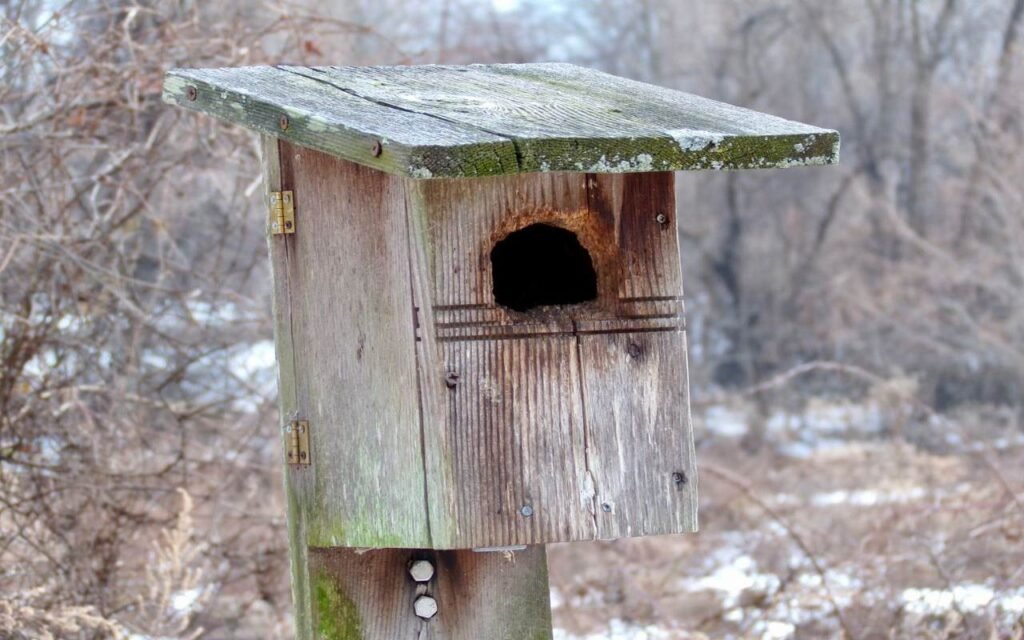
Have you ever wondered, why are birds not using my birdhouse? If your backyard nesting box remains completely vacant all season, a few hidden placement or structural design errors are usually to blame. Missing the mark on a single fractional dimension can easily cause local avian scouts to completely pass over your property line.
Cavity nesters evaluate candidate properties based on incredibly strict security, microclimate, and territory thresholds. Pinpointing these highly specific environmental flaws is the only way to quickly turn a permanent property vacancy into a thriving avian sanctuary.
Why Are Birds Not Using My Birdhouse?
Birds routinely reject nesting boxes due to incorrect entrance hole sizing, high-traffic feeder placements, or smooth tree-trunk mounting surfaces that grant easy access to climbing predators.
To fix a vacant box instantly, remove any decorative perches that invite invasive house sparrows, angle the entry portal east-southeast to block dominant storms, and isolate the unit on a baffled metal conduit pole.
The Perch Paradox: Why Decorative Pegs Invite Nest Raids
Many commercial birdhouses sold at local craft stores include a decorative wooden peg or landing perch glued directly beneath the entryway. While humans view this feature as a helpful rest stop for parent birds, it actually acts as a dangerous hunting platform for predators.
Native cavity-nesting birds have evolved sharp, powerful claws that allow them to cling directly to rough timber siding or raw bark without any extra support; they do not need a perch.
According to construction safety guidelines published by the Cornell Lab of Ornithology NestWatch Program: Features of a Good Birdhouse, high-quality nesting boxes must exclude outside perches because they grant invasive house sparrows, European starlings, and weasels a perfect platform to target the nest.

They can sit outside, poke their heads into the entrance hole, and terrorize the brooding female or pull out the chicks. If your box has an integrated landing peg, use a small hand saw to cut the peg completely flush with the front wall panel to restore your cavity security.
Feeder Traffic Shock and Territorial Stress Zones
One of the most common reasons a box remains completely vacant all season is its horizontal distance to your main backyard feeding stations. While homeowners think grouping a birdhouse next to an active sunflower or suet feeder creates a convenient dining setup, wild songbirds interpret it as a chaotic hazard zone.
Bird feeders function as highly active public hubs, attracting noisy flocks of competing species and focused ground predators like cats or hawks. A brooding female cavity nester requires complete sensory isolation to feel secure during her incubation window. If her immediate canopy is constantly swarmed by foraging flocks, she will experience severe stress and completely abandon the site.
To fix this traffic shock, enforce a strict 30-to-40-foot structural buffer zone between public feeding platforms and private boxes. For a comprehensive look at balancing your entire backyard environment from scratch, refer back to our foundational birdhouse guide for beginners.
Critical Scent Traces and the Lack of Natural Weathering
Newly cut lumber and treated store-bought houses carry sharp wood treatment odours, adhesive chemical scents, and human skin oil residues that can scare off sensitive avian scouts. If you hang an un-weathered box right before the breeding rush, birds will reject the location because the heavy chemical odor smells entirely unnatural.
Mounting your nesting structures during late autumn allows the panels to sit through multiple freezing cycles, heavy snowfall patterns, and rain. This environmental exposure naturally strips away human scents and dulls glaring bright wood grain finishes into a muted grey tone.
By the time the early birds begin mapping out territories, the structure looks and smells like an ancient, weathered tree trunk, drastically lowering their caution thresholds.
The Thermal Trap: Internal Heat Exhaustion Risks
If a birdhouse is built from thin plywood or plastic, it fails to insulate the interior cavity from direct afternoon sun exposure. During hot spring and summer weeks, a dark, thin-walled box can act as a thermal trap, causing internal air temperatures to spike past 105°F (40.5°C).
Adult songbirds can easily detect this heat accumulation during their initial property scouting phase and will pass over the box to avoid cooking their eggs.
⚠️ CRITICAL HARDWARE ERROR: Missing Ventilation Gaps
Never use a nesting box that lacks proper air circulation features. Ensure your box has intentional 1/4-inch ventilation gaps drilled right beneath the roofline to let rising heat escape naturally. Additionally, confirm that the floor panel has pre-drilled drainage holes to prevent standing rainwater from collecting inside the nest bedding.
Residual Parasite Layers from Uncleaned Old Nests
Leaving a spent nest inside a box from the previous year is a guaranteed way to ensure an empty house the following spring. Old nesting materials act as a winter breeding ground for destructive blowfly larvae, avian mites, fleas, and aggressive paper wasp queens.
When returning songbirds inspect an uncleaned cavity in March, they see the old nest debris and reject the box to avoid exposing their upcoming brood to high parasite infestations.
To clear this hurdle, always open your side cleaning panels every autumn to scrape out old straw bedding completely. Spray the interior raw wood surfaces with a natural solution of nine parts water to one part white vinegar to eliminate remaining parasite eggs.
Let the unit dry thoroughly in the sun before locking it back up for the upcoming season.
The Tree Trunk Trap: Easy Access Paths for Climbing Pests
Nailing a birdhouse directly onto a mature tree trunk or a wooden privacy fence panel creates an open invitation for climbing predators. The rough bark of an oak tree or the coarse grain of a fence post offers outstanding claw traction for raccoons, squirrels, rat snakes, and neighborhood cats. If a birdhouse is mounted directly onto these structures, it becomes an incredibly easy hunting platform.
To achieve maximum safety, completely isolate your boxes by mounting them on smooth, freestanding galvanized steel conduit pipes driven securely straight into the soil. The slick, non-porous metal surface prevents land predators from gaining vertical leverage.
To completely lock down this defensive perimeter, slide an under-box stovepipe or cone-shaped predator baffle onto the pole directly below the base of your birdhouse to form an absolute physical barrier against climbing raiders.
The Compass Rule: Exposure to Dominant Storm Fronts
The directional angle of your box entry hole plays a critical role in avian choice. Across most North American ecosystems, highly destructive spring rainstorms and localized gust patterns blast directly out of the west and northwest.
If your entryway faces straight into these dominant weather paths, driving downpours will blow into the box, soaking the inner bedding and chilling featherless nestlings.
To shield your boxes from these storms, always face your entry portal east, southeast, or due south. Facing east acts as a mechanical windbreak against cold western fronts while allowing the first rays of morning dawn to warm up the cold interior air fast after a freezing night.
By the time the intense, baking heat of the late afternoon sun rolls around, the roof angle shields the core layout, preventing the cavity from turning into an oven.
Micro-Habitat Mismatch: Forcing the Wrong Species Blueprint
Wild birds select their territories using distinct landscape frameworks. Trying to attract a bird into a habitat that doesn’t match its evolutionary hunting style will leave your box permanently vacant.
For instance, trying to attract Eastern Bluebirds into a highly shaded, dense woodland garden layout is impossible; bluebirds are open-field hunters that require massive expanses of clear lawn space to spot ground insects.
Conversely, trying to force a Black-capped Chickadee out into an open field away from dense shrubbery margin boundaries fails because they require nearby staging branches to hide from aerial hawks. Identify your yard’s macro-habitat profile before deploying hardware.
Inside Wall Friction Failures: Slick Interior Panels
When young hatchlings are mature enough to fledge, they must climb up the slick inside front wall of the nesting box to reach the entry portal. If your box is constructed from smooth plastic, PVC pipe, or planed, slick cedar boards with no inside traction, the young birds cannot climb out.
Adult scouts check the texture of the interior panels during their spring inspection flights. If they notice the inside front panel lacks climbing traction, they will immediately abandon the house to prevent their upcoming young from becoming permanently trapped at the bottom of the cavity.
Always score deep horizontal grooves into the interior wood beneath the entryway using a utility knife or rough rasp to give fledglings a secure ladder to exit the box safely.
Structural Dimension Errors and Dimensional Misalignment
Wild birds choose their nesting territories using incredibly strict physical requirements. If your entrance door size is off by even an eighth of an inch, your target birds will find it physically impossible to use the space.
For example, an Eastern Bluebird requires a precise 1-1/2 inch opening to enter a cavity safely; if the hole is drilled at 1-1/4 inches, they are mechanically locked out of the house entirely.
Conversely, if the entryway is drilled too large, larger invasive species like starlings will instantly invade, throw out your target residents, and claim the space. You must double-check your hole sizes with a precision caliper.
For a complete species-by-species guide on matching exact doorway measurements and wood floor specifications to your specific target yard birds, review our verified birdhouse entrance hole size chart.