
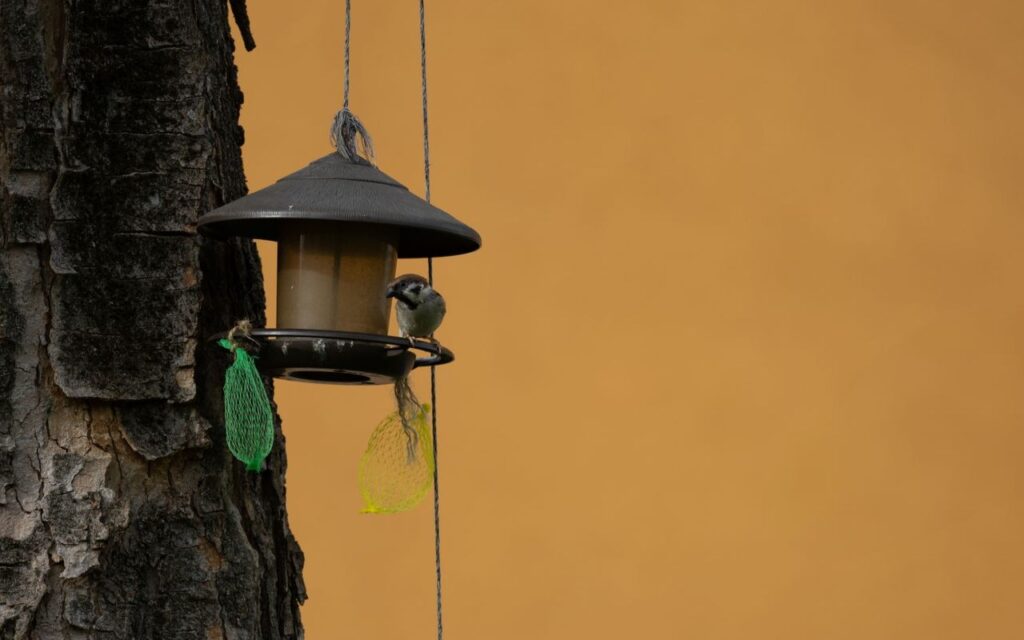
Discovering your bird feeder empty every morning points directly to nocturnal mammalian visitors rather than energetic songbirds. While backyard birds bed down at twilight, a diverse cast of night foragers exploits unprotected feeding stations under cover of darkness.
Identifying the specific culprit requires close observation of physical clues left around the pole. Eliminating this overnight depletion requires evaluating mounting hardware, animal biology, and food selection.
Nocturnal Raiding Culprits and Ground Spillage Clues
Different nighttime visitors leave distinct signatures around a depleted station. Raccoons utilize dexterous forepaws to unlatch hopper roofs, tip tube ports upside down, and dismantle delicate plastic perches. In contrast, white-tailed deer possess long tongues capable of lapping ports clean without spilling a single hull or shifting the pole.
Rodents leave completely different behavioral evidence. Flying squirrels glide downward from nearby tree canopies, entering cage openings and gorging directly at the reservoir. Norway rats and house mice scale smooth metal tubing, chewing through polycarbonate ports and scattering debris onto the ground.
- Chewed plastic ports or gnawed wooden perches indicate rat or squirrel activity.
- Feeders tipped sideways or unhooked entirely from swivels point directly to raccoons or black bears.
- Seed reservoirs left completely dry with no spilled debris underneath signal visiting deer.
- Concentrated scat droppings left inside the seed tray reveal mice or opossums.
Carefully inspect the ground beneath the feeding station each dawn. A shattered feeder carcass indicates heavy leverage from a bear or heavy raccoon. Pristine hardware with vanishing contents almost always means deer or agile rodents are at work.
Baffle Clearance Dimensions and Pole Mounting Mechanics
Standard garden hooks fail because they place food well within mammalian leaping range. Mammals exploit tree limbs, deck railings, and rooflines as springboards to bypass pole defenses entirely. Successful exclusion requires adhering strictly to vertical and horizontal spacing rules.
A feeder pole must stand at least ten feet away from any horizontal launching surface, including tree trunks, fence lines, and low branches. Vertical clearance is equally critical to prevent mammals from jumping upward from the turf. The main feeding ports should hang at least six feet above the ground surface.
- Torpedo-style pole baffles must measure at least eight inches in diameter and twenty-four inches in length.
- Baffles must be mounted so their lower rims sit a minimum of four and a half feet above the ground.
- Cone-shaped pole baffles must span at least eighteen to twenty-two inches across to prevent animals from reaching around the perimeter.
Never coat shepherd hooks or mounting poles with grease, petroleum jelly, or cooking oil. These viscous substances coat avian contour feathers, destroying their microscopic interlocking barbules. Feathers matted with grease lose their insulation properties, inevitably causing fatal hypothermia when birds brush against the pole.
Deer Reach, Bear Damage, and Mechanical Suspension Rigging
White-tailed deer present a unique challenge because their vertical standing reach exceeds seven feet. When a deer elevates onto its hind legs, it effortlessly empties hanging tube feeders and platform trays without triggering squirrel baffles. In regions with active black bear populations, standard poles snap under sheer animal weight.
Suspension systems using aircraft cable provide an exceptional solution for large mammals. Rigging a high-line between two sturdy trees keeps the food suspended out of reach of both bears and browsing deer. A marine-grade pulley allows smooth lowering of the feeder assembly for daily maintenance.
- Use 0.125-inch braided stainless steel aircraft cable rated for high breaking strength.
- Install heavy-duty pulleys at least twelve to fifteen feet above the forest floor.
- Anchor the tie-off rope to a remote tree trunk protected by a locked cleat box.
Keep window collision geometry in mind whenever relocating suspension lines. Following established field guidelines, place feeders either within three feet of window glass or farther than thirty feet away. This spacing prevents alarmed birds from achieving lethal flight speeds before striking reflective window panes.
Seed Chemistry Adjustments and Bitter Repellent Strategies
Adjusting your seed profile immediately curtails nocturnal activity without harming native birds. Mammals rely heavily on scent cues to locate high-calorie foods, whereas birds prioritize visual detection. Switching out generic filler seeds disrupts this foraging loop.
Mammals possess TRPV1 heat receptors that react strongly to capsaicin, the active chemical compound found in hot peppers. Birds completely lack these capsaicin-sensitive oral receptors and consume pepper-treated seeds without distress.
Commercially infused suet blocks, liquid capsaicin coatings, and hot pepper sunflower chips rapidly deter raccoons, mice, and deer.
- Safflower seed features a bitter taste that raccoons, gray squirrels, and flying squirrels dislike, though cardinals and chickadees readily consume it.
- Nyjer seed provides high lipid levels for winter finches while remaining completely ignored by deer and raccoons.
- Cracked corn and white proso millet should be eliminated immediately because they actively attract mice, rats, and raccoons.
Avoid allowing discarded seed to accumulate on the ground below the hanging station. Wet ground seed rapidly fosters pathogenic mold like Aspergillus flavus, which generates hazardous aflatoxins that poison native birds. Rake away damp hulls weekly to remove the scent trails that lure nocturnal mammals into the yard.
Overnight Storage Routines and Enclosed Caging Upgrades
The simplest and most reliable overnight fix is establishing a dusk removal schedule. Removing the food source at sunset completely removes the incentive for nocturnal creatures to visit your yard. Without an evening reward, passing foragers quickly adjust their territory circuits elsewhere.
Store the harvested feeders inside a locked garage, an unheated shed, or a heavy galvanized metal trash can fitted with a tension lid. Polycarbonate plastic reservoirs left on a screened porch will still be chewed through by motivated rodents. Return the feeders to their outdoor mounts at sunrise to support early-foraging songbirds.
- Enclose delicate tube reservoirs within excluder cages made of 0.25-inch hardware cloth.
- Use threaded locking carabiners rather than open hooks to attach feeders to hanging brackets.
- Add weight-activated perches calibrated to snap shut under animals heavier than four ounces.
Retrofitting feeding setups with physical excluder wire maintains steady access for small clinging birds like nuthatches and titmice. Larger nocturnal pests cannot squeeze their bodies through the narrow wire mesh to reach the central reservoir ports. Combining physical barriers with proper dusk storage permanently ends the mystery of your vanished morning seed.