
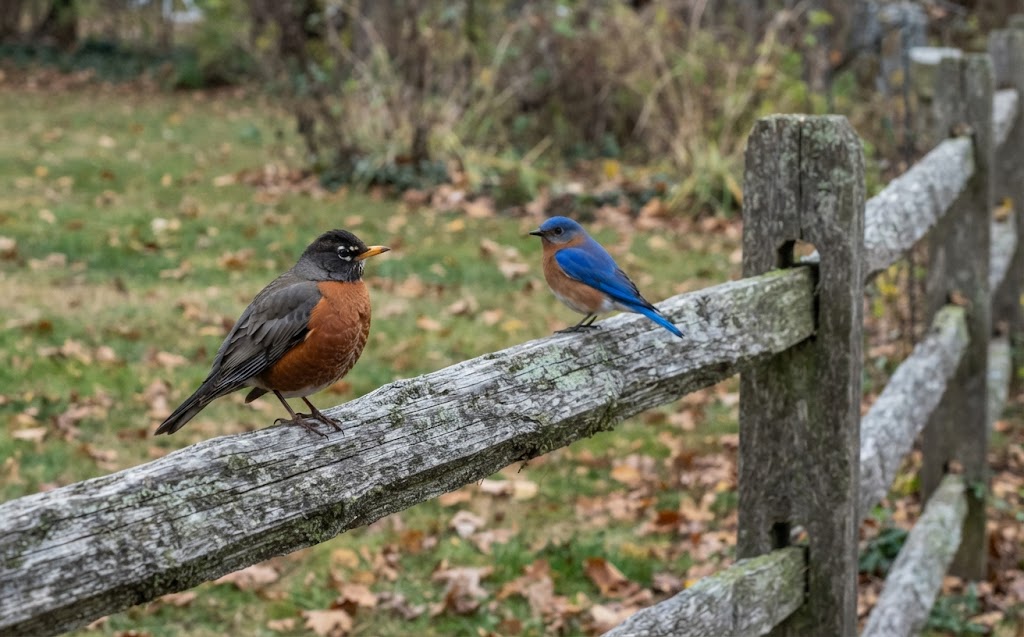
Understanding the backyard dynamics of the American Robin vs Eastern Bluebird requires looking past their shared red-orange breast plumage to analyze distinct territorial, foraging, and nesting adaptations. Both belong to the thrush family (Turdidae), yet their functional presence in a managed yard demands completely different habitat strategies.
While casual observers often confuse drab juvenile robins with female bluebirds during late summer molts, experienced birders face practical challenges when managing feeding stations and nest sites for each species. Addressing these behavioral differences ensures your yard supports both thrushes without triggering territorial bullying or site abandonment.
Quick-Glance Field Summary
Distinguishing and supporting both thrushes requires separating open-platform structures from strict cavity dimensions while managing targeted protein and berry distribution throughout the seasons. Implementing species-specific feeder spacing and restricted entrance hole sizes eliminates direct competition and protects vulnerable broods.
- Eastern Bluebird nest box entrance diameter: 1.50 inches (prevents larger thrushes and starlings)
- American Robin nesting shelf footprint: 7 inches wide by 8 inches deep with an 8-inch ceiling clearance
- Bird bath water depth target: 0.50 to 1.50 inches maximum with textured perimeter stones
- Mealworm provisioning distance: Minimum 25 feet of spatial separation between feeding stations
- Preferred winter berry species: American bittersweet, eastern redcedar, sumac, and flowering dogwood
Cavity Requirements versus Open-Shelf Nesting Geometries
Nesting architecture represents the sharpest structural divide between these two related thrushes. Eastern Bluebirds are obligate secondary cavity nesters that rely on abandoned woodpecker holes or wooden nest boxes. In contrast, American Robins construct reinforced, cup-shaped mud structures placed on open platforms, horizontal tree forks, or protected porch ledges.
Forum discussions on Reddit’s r/backyardbirds frequently feature frustrated landowners reporting robins claiming bluebird territory. Robins cannot physically access an active bluebird box that features a standard 1.50-inch entrance diameter. An entrance of this size naturally excludes the larger robin body while offering bluebirds safety from European Starlings.
Providing an open nesting shelf under an eave easily accommodates local robins. A simple platform mounted at least eight feet above the ground satisfies the robin drive for elevated stability. Keeping open platforms at least forty feet away from bluebird boxes reduces interspecies boundary friction during spring territory establishment.
Foraging Niche Partitioning and Live Insectivore Feeders
Both birds feed heavily on soil invertebrates, yet their hunting styles diverge significantly across the lawn. Robins run and pause across open turf, relying on keen visual movements to pull subterranean earthworms directly from the dirt. Eastern Bluebirds hunt primarily by “drop-foraging,” scanning the grass from low perches like fence posts before diving on surface crickets and spiders.
A common complaint across specialty platforms like the Sialis birding forum involves robins monopolizing dedicated bluebird mealworm cups. Robins consume entire dish loads in minutes because their larger gape accommodates dozen-worm clusters. Bluebirds feed cautiously, frequently caching prey for developing nestlings.
To prevent feeder raiding, install specialized mealworm enclosures equipped with 1.50-inch excluder mesh. Bluebirds slip through the wire framework easily, while larger robins are completely barred from entry. If using open dishes, offer live mealworms rather than dehydrated alternatives. Dried mealworms lack critical moisture and can cause lethal impaction in bluebird nestlings during high-heat periods.
- Live mealworms: High moisture content, stimulates natural hunting response, safe for nestlings
- Dried mealworms: Low hydration, high chitin ratio, requires pre-soaking in fresh water
- Earthworms: Optimal seasonal protein for foraging robins, unsuitable for enclosed feeder tubes
- Crickets and waxworms: Ideal supplemental fats for bluebird rehabilitation and cold-weather energy
Offering mealworms in moderation prevents nutritional deficiencies in breeding pairs. Too many mealworms can trigger calcium depletion unless dusted lightly with food-grade calcium carbonate.
Territorial Water Basin Aggression and Depth Management
Backyard hobbyists often notice distinct bathing behaviors between these two species at fresh water features. Robins approach bird baths with dramatic splash bathing, soaking their plumage deeply to clean flight feathers and dislodge parasites. Bluebirds behave far more conservatively, preferring shallow edges, gentle drippers, or active misting stations.
On community forums like r/birdwatching, users frequently post about bluebirds being chased away from heated basins by agitated robins. Robins establish heavy dominance around standing water, especially when surrounding ground moisture is locked by summer droughts or winter freezes. Adding a second water station on the opposite side of the yard breaks this single-point resource defense.
Water depth configuration is equally critical for species safety. Robins comfortably wade into water approaching two inches in depth. Eastern Bluebirds avoid basins deeper than one inch unless large, flat river stones provide stable, non-slip footing.
- Basin depth: Maintain a gradual slope between 0.50 and 1.50 inches
- Surface traction: Submerge textured slate chips or rough river gravel to prevent footing slippage
- Water movement: Install a battery or solar bubbler to project low-frequency surface vibrations
- Cleaning protocol: Scrub surfaces weekly using a 1:9 vinegar-to-water solution to kill harmful bacteria
Never add commercial chemical additives or glycerin to prevent freezing during sub-zero temperatures. These oily compounds destroy the feather microstructures that keep birds insulated, leading to hypothermia.
Winter Lipid Survival and Frugivorous Planting Strategies
Winter resource competition forces both species into heavy fruit consumption as insect populations crash. While some northern robin populations migrate, nomadic flocks frequently stay in cold regions wherever fruit remains abundant. Eastern Bluebirds also form small winter flocks that rely on high-lipid wild drupes to survive freezing nights.
Backyard planting choices directly influence which thrush species overwinters successfully on your property. American Robins strip ornamental trees like crabapples and mountain ash through bulk flock foraging. Bluebirds target smaller, soft-skinned fruits like sumac, pokeberry, and native juniper berries that their smaller beaks can swallow easily.
When natural berry crops are depleted, bluebird enthusiasts turn to homemade suet blends and no-melt crumbles. Robins will occasionally visit open suet shelves, but bluebirds use inverted or sheltered bark-butter feeders far more effectively. Spreading feeding stations across structural canopy layers ensures that both thrushes find sufficient calories during ice events.
- Eastern redcedar (Juniperus virginiana): Dense evergreen foliage offering lipid-rich berries
- Smooth sumac (Rhus glabra): High-tannin emergency winter survival fruit for bluebirds
- Winterberry (Ilex verticillata): Excellent moisture-rich forage stripped during late-winter freezes
- Flowering dogwood (Cornus florida): High-fat pulp favored by both species before deep winter sets in
Position planting zones away from heavy feline cover. Predatory domestic cats frequently ambush fruit-distracted thrushes inside thick low-branch clusters.
Predator Guard Hardware and Competition Mitigation
Protecting these species from nest predation demands different hardware protocols due to their distinct nesting sites. Eastern Bluebirds face constant pressure from climbing snakes, raccoons, and flying competitors like House Sparrows. American Robins face platform raiding by American Crows, Blue Jays, and common domestic cats.
For Eastern Bluebirds, a metal baffle on the mounting pole is mandatory. Forum builders frequently recommend stovepipe baffles with a minimum diameter of 8 inches and a length of 24 inches. Mounting the baffle at least four feet off the ground prevents climbing snakes and raccoons from bypassing the barrier.
| Management Metric | Eastern Bluebird Target | American Robin Target |
|---|---|---|
| Nesting Style | Secondary Cavity | Open Platform / Ledge |
| Entrance / Footprint | 1.50-inch circle | 7″ x 8″ flat shelf |
| Predator Shield | 8″ x 24″ Stovepipe Baffle | Architectural placement / Eaves |
| Foraging Style | Drop-foraging from low perches | Ground running and visual probing |
| Water Depth | 0.50 to 1.00 inch (with river stones) | 1.50 to 2.00 inches (deep bathing) |
| Primary Winter Flora | Sumac, Juniper, Pokeberry | Crabapple, Mountain Ash, Dogwood |
Robin nesting shelves require structural positioning rather than pole baffles. Mount shelves under the eaves of sheds, garages, or covered porches to block overhead aerial predators. A small strip of wood trim along the outer lip keeps wet nesting mud from slipping off the wood surface during construction.
Managing competitive invasive birds is critical for bluebird success. If House Sparrows target a bluebird box, install monofilament line rigs or an approved sparrow spoofer immediately. Robins handle open spatial competition aggressively, but monitoring your yard helps both thrushes raise broods successfully year after year.