
You pull up a chair with your morning coffee and look out the window, only to spot a beautiful flash of crimson at your bird feeder. If you want to master male vs female cardinal identification, you know how easy it is to mistake a subtle brown visitor for an entirely different species. Lighting tricks, seasonal molting, and distant branches frequently fool even experienced birdwatchers, but you can confidently tell them apart in seconds.
By isolating key physical markers like fire-engine plumage saturation, distinct facial mask borders, adult beak coloration, and territorial song patterns, you can immediately decode your backyard wildlife. Here is how to use a simple three-step identification process to distinguish between adult males, elegant females, and transitional juveniles with total confidence.
What is the Fastest Way to Tell a Male vs Female Cardinal Apart?
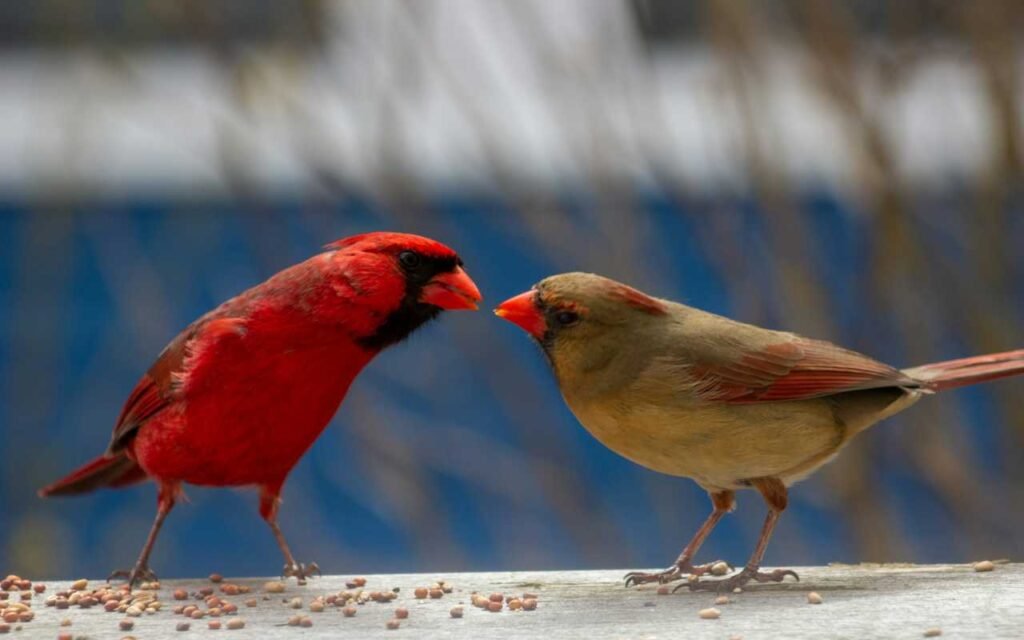
The fastest identifier is overall color, as adult males sport vibrant fire-engine red plumage with a jet-black face mask, while adult females display a subtle pale brown body with soft red-orange accents.
To verify tricky views, check their behaviors, because territorial males whistle loudly from high perches to claim space, whereas cautious females stick to low cover and use soft chip calls.
Spotting Cardinal Gender Patterns on the Sketchboard
Reviewing an illustrated breakdown provides excellent clarity when learning these subtle avian markers for the first time. This animated explainer video maps out the distinct visual checkpoints and physical boundaries directly on a digital canvas.
📝 View Video Timeline & Key Takeaways
[00:00 – 01:49]: Quantifying sexual dimorphism in mature adults. Evaluating the explicit morphological profile of the mature male *Cardinalis cardinalis*, characterized by high-intensity carotenoid red plumage, a distinct melanistic black facial mask, and a prominent cone-shaped bill used for territorial advertising.
[01:50 – 03:05]: Cryptic female coloration and the juvenile diagnostic smoking gun. Analyzing the adaptive value of the female’s warm tan camouflage which conceals nesting operations. Isolating the juvenile phase by tracking its critical diagnostic marker: a dull, dark grayish bill that separates it from an adult female’s bright orange-red mandibles.
[03:06 – 04:53]: Advanced behavioral acoustics and late-summer molting anomalies. Dissecting territorial male vocal displays from cautious female contact chipping notes. This section identifies common red herrings like late-summer molting cycles, winter plumage fading, and poor ambient lighting that mask true phenotypic traits.
[04:54 – End]: The 3-second rapid forensic field audit and master case file. Executing a streamlined visual checklist tracking overall plumage saturation, facial mask borders, and bill coloration. Compiling these metrics into a complete structural dataset unlocks deep, real-time context for backyard ecosystem watching.
The Obvious Differences You Can Spot Instantly
When it comes to cardinal gender differences, nature made things pretty straightforward once you know what to look for. The good news is that cardinals are one of the easier birds to sex, especially compared to those tricky little brown jobs that all look identical.
Take the 50-Bird Backyard Challenge!
Spotted a brilliant Cardinal in your yard today? Don’t let the memory fade! Easily track your sightings on our premium, large-font printing sheets designed perfectly for your kitchen window sill.
Male Cardinals: The Show-Offs
Male cardinals are basically the peacocks of the backyard bird world. They sport that brilliant, fire-engine red plumage that makes them impossible to miss. According to the American Bird Conservancy, male cardinals are bright red all over, with a reddish bill and black face immediately around the bill. I call them the “look at me” birds, and honestly, who can blame them? When you’re that stunning, why not flaunt it?
The male cardinal identification starts with that unmistakable red. We’re talking about a rich, vibrant red that covers almost their entire body. Their crest, back, wings, tail, and underparts are all various shades of red. The only contrast comes from their jet-black face mask that extends around their eyes and down to their throat, creating a striking bandit-like appearance.
Their beaks are thick, conical, and bright orange-red, perfect for cracking seeds. During breeding season, these beaks become even more vibrant, like nature’s way of adding extra bling.
Genetic research (including the CYP2J19 gene) confirms that the red plumage in male Northern Cardinals is tightly regulated at the molecular level, which is why diet and condition can affect how red a male looks. (De Novo Cardinal Genome Study)
Ever noticed how some male cardinals look redder than others? That’s often related to diet and age – older, well-fed males tend to show the most intense coloration.
Female Cardinals: The Understated Beauties
Now, female cardinal traits are where things get interesting. These ladies are the masters of subtle elegance. According to Celebrate Urban Birds, females are pale brown overall with warm reddish tinges in the wings, tail, and crest.
The red isn’t absent – it’s just more strategically placed. You’ll see lovely red-orange highlights on the tips of their wings, tail feathers, and that adorable pointed crest. Their beaks are the same thick, seed-cracking shape as the males, but they’re usually more orange than red. The face mask?
Much more subtle or sometimes barely visible. Instead of that dramatic black bandit look, females have more muted facial features that blend beautifully with their overall coloring.
The Rare Exception: Half-Male, Half-Female-Looking Cardinals
While separating adult genders is usually basic, nature occasionally produces a mind-boggling visual anomaly that throws off even experienced birders. Online birding communities frequently share viral photos of single cardinals split perfectly down the middle, displaying bright red male plumage on one side of their body and soft tan female plumage on the other.
According to a famous case study published by The University of Texas at Dallas, this incredibly rare event is known as bilateral gynandromorphism, commonly called a “half-sider.” This rare condition occurs when a genetic mistake during the earliest cell divisions causes a bird to develop with one side of its body female and the completely opposite side male.
If you think you have spotted an unusual “half-and-half” variant in your yard, use this three-part rule to confirm the anomaly:
- Check for a Clean Boundary: Look closely for a razor-sharp, left-to-right boundary line running directly down the center of the breast and belly.
- Photograph Both Profiles: Take high-quality photos of both sides of the bird’s body rather than judging its gender from a single flight angle.
- Submit the Case File: Record the entry as a “possible gynandromorph” and submit your clear photograph to a local birding group or the eBird Macaulay Library for university review. Do not assume every patchy bird is a half-sider; normal autumn molts and patchy juvenile feathers are far more common.
Juvenile Cardinals: The Awkward Teenagers
Juvenile cardinals look like the in-between stage of birdhood. They’re mostly dull brown with a slightly scruffy appearance, lacking the polished colors of adults. Their beaks start out dark before turning bright orange-red as they mature.
According to the Cornell Lab of Ornithology, juvenile male cardinals resemble females until their adult plumage develops. Unlike adults, their black face mask is either missing or very faint, which makes them look like a “work in progress” version of their parents.
Adding to that, Birdfact notes that young cardinals of both sexes look remarkably similar to adult females, but there are subtle differences that help you tell them apart. Juvenile males start showing hints of red earlier than you might expect, though it’s patchy and uneven—think of a female cardinal sprinkled with random red feathers as he figures out his adult colors.
Their beaks are also darker, more grayish-orange rather than the bright orange-red of adults. Juvenile females look very similar to adult females but tend to be slightly duller overall. Their beaks are darker too, and they often have a fluffier, less sleek appearance.
Unlike adults, their black face mask is faint or missing entirely, which makes them look like “work in progress” versions of their parents—awkward, patchy, and a little unpredictable.

Beyond the Basics: Subtle Clues That Matter
Once you’ve mastered the obvious cardinal plumage differences, let’s talk about the details that separate casual observers from true cardinal experts. These subtle differences can help you identify birds even when lighting conditions aren’t perfect or when you’re watching from a distance.
Size and Body Language
Here’s something most people don’t realize: northern cardinal male vs female differences extend beyond just color. Males are typically slightly larger and more robust-looking than females. It’s not a huge difference, but once you start paying attention, you’ll notice it.
Males also tend to be more territorial and aggressive, especially during breeding season. I’ve watched male cardinals chase off other males with an intensity that’s both impressive and slightly comical. They puff up their chest feathers, raise their crest, and basically turn into tiny feathered bodybuilders.
Females, on the other hand, tend to be more cautious and observant. They spend more time scanning for potential threats before committing to a feeding spot. Smart ladies – they’ve got eggs and babies to think about.
Behavioral Differences That Give Them Away
Want to know a secret? Sometimes behavior tells you more than appearance. Male cardinals are the singers of the family. If you hear that classic “birdy-birdy-birdy” or “cheer-cheer-cheer” call, you’re almost certainly listening to a male defending his territory or trying to impress a female.
Females can sing too, but they do it much less frequently and usually more quietly. When they do vocalize, it’s often a softer, more conversational sound. During nesting season, I’ve noticed females make a lot of subtle contact calls to communicate with their mates.
Seasonal Changes That Might Fool You
Here’s where things get tricky, and honestly, where I got fooled for years. Cardinal identification isn’t always consistent throughout the year, and these seasonal changes can really mess with your confidence.
Winter vs. Summer Males
Male cardinals aren’t quite as brilliant in winter as they are during breeding season. Their red can appear slightly duller, almost like someone turned down the saturation on a photo. According to All About Birds, by midwinter, cardinals are approaching maximum redness after molting into and polishing up a new set of feathers.
The edges of their feathers might look a bit brownish or grayish, especially on newly molted birds. Don’t panic if your male cardinal looks a bit dull in December – he’s not sick, just rocking his winter wardrobe.
Studies show that environmental factors, especially urban ones like pollution, light levels, and habitat can actually affect how bright his feathers appear (Jones et al., Variation in Plumage Coloration of Northern Cardinals). Come spring, those hormones kick in, and he’ll be back to his show-stopping best.
Juvenile Cardinals: The Ultimate Tricksters
Oh boy, juvenile cardinals. These little troublemakers had me questioning everything I thought I knew about how to identify cardinals. Young cardinals of both sexes look remarkably similar to adult females, but with some key differences that can help you tell them apart.
Adding to that, Birdfact notes that young cardinals of both sexes look remarkably similar to adult females, but there are subtle differences that help you tell them apart. Juvenile males start showing hints of red earlier than you might expect, though it’s patchy and uneven—think of a female cardinal sprinkled with random red feathers as he figures out his adult colors.
Their beaks are also darker, more grayish-orange rather than the bright orange-red of adults. Juvenile females look very similar to adult females but tend to be slightly duller overall. Their beaks are darker too, and they often have a fluffier, less sleek appearance.
Unlike adults, their black face mask is faint or missing entirely, which makes them look like “work in progress” versions of their parents—awkward, patchy, and a little unpredictable.

Common Mistakes Even Experienced Birders Make
Let me share some embarrassing moments that taught me valuable lessons about cardinal identification. Maybe my mistakes can save you some confusion :/.
The “Rare Cardinal” Mix-Up
I once got super excited thinking I’d discovered some rare cardinal variant, only to realize I was looking at a female in perfect lighting conditions. The morning sun was hitting her reddish highlights just right, making them appear much more vibrant than usual. Lesson learned: lighting can dramatically change how cardinal plumage differences appear.
The Molt Confusion
During molting season, even experienced birders can get thrown off. I’ve seen males mid-molt that looked patchy and weird, with missing head feathers that made their black mask look completely different. If you see a cardinal that looks “off,” consider whether it might be going through a molt.

Distance and Weather Effects
Rainy, overcast days can make male cardinals look much duller, while bright, sunny days can make females appear more vibrant. I’ve learned to consider weather and lighting conditions when making identifications, especially when I’m birding from a distance.
Messy Bill or Medical Problem?
When tracking close-up images on modern backyard feeder cameras, bird watchers often panic when they spot a cardinal with a dark, dirty-looking, or crusted bill. They assume the bird is suffering from a dangerous disease or a severe deformity that alters its identity.
Community discussions on r/birding confirm that a messy beak is typically normal foraging behavior rather than a medical emergency. Cardinals possess powerful jaw structures designed to physically break open tough seed shells to access the nutritious content within. After a heavy feeding session, visiting females will routinely scrape and rub their bills against wooden perches or plastic frames to tidy up and remove sticky residue.
To run a fast health audit on your backyard visitors, follow these guidelines:
- Normal Maintenance: Temporary seed fragments, powdery coating, or bill-scraping behavior on perches are normal and should not affect your identification.
- Health Concerns: Persistent swelling, bloody growths, an inability to close the mandibles completely, or obvious difficulty cracking seeds indicate a legitimate injury or pox event.
Quick Reference: When You Need to Know NOW
While overall plumage gives you an instant visual clue, beginner birdwatchers frequently make the mistake of assuming every brown-bodied visitor is an adult female. To prevent false sex classifications, you must evaluate the color of the beak as an explicit indicator of age before you try to determine the bird’s gender.
Real-world identification threads across r/birding repeatedly resolve confusing “female or young male?” questions by tracking the gradual transition of the mandibular beak. Use this clear decision table for your rapid backyard field audits:
| Beak and Plumage Observation | Best Avian Interpretation | Actionable Field Rule |
|---|---|---|
| Gray, brown, or blackish bill | Likely an immature bird. | Sex classification is not yet reliable. Track its facial mask development instead. |
| Orange bill with a smooth brown body | Usually an adult female. | Inspect the mask and crest tips for subtle red-orange highlights. |
| Orange-red bill with full crimson feathers | Adult male. | Fire-engine red plumage and a jet-black bandit mask confirm identity instantly. |
| Patchy red with a dark immature bill | Confirmed young male. | Record the entry as an immature male transitioning into adult breeding plumage. |
Why These Differences Matter
Identifying specific bird behaviors and genders is a favorite pastime for millions of people. Check out our Ultimate Bird Watching Industry Report to see the incredible participation numbers and economic impact of this hobby.
Understanding northern cardinal male vs female differences isn’t just about showing off your birding knowledge (though that’s fun too). According to this study, these differences tell a fascinating story about survival, evolution, and the roles each sex plays in cardinal society.
Males are bright and conspicuous because they need to attract mates and defend territories. That flashy red plumage is basically a neon sign saying, “I’m healthy, strong, and would make excellent father material.” The trade-off? They’re more visible to predators.
Females evolved their more subtle coloring for completely practical reasons. When you’re sitting on a nest for weeks, blending in with your surroundings can literally be a matter of life and death. Their coloring provides perfect camouflage among dead leaves and brown twigs.
Making the Most of Your Cardinal Watching
Now that you know how to identify cardinals with confidence, you can really start appreciating the subtle dramas playing out in your backyard. Watch for pair bonding behaviors, where males feed females during courtship. Look for territorial disputes between males. Notice how females carefully scout feeding areas before committing.
I keep a simple notebook by my window where I jot down interesting cardinal behaviors I observe. Over time, you start noticing patterns and personalities. That slightly more aggressive male might be the same one you see every day. That cautious female might be the one who successfully raised three broods last summer.
Quick Reference Infographic for Male vs Female Cardinals
Here’s an easy visual guide summarizing the key differences between male, female, and juvenile cardinals—perfect for a fast backyard check.

Final Thoughts: Embracing the Learning Curve
Learning cardinal gender differences is like learning any new skill – it takes practice, and you’ll make mistakes. I still occasionally second-guess myself when lighting conditions are weird or when I’m dealing with juveniles in transition.
The key is to enjoy the process. Every time you correctly identify a female cardinal or spot a juvenile male starting to show his colors, you’re connecting more deeply with the natural world around you. And honestly, cardinals are pretty forgiving subjects for practicing your identification skills.
Next time you’re watching your feeders and spot those familiar red flashes, take a moment to really observe. Notice the subtle differences, the behaviors, the way light plays on their feathers. IMO, the more you pay attention, the more amazing these common backyard birds become. Who knew something so familiar could still surprise you?