
Boring a random opening into a nesting box is a recipe for disaster. If you are looking for a birdhouse entrance hole size chart to keep aggressive intruders away from vulnerable eggs, precision is everything. A difference of just an eighth of an inch determines whether a brood thrives or gets crushed. Mastering these precise physical thresholds is your most effective tool for backyard conservation.
By installing hard-shelled portal protector plates, tailoring doorway shapes to specific target birds, and applying strict exclusion metrics, you can easily secure your nesting boxes. Here is how to use precise structural measurements to defend your local wildlife sanctuary.
What Is the Correct Birdhouse Hole Size?
The correct entry diameter acts as a strict mechanical predator filter; an exact 1-1/8 inch hole allows native wrens inside while physically blocking invasive, egg-crushing House Sparrows.
A target bluebird setup requires a precise 1-1/2 inch opening to let the songbirds pass, making the addition of a rigid metal portal defender plate necessary to stop squirrels from chewing the door wider.
1. The Physics of the Sparrow Exclusion Threshold
The front entry door of a nesting box does not just let your preferred birds in—its primary biological job is to keep dominant, non-native pests out. Aggressive House Sparrows are the single biggest threat to native cavity nesters across North America. They will routinely enter unsecured boxes, attack brooding females on the nest, destroy eggs, and build their own bulky straw nests right on top of native songbirds.
According to a dedicated field study on avian displacement published on ResearchGate, nest-site competition between invasive and native cavity-nesting birds creates severe survival pressure that requires human conservation intervention.
In everyday lawn application, this defense line relies entirely on physical dimensions. The rigid skeletal framework of a standard adult House Sparrow requires an opening of at least 1-1/4 inches to pass into a box cavity.
If you are trying to attract smaller native songbirds like House Wrens or Black-capped Chickadees, boring an exact 1-1/8 inch portal creates an absolute mechanical block. The sparrow’s chest bone structure cannot physically squeeze through the tighter opening, providing total security for your target songbirds to incubate their clutches without territorial harassment.
2. Master Entrance Hole Dimension Chart
To ensure your backyard boxes are calibrated perfectly, use this specialized dimension layout before drilling new lumber or purchasing retail house hardware. Every measurement listed here represents a hard biological limit verified by global conservation and field study data.
3. Defending the Door From Predator Chewing
Even if you construct a box with a perfect entrance hole, your dimensions are under constant threat from local backyard wildlife. Red squirrels, flying squirrels, white-footed mice, starlings, and downy woodpeckers will routinely chew at the soft, raw wood edges of an entry portal. Their goal is to expand the doorway just enough to allow their larger bodies to fit inside so they can steal the nesting space or eat the eggs and hatchlings.
⚠️ CRITICAL HARDWARE ALERT: Avoid Soft Wood-Only Portals
Never leave a soft cedar or pine entry door unprotected if bluebirds are actively nesting on your property line. Once a squirrel chews the portal open by a mere 1/8 of an inch, your physical sparrow defense filter is ruined permanently. Always install a rigid metal guard plate on day one.
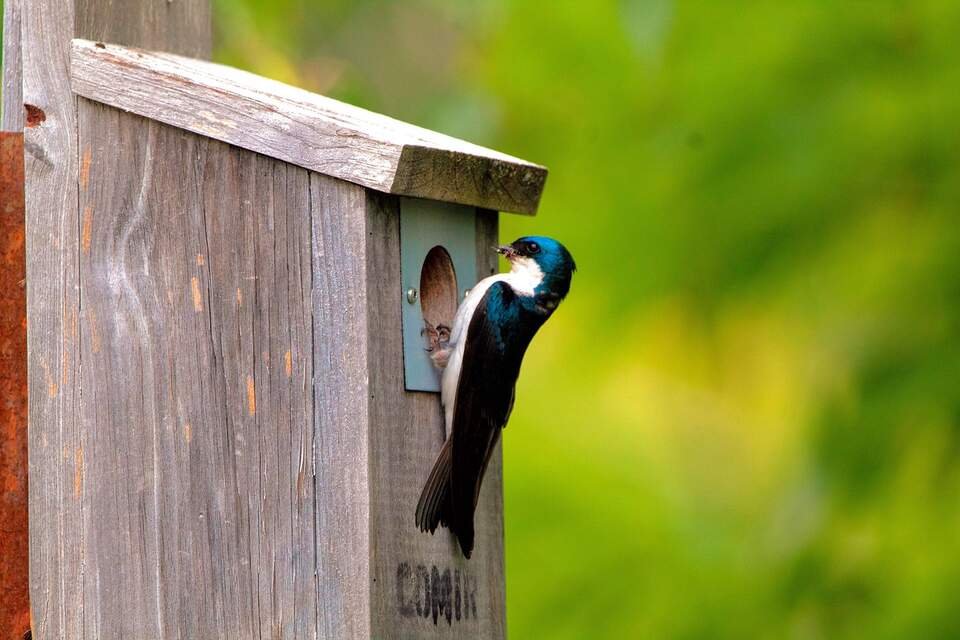
To permanently stop this chewing damage, you must screw a heavy-gauge zinc, copper, or powder-coated metal portal protector plate over the exterior entry door. This simple metal ring maintains your required fractional diameter permanently, completely defeating the teeth and beaks of raiders.
For a complete guide on mapping out your installation pole angles and heights alongside these hole size filters, review our central best birdhouse placement blueprints.
4. Deep-Cavity Mechanics: Managing the Distance to the Door
The diameter of the entrance hole is only half of the structural equation; you must also calculate the distance from the bottom of that hole to the inside floor of the box. This vertical span is known as the drop depth, and it serves two critical protection purposes that impact nestling survival.
First, a deep interior cavity keeps the developing nestlings far out of reach from reaching predators. If a raccoon or outdoor cat manages to bypass your pole baffles and climb to the box, they will try to sit on the roof and reach their front paws down through the entrance hole to scoop out the chicks. If your interior depth is less than 6 inches, the predator can easily grab the nest.
Second, a proper depth prevents premature fledging. If the hole sits too low, older nestlings will crowd the doorway too early in their development, accidentally tumbling out onto the ground before their flight feathers have matured. Ensure your inside walls are left completely raw and rough so the mature chicks can easily grip the wood grain like a ladder when it is officially time to fly.
5. Specialized Entry Shapes: Beyond the Standard Circle
While a perfectly round bored hole is the most common option for beginner builders, specialized entry shapes can provide massive biological advantages for specific bird species. Changing the geometry of the doorway allows you to target selective behaviors.
For example, Eastern Bluebird conservationists frequently utilize an elongated oval entrance hole (measuring 1-3/8 inches wide by 2-1/4 inches tall). This oval design replicates the vertical fissures found in rotted orchard trees and is often preferred by bluebirds over standard circular doors.
For Purple Martins, developers use crescent-shaped, starling-resistant entry holes (SREH). These precise semicircular slots sit exactly 1/4 inch above the porch floor, allowing the flat, low-profile bodies of martins to crawl inside while physically blocking the taller chest profiles of destructive European Starlings.
6. Wood Selection and the Impact of Wood Swelling on Portal Tolerances
The primary material you choose for your nesting box construction changes its physical dimensions throughout the year. Softwoods like western red cedar, white pine, and redwood absorb significant environmental moisture from high spring humidity and heavy, pounding summer downpours. This moisture causes the wood grain to expand.
This swelling can cause an unprotected, raw wooden entrance portal to shrink by up to 1/16 of an inch at the peak of the breeding season. While a tighter door might tightly secure wrens, it can accidentally lock out larger native target species like Eastern Bluebirds or Tree Swallows who require every single millimeter of their 1-1/2 inch clearance to enter safely.
To combat this wood movement, always use a premium sharp spade bit or a high-speed hole saw to cut your entryways cleanly. Sand the internal rim smooth to remove loose splinters that trap water, and apply your metal portal defender plates to both the inside and outside faces of the wood. This locks the structural timber in place and keeps the portal perfectly round.
7. The Illusion of Perches: Why Pegs Wreck Portal Security
Many commercial birdhouses sold in craft stores include a small wooden peg or decorative perch glued directly beneath the entrance hole. While people think a perch helps the parent bird sit and rest before feeding its family, it actually acts as a dangerous hunting platform for predators.
Native cavity-nesting birds have evolved sharp, powerful claws that allow them to cling directly to raw wood siding or bark without any extra support. They do not need a perch.
However, non-native house sparrows, European starlings, crows, and weasels have weaker clinging skills. Adding a perch gives these invasive raiders a perfect, solid platform to stand on. They can perch comfortably outside, poke their heads into the entrance hole, and terrorize the brooding female or pull out the chicks. Never build or buy a house with a perch, and saw off any pegs on existing boxes flush with the wall panel.
8. The Danger of Over-Sizing for Quick Attraction
A common trap people fall into is boring an extra-large door with the mindset that a bigger hole will make it easier for any passing bird to find and enter the house. While an oversized door may attract high traffic initially, it instantly transforms the home into an un-defendable ecological death trap.
An oversized portal increases the interior light levels, exposing the vulnerable white eggs to passing predators, and allows cold spring winds to blow directly onto the brooding female. If an entrance hole is widened even slightly beyond a target species’ metric, larger aggressive birds will immediately invade, throw out the original residents, and claim the space.
Stick strictly to the fractional dimensions required by your target species; true conservation relies on precision filtering, not open invitations.
9. End-of-Season Portal Inspection Protocols
Because your entrance dimensions dictate the entire safety profile of the box, you must perform a strict portal audit every autumn during your annual maintenance routine. Do not assume your metal protector plates or wooden panels have remained completely stable through a chaotic spring and summer breeding stretch.
When you lower your telescoping poles to handle your annual cleanup, inspect the entry door for hairline wood splits, wasp nest attachments, or signs of rodent chewing along the interior rim. If a predator has managed to gouge or widen the wood behind your metal protector plate, the box must be taken down and repaired with a fresh front block before the next spring migration peak hits.
To ensure your entirely calibrated structure is fully integrated with thick insulating wood materials and protective features, refer back to our foundational birdhouse guide for beginners.