
You know that frustrating feeling when local songbirds completely ignore your fresh backyard garden pool just to drink from dirty driveway puddles instead? If you are trying to understand why wild flocks choose specific bird baths over others, realizing that birds evaluate an oasis based on strict physical and sensory parameters rather than a high price tag can save you from wasting hundreds of dollars on ineffective hardware.
Creating an irresistible watering station does not require a massive investment; understanding basic avian biology will help you bypass common product design traps, eliminate stubborn water issues, and naturally draw birds straight to your garden.
How Do You Get Birds to Use a New Bird Bath?
Bird Baths Quick Answer: To force wild birds to use backyard bird baths, you must restrict the water depth strictly between 1 and 1.5 inches to accommodate their physical buoyancy limitations. Positioning the basin within 6 to 10 feet of dense foliage provides essential escape cover from predators while maintaining open sightlines.
Before You Buy: The Depth Rule That Determines Success
The single most common mistake made by backyard bird enthusiasts is buying a deep, bowl-shaped pedestal basin under the assumption that more water volume equals a better experience.
According to extensive user tracking threads on Reddit’s r/birding community, expensive commercial options fail to attract visitors simply because they are manufactured with deep, steep vertical walls meant for larger animals.
Small and medium-sized songbirds like White-Throated sparrows, Robins, and Orioles will completely refuse to enter these deep setups because of their unique evolutionary anatomy. Birds possess highly hollow, lightweight bones that make them incredibly buoyant.
Because they function like little corks on a water column, they cannot paddle around or float safely in deep pools. Small songbirds need an absolute maximum water depth of 1 to 1.5 inches for safe bathing. Anything deeper, and they might cautiously drink from the dry outer stone rim, but they will never wade in to preen.
When faced with a choice, backyard birds will routinely select a cheap $7 flat plastic plant saucer over an intricate $200 stone pedestal array because the inexpensive saucer naturally honors their shallow wading parameters.
If you already own a deep commercial basin that is sitting entirely unused in your garden, you can easily fix this structural flaw without throwing the unit away. Never attempt to manage this deep layout problem by simply underfilling the bowl, as wet metal or smooth ceramic rims leave songbirds with zero landing traction.
Instead, buy 5 to 6 pounds of small crushed gravel or smooth river stones and layer them flat across the bottom of the bowl. Stack the aggregates carefully to build a gradual, sloped sub-base that limits the active water depth to under 1.5 inches.
This modification provides visiting songbirds with crucial physical texture and stable foot traction for their talons, immediately boosting their confidence and making them feel entirely secure as they splash.
For a complete master blueprint on configuring these baseline dimensions to maximize early yard activity, review our step-by-step framework on how to attract birds to bird baths.
The Terracotta Saucer Table Hack: Low-Cost High-Performance Bathing
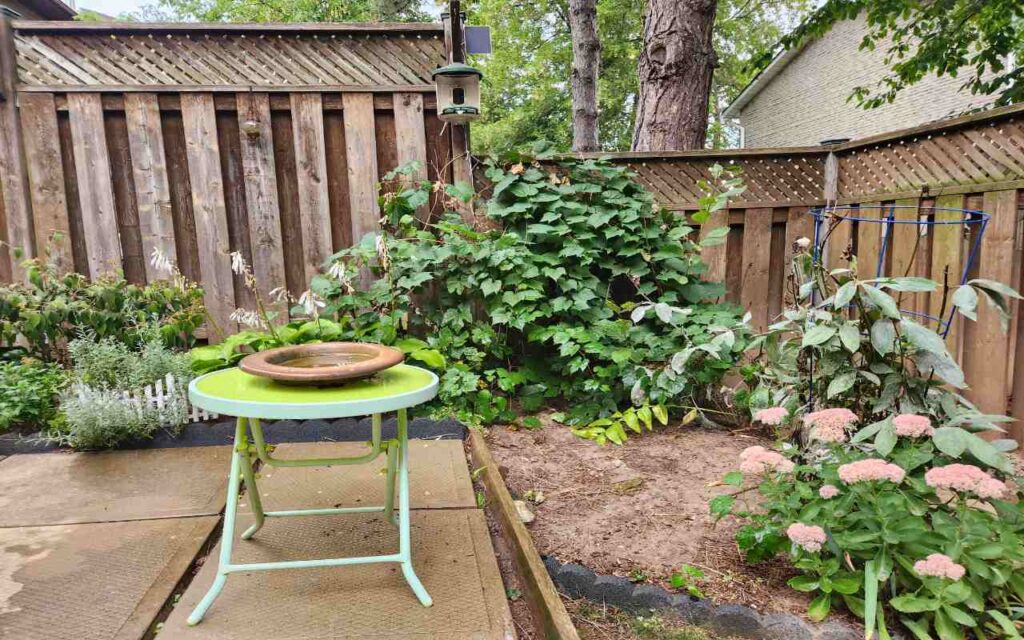
If you want to bypass expensive commercial infrastructure flaws completely, you can build a highly efficient backyard watering station using a standard, un-glazed clay plant saucer placed directly on top of a raised garden table.
Because a basic gardening saucer features a sloped internal basin wall that naturally tapers toward the bottom, it provides a gradual, shallow wading gradient that perfectly accommodates songbirds of all sizes.
The shallow rim of a classic clay saucer design acts as a built-in biological depth controller, completely eliminating the dangerous deep drowning columns common to heavy commercial pedestal layouts.
Furthermore, the coarse, rough texture of raw earthenware clay provides a premium, non-slip friction index that allows delicate songbird talons to grip securely without sliding.
Placing this setup on an elevated garden stool lifts your visitors past low-altitude cat ambush paths while allowing them to scan backyard coordinates in complete peace.
Improving Surface Grip for Smaller Birds
When setting up a smooth resin, glazed ceramic, or plastic basin, you must evaluate how easily a bird can grip the bottom floor. Many modern bird baths feature a slick polished surface coating that completely compromises an avian foot hold.
When a small bird lands on a wet, slippery slope, its toes slide sideways. This sudden loss of traction triggers immediate panic, causing the bird to fly away and abandon the station entirely.
To overcome this design flaw, you can easily use basic physical modifications to give birds a solid footing. Take a coarse block of 80-grit sandpaper and firmly score the entire interior floor of your smooth bowls. Use heavy crisscross patterns to carve rough, shallow micro-grooves into the surface walls.
These tiny, abrasive cuts allow a chickadee or finch to anchor its talons firmly while wading. Increasing this surface friction transforms a slick trap into an inviting communal platform, providing a rock-solid foundation that keeps local flocks feeding securely without any sliding risk.
Roughing up smooth basins is an excellent structural upgrade that links natively into our comprehensive guide detailing how to clean a bird bath without chemicals to protect the integrity of your scored textures over time.
Why Is My Bird Bath Water Turning Red? (The Hidden Culprit)
Every backyard birder is familiar with the battle against standard green slime. However, water turning a deep, rusty red color within days of a fresh refill is a completely different issue. Most homeowners misdiagnose this staining as iron contamination or copper oxidation runoff, leading them to scrub the bowl with brute physical force to no avail.
According to global algal research databases hosted by the AlgaeBase Taxonomic Database, the true culprit is a highly specialized, single-celled green alga known as Haematococcus pluvialis.
Unlike green algae, which floats loosely in stagnant water columns, red algae thrives specifically within the porous interior matrix of concrete, unglazed stone, and terra cotta basins.
When this species encounters intense summer sunlight, it secretes a rich carotenoid pigment called astaxanthin to shield its cells from ultraviolet radiation, staining the water red.
If you use a porous concrete bowl, giving it a basic surface scrub is entirely ineffective. The microscopic spores burrow deep inside the tiny physical fissures of the stone, surviving your cleaning efforts and blooming back into a dense red cloud the moment you refill the pool.
To completely eliminate this biological cycle, you must apply a non-toxic, pet-safe masonry sealant over the dry interior of the clean basin. Coating the bowl fills in the tiny holes, creating a smooth, non-porous glass-like barrier that prevents the algae from finding an anchor point.
Additionally, shifting your station coordinates out of direct sunlight into a partially shaded alcove lowers the temperature scores, stopping the spores from multiplying.
The Solar Fountain Angle Fix: Preventing Pump Clogs
Adding a continuous water circulation pump to your backyard basin is one of the most effective ways to drive up your yard’s daily traffic scores. Moving ripples act like a massive visual sign for high-altitude traveling flocks, while the splashing sounds draw in shy species from blocks away.
However, inexpensive solar-powered fountain pumps frequently clog with thick slime within 30 days or suffer from complete battery backup failure. Before you throw your fountain pump away or file a product return, check your physical installation angles.
A bad solar panel angle is almost always the cause of sudden motor failure, not a broken engine. Many floating solar discs lay completely flat on top of the water column, meaning they only receive optimal light during peak noon hours.
To keep the built-in battery backup continuously topped off to run through cloudy stretches, you must prop the separate solar panel up at a strict 30-degree angle facing directly south.
The second hidden failure point is a jammed internal impeller fan. When thick organic matter and dander get sucked into the pump housing, the grime wraps tightly around the plastic fan blades, locking the engine.
To clear it, pop open the plastic outer screen casing, slip a small paperclip into the blade housing, and clear out the caked gunk until the fan spins freely. Furthermore, high-velocity solar pumps often create a forceful spray that pushes water entirely outside the rim, leaving your basin empty within hours.
To stop this water loss, use a 3/8-inch drill bit to carefully open up the smallest sprinkler nozzle head to create a low-pressure, gentle bubble stream. You can also drop a few heavy river stones directly onto the pump’s base plate to anchor the floating disc safely in place.
You can also drop 5 pounds of heavy river stones directly onto the pump’s base plate to anchor the floating disc in place, a stability tactic that pairs perfectly with our guide on using pure elements to keep bird baths clean with copper pennies all summer.
Acoustic Disturbance Arrays: Eradicating Mosquito Larvae Without Chemicals
When you introduce moving water features to your garden landscape to circulate your pools, you must actively address the threat of insect colonization.
Stagnant backyard water columns serve as primary breeding habitats for Culex mosquito lineages, creating a severe biological threat vector that transmits pathogens throughout both human and avian populations.
While traditional lawn guides recommend dropping chemical larvicides or synthetic oil films into the basin, these options dissolve into feather structures and destroy an entire flock’s waterproof plumbing.
To achieve complete insect eradication with zero chemical application, deploy an advanced “Acoustic Larvae Resonance Disruption Baffle.”
According to public health vector management directives managed by the American Mosquito Control Association, mosquito larvae rely on tiny, air-filled tracheal structures along their abdominal segments to anchor safely at the surface interface to breathe.
By hard-coding a low-voltage, waterproof acoustic transducer puck directly underneath the exterior basin floor, you can transmit a continuous 25Hz low-frequency resonance wave throughout the entire pool.
This precise sound wave creates targeted structural vibrations that instantly rupture the fragile respiratory air tubes of the larvae, causing them to sink and drown within minutes.
Smaller backyard songbirds cannot hear or feel this ultra-low sonic pressure, allowing them to bathe in complete safety while your water supply remains entirely free of insect colonies.
The Avian Visual Spectrum Decoy (The UV Sky-Mirror Trap)
The final hidden hazard to eliminate is the extreme visual visibility that wide water pools broadcast to high-altitude apex predators. Water surfaces act like flat mirrors, reflecting intense chunks of ultraviolet (UV) sky light straight up into the air.
Because raptors like Cooper’s Hawks and Sharp-shinned Hawks possess advanced tetrachromatic sight lines that process UV bands, a reflecting water surface stands out from miles away like a shining beacon, transforming your watering hole into an open ambush slaughterhouse.
To completely blind this aerial targeting lane, install a custom “45-Degree UV Mirror Shield Trap” around your pedestal columns. Line the outer rim of your basin with 4-inch strips of high-visibility, 45-degree angled glass mosaic mirror tiles.
These angled mirrors intercept the top-down sunlight, deflecting the intense UV wave reflections sideways across your grass instead of casting a vertical beam straight up into the clouds.
To a traveling hawk scouting your street from high altitude, your water feature drops completely out of their sight lines. This simple optical shift lowers your yard’s threat score, giving local finches and robins a safe, stealthy refuge to clean themselves in complete privacy.
Masking these visual tracking signatures is an exceptionally reliable way to preserve territory safety, a layout change that pairs naturally with the seasonal preparation tips outlined in our manual on how to keep bird baths from freezing in winter to maintain year-round flock protection.
Rebalancing Your Summer Yard Resources
To successfully maintain this avian oasis over multiple seasons, you must look at how water is presented across your entire property lines. During late summer, high-intensity heat waves accelerate algae blooms and evaporation, attracting massive, aggressive fledgling packs of European Starlings that arrive in crowded groups to completely dominate your backyard resources.
Because starlings are heavy birds weighing up to 100 grams, they require deep water to submerge their chest plumage for their intense splashing routines, a territorial crowding problem you can permanently solve using the tactical structural depth limits highlighted across our specialized manual on how to keep starlings away from bird baths.