
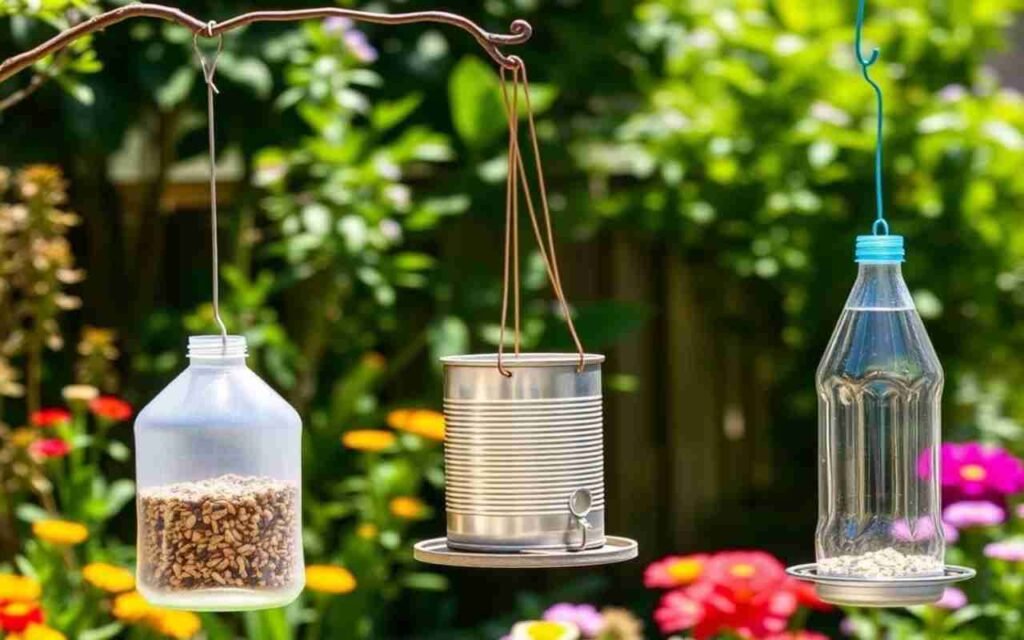
Choosing to make a DIY bird feeder from recycled materials for a family crafting day instantly turns clean kitchen scraps into functional backyard wildlife stations. Transforming everyday plastic containers or cardboard tubes gives kids a hands-on biology lesson while increasing local songbird traffic on a budget.
Repurposing these basic household supplies helps support native avian populations during critical nesting weeks and frozen winter foraging seasons. Adding small drainage shortcuts and picking strategic tree branch placements ensures you can easily build durable, weather-resistant feeding hubs right at your kitchen counter.
Fastest Ways to Construct a Homemade Bird Feeder
The fastest way to build an eco friendly backyard feeding station is converting plastic milk jugs or juice bottles into perching hubs, as lightweight plastics protect seed stores while offering easy multi-angle landing access for small songbirds.
To build zero waste stations instantly without cutting tools, apply unsalted peanut butter and wild grains directly onto dry pinecones or cardboard tubes, creating a highly concentrated energy source that chickadees and finches can easily harvest.
Video Explainer for Household Recycling Feeder Projects
This animated whiteboard walkthrough illustrates the quick manufacturing steps, tool requirements, and optimal seed filling depths for multiple recycling designs. Reviewing these visual steps allows families to easily construct durable birding stations using basic components found in common kitchen drawers
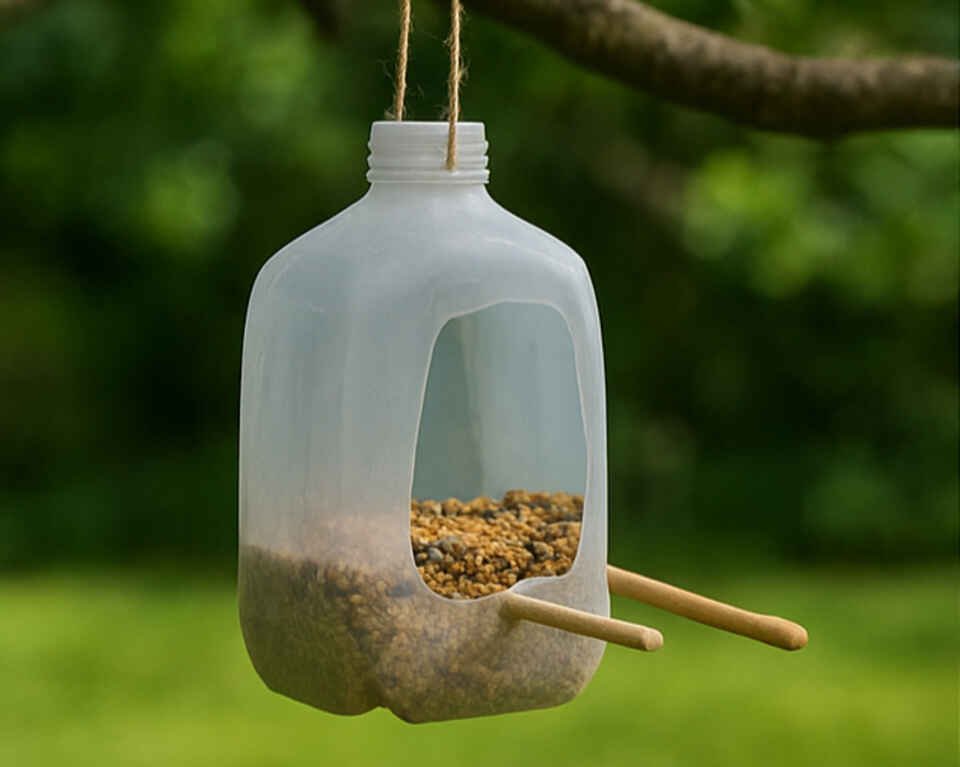
The Classic Milk Jug Multi Perch Feeder
Converting a lightweight plastic milk jug creates a remarkably durable and weather-resistant station that small perching birds can access easily throughout the year. To prepare this project properly, you simply need a clean container, a sharp utility knife, heavy twine, and two wooden spoons to serve as platforms.
Executing the construction steps requires minimal effort:
- Cut Balanced Entrance Portals: Slice clean three-inch wide access windows into two opposite sides of the plastic jug roughly three inches up from the base.
- Insert Cross Perch Dowels: Punch small matching slot holes directly beneath each window to push your wooden spoons completely through the container walls.
- Secure Twine Anchor Ties: Wrap heavy twine tightly around the plastic handle base before suspending the finished unit from a sturdy tree branch.
This lightweight design works perfectly because it provides feeding birds with multiple viewing angles to spot incoming backyard predators early. Shading the container from direct afternoon sunlight prevents the recycled plastic walls from warping while protecting wild seeds from overheating.
Pro Tip: Keep it shaded. Sun can warp the plastic and cook your seeds. Nobody likes crunchy sunflower seeds.
Toilet Paper Cardboard Peanut Butter Core
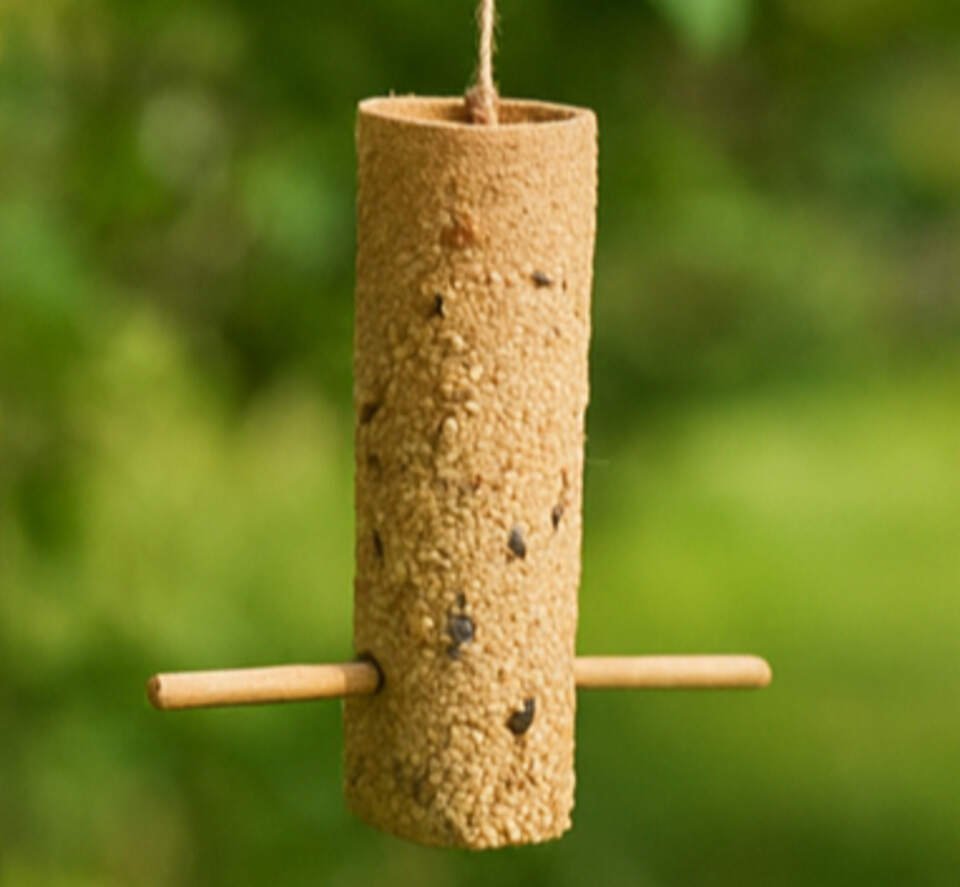
Repurposing plain paperboard tubes offers an immediate way to assemble a zero-waste feeding station that does not require any specialized cutting tools. This quick backyard project utilizes an empty toilet paper roll, unsalted peanut butter, a heavy length of twine, and mixed wild birdseed.
Assembling this high-energy feeding tube follows a simple method:
- Apply Dense Core Adhesive: Spread a thick, uniform layer of unsalted peanut butter across the entire outer surface of the cardboard cylinder.
- Roll Across Seed Trays: Press the sticky tube firmly into a flat tray of wild grain until the entire cardboard face is heavily blanketed.
- Thread Vertical Hanging Twine: Loop your twine directly through the center of the finished paperboard core and tie it securely to an outdoor branch.
Backyard birds flock to peanut butter because it delivers high concentrations of healthy fats required to maintain their core body temperature during cold weather transitions.
Protecting this cardboard cylinder from direct rainfall ensures the paperboard structure maintains its shape while adding crushed almonds or walnuts helps attract larger species like northern cardinals.
It’s simple, fast, and birds go nuts for peanut butter. I made one on a whim last winter, and within an hour, chickadees had discovered it. Just don’t leave it out too long in the rain, peanut butter + water = sticky mess that even the birds avoid.
Extra Tip: Mix in some crushed nuts if you want to attract bigger birds like cardinals.
Plastic Beverage Bottle Horizontal Skewer Hub
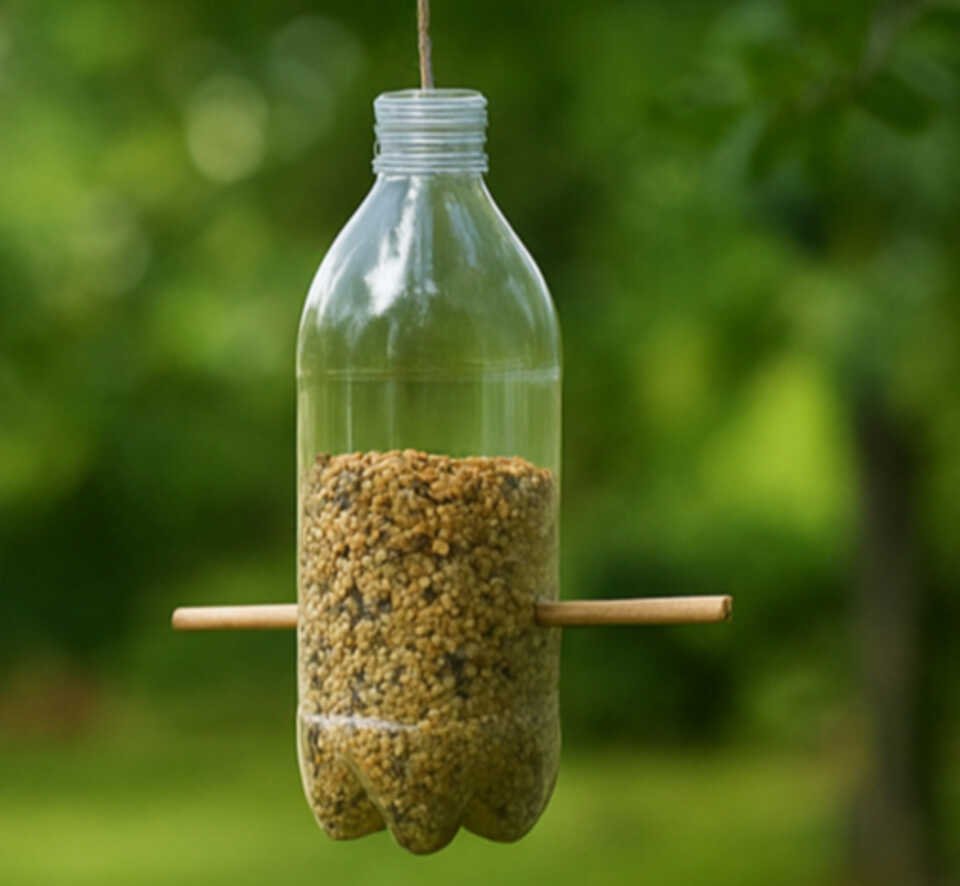
Converting an empty plastic juice or soda bottle creates a highly focused feeding silo that allows multiple small birds to feed at the same time. This simple upcycling project utilizes a clean plastic beverage bottle, sharp scissors, heavy hanging wire, and several wooden kitchen skewers.
Building this multi-level perching silo relies on precise slot placement:
- Pierce Alternating Level Slots: Punch small matching holes through the mid-section and bottom tiers of the plastic bottle walls.
- Drive Horizontal Perch Sticks: Slide your wooden kitchen skewers completely through the matching side walls to create sturdy landing pegs.
- Fill Through Top Funnels: Pour your mixed wild birdseed directly through the narrow neck opening before twisting the cap back on tightly.
This narrow vertical design is ideal for neighborhoods where aggressive birds constantly fight over open feeding platform space. Giving smaller songbirds their own dedicated perching skewers ensures a peaceful foraging zone that keeps high-volume bird traffic visiting your yard all day long.
Cardboard Cereal Box Open Platform Deck
Upcycling a simple paperboard cereal box creates a wide open platform feeder that is perfect for birds that prefer to hop around while foraging. This quick yard project utilizes an empty cardboard cereal box, sharp scissors, non-toxic heavy glue, and hanging twine.
Manufacturing this flat foraging tray requires a quick structural modification:
- Slice Off Upper Cardboard Flaps: Cut away the upper folding sections of your box to create wide open overhead visibility.
- Reinforce Edges with Adhesive: Apply heavy glue or weather-resistant tape along the cardboard corners to prevent the base from buckling under moisture.
- Punch Corner Drainage Holds: Poke small holes through each lower corner before threading your twine strands upward to a central hanging branch.
Flat platform boundaries are highly attractive to heavy ground-feeding species like jays that completely struggle to balance on narrow vertical perching skewers.
If you want to expand your backyard flock size using this wide design, apply the strategic layouts found in our field guide on how to attract blue jays to your yard to maximize your local wildlife traffic.
Quick Tip: Place it away from edges where predators might sneak up. Your birds will thank you.
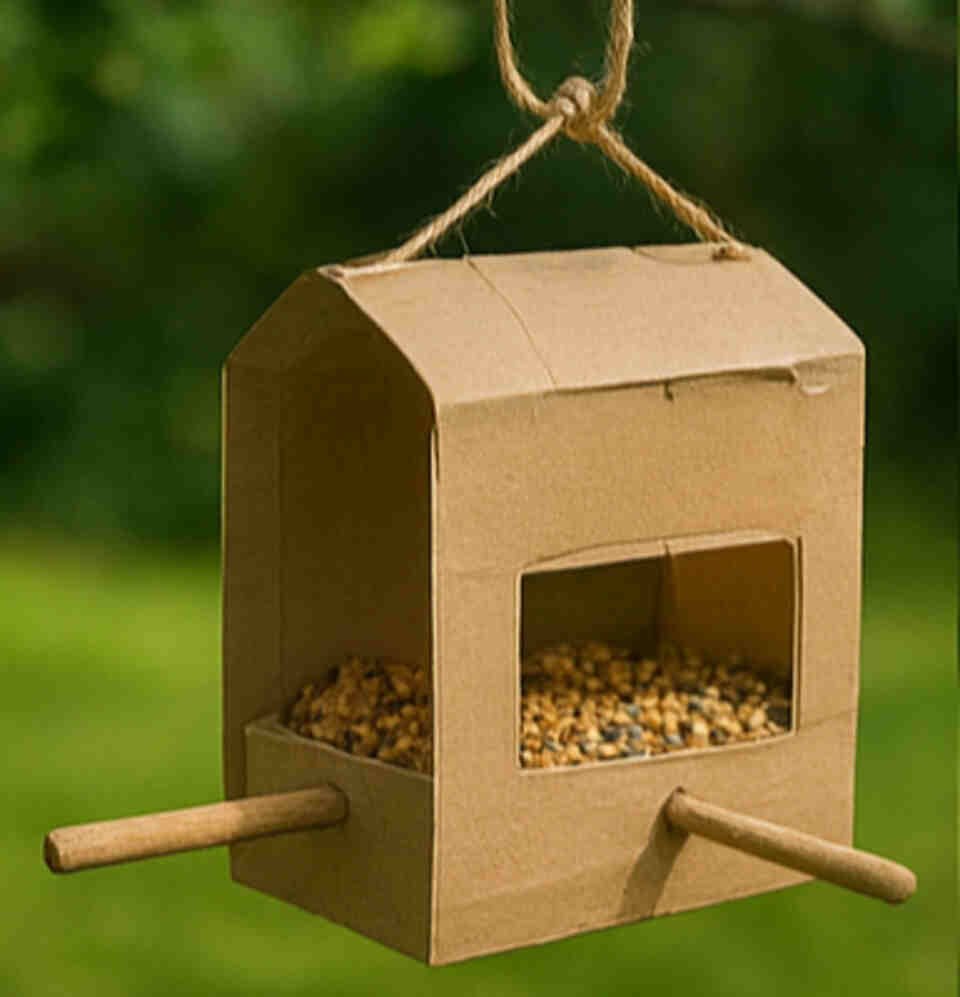
Vintage Teacup and Saucer Hanging Platform
Repurposing an old ceramic teacup creates a beautiful, classy feeding station that adds a wonderful touch of character to any backyard landscape garden. This elegant project requires a matching porcelain teacup and saucer, strong waterproof adhesive, and a sturdy hanging chain.
Assembling this decorative backyard fixture follows a distinct layout path:
- Apply Strong Porcelain Adhesive: Secure the ceramic teacup directly onto its side across the center face of the porcelain saucer.
- Set the Handle Hanging Angle: Rotate the cup handle so it points directly upward, creating the perfect built-in anchor loop for your chain.
- Pour Grains Inside Cavities: Fill the open mouth of the fallen cup with mixed seeds so they spill out naturally onto the saucer ledge.
While this polished ceramic unit looks incredible, heavy summer rainfall can quickly saturate or wash away open seed stores. Hanging your porcelain tray directly beneath a roof overhang or a dense tree canopy provides reliable weather protection while keeping high-volume wild traffic visiting your yard all day long.
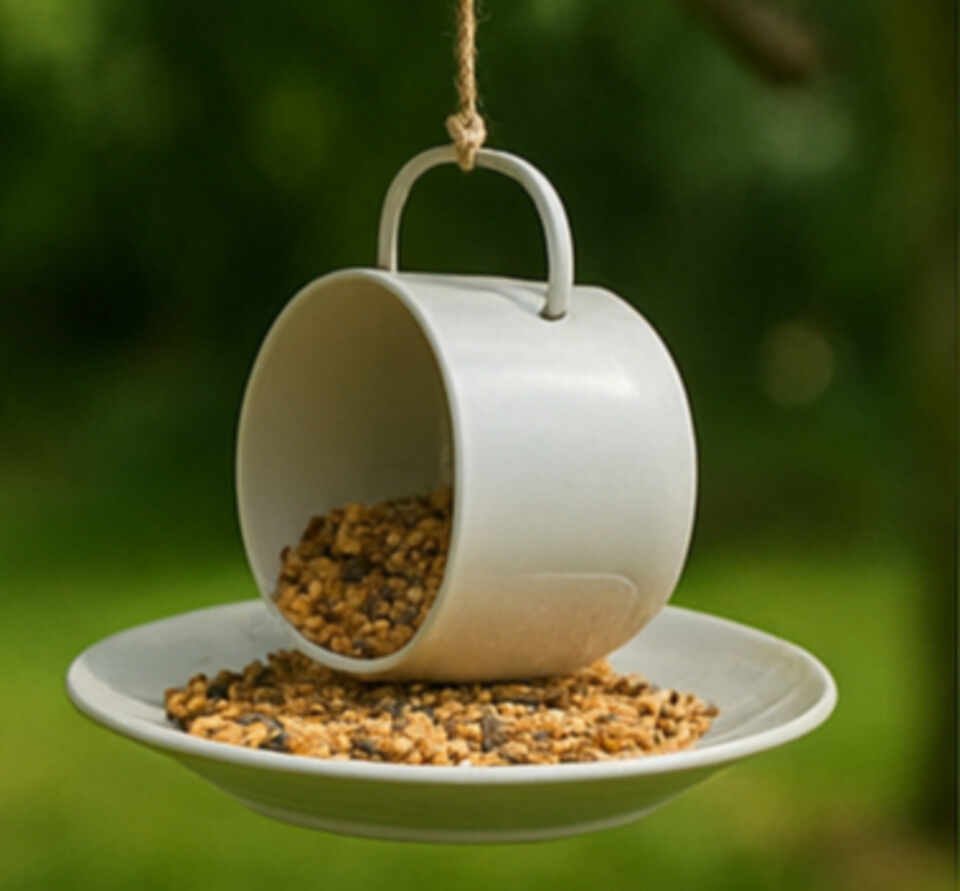
Natural Pinecone Peanut Butter Cluster
Collecting large, dry pinecones from your local neighborhood trees provides a wonderful organic foundation for building a quick backyard feeding project. This classic project relies on large pinecones, unsalted natural peanut butter, wild birdseed, and heavy hanging twine.
Caking these organic scales with energy-dense food is incredibly simple:
- Tie the Upper Twine Anchor: Knot your heavy hanging twine tightly around the top scales of the pinecone before adding any sticky ingredients.
- Pack the Inner Scale Cavities: Press your unsalted natural peanut butter deep into every open nook and cranny along the cone body.
- Dredge Across Seed Platters: Roll the sticky pinecone through a deep tray of wild birdseed until every surface is heavily blanketed.
This small, portable design is fantastic for winter birdwatching because it mimics the natural foraging contexts songbirds look for in deep evergreen forests. Spraying very dry pinecones with a faint mist of water before packing the scales can significantly improve how tightly your protein layer sticks to the organic core.
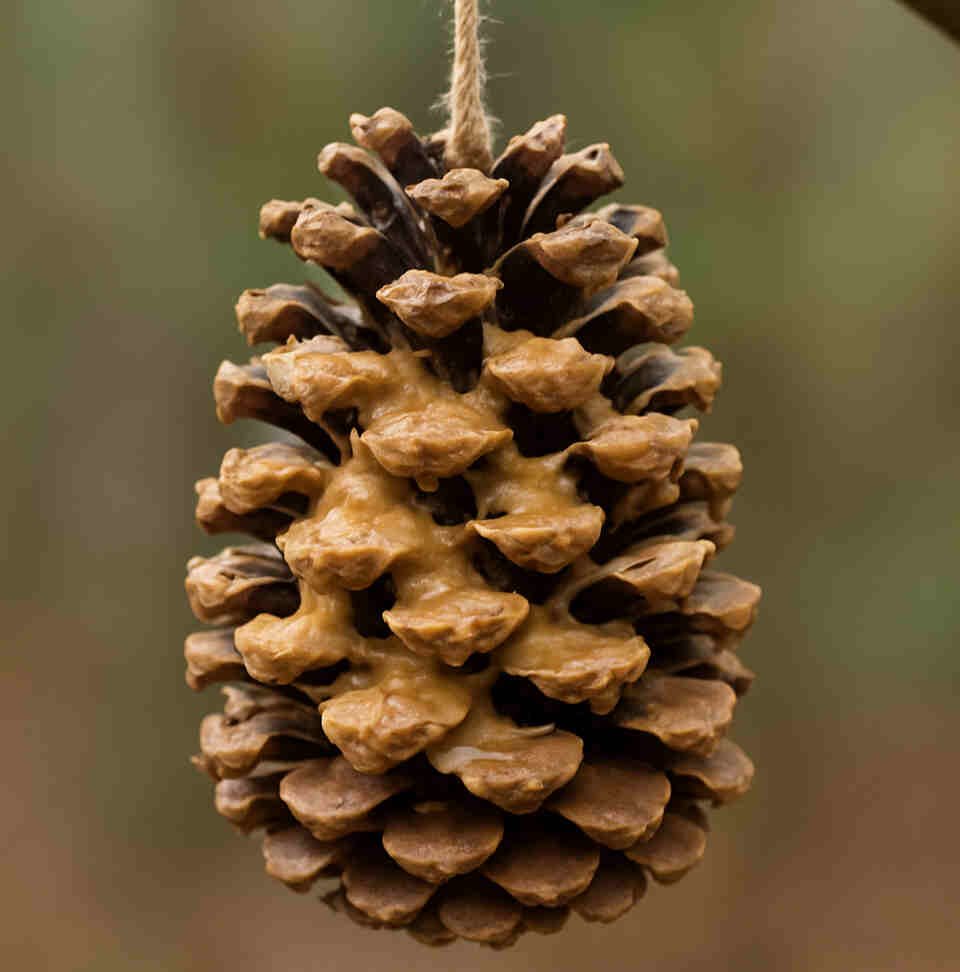
Ribbed Tin Can Horizontal Feeding Cradle
Upcycling a heavy metal soup or tin can creates a highly durable, solid feeding station that can survive harsh backyard weather conditions for months. This long-lasting project utilizes an empty tin can, a hammer and nail for drainage, heavy wire, and a small wooden dowel perch.
Drilling this heavy metal container requires a systematic approach:
- Punch Bottom Moisture Drainage Holes: Use your hammer and nail to poke three small holes through the bottom metal rim to stop rainwater pooling.
- Drive Opposite Side Support Slots: Pierce two matching holes near the top open lip to thread your heavy hanging wire through cleanly.
- Glue the Horizontal Perch Branch: Secure your wooden dowel stick straight across the bottom opening to serve as a steady landing platform.
The sturdy metal walls of a tin can provide an incredibly solid frame that easily handles the weight of larger backyard visitors. Coating the outer metal shell with non-toxic, pet-safe outdoor paint allows you to seamlessly blend the container into your garden landscaping while protecting the metal surfaces from rust.
Safety Maintenance and Strategic Backyard Placement
Securing high wildlife traffic across your homemade projects requires choosing a safe layout that protects feeding birds from roaming neighborhood predators. Birding stations should be hung roughly ten feet away from dense, low-hanging bushes where stalking neighborhood cats can easily hide.
Maintaining clean feeding surfaces is critical for keeping your backyard flocks healthy:
- Scrub Out Food Residue Regularly: Wash down your plastic milk jugs and metal tin cans every few weeks using warm water and biodegradable soap.
- Sanitize Bird Baths Safely: To clean neighboring water stations without introducing toxic chemical residues into your landscape, implement the natural methods detailed in our guide on how to clean a bird bath without chemicals.
- Monitor Weather Wear Damages: Keep a close eye on lightweight cardboard boxes and thin plastic tubes after heavy storms, as these materials break down quickly and must be replaced.
Offering a diverse mix of platform trays, vertical beverage silos, and high-energy peanut butter tubes ensures you cater to multiple songbird species simultaneously. Keeping your feeders sanitary and well-placed transforms your simple household recycling projects into an incredibly safe, bustling sanctuary for local wildlife.
Frequently Asked Questions About DIY Bird Feeders
Can I Use Leftover Food for Bird Feeders?
Repurposing kitchen scraps works well for wild songbirds as long as you strictly avoid processed foods containing high concentrations of salt, sugar, or chemical preservatives. Offering plain, unsweetened whole grains, raw peanuts, or stale fruit pieces delivers exceptional organic energy without disrupting avian digestive systems.
How Often Should I Refill Bird Feeders?
Refilling your backyard stations on a daily basis ensures steady wildlife traffic, especially during freezing winter weather drops when native birds rely heavily on stable feeding anchors. If daily property maintenance is not possible, topping off your large vertical silos every three days provides enough baseline support to keep foraging flocks returning to your yard.
Will Squirrels Steal All the Bird Seed?
Determined local squirrels will absolutely attempt to raid open platform decks and lightweight plastic containers unless you take active defensive steps. Installing wide metal squirrel baffles directly onto your mounting poles or hanging your recycled milk jugs on slender branches at least ten feet away from jumping ledges safely protects your wild seed investments.
Summary Project Checklist for Recycled Household Feeders
Reviewing these simple manufacturing steps, necessary tools, and species preferences ensures you can quickly deploy successful birding projects alongside your children. Instead of throwing away empty daily packaging items, you can easily transform them into powerful wildlife magnets that fill your landscape with active songbird flocks.
Converting lightweight plastic milk jugs or soda bottles provides small perching birds with fantastic weather-protected access to food. Caking cardboard rolls or natural pinecones with unsalted peanut butter delivers an immediate, high-fat energy source that chickadees love to harvest.
Combining these diverse crafting ideas with smart backyard placement guarantees a vibrant, bird-friendly garden makeover that saves money while supporting local wildlife conservation.